
DOWNLOAD THE APP


Customer Services
Copyright © 2025 Desertcart Holdings Limited
DOWNLOAD THE APP
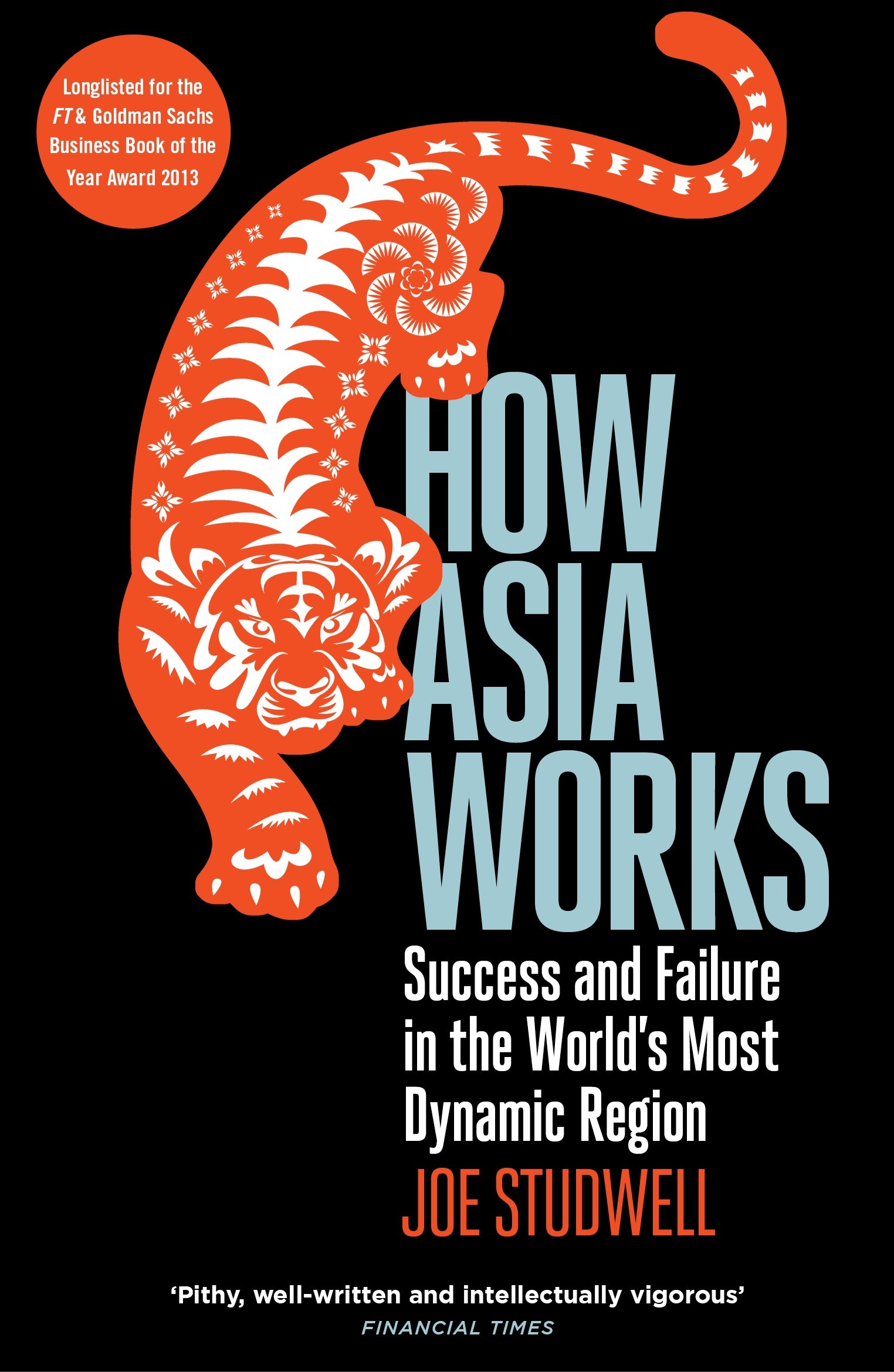
desertcart.in - Buy HOW ASIA WORKS book online at best prices in India on desertcart.in. Read HOW ASIA WORKS book reviews & author details and more at desertcart.in. Free delivery on qualified orders. Review: Insightful book - This was a really insightful book and well written. Worth the read for an understanding of Asia. Review: How to grow an economy fast? - To grow their economy FAST from ruins and colonial havoc after world war two, the Nations Japan, South Korea and Taiwan followed a slightly refined, although same in economic nature, policies used by the Western Nations themselves for their industrialisation. Friedrich List, the most influential economist after Karl Marx in the 19th century, published his treatise The National System of Political Economy . List developed his ideas based on his observations of the then young and independent United States of America. United Germany in 1871, under Bismarck, executed the same policies for industrialisation and by the time of World War One Germany became the economic powerhouse of Europe. Meiji restoration of Japan in 1868 and their desire to industrialise made them send its young leaders to then growing Germany to study their policies. After all, the real history of industrial capitalism, hidden deep inside the rugs bearing the name 'Free Markets' teaches us the valuable lesson - There is one and only path for a poor nation to industrialise. Forget what contemporary economists preach, 'How Asia Works' uncovers the history brilliantly that challenges the fragile underpinnings of current neoclassical economic thinking. The book, 'How Asia Works' narrates the story of how the three North East Asian nations (Japan, South Korea, Taiwan) and now China have effectively employed those economic policies to attain prosperity while the South East Asian nations (Malaysia, Indonesia, Philippines and Thailand) doing the same but ineffectively, failed. Well researched, the book succinctly argues that there are three critical interventions government can use to speed up economic development. For long time economists have argued that free market policies have enabled the current rich countries to attain prosperity and the IMF and World Bank, deluded by doctrines that have no real or empirical underpinning, recommended the poor and developing nations to open up markets and lift capital controls. The outcome is an Oligarchic Russia, service sector dominated India, stuck in the middle Thailand, Indonesia etc. The South Korean economist Ha-Joon Chang and Nobel Laureate economist Joseph Stiglitz have long criticised this propaganda by Western Nations in their works Kicking Away the Ladder: Development Strategy in Historical Perspective (Anthem Studies in Development and Globalization) & Bad Samaritans: The Guilty Secrets of Rich Nations and the Threat to Global Prosperity and Globalization and its Discontents respectively. India should seriously assess its economy since the services, inherently low productive in nature, will stop growing. Make in India, inviting FDI into the country, is a rhetoric that is essentially same as 'Invest in Africa' marketed by African Nations, as all these policies stem from the free market doctrine the rich nations propagated. Joe Studwell does a remarkable job. How Asia Works is highly recommended.
| ASIN | 1846682436 |
| Best Sellers Rank | #13,757 in Books ( See Top 100 in Books ) #528 in Hinduism (Books) #597 in Analysis & Strategy |
| Country of Origin | United Kingdom |
| Customer Reviews | 4.4 4.4 out of 5 stars (934) |
| Dimensions | 12.4 x 1.8 x 19.4 cm |
| Edition | Main |
| ISBN-10 | 9781846682438 |
| ISBN-13 | 978-1846682438 |
| Importer | Atlantic Publishers and Distributors (P) Ltd., 7/22, Ansari Road, Darya Ganj, New Delhi - 110002 INDIA, Email – [email protected], Ph – 011-47320500 |
| Item Weight | 242 g |
| Language | English |
| Net Quantity | 750.00 Grams |
| Print length | 288 pages |
| Publication date | 2 January 2014 |
| Publisher | Profile Books Ltd |
A**N
Insightful book
This was a really insightful book and well written. Worth the read for an understanding of Asia.
S**A
How to grow an economy fast?
To grow their economy FAST from ruins and colonial havoc after world war two, the Nations Japan, South Korea and Taiwan followed a slightly refined, although same in economic nature, policies used by the Western Nations themselves for their industrialisation. Friedrich List, the most influential economist after Karl Marx in the 19th century, published his treatise The National System of Political Economy . List developed his ideas based on his observations of the then young and independent United States of America. United Germany in 1871, under Bismarck, executed the same policies for industrialisation and by the time of World War One Germany became the economic powerhouse of Europe. Meiji restoration of Japan in 1868 and their desire to industrialise made them send its young leaders to then growing Germany to study their policies. After all, the real history of industrial capitalism, hidden deep inside the rugs bearing the name 'Free Markets' teaches us the valuable lesson - There is one and only path for a poor nation to industrialise. Forget what contemporary economists preach, 'How Asia Works' uncovers the history brilliantly that challenges the fragile underpinnings of current neoclassical economic thinking. The book, 'How Asia Works' narrates the story of how the three North East Asian nations (Japan, South Korea, Taiwan) and now China have effectively employed those economic policies to attain prosperity while the South East Asian nations (Malaysia, Indonesia, Philippines and Thailand) doing the same but ineffectively, failed. Well researched, the book succinctly argues that there are three critical interventions government can use to speed up economic development. For long time economists have argued that free market policies have enabled the current rich countries to attain prosperity and the IMF and World Bank, deluded by doctrines that have no real or empirical underpinning, recommended the poor and developing nations to open up markets and lift capital controls. The outcome is an Oligarchic Russia, service sector dominated India, stuck in the middle Thailand, Indonesia etc. The South Korean economist Ha-Joon Chang and Nobel Laureate economist Joseph Stiglitz have long criticised this propaganda by Western Nations in their works Kicking Away the Ladder: Development Strategy in Historical Perspective (Anthem Studies in Development and Globalization) & Bad Samaritans: The Guilty Secrets of Rich Nations and the Threat to Global Prosperity and Globalization and its Discontents respectively. India should seriously assess its economy since the services, inherently low productive in nature, will stop growing. Make in India, inviting FDI into the country, is a rhetoric that is essentially same as 'Invest in Africa' marketed by African Nations, as all these policies stem from the free market doctrine the rich nations propagated. Joe Studwell does a remarkable job. How Asia Works is highly recommended.
J**M
Great discription of the rise of aaian economies nd the ...
Superb book for anyone who wants to undersatnd the genesis of the rise of these asian economic powers - from land reform to manufacturing push - the book captures in detail the success and failure stories. Great description of the rise of Asian economies & the deep analysis of the actual mechanism that leads to the growth nd what didn't work in other competing peers. A must read for someone intrstd in global events, the rise and fall of nation/state.
A**N
A Delightful Read
Power packed narrative and with evidence. This book is a must read for all looking for that elusive growth. A collector’s book and would find a corner in thinking shelves.
K**R
It helped me see the world in a different light
I read and always wondered what made the countries that are rich and poor, rich and poor?. What happened that they turned out in that way?. I was taught that free markets always encouraged efficiency and all, but practically speaking I always felt it was not so, that there is something remiss in all this economic discourse. Joe Studwells book on how development can take place throws light on this remissed economic thought and discipline that seemed to be suppressed. The book clearly communicates to the reader and explains how development actually works. Recommended definitely for the curious.
J**H
Growth
One of the best I read this year
C**E
History and Economics can't get simpler than this
Ever interested in knowing why Big Brothers ( read as US, Europe, Japan) are Big? go for this book
C**O
Understand the real reasons for the growth in Korea, China and Taiwa
Very important read for those hold forth on free trade without realising that it only works once the country has got ahead in the game.
G**S
I liked this book because teached me how the south east countries of Asia got to be developed countries and how México and other developing and undeveloped countries can follow for to be one developed country. The points were simple: 1) Invest in the land/agriculture 2) Invest in the manufacture 3) Get the option to finance the first 2 In my opinion México how has experience and has a lot of agriculture and manufacture can use these points to improve as a country. For my is a must to read this book.
C**D
An Excellent book elaborating a very much valid and honest perspective of East Asia. This story or work provides a profound summary on the distinctions between North East and South East Asia with regards to developmental policies and economics. Furthermore, it reflects not only on these aspects, but also that of the Western World and how their (western worlds) influence was interpreted and used or ignored.
A**K
The book covers the economic development of both North-East and South-East Asian economies in the 20th and early 21st centuries in a compare and contrast fashion, in order to create a better understanding why some made giant leaps in development, while others made gains altogether far less impressive, largely irrespective of their starting levels. The author is a staunch defender of state guided industrial policy - a view not particularly popular with neo-liberal economists, which nevertheless does a much better job of explaining the success of economic catching up to the developed world than any alternative explanation offered in the classical economics literature. The main thrust is a three phase explanation model, namely agricultural land redistribution towards small scale yield intensive agriculture, an export driven manufacturing development, and finally a financial system geared towards supporting these two goals. Covered examples, where these steps have been effectively followed followed and are presented in detail, are Japan (from the Meiji restoration onwards), South Korea, Taiwan and China. On the other hand, there are cases of South East Asian economies, which decided to liberalize their economies sooner - in the author's opinion prematurely - and were thereby not capable of following the three policies effectively. These include the outright dire example of the Philippines, the moderately better one of Thailand and the best of the lot - Malaysia - which still lags significantly behind the successes of the North-East model countries. Before the author is labelled a big government supporter, or a 'statist' in the widest sense, he makes a clear distinction between the needs of the catching up / development phase (where even currently free market supporters such as the UK and the US used the same mechanisms in their early development phases) and the later phase, when the first world level has been achieved. In the latter case, many of the tools needed for success in the catch-up phase become hindrances to further development and further reforms become necessary, something that some countries managed better (South Korea) than others (Japan or Taiwan). The analysis is brilliant, the case studies very compelling, and crucially, the framework does an excellent job of describing and predicting the developmental success. The comparison between different policy choices in both the successful and less successful groups give the reader further insight and provide a more differentiated picture of what is important for development and what not. Furthermore, the framework also wonderfully explains why industrial policy worked in North-East Asia, and less well in other regions where it has been applied (such as SE Asia, the Soviet Union, or Latin America), showing which levers have a real positive impact, which are highly detrimental to development, and which are of no real consequence. This is not about creating protected state champions but much more about relentless pruning of the low performers, first through export discipline and subsequently also at home. If you look at it from the perspective of a manager / owner of an individual company, you may well wish for governments not following the advice, since they may well force you to earn your money in a more difficult fashion than is strictly necessary. Especially export led growth, leading both to a knowledge build-up and a quality requirement through free competition on world markets (while being protected at home) will in the short run be much more laborious than investing in gambling, tourism or real estate but is a proven method of improving the well-being of the country as a whole, rather than the wealth of an individual or profitability of a single company. As long as the government leaves little leeway for circumventing its aims, while at the same time allowing the entrepreneurs to generate adequate profits while serving the developmental needs, a win-win can be produced. Even if not all managers would like the lessons applied by the government of the country where they operate, there are excellent learnings for them, as there are for politicians. Many of the lessons can be applied in a business set-up, too - if you are looking at expansion into new markets or product areas, or trying to catch up with more dominant competitors. The book is perhaps not something for the very casual reader, as it takes some effort, and is written from an expert's point of view (even if the writing is far from ponderous). If you are looking for an easier but less profound read, Kaplan's Asia's Cauldron: The South China Sea and the End of a Stable Pacific is probably the better start. If the topic is of serious interest, not reading this book would be an unfortunate omission, though.
S**N
The book delivers as promised. There's a lot of factual information and historical explanations on the success or failures of different areas of Asia. If you get this book, you'll be thoroughly educated.
A**N
How Asia Works by Joe Studwell is an account of economic developement and history in Asia. It focuses on a several key economies including Japan, Taiwan, Korea, Malaysia, the Philippines, Indonesia and finally to China. It discusses economic history and the sequencing of events that led to the success and failurs of different countries in Asia. The author draws conclusions about the right ingredients for economic growth in the modern era given the various lessons one can learn from Asian examples. The author breaks the book into 4 categories- Land, Manufacturing, Finance and finally China. The author starts by discussing Land and agriculture. He starts out by making the observation that the highest efficiency in produce per square meter for agriculture occurs through home farming and that economies of scale might exist from a cost perspective given the cost of labour but does not mean that aggregate produce would be highest if we all farmed. He then discusses how farming in history has been dominated by landlords and the business of farming within a landlord system by rent seeking behaviour that does not sufficiently invest in land improvement. He finally concludes that when human capital is cheap gaining productivity by eradicating rents and equalizing ownership of farm land increases productivity and moves people up the income curve allowing for the first stage of economic growth. Studwell then goes on to discuss how this general idea was understood and implemented in Japan, Korean and Taiwan and in particular how their experiences led to yield improvements. It also discusses how these principles were not followed in Philippines and other parts of south east asia and how the differences in land policy were the first fundamental hurdle for economic developement to take off. The author then moves on to manufacturing and discusses the concept of infant industries. He discusses the origin of the idea and how creating barriers to entry was understood to be a necessary part of fostering domestic industry. The need to create a system of carrots for successful ventures and sticks to punish failures was shown to be an integral part of successful development policy and the differences between Korean and Malaysia is used as an example to show how competition was needed to keep entrepreneurs more honest. Focusing on exports is shown to be a key to forcing companies up technology curves and putting them in a competetive landscape to perfect the growth process and that preferential credit was a means to facilitate projects like this. Having industrial policy is shown to be more effective when looking at the differences between Korean and Taiwan as an example. The author then goes on to finance. Having finance controlled by industrial policy rather than nepotistic interests is quite obviously shown to have major impacts on the quality of investment. Southeast asia and crony capitalism are given as examples of how credit was funelled into asset gathering instead of broadening productive capacities. The differences in experience between Indonesia and Korea are given as examples to think about. The liberalization of finance is also discussed and the merits of liberal capital flows vs closed capital accounts are detailed and the author argues that in developement having control over the flow of capital in and out of the country can have massive benefits especially when those flows are hot money. The author finally discusses China and where it fits in. Its similarity on industrial policy to north asia and taiwan is shown and its history of encouraging state upstream industries to continue to compete and stay competitive is discussed. The author also discusses the failure to reform the agricultural side of the economy and how that is a long run problem that needs to be solved for China to be able to escape the middle income trap. The limits of supporting upstream and midstream activities is discussed and the need for capital allocation to start flowing towards creating consumer brands is considered. The author covers the successful parts of China's growth model as well as the limits of it and considers other asian countries lessons to be heeded. This is a combination of history and economic policy lessons as a function of that history. It is coherent, interesting and insightful. One finishes it believing that free market capitalism too is dependent on institutional arrangement and market structure. The need to adapt developement strategy to the stage of economic developement is currently in is given to be of critical importance. This reads well and illuminates developent in Asia to the reader. It contains anecdotal stories and economic interpretation. It caters to a wide audience and can be appreciated on many levels.
Trustpilot
3 days ago
1 month ago