Some deliveries may take a little longer than usual due to regional shipping conditions.

DOWNLOAD THE APP


Customer Services
Copyright © 2025 Desertcart Holdings Limited
DOWNLOAD THE APP
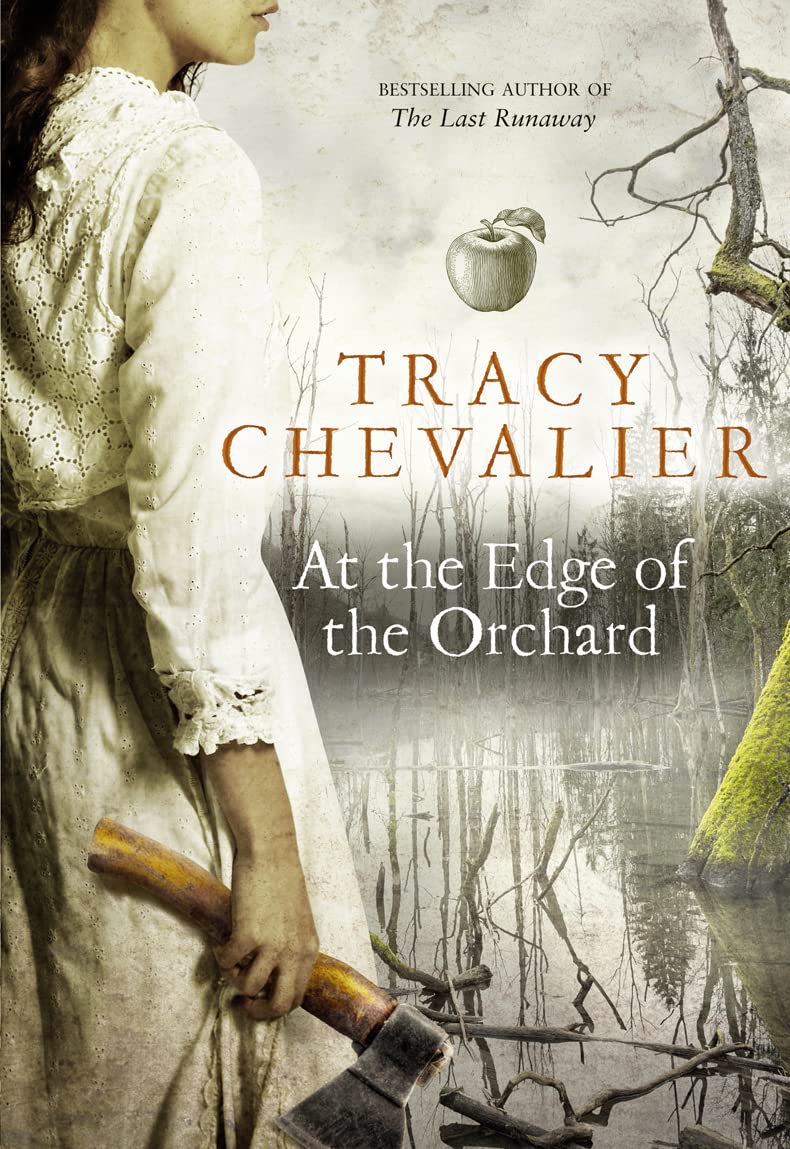
Buy At the Edge of the Orchard First Edition by Chevalier, Tracy (ISBN: 9780007350391) from desertcart's Book Store. Everyday low prices and free delivery on eligible orders. Review: Great story - The story of the Goodenough family is engaging and very well written. The author did a great job mixing tragedy with happiness in a family history to which every one of us could relate, one way or another. Review: A Good Read - I enjoyed this book, but did find it a little predictable if I am totally honest. The book is set in 1800's America at the time when families were spreading into unknown wild desolate parts of the country in order to try and plant roots for their future. In this case they plant apple trees and Sadie is much more interested in drinking the applejack that they produce from the sour apples than selling the sweet apples that can enable them to survive the harsh conditions of Black Swamp. Eventually their son Robert escapes the harshness of family life and spreads his wings into the unknown. He drifts from place to place until he meets a plant collector who takes him under his wing. Life seems reasonably good for a while until Roberts past catches up on him and he is forced to confront the demons from his past. This is a good book and the characters are believable, though as I found the eventual outcome fairly predictable I have deducted a star.
| Best Sellers Rank | 366,892 in Books ( See Top 100 in Books ) 651 in Women's Literary Fiction (Books) 2,506 in Literary Fiction (Books) 3,096 in Family Sagas |
| Customer Reviews | 4.1 out of 5 stars 6,507 Reviews |
A**R
Great story
The story of the Goodenough family is engaging and very well written. The author did a great job mixing tragedy with happiness in a family history to which every one of us could relate, one way or another.
S**Y
A Good Read
I enjoyed this book, but did find it a little predictable if I am totally honest. The book is set in 1800's America at the time when families were spreading into unknown wild desolate parts of the country in order to try and plant roots for their future. In this case they plant apple trees and Sadie is much more interested in drinking the applejack that they produce from the sour apples than selling the sweet apples that can enable them to survive the harsh conditions of Black Swamp. Eventually their son Robert escapes the harshness of family life and spreads his wings into the unknown. He drifts from place to place until he meets a plant collector who takes him under his wing. Life seems reasonably good for a while until Roberts past catches up on him and he is forced to confront the demons from his past. This is a good book and the characters are believable, though as I found the eventual outcome fairly predictable I have deducted a star.
G**R
Seeds of America
Tracy Chevalier enjoyed a “runaway” success with her last novel. In her new book she returns us to Ohio in the mid-19th century. She combines a dramatic plot with folk history – before quilts, now apple trees. I enjoyed her previous novel immensely. This much less – the final sections actually quite poor. The story begins in a dirt poor settlement, the Black Swamp. The Goodenough family struggle to make a living – fighting fever, climate, mud and poverty. James and Sadie fight each other. The author captivated my interest in grafting and nurturing trees to create a productive orchard. She revived my memories of childhood – we had two apple trees which formed a back drop to garden summers. She describes well frontier life – the religious lift of camp meetings, the comforts of cider, the explosive violence in family settlements. The author varies her style – Sadie she gives her own voice to show a bitterness as sour as any of the spitters [cider apples]. Other characters relate their lives in the letters they write. We get the idea of a restless growing nation. People ever on the move. Finding whatever work they can as they move west. She also shows how it was different for women. The orchard is woven into the plot as a metaphor for Goodenough family life. Later the discovery and exploitation of the giant redwoods in California does the same – both backdrop and metaphor. Real historical characters add authenticity. And then it all fails. SPOILER ALERT SPOILER ALERT SPOILER ALERT There is so much wrong with the final section for me. Too much sentiment – contrast Molly and Mrs B. [!] with Sadie - and a major plot problem. The first part of the book describes a dysfunctional family that Robert abandons. Sadie’s dying breath tell him James is not his father. So he heads off west. In the second part he acquires his new family and happiness. His new family – well what to say? His baby daughter, Sarah, is quite possibly not his daughter, Molly having slept with many miners to survive. The other baby is his sister’s boy [she dies in childbirth] conceived when she was raped by Caleb, their brother. One admires him for taking on responsibility – but this is one very mixed-up orchard. It doesn’t work. In a reversal of Victorian novels Robert and Molly leave the new world to go back to the old. I see the balance – apple trees are brought from England to America, then sequoia crosses the Atlantic back. Yet it’s not satisfying. It’s as though the author took Robert to the shores of California and then thought “Oh what do I do with him now?”
A**E
I missed it when I had finished
A page turner, the tough start and journey of the protagonist across America during the gold rush years is beautifully and realistically portrayed. It is also a story about trees, and our relationship with them
C**L
A dark and gripping tale of American frontier life
I ordered this after reading the reviews, having also read "The Last Runaway" when it came out. I had enjoyed Tracy Chevalier's books very much and hadn't realised I'd missed a few, so played catch up. I would say they are a bit variable in calibre, but that is probably just my personal preferences coming out. I liked the fact "The Last Runaway" was set in the US (where Tracy originates from) but found it very slight, although I enjoyed the details of quilting. But then I always like the carefully researched detail in her books - some reviewers seem to find them irksome, but basically it is what she does. This was a cleverly constructed book, which didn't reveal what had actually happened in the eponymous orchard until quite a long way into the book. It was also a bit longer than some - I do find that, although beautifully written, the brevity of some of the books is a bit frustrating. I did wonder initially if I was going to enjoy it - I thought it was a bit of a rework of its predecessor, and there was a certain amount of quilting detail ..... All right, the research topic here was trees and grafting, but I didn't find this effortful. I never need to like or sympathise with characters in novels in order to enjoy a book overall, but I would say that this lot were right up there with Wuthering Heights as a collection of totally unlikeable and unsympathetic characters . Sadie and several of her children were frankly repulsive, and even James, portrayed as a decent enough chap struggling to make a life in a deeply unhospitable land in severely straightened circumstances, did not hesitate to beat his wife and children. However, I felt that unacceptable though this might be to 21st Century sensibilities, it did ring true. The desperate struggle of the early settlers was convincingly portrayed, and the wide sweep of frontier history, incorporating ranches, the gold rush and the constant movement across the vast, largely empty continent was very illuminating. I am not going to recount the plot, or dwell on the individual characters other than to say that I found them well drawn and convincing and that after my early misgivings, I thoroughly enjoyed this book.
E**B
Cream of the crop
In her latest work Tracy Chevalier has returned to Ohio to give us the story of the Goodenough family and their struggle to carve out a life and a future as settlers from the east who have set up home in the Black Swamp. There are few neighbours and the occasional trips into the nearby town for supplies, trade and religious meetings form their only social life. The cash crop is apples: there are two kinds - eaters and spitters. Eaters are sweet and good as the name suggests, the spitters on the other hand are fit only for making cider and in its stronger distillation, applejack. In order to qualify for ownership of their land, they have to grow 50 apple trees. James and his wife Sadie are constantly at loggerheads over the production of this essential fruit and the achievement of this seemingly impossible target. He tenderly nurturing his eaters and studying the best ways to graft cuttings to produce high quality trees and crops, she soothing her frustrations and difficult path in life with applejack and infidelity. This ill matched couple have also produced ten children, of whom only five remain as the vicious swamp fever has taken the others year on year. The two youngest children, Robert and Martha, are the most sympathetic characters in the book and their futures are determined by one awful day in the orchard. The second part of the narrative is told through the letters that Robert, having escaped his dysfunctional family, sends home every New Year from wherever his travels in search of work lead him. These letters track his road west and eventually to California where he becomes a collector of trees for William Lobb, an Englishman who sends saplings and seeds back home to collectors who wish to see Redwoods and Sequoias growing on their estates. Robert's growing skill in these endeavours sees him become his own man and helps him to understand his father's fascination with his apple orchard. Based in a lodging house in San Francisco he finds friendship and begins to put down roots of a kind as Lobb's assistant. Little Martha remains in the Black Swamp, and we get a window into her life through her own letters sent over the years in the hope of reaching Robert, whilst she herself painstakingly salts away every dime she can earn to fund her own journey west. The story of these hard lives, shaped as much by landscapes and circumstances they cannot really control as by their own flawed characters, is in the safest of hands: Tracy Chevalier has created a superb, almost Dickensian, cast of characters for whom one can feel acute sympathy whilst disliking their personalities and actions. It is also, in part, a very American tale showing how a nation grew from the blood, sweat and tears of individual settlers; the farmers and gold miners, the whores, gamblers, visionaries and commercial risk takers. Highly recommended, it moves at an excellent pace and I will shortly read it again to enjoy Chevalier's excellent prose.
M**N
Great Read
This book was very enjoyable and informative, and well researched. It is even better when you realise most of the characters are real. It is a good idea to read the author’s notes at the back of the book first The supplier FT were very good, I think it arrived virtually the next day, very impressed.
K**N
Gripping and evocative.
I love Tracey's work and have read quite a few of her books over the years. I found this book very gripping and read it fast over a couple of days, as I tend to do when the writing is good and the characters are engaging. She is so skilled at creating a sense of place and I am a little in love with pioneer America anyway so I was ready for the hardships and hopes which underpin the storytelling and excited to follow the course of the main character's adventure across the West in search of a better life. Sadie and Molly stood out for me as such strongly imagined characters which seemed to come alive off the page and demand the reader's empathy. Would highly recommend.
Trustpilot
1 week ago
3 weeks ago