
DOWNLOAD THE APP


Customer Services
Copyright © 2025 Desertcart Holdings Limited
DOWNLOAD THE APP
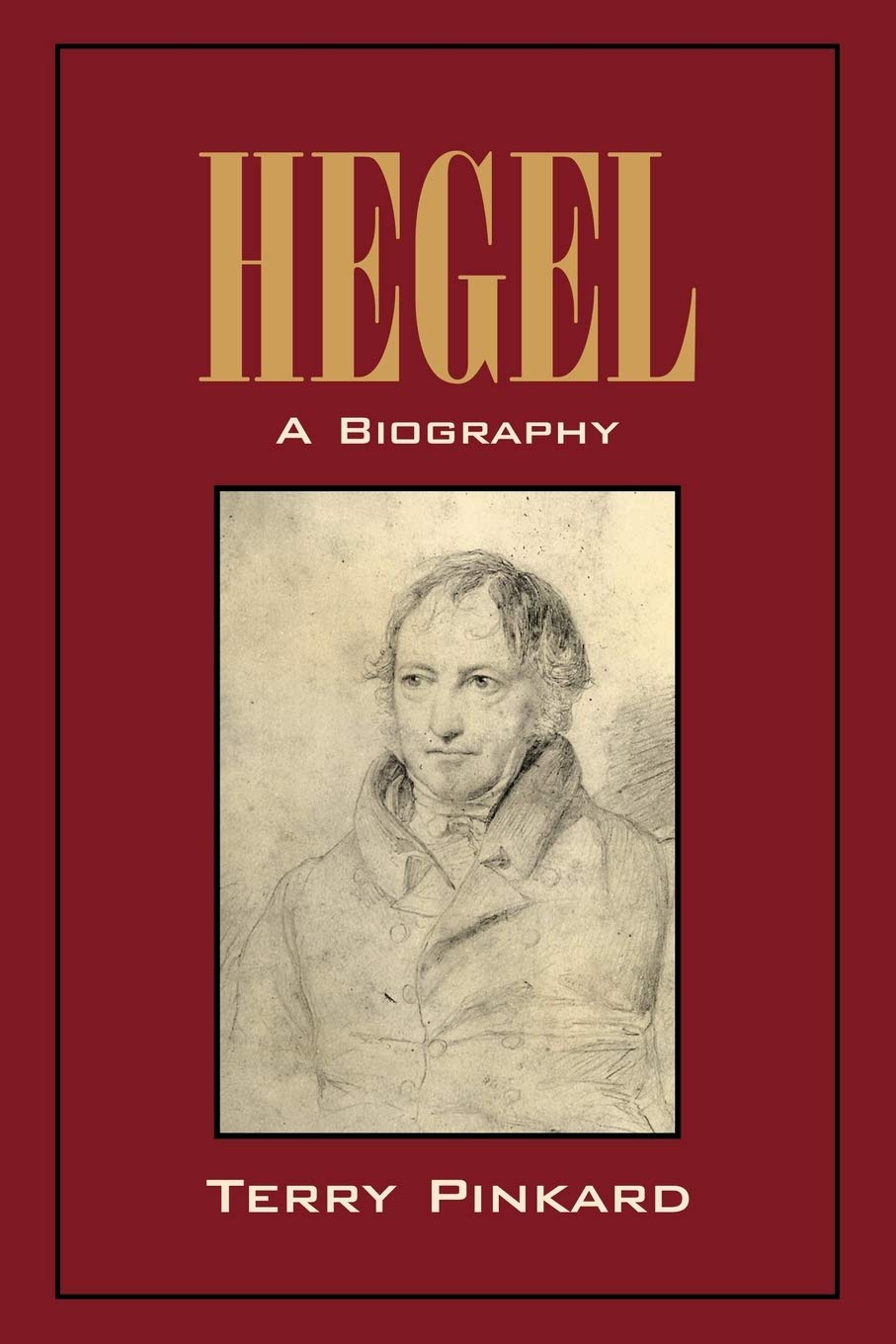
Hegel: A Biography [Pinkard, Terry] on desertcart.com. *FREE* shipping on qualifying offers. Hegel: A Biography Review: A fresh understanding of Hegel - With some knowledge of Marx and early existentialism I thought I had a pretty good idea of who G.W.F. Hegel was. One of the best results of reading this detailed and well-written biography is that it showed how limited a stereotype I had of the man. Pinkard gives a synopsis of Hegel’s most important works but does that in chapters that can be skipped if the reader wants the personal biography only. Both the personal and philosophical angles on Hegel are well done. The personal life of Hegel was completely unknown to me. Hegel enjoyed good times and great philosophical discussions with his close friends Schelling and Holderlin when younger. That in itself was not unusual. But what was initially surprising to me was how kind and social Hegel could be as he got older. Throughout his life he went out of his way to give extra time and financial help to students who came from poor backgrounds. He once traveled by boat with a group of students to visit surreptitiously a friend imprisoned by the repressive government. He cared deeply about his family but had a mixed relationship with his illegitimate son Ludwig. When Ludwig was five, Hegel brought him into his home as part of his family but, as Pinkard shows, Hegel often treated him in a less than familial fashion compared to his other two sons. Until his later years Hegel was often the most gregarious person at a party. Pinkard gives dozens of examples that humanize this man so often portrayed as a cold and austere figure. Early on Hegel made up his mind that his most serious work demanded a serious and new terminology to explain his ideas, a terminology which (as he himself knew) was very often turgid and incomprehensible to those trying to read and understand him. In his view he was creating a new vision of philosophy. But this off-putting terminology and style were not true of his more “popular” work – either in speaking or writing. When Hegel was rector of the “gymnasium” in Nuremburg from 1808-1816, he was extremely popular both as a teacher and administrator. He single-handedly renewed the level of “gymnasium” education in Nuremberg and his end-of-the-year addresses to parents and the public were powerful and clear arguments toward the goal of “Bildung” – the cultivation of knowledge and self-awareness that leads a young person toward being an integrated and mature adult. Besides elements of his personal life, his educational and personal leadership in Nuremburg was for me one of the most eye-opening factors in Hegel’s life. But Pinkard also points out Hegel’s flaws. One which appears several times was his view of women as less intellectually capable than men – a common view at the time but one which this philosopher of self-consciousness never transcended. But another major issue was Hegel’s single-minded fixation on his “system.” Many times Pinkard shows Hegel struggling to “fit” an historical event or personal experience into his system. His system was in many ways the coherence theory of truth gone wild. Some fundamental ideas from the science of his day did not “fit” and were often ridiculed by Hegel. Personal experiences or historical events were taken as representations of worldwide processes – “spirit” being realized in history toward the increase of "freedom" – without Hegel ever stopping to consider his own limitations in understanding these events. Hegel had many insights into the development of self-consciousness and into what appear to be absolute contradictions in life and history. But his application of his ideas to actual events was more often than not wrong – often blatantly wrong. For Hegel (and other post-Kantian idealists) it simply could not be the case that his “system” was wrong. Events had to “fit” the system. For anyone interested in the full picture of one of the most important figures in the history of Western philosophy, this is a worthwhile and (yes) engaging biography. Even if we can see clearly now where Hegel was wrong, showing Hegel’s role in the culture and thought in Germany after Kant makes this thoroughly researched and well-written book a highly useful and enlightening reading experience. Review: Satisfied - Arrived promptly and in good condition.
| Best Sellers Rank | #432,977 in Books ( See Top 100 in Books ) #237 in Philosopher Biographies #299 in History of Philosophy #715 in Modern Western Philosophy |
| Customer Reviews | 4.9 4.9 out of 5 stars (39) |
| Dimensions | 6.02 x 1.83 x 8.98 inches |
| ISBN-10 | 0521003873 |
| ISBN-13 | 978-0521003872 |
| Item Weight | 2.4 pounds |
| Language | English |
| Print length | 812 pages |
| Publication date | June 18, 2001 |
| Publisher | Cambridge University Press |
D**N
A fresh understanding of Hegel
With some knowledge of Marx and early existentialism I thought I had a pretty good idea of who G.W.F. Hegel was. One of the best results of reading this detailed and well-written biography is that it showed how limited a stereotype I had of the man. Pinkard gives a synopsis of Hegel’s most important works but does that in chapters that can be skipped if the reader wants the personal biography only. Both the personal and philosophical angles on Hegel are well done. The personal life of Hegel was completely unknown to me. Hegel enjoyed good times and great philosophical discussions with his close friends Schelling and Holderlin when younger. That in itself was not unusual. But what was initially surprising to me was how kind and social Hegel could be as he got older. Throughout his life he went out of his way to give extra time and financial help to students who came from poor backgrounds. He once traveled by boat with a group of students to visit surreptitiously a friend imprisoned by the repressive government. He cared deeply about his family but had a mixed relationship with his illegitimate son Ludwig. When Ludwig was five, Hegel brought him into his home as part of his family but, as Pinkard shows, Hegel often treated him in a less than familial fashion compared to his other two sons. Until his later years Hegel was often the most gregarious person at a party. Pinkard gives dozens of examples that humanize this man so often portrayed as a cold and austere figure. Early on Hegel made up his mind that his most serious work demanded a serious and new terminology to explain his ideas, a terminology which (as he himself knew) was very often turgid and incomprehensible to those trying to read and understand him. In his view he was creating a new vision of philosophy. But this off-putting terminology and style were not true of his more “popular” work – either in speaking or writing. When Hegel was rector of the “gymnasium” in Nuremburg from 1808-1816, he was extremely popular both as a teacher and administrator. He single-handedly renewed the level of “gymnasium” education in Nuremberg and his end-of-the-year addresses to parents and the public were powerful and clear arguments toward the goal of “Bildung” – the cultivation of knowledge and self-awareness that leads a young person toward being an integrated and mature adult. Besides elements of his personal life, his educational and personal leadership in Nuremburg was for me one of the most eye-opening factors in Hegel’s life. But Pinkard also points out Hegel’s flaws. One which appears several times was his view of women as less intellectually capable than men – a common view at the time but one which this philosopher of self-consciousness never transcended. But another major issue was Hegel’s single-minded fixation on his “system.” Many times Pinkard shows Hegel struggling to “fit” an historical event or personal experience into his system. His system was in many ways the coherence theory of truth gone wild. Some fundamental ideas from the science of his day did not “fit” and were often ridiculed by Hegel. Personal experiences or historical events were taken as representations of worldwide processes – “spirit” being realized in history toward the increase of "freedom" – without Hegel ever stopping to consider his own limitations in understanding these events. Hegel had many insights into the development of self-consciousness and into what appear to be absolute contradictions in life and history. But his application of his ideas to actual events was more often than not wrong – often blatantly wrong. For Hegel (and other post-Kantian idealists) it simply could not be the case that his “system” was wrong. Events had to “fit” the system. For anyone interested in the full picture of one of the most important figures in the history of Western philosophy, this is a worthwhile and (yes) engaging biography. Even if we can see clearly now where Hegel was wrong, showing Hegel’s role in the culture and thought in Germany after Kant makes this thoroughly researched and well-written book a highly useful and enlightening reading experience.
N**S
Satisfied
Arrived promptly and in good condition.
M**D
Pinkard offers a ray of hope for philosophy
I have just begun reading Terry Pinkard's biography of Hegel, but I am familiar with his other writings on Hegel, and what he seems to have done here is offer both biography and a very good articulation of Hegel's philosophy threaded within it. Another Hegel scholar Merold Westphal remarked in his "History and Truth in Hegel's Phenomenology" that 'Hegelese is a dead language, and should remain so'. I agree with Westphal, and this makes it all the more important that people like he and Pinkard are doing hermeneutic justice within a contemporary English idiom to Hegel's most important contributions. Pinkard, along with the Americans Robert Brandom and Robert Pippin, is a major contributor to a new and more accurate understanding of Hegel in English-speaking philosophy. This new understanding is post-Kantian and post-metaphysical; it emphasizes the temporal normativity of reason as Hegel's most important insight; it is compelling and highly relevant to people versed in the problems of 20th-century analytic philosophy. There is also implicit in Pinkard's articulation of Hegel a strong understanding of the limitations of 20th-century 'continental', phenomenological, or Heideggerian philosophy. In my view the greatest value of Pinkard's book is the implicit (and sometimes explicit) critique of both 20th-century analytic and continental philosophy that is threaded throughout his clarifying articulation of Hegel's philosophy. Highly recommended for anyone concerned about the state of philosophy.
J**K
Outstanding biography of G.F. Hegel
Excellent very readable. Not too technical but includes both Hegel's philosophy & his bio as well as the context & milieu of the times (1770 - 1831) German Romanticism, German Idealist philosophy, & the impact of the French Revolution. A who's who of everyone who came in contact with Hegel. Well documented -- great end notes & a good bibliography. Pinkard is an outstanding Hegel scholar. A must read for anyone interested in this period of time.
J**E
Good book
Lengthy and In-depth. At times however the descriptions feel bloated and confusing, this may just be a feature of explaining Hegelian thought but none the less makes certain sections a chore to read.
S**N
wonderful
My review will be short—this is because I think that the other reviews on here capture much of feel of, and the detail provided in, Pinkard's biography of Hegel. The detail in the book is stunning, but it is also easy to follow; the narrative doesn't get bogged down by too many unnecessary details or repetitious claims. What I appreciated most about the book was Pinkard's ability to depict Hegel's life in such a way that it makes sense why Hegel's philosophy has been interpreted in polarizing ways. And I am thankful for the way in which Pinkard situates Hegel's life and concerns in order to shed much light on what is usually taken to be an impenetrably obscure topic: Hegel's entire system. Though it was long, and at times tedious (Hegel did not live a life filled with remarkably "extraordinary" personal events), I would definitely recommend the book to those who, like me, have a difficult time grasping a philosopher's work without also grasping a clearer picture of the context in which they lived their life.
P**S
Rare combination of depth and popular writing
Pinkard is a great writer about Hegel's philosophy and the ideas of that time. I've read this book three times, which speaks to the pleasure of reading it. Hegel's life was not filled with fascinating incidents, but this book skillfully conveys the richness of his ideas. This is a rare book, which could pass for popular biography but that contains first-class writing about philosophy and the history of ideas. Highly recommended.
W**A
Outstanding Text!
I won't belabor the kudos here. This is an impressive work of scholarship and well worth the read.
S**N
Written very lucidly the book is filled with almost all details about Hegel’s life. However if interested in Hegel philosophy then refer copleston or lavine. The book is about 775 pages long and I bought it in ₹1275.
Trustpilot
2 days ago
2 weeks ago