Desert Online General Trading LLC
Dubai, United Arab Emirates
Desert Online General Trading LLC
Dubai, United Arab Emirates

Full description not available
D**O
Juan Mascaro's translation of the Bhagavad Gita.
It is over thirty years since I purchased (at a cost of 30p)Penguin Classic's paper back edition of Juan Mascaro's translation of the Bhagavad Gita, it has been a constant companion of mine ever since and has travelled with me far and wide. Unfortunately time and usage have taken their toll and the book is now somewhat tired and worn. It was for this reason that I decided it was about time to purchase a new copy . I was delighted to find an identical hardback edition for sale on Amazon. What a beautiful edition it is with its firm , lotus pattern blue binding . I am no Sanskrit scholar, although over the years I have read many translations of the Gita, but it is to Mascaro's work that I invariably return. The Bhagavad Gita needs no words of mine to sing its praise, but Juan Mascaro's fullsome introduction is a sheer delight in itself, sensitive, informative and so beautifully composed . I recommend this lovely book to all who have an interest in the Bhagavad Gita. My only critisism is with Amazon themselves for so carelessly placing an adhesive label directly on the book cover itself, for even after removal a sticky patch remains
R**R
Lost in translation? No!
Lost in translation?Well ... this is an everlasting issue.It can be a disaster - also it can be an opportunity.The best method is to do a literal translation first and then transliterate it to the culture of the language into which the translation is made. Sometimes it is a good thing, and very useful, that two native speakers do this in co-operation - particularly with translations of poetry - and the Bhagavad Gita is poetry also.Indian translation is the same as any other in these fundamental respects.Consider this literal translation ... `... as beautiful as a female elephant in rut ...' How can one translate that into English without it being risible? The translator is therefore given great discretion here; it calls for enormous sensitivity; he could translate it as ... `as beautiful as a songbird in spring ...' Consider another translation in the King James Version of the Bible ... `... comfort me with apples ...' Actually the original is probably `pomegranates' ... but the word `apple' was used for ease of accessibility for the people of England in the early 17th century.A book of the stature of the Bhagavad Gita is fully worthy of connection with the language and spirit of the King James Version of the Bible.The Mascaro translation has that impact. It is valid and supremely beautiful in itself.RAC - 24th July 2011
B**Y
Difficult
I have to award five stars. It’s like rating the Bible ! But I have found it hard to interpret. On the other hand, the translator’s copious notes are fascinating.
K**N
Very Simple Yet Powerful Reading, But Without Some Aspects To Be Aware Of Before Reading.
This book doesn't need any introduction from me. It really isn't one you stumble upon but rather you hear referenced through someone or something else. I believe it was either Jordan Peterson or Tim Ferriss in my case. Anyway, this is a short poem which is often cited as a cornerstone of the Hindu faith, and I general it is really beautifully written considering its age (those who have read the likes of The Odyssey of some of Shakespeare's works) will be familiar with this style. If not, it'll just take a little getting used to). Essentially it is the dialogue between the warrior Arjuna and the God Krishna as he second guesses himself before a large battle. In all, the lessons parted here are very interesting, especially emphasising the aspects self-control and working for the sake of faith and belief in honest working. These really are where it shines. However (and this perhaps relates more to my tendency to question things, especially on religious based texts), I couldnt help but feel that the intention of the writer in making this story was to have Arjuna play the role of the feeble soul (perhaps us) who is questioning the idea of faith itself in the context of life's daily battles, before Krishna (perhaps the writer trying to push forward a religious agenda) is now addressing every concern Arjuna (we) have and who complete and total belief is the only way to achieve immortality and everlasting inner peace. All the while, it is completely forgotten that at the very start of the story Arjuna rides into the middle of two armies before having his crisis of confidence and hence this dialogue with Krishna (while, I should add, both armies seem completely content to allow this entire dialogue to take place without moving a muscle). So, if you read this as a piece for gaining some interesting thoughts and insights then you don't need to look any further. However, you should also consider the writers overall goal in creating this piece so that you have a neutral perspective. Overall it's a really nice short read, do not let my criticism's deter you from investing in this mostly pleasant read.
F**Z
Mind blowing wisdom
This has really impacted the way I think and see things (and I never thought I'd say this of a religious/spiritual text). Absolutely fascinating and a complete shift from the western way of thinking. Definitely recommend reading it.I enjoyed the translation style.
R**T
Excellent!
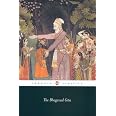
i chose this rating because:1. it is a good edition (the paper is Indian, meaning not that durable, but as the subject is also Indian i don't mind)2. the translation and the commentary are brilliant. Mr. Mascaró thinks perfectly in both worlds, Eastern and Western.3. I like the hardbound copy.4. I like the illustration on the front cover.
M**P
Life Changing
Totally life changing. Will open up many doors. A must read.
K**R
Lo recomiendo
No encontre el libro completo en Español, pero este me encantó!!Texto digerible, y bueno. Lo volvere a leer. .
R**L
Una obra Maestra
Es la mejor traducción y explicación del Bhagavad Gita que hasta ahora he encontrado.De una gran claridad y muy amena de entender.Además muy práctica de llevarla a cabo.Verdaderamente la recomiendo al 100%
J**E
Yoga teachers all need this in their library
Classic! And this particular version is easy to digest
M**O
Um grande obra do pensamento oriental
Um dos livros básicos do hinduísmo e de todas as suas derivações, o Bhagavad Gita é também uma belíssima obra literária e um tratado de Filosofia Oriental. O livro faz parte de um relato mais amplo, o Mahabharata, que conta a história da guerra dos pandavas com os karauvas pelo trono. O arqueiro Arjuna, um pandava, olha os dois exércitos que estão prestes a se envolverem em uma sangrenta batalha (4 milhões de pessoas irão morrer) e reconhece mestres, parentes, amigos do lado de seus inimigos. Em desespero, está prestes a desistir da batalha, pois é um dever não matar seus parentes e mestres, mas, para ele que é um guerreiro, é também um dever lutar. Pede então a seu amigo, e condutor de seu carro, Krishna, que o ensine. Krishna ensina que todos os homens ali já estão mortos, e, ao mesmo tempo, que são imortais. Por isso, Arjuna deve fazer seu dever, mas, para alcançar a paz, deve fazê-lo com desapego, sem esperar qualquer resultado, sem esperar qualquer recompensa. Só esse tipo ação (dharma) tem valor, se ele quer serenar seu espírito, pois existem três disciplinas que podem produzir a paz: a disciplina do conhecimento e da luz (Jnana Yoga), a disciplina da devoção e do amor (Bhakti Yoga) e a disciplina da ação (Karma Yoga). Depois de ser ensinado, e de perceber que todo o universo está interconectado por causas produzidas por essa ação, Arjuna decide lutar. Apesar da Filosofia Oriental se expressar de um modo muito diferente da Ocidental, entremeada com conceitos religiosos, há conceitos puramente filosóficos, muito semelhantes ao Estoicismo e às filosofias de Platão e de Aristóteles. O capítulo 12 deu origem à letra da canção Gita, de Raul Seixas e Paulo Coelho.
J**
Holy
This book is grace in every person's life. Buy it .
Trustpilot
2 days ago
4 days ago