We remain fully operational. Our teams are working around the clock to ensure your deliveries continue safely.

DOWNLOAD THE APP


Customer Services
Copyright © 2025 Desertcart Holdings Limited
DOWNLOAD THE APP
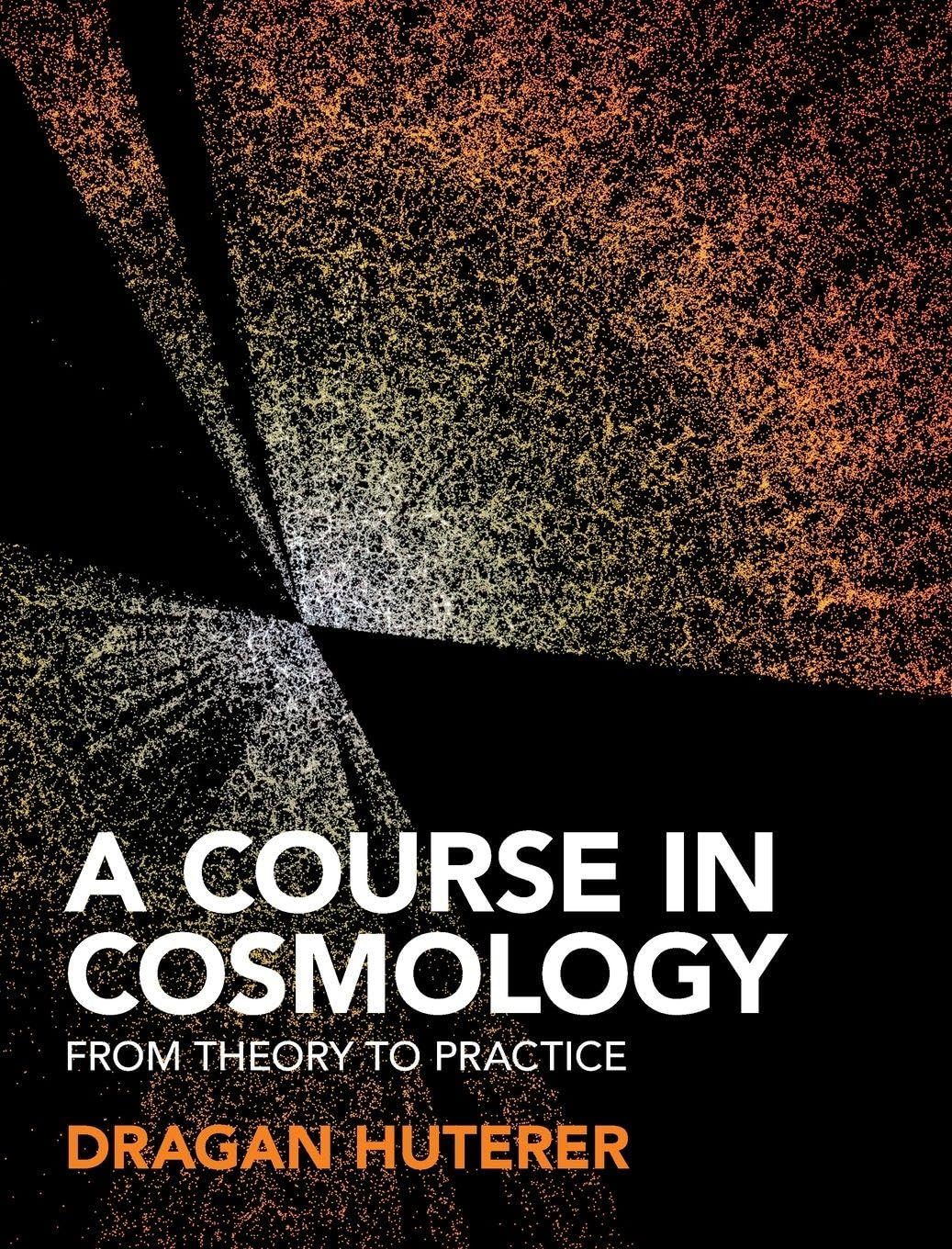
Buy A Course in Cosmology: From Theory to Practice on desertcart.com ✓ FREE SHIPPING on qualified orders Review: Great book - Good book! Review: Good and approachable introduction to cosmology - I used this book as my first introduction to cosmology. Overall, I liked the book and am glad I bought it. Below I list pros and cons of the book - Pros - 1. The book quickly covers foundational topics such as FLRW metric, particle physics, statistical mechanics etc. that are relevant in cosmology. So not much is expected as prior knowledge. However this is a proper physics text book so topics like multi-variable calculus, spherical harmonics, classical mechanics, Fourier transform are a necessary prerequisite. Knowledge of general relativity is recommended though not required. 2. The book lives up to its name - "From theory to practice" - there is lot of emphasis on connecting theory with observations which I liked very much. There are computational exercises also. I am not planning to be a cosmologist so I did not do those and can't comment on those but it seems they would be tremendously useful and exciting for budding cosmologists. 3. The questions at the end of chapter are easy to medium difficulty. The author does a great job of providing high level steps for most questions to arrive at the solutions. 4. The book is organized very well into foundational concepts, early universe and later universe and flows well (though I had to wait until chapter 13 to study CMB). 5. The book emphasizes important equations and conclusions in boxes which is useful when referring back or going over a chapter again. 6. Cosmology is a fast evolving field with new observation / data coming in every day. As of 2025, this book was quite up to date with the latest discoveries and observations. 7. Most chapters are short which makes them easy to digest. 8. The book uses natural units which makes the equations less cluttered and calculations easier. Below are the cons. Except for the first couple which I think are serious (hence 4 stars and not 5), rest are mostly nitpicks and don't take anything away from the book - Cons 1. Being the first edition, this book has quite a few typos and some in egregious places. Specifically k and kappa are often swapped throughout the book whenever referring to FLRW metric. There is Errata on book website so be sure to download that. But I found few more typos that are not in the Errata. 2. No answers provided for questions. Even though the author guides the reader towards the solution to at end of chapter exercises, there is no way to know if one solved the question correctly. Would have been nice to have answers at the back of the book. 3. In a few places, the book has a tendency to forward reference. For example, a question in chapter 2 requires using continuity equation which is introduced only in chapter 3. The graviton decoupling question in chapter 4 requires using a calculation that is shown only in chapter 5. Chapter 8 uses concept of power spectrum that is properly introduced in chapter 9. Had to read power spectrum in chapter 9 and then come back to chapter 8. 4. There are colored graphs which is nice but all of them are inserted together randomly in the middle of chapter 9. This makes it annoying to flip through chapter 9 as there are several pages in chapter 9 that don't belong to chapter 9. I would have preferred the colored graphs to be where they are relevant or if they all had to be together then they should be either the end of the book or between chapters. Overall I think it is a good book and recommend it.
| Best Sellers Rank | #1,043,501 in Books ( See Top 100 in Books ) #669 in Cosmology (Books) #6,665 in Science & Mathematics |
| Customer Reviews | 4.6 4.6 out of 5 stars (19) |
| Dimensions | 8 x 1 x 10 inches |
| Edition | New |
| ISBN-10 | 1316513599 |
| ISBN-13 | 978-1316513590 |
| Item Weight | 2.75 pounds |
| Language | English |
| Print length | 436 pages |
| Publication date | May 18, 2023 |
| Publisher | Cambridge University Press |
A**Y
Great book
Good book!
D**Y
Good and approachable introduction to cosmology
I used this book as my first introduction to cosmology. Overall, I liked the book and am glad I bought it. Below I list pros and cons of the book - Pros - 1. The book quickly covers foundational topics such as FLRW metric, particle physics, statistical mechanics etc. that are relevant in cosmology. So not much is expected as prior knowledge. However this is a proper physics text book so topics like multi-variable calculus, spherical harmonics, classical mechanics, Fourier transform are a necessary prerequisite. Knowledge of general relativity is recommended though not required. 2. The book lives up to its name - "From theory to practice" - there is lot of emphasis on connecting theory with observations which I liked very much. There are computational exercises also. I am not planning to be a cosmologist so I did not do those and can't comment on those but it seems they would be tremendously useful and exciting for budding cosmologists. 3. The questions at the end of chapter are easy to medium difficulty. The author does a great job of providing high level steps for most questions to arrive at the solutions. 4. The book is organized very well into foundational concepts, early universe and later universe and flows well (though I had to wait until chapter 13 to study CMB). 5. The book emphasizes important equations and conclusions in boxes which is useful when referring back or going over a chapter again. 6. Cosmology is a fast evolving field with new observation / data coming in every day. As of 2025, this book was quite up to date with the latest discoveries and observations. 7. Most chapters are short which makes them easy to digest. 8. The book uses natural units which makes the equations less cluttered and calculations easier. Below are the cons. Except for the first couple which I think are serious (hence 4 stars and not 5), rest are mostly nitpicks and don't take anything away from the book - Cons 1. Being the first edition, this book has quite a few typos and some in egregious places. Specifically k and kappa are often swapped throughout the book whenever referring to FLRW metric. There is Errata on book website so be sure to download that. But I found few more typos that are not in the Errata. 2. No answers provided for questions. Even though the author guides the reader towards the solution to at end of chapter exercises, there is no way to know if one solved the question correctly. Would have been nice to have answers at the back of the book. 3. In a few places, the book has a tendency to forward reference. For example, a question in chapter 2 requires using continuity equation which is introduced only in chapter 3. The graviton decoupling question in chapter 4 requires using a calculation that is shown only in chapter 5. Chapter 8 uses concept of power spectrum that is properly introduced in chapter 9. Had to read power spectrum in chapter 9 and then come back to chapter 8. 4. There are colored graphs which is nice but all of them are inserted together randomly in the middle of chapter 9. This makes it annoying to flip through chapter 9 as there are several pages in chapter 9 that don't belong to chapter 9. I would have preferred the colored graphs to be where they are relevant or if they all had to be together then they should be either the end of the book or between chapters. Overall I think it is a good book and recommend it.
O**N
Eu recebi hoje. Dá muito boa impressão. Capa dura, paginação maravilhosa. Gostei muito do aspecto físico da obra.
Trustpilot
1 month ago
3 weeks ago