
DOWNLOAD THE APP


Customer Services
Copyright © 2025 Desertcart Holdings Limited
DOWNLOAD THE APP
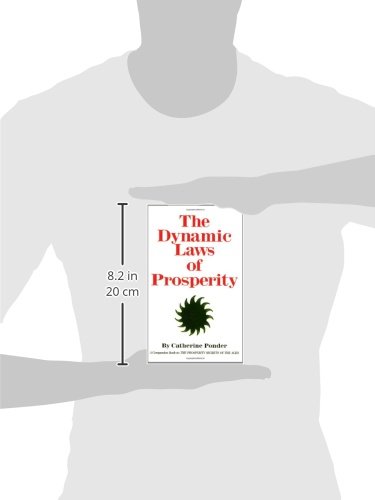
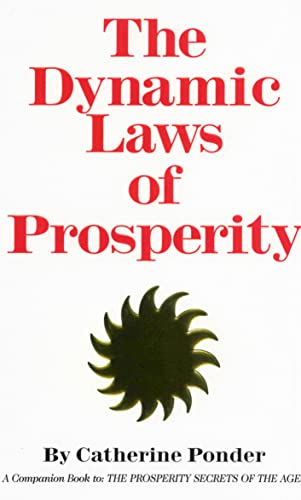
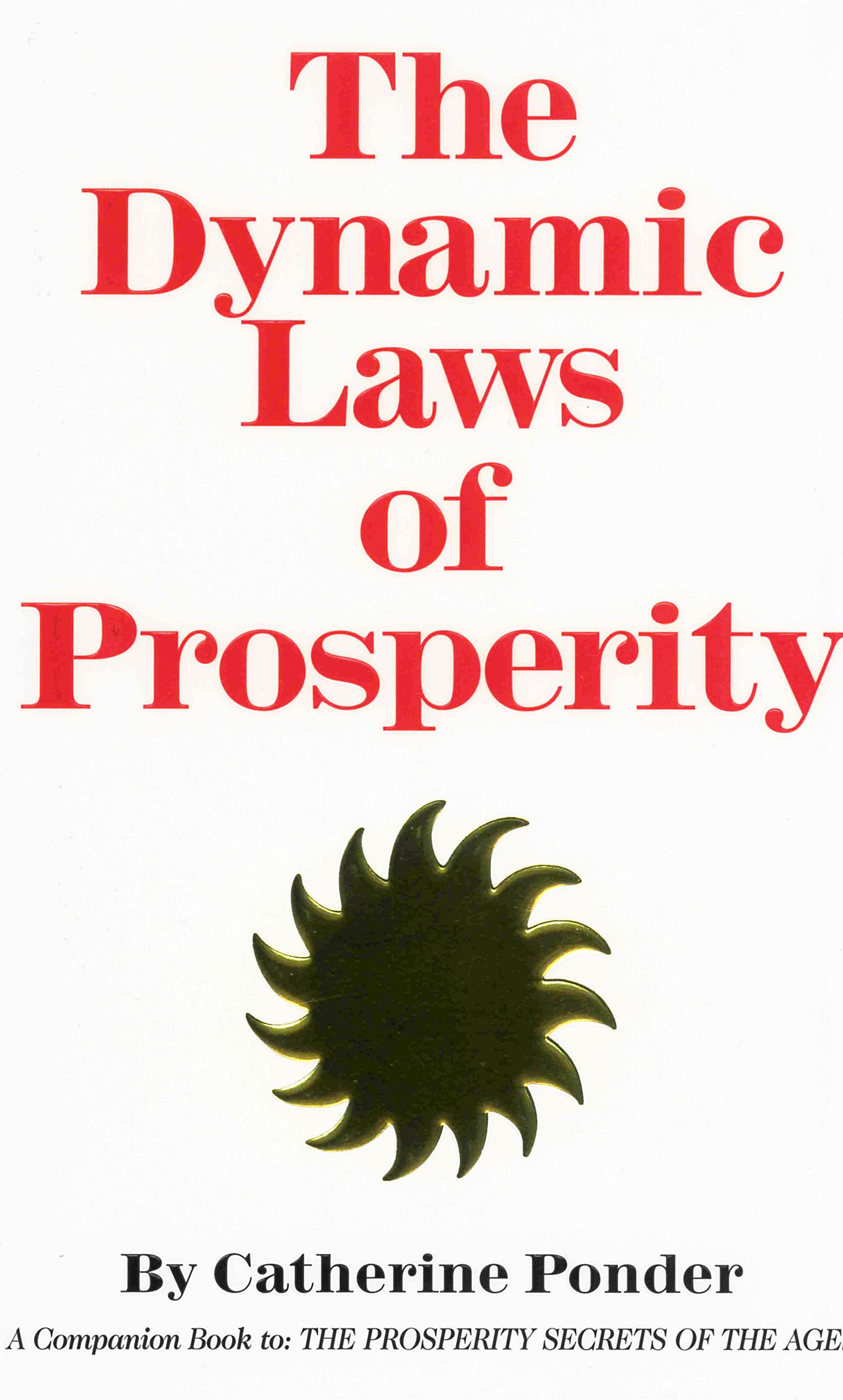
THE DYNAMIC LAWS OF PROSPERITY [Ponder, Catherine] on desertcart.com. *FREE* shipping on qualifying offers. THE DYNAMIC LAWS OF PROSPERITY Review: A Milestone Book on Prosperity Laws - 'The Dynamic Laws of Prosperity' is one of the few books in which all the prosperity laws are outlined and explained. Most books focus on a few only, and many recent books only upon 'The Law of Attraction.' This makes the high value of this book together with the easy-to-read and comprehensive style and diction of the author, who gives many examples out of her minister practice. It is often experienced by authors that they write their best books after the search of a book they imagine should exist but cannot be found. So it was in he case of the present book. Catherine Ponder went through a phase of need and hardship, after having been widowed and left with a small son to rear, and eager to learn more about the principles of prosperity. As she did not find that book that she needed, she wrote it. And that was after all a very good idea. Until today, in an era where prosperity books are proliferating, I haven’t found another book that compiles all the prosperity laws in one volume. Consider for example that the recent quite well-known book, The Secret, is only about the Law of Attraction—as if that was the last word to say about prosperity, as if there were no other laws we need to learn and apply in order to become truly prosperous. Many rags-to-riches online programs follow in the same train, and one often gains the impression that their ‘prosperity laws’ are geared toward making them rich in the first place …, while of course the contrary is true. If your desire for service is only lip-service and in truth you adhere to a quick-rich scheme, you will probably not make it through; you may have some temporary gain, but all prosperity authors absolutely agree that there is no long-term prosperity for those folks who consider their own personal gain only instead of putting themselves at the forefront of service! Let me first explain why this book bears the word ‘dynamic’ in the title. Catherine Ponder explains that he word ‘dynamic’ has the same root as the word ‘dynamite’: ‘that which is dynamic is powerful, forceful, filled with energy, and leads to change.’ /5 One may also want to ask what a ‘law’ is in the sense used in this book? Some people out of the science world tend to frown upon authors who use the word ‘law’ when they speak about non-scientific and spiritual principles. But law, as I learnt is a lawyer, is not just a parliamentary enactment for there were laws—think for example of the 10 Commandments—that were not issued by a legislative. Law in the general sense simply is a rule of action. It conveys the notion of order, of something also that produces its effect over and over again, in a systematic fashion, in a way that cannot be altered by deliberate action. Even such a mechanistic scientist as Isaac Newton talked about ‘natural laws’, which means mental or spiritual laws that do not originate from the physical plane but that produce effects on the physical plane. After this introduction and before I go into more detail, let me first list the whole set of prosperity laws here, as this is a good way for understanding the structure of the book. In Part 1: Basic Prosperity Laws, the author discusses the following prosperity laws: —The Basic Law of Prosperity —The Vacuum Law of Prosperity —The Creative Law of Prosperity —The Imaging Law of Prosperity —The Prosperity Law of Command —The Prosperity Law of Increase The first thing you should know is that these prosperity laws build upon one another, in the order they are presented in the book. The second thing is to know what the term ‘prosperity’ actually means. The author explains that prosperity connotes abundance, and that this abundance must manifest on the three planes of life—the physical plane, the mental plane, and the spiritual plane. Right at the beginning of the book, Catherine Ponder mentions an important obstacle to abundance: it is the belief—partly resulting from a wrong interpretation of the Bible—that abundant thinking was ‘materialistic’ thinking. She clarifies that abundance is not equal to ‘serving mammon’ when the focus of one’s prosperity thinking is deliberately based upon the recognition of the divine origin of it. In this sense, she writes, the Bible is a ‘prosperity textbook.’ In addition, it is important to behold that a faithful attitude toward life is not one of sacrifice, persecution and hard times. The problem is that religion, and this is true for each and every religion after its founder passed away, has become a secularized power institution, from the feudal society of the Middle Ages until our corporate international culture. It was a strategy, and is not a virtue that millions were led to believe that it was ‘pious to be poor’, a belief which was of course useful in forestalling revolt in the masses. Ponder writes that some of those feudal ideas have persisted until today, but they do not reflect the order of things as established by the law of life. The other important truth, which we have seen mentioned already with Napoleon Hill and Joseph Murphy, is that there are scientific reasons why we need to work our way through from inside out, and not the other way around. Why can our mind impact upon the world, events, behaviors and even physical processes inside and outside our body? This is because all is connected in the universe. This was recognized by invoking the age-old idea of the ether, which is also mentioned and explained by Napoleon Hill, and besides, Charles Haanel, in his book The Master Key System (1916) and Charles Fillmore in his book Prosperity (1936). Today science recognizes this truth under another header, namely the notion of the quantum field, quantum vacuum, akashic field, or zero-point field. But why not keeping the old terminology that was after all valid for humanity for hundreds of years? I will end this rather extensive book by mentioning how important tithing is for lasting success. Ponder writes repeatedly in this and her other books that we should tithe primarily to the source of our spiritual learning, which is for many people a church or other enlightening organization. The tithe has to be send upfront every first of the month, in good faith that one’s financial means won’t suffer from giving 1/10 of it away, but will in the contrary prosper more. Some people, after having reached a certain level of prosperity, double their tithe, triple it, or even send away half of their fortune. Let us remind ourselves that Bill Gates did exactly that when he setup up with his wife the Melinda Gates Foundation. Catherine Ponder explains that in ancient times there was a rule how to tithe: the first tithe was to be sent to the priest of one’s church, the second tithe was destined for a social purpose and the third tithe was for charity. She gives several examples in this book and in other books of hers that applying prosperity principles without tithing works only temporarily. This is quite an uncanny truth! Most prosperity programs, as expensive as they sometimes are, teach the principles of right thinking, making lists, a wheel of fortune, applying the law of command, and image the outcome. But most of those programs do not teach the secret of tithing. She writes that she has known a number of people who after learning the prosperity laws were prospering suddenly, and sometimes dramatically for a certain while but then, astonishingly so, as they were not tithing the riches they had accumulated vanished off by and by, and they had to realize that their prosperity was not a lasting one. Tithing is what makes the difference here. I have another example of this truth, and it’s a big example. It’s the Rothschilds. Most people neither know how big their actual fortune was at the height of their prosperity, and how their attitude was toward the old Jewish habit of tithing. The fortune of the Rothschild clan by far surpassed that of Bill Gates, Rockefeller, Getty, Walton, Buffett or Carnegie. It was comparable only to the immense fortune of the Queen of England, but still higher, estimated to have been 400 trillion dollars! In an almost unknown biographical book about the Rothschilds, written by John Reeves and published in 1887, the truth is unveiled: the Rothschilds have tithed regularly and very generously, and what is even more important, consistently; they gave away immense amounts of their fortune, and always without hesitating, even to people who would beg in the street, who wrote to them, who came to their houses and castles; they had a tremendous sense of compassion and never sent anybody away. Another example comes to mind: Pablo Picasso. Picasso has not only founded exemplary orphanages, one of which I visited in Saigon, Vietnam, back in 1986; he has also sent regularly sometimes big amounts of money to people who wrote to him in need and explained their hardships. And the fortune Picasso had later in life is legendary for an artist; we might rightfully assume that it was the ever biggest fortune accumulated by a single artist! And yet in his younger years, when his career really took off in Paris, France, he was a poor man, hardly having the means to heat his flat, sometimes selling a painting for a bread or burning it in the chimney because he could not afford to buy charcoal! So please be reminded that giving really is the secret motor of receiving for all in life is cyclic. Money is a form of energy and as such it must circulate. I have seen that over and over in my own life and there were phases when I was holding on too tightly to my fortune, and during these periods I was regularly losing large amounts of money. So, to close this review, I would consider in agreement with the author that tithing is by far the most important prosperity secret! Review: Phenomenal Book! - The review I'm writing about is for "The Dynamic Laws of Prosperity" by Catherine Ponder and published by DeVorss Publications (Sixteenth Printing 2018). I thought this book was going to be a little flat paperback of a book because every picture I saw of it was just the cover page but it was surprisingly, wonderfully thick at 430 pages. Yes, I read the description but honestly, it didn't click until I got the book! Anyway, this was such a phenomenal book to read and I couldn't put this book down after I got started. It was that good and so easy to read and understand! I love how Catherine Ponder laid out her ideas in this book with bold header sections and with all affirmations clearly written in capital letters to stand out. This printing is so well done and the font is perfect also. I think everyone will enjoy reading it. I've been listening to Catherine Ponder's lectures on Youtube for years now; and more recently her affirmations on Hermeticphysical Truths Youtube channel which finally got me curious and inspired to get her books (I bought "The Dynamic Laws of Prayer" also but that's for another review). I only wish I had boughten this book sooner also because it is so fun to read, practical, and filled with so many amazing stories of how people overcame their failures and started living the good life through prosperous thinking. It was quite interesting also to know more about her own background. Catherine Ponder recounted her struggles as a single mother and how she overcame obstacles through prosperous thinking and positive affirmations, because failure for her was simply not an option. It shouldn't be for us either! Her message is if she could do, we can too and she clearly explained how it can be done in this book using different methods and laws (vacuum law, imaging law, prosperity law, etc.). There are lots of similarities between Catherine Ponder's writings and those of Florence Scovel Shinn's (I have written a review on her books as well). If you like Florence Scovel Shinn's writings, you will surely like Catherine Ponder's as well. I believe she wrote about 15 books or more and I plan on acquiring them all eventually. The price is about $20 at the time of this writing, but it is worth every penny because it is such a thick book and full of priceless information. Hesitating to spend this much on the book means that you still have not yet overcome the "fear", "poverty", and "lack" mentality! Remind yourself that God is your supply and buy the book! I would highly recommend this book and I am so happy that I can now add her books to my expanding collection. Lastly, my advise would be to purchase only from DeVorss Publishings (see pictures) because they seem to be the original publisher of her works since 1985 or so (post Prentice-Hall) lest you end up with some tiny font, highly redacted copy of the book by some unknown publisher. I'd give this book 5.0/5.0 - 03/15/2021.
| Best Sellers Rank | #66,244 in Books ( See Top 100 in Books ) #1,145 in Success Self-Help #1,186 in Motivational Self-Help (Books) #1,461 in Personal Transformation Self-Help |
| Customer Reviews | 4.8 4.8 out of 5 stars (553) |
| Dimensions | 6 x 1.31 x 8 inches |
| Edition | Revised |
| ISBN-10 | 0875165516 |
| ISBN-13 | 978-0875165516 |
| Item Weight | 1.2 pounds |
| Language | English |
| Print length | 430 pages |
| Publication date | January 1, 1962 |
| Publisher | DeVorss Publications |
P**R
A Milestone Book on Prosperity Laws
'The Dynamic Laws of Prosperity' is one of the few books in which all the prosperity laws are outlined and explained. Most books focus on a few only, and many recent books only upon 'The Law of Attraction.' This makes the high value of this book together with the easy-to-read and comprehensive style and diction of the author, who gives many examples out of her minister practice. It is often experienced by authors that they write their best books after the search of a book they imagine should exist but cannot be found. So it was in he case of the present book. Catherine Ponder went through a phase of need and hardship, after having been widowed and left with a small son to rear, and eager to learn more about the principles of prosperity. As she did not find that book that she needed, she wrote it. And that was after all a very good idea. Until today, in an era where prosperity books are proliferating, I haven’t found another book that compiles all the prosperity laws in one volume. Consider for example that the recent quite well-known book, The Secret, is only about the Law of Attraction—as if that was the last word to say about prosperity, as if there were no other laws we need to learn and apply in order to become truly prosperous. Many rags-to-riches online programs follow in the same train, and one often gains the impression that their ‘prosperity laws’ are geared toward making them rich in the first place …, while of course the contrary is true. If your desire for service is only lip-service and in truth you adhere to a quick-rich scheme, you will probably not make it through; you may have some temporary gain, but all prosperity authors absolutely agree that there is no long-term prosperity for those folks who consider their own personal gain only instead of putting themselves at the forefront of service! Let me first explain why this book bears the word ‘dynamic’ in the title. Catherine Ponder explains that he word ‘dynamic’ has the same root as the word ‘dynamite’: ‘that which is dynamic is powerful, forceful, filled with energy, and leads to change.’ /5 One may also want to ask what a ‘law’ is in the sense used in this book? Some people out of the science world tend to frown upon authors who use the word ‘law’ when they speak about non-scientific and spiritual principles. But law, as I learnt is a lawyer, is not just a parliamentary enactment for there were laws—think for example of the 10 Commandments—that were not issued by a legislative. Law in the general sense simply is a rule of action. It conveys the notion of order, of something also that produces its effect over and over again, in a systematic fashion, in a way that cannot be altered by deliberate action. Even such a mechanistic scientist as Isaac Newton talked about ‘natural laws’, which means mental or spiritual laws that do not originate from the physical plane but that produce effects on the physical plane. After this introduction and before I go into more detail, let me first list the whole set of prosperity laws here, as this is a good way for understanding the structure of the book. In Part 1: Basic Prosperity Laws, the author discusses the following prosperity laws: —The Basic Law of Prosperity —The Vacuum Law of Prosperity —The Creative Law of Prosperity —The Imaging Law of Prosperity —The Prosperity Law of Command —The Prosperity Law of Increase The first thing you should know is that these prosperity laws build upon one another, in the order they are presented in the book. The second thing is to know what the term ‘prosperity’ actually means. The author explains that prosperity connotes abundance, and that this abundance must manifest on the three planes of life—the physical plane, the mental plane, and the spiritual plane. Right at the beginning of the book, Catherine Ponder mentions an important obstacle to abundance: it is the belief—partly resulting from a wrong interpretation of the Bible—that abundant thinking was ‘materialistic’ thinking. She clarifies that abundance is not equal to ‘serving mammon’ when the focus of one’s prosperity thinking is deliberately based upon the recognition of the divine origin of it. In this sense, she writes, the Bible is a ‘prosperity textbook.’ In addition, it is important to behold that a faithful attitude toward life is not one of sacrifice, persecution and hard times. The problem is that religion, and this is true for each and every religion after its founder passed away, has become a secularized power institution, from the feudal society of the Middle Ages until our corporate international culture. It was a strategy, and is not a virtue that millions were led to believe that it was ‘pious to be poor’, a belief which was of course useful in forestalling revolt in the masses. Ponder writes that some of those feudal ideas have persisted until today, but they do not reflect the order of things as established by the law of life. The other important truth, which we have seen mentioned already with Napoleon Hill and Joseph Murphy, is that there are scientific reasons why we need to work our way through from inside out, and not the other way around. Why can our mind impact upon the world, events, behaviors and even physical processes inside and outside our body? This is because all is connected in the universe. This was recognized by invoking the age-old idea of the ether, which is also mentioned and explained by Napoleon Hill, and besides, Charles Haanel, in his book The Master Key System (1916) and Charles Fillmore in his book Prosperity (1936). Today science recognizes this truth under another header, namely the notion of the quantum field, quantum vacuum, akashic field, or zero-point field. But why not keeping the old terminology that was after all valid for humanity for hundreds of years? I will end this rather extensive book by mentioning how important tithing is for lasting success. Ponder writes repeatedly in this and her other books that we should tithe primarily to the source of our spiritual learning, which is for many people a church or other enlightening organization. The tithe has to be send upfront every first of the month, in good faith that one’s financial means won’t suffer from giving 1/10 of it away, but will in the contrary prosper more. Some people, after having reached a certain level of prosperity, double their tithe, triple it, or even send away half of their fortune. Let us remind ourselves that Bill Gates did exactly that when he setup up with his wife the Melinda Gates Foundation. Catherine Ponder explains that in ancient times there was a rule how to tithe: the first tithe was to be sent to the priest of one’s church, the second tithe was destined for a social purpose and the third tithe was for charity. She gives several examples in this book and in other books of hers that applying prosperity principles without tithing works only temporarily. This is quite an uncanny truth! Most prosperity programs, as expensive as they sometimes are, teach the principles of right thinking, making lists, a wheel of fortune, applying the law of command, and image the outcome. But most of those programs do not teach the secret of tithing. She writes that she has known a number of people who after learning the prosperity laws were prospering suddenly, and sometimes dramatically for a certain while but then, astonishingly so, as they were not tithing the riches they had accumulated vanished off by and by, and they had to realize that their prosperity was not a lasting one. Tithing is what makes the difference here. I have another example of this truth, and it’s a big example. It’s the Rothschilds. Most people neither know how big their actual fortune was at the height of their prosperity, and how their attitude was toward the old Jewish habit of tithing. The fortune of the Rothschild clan by far surpassed that of Bill Gates, Rockefeller, Getty, Walton, Buffett or Carnegie. It was comparable only to the immense fortune of the Queen of England, but still higher, estimated to have been 400 trillion dollars! In an almost unknown biographical book about the Rothschilds, written by John Reeves and published in 1887, the truth is unveiled: the Rothschilds have tithed regularly and very generously, and what is even more important, consistently; they gave away immense amounts of their fortune, and always without hesitating, even to people who would beg in the street, who wrote to them, who came to their houses and castles; they had a tremendous sense of compassion and never sent anybody away. Another example comes to mind: Pablo Picasso. Picasso has not only founded exemplary orphanages, one of which I visited in Saigon, Vietnam, back in 1986; he has also sent regularly sometimes big amounts of money to people who wrote to him in need and explained their hardships. And the fortune Picasso had later in life is legendary for an artist; we might rightfully assume that it was the ever biggest fortune accumulated by a single artist! And yet in his younger years, when his career really took off in Paris, France, he was a poor man, hardly having the means to heat his flat, sometimes selling a painting for a bread or burning it in the chimney because he could not afford to buy charcoal! So please be reminded that giving really is the secret motor of receiving for all in life is cyclic. Money is a form of energy and as such it must circulate. I have seen that over and over in my own life and there were phases when I was holding on too tightly to my fortune, and during these periods I was regularly losing large amounts of money. So, to close this review, I would consider in agreement with the author that tithing is by far the most important prosperity secret!
G**K
Phenomenal Book!
The review I'm writing about is for "The Dynamic Laws of Prosperity" by Catherine Ponder and published by DeVorss Publications (Sixteenth Printing 2018). I thought this book was going to be a little flat paperback of a book because every picture I saw of it was just the cover page but it was surprisingly, wonderfully thick at 430 pages. Yes, I read the description but honestly, it didn't click until I got the book! Anyway, this was such a phenomenal book to read and I couldn't put this book down after I got started. It was that good and so easy to read and understand! I love how Catherine Ponder laid out her ideas in this book with bold header sections and with all affirmations clearly written in capital letters to stand out. This printing is so well done and the font is perfect also. I think everyone will enjoy reading it. I've been listening to Catherine Ponder's lectures on Youtube for years now; and more recently her affirmations on Hermeticphysical Truths Youtube channel which finally got me curious and inspired to get her books (I bought "The Dynamic Laws of Prayer" also but that's for another review). I only wish I had boughten this book sooner also because it is so fun to read, practical, and filled with so many amazing stories of how people overcame their failures and started living the good life through prosperous thinking. It was quite interesting also to know more about her own background. Catherine Ponder recounted her struggles as a single mother and how she overcame obstacles through prosperous thinking and positive affirmations, because failure for her was simply not an option. It shouldn't be for us either! Her message is if she could do, we can too and she clearly explained how it can be done in this book using different methods and laws (vacuum law, imaging law, prosperity law, etc.). There are lots of similarities between Catherine Ponder's writings and those of Florence Scovel Shinn's (I have written a review on her books as well). If you like Florence Scovel Shinn's writings, you will surely like Catherine Ponder's as well. I believe she wrote about 15 books or more and I plan on acquiring them all eventually. The price is about $20 at the time of this writing, but it is worth every penny because it is such a thick book and full of priceless information. Hesitating to spend this much on the book means that you still have not yet overcome the "fear", "poverty", and "lack" mentality! Remind yourself that God is your supply and buy the book! I would highly recommend this book and I am so happy that I can now add her books to my expanding collection. Lastly, my advise would be to purchase only from DeVorss Publishings (see pictures) because they seem to be the original publisher of her works since 1985 or so (post Prentice-Hall) lest you end up with some tiny font, highly redacted copy of the book by some unknown publisher. I'd give this book 5.0/5.0 - 03/15/2021.
K**N
I love this book. I've heard the audiobook many times, but there is something different when you actually read the words... they sink in deeper. The quality of the book is top quality, unlike most of the cheap nock-offs that are sold on here. This is the quality of book that you purchase in a bookstore. Great book. Great quality. It was written in the 1960's, so the info is dated, but if you can get past that and see the info for what it is, it will transform your mind over time and over multiple readings. It's changed my life and will change yours. Give it time. Give it practice. It's not a magical spell, but a change in how you must see the world. You have to change your thinking from "glass half empty" to "glass half full" and this changing process takes time. But you can do it. I did. Others have. And you will too.
L**A
Incredible and delightful read that sets you thinking deeply about life and your own way into the future. You feel you can improve your life in the most positive of ways after reading this great book. Would recommend as a must read if you want to better your lot in life as it is very inspiring!
L**T
grand livre inspirational , bien écrit, facile à lire et à l'appliquer , je le recommande chaleureusement pour bien avancer spirituellement!
N**S
Useful book, helps alot.
A**E
Awesome Book!! Filled with very practical advice to help you to produce more positive results in your life. I highly recommend it!
Trustpilot
2 days ago
2 weeks ago