
DOWNLOAD THE APP


Customer Services
Copyright © 2025 Desertcart Holdings Limited
DOWNLOAD THE APP
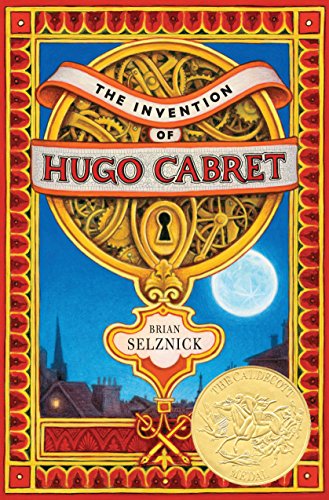

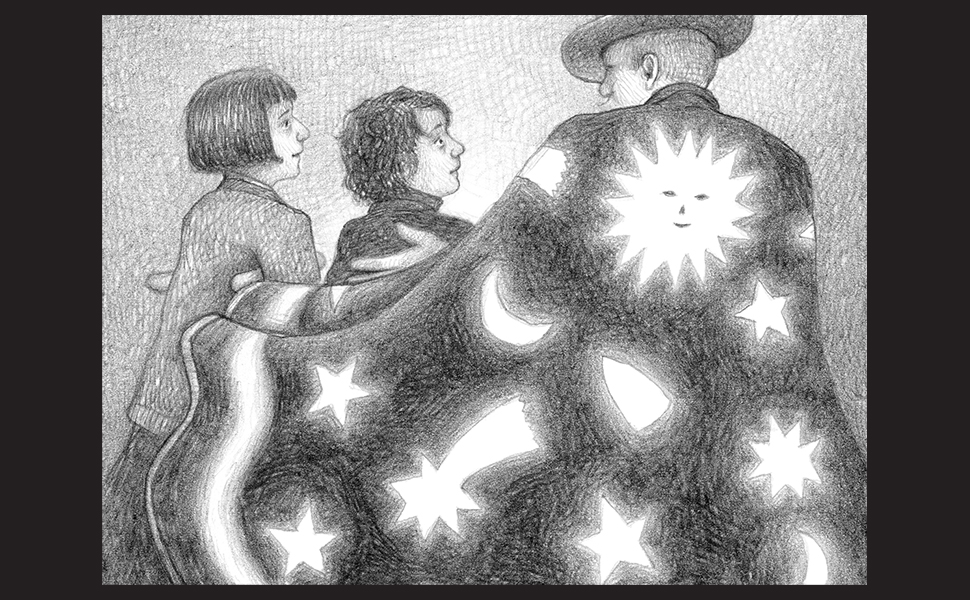
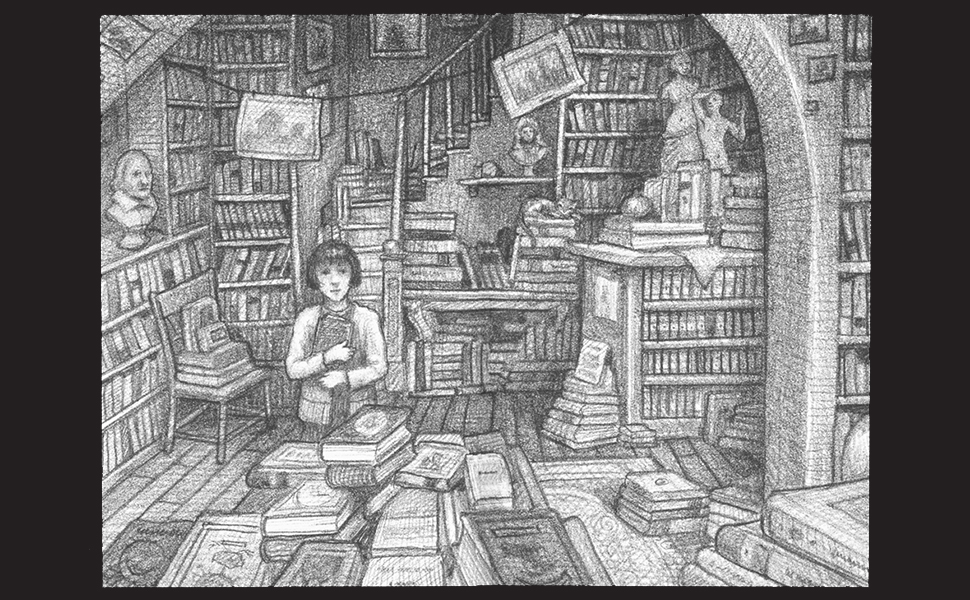
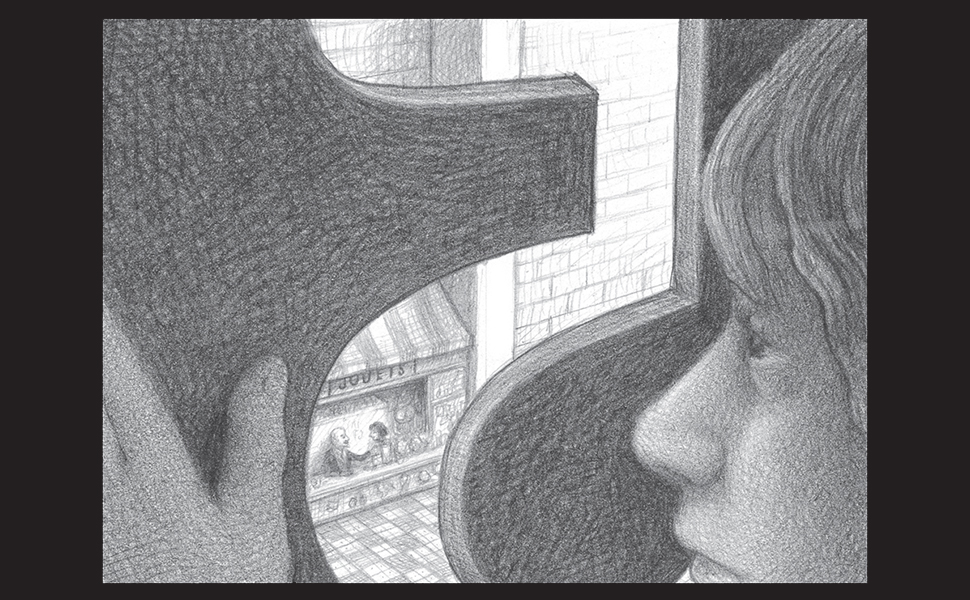
The Invention of Hugo Cabret [Selznick, Brian, Selznick, Brian] on desertcart.com. *FREE* shipping on qualifying offers. The Invention of Hugo Cabret Review: Far more than a children's book - I simply have never had this experience before. No book I've read has ever combined graphics as part of the actual movement of the story - not as supportive to the dialog, not to clarify the words, but as vehicles themselves to carry the story forward. They are pencil drawings, beautifully shaded. It is a more like the merging of a book and a silent black and white movie. Good stories are layered. The tale hangs mainly on our protagonist, the orphan Hugo, living within the walls and spaces of a Parisian train station. He has taken on the function of time keeper/clock winder that his now missing uncle once performed. A mysterious mechanical man in disrepair, left to Hugo by his beloved father, becomes the vehicle to join the child to another station character - the crotchety toy merchant who maintains a small shop in the main concourse. Hugo uses pieces from the mechanical toys - which he has stolen from the merchant - to tinker with the mechanical man. Once he is caught, we have the opportunity to learn more about the old man through Hugo's interaction with him and his young niece, Hugo's new friend. The pivotal character of the station's toy merchant pulls us further into this world when Hugo discovers his past as a magician and as a pioneer with film. By placing the story within a train station, Brian Selznick can tip his hat to some of the groundbreaking first attempts at film which used the same type of venue, as well as the genius of imagination that was set free with this new medium. The great clocks of the station's tower help us remember Harold Loyd, and the trains were the subjects of some of the first films. It is at this point that the use of the black and white illustrations takes on another function, speaking to us about the dramatic way images, without sound and color, can still speak to us so eloquently. This is one of those special books that has a compelling story that can be read by a young reader, and at the same time can be a bridge to historical events when read by an adult. I chose to explore Hugo Cabret after seeing a trailer for the movie "Hugo." My intention was to pre-screen the book to see if it was appropriate for a great niece's Christmas present. To my surprise, as an adult I was enthralled. And as so often happens, the book's story became a doorway - it led me to trace more information about the earliest experiments with film. The relationship between early film and magicians was a surprise to me. And perhaps as a person living approximately a century after film began, let alone having no memory of a life without it, it is understandable that I had no perspective about the effects of the first films on their viewers - a world of imagination, nightmares and dreams. How strange, magical and wonderful it all must have seemed. Knowing Scorsese's love of film history, I am now anxious to see how he has brought this book to film to tell both a child's story and to help all of us appreciate the evolution of what we are watching. Review: beautiful illustrations and fun story involving George Melies - The Lumiere Brothers were the first documentary filmmakers; George Melies was the first movie maker. While they filmed workers emerging from a factory he, who had been a magician, immediately saw the potential for film as a medium to create magical illusions. Melies also collected automata -- intriguing mechanical devices -- which were donated to a museum and later destroyed in a fire. Author Brian Selznick runs with that bitty fact and ... Enter Hugo Cabret, a boy who knows none of this and, through no fault of his own, now lives in the walls of a train station in Paris, maintaining the station's many important clocks. One night wandering Hugo comes upon the remains of a fire and finds a mechanical man, who seems to be trying to write something. As if all that isn't intriguing enough, Hugo becomes convinced the device wants to give him a last message from his father, who was attempting to repair it, and who perished in the fire. The illustrations are gorgeous. No stick figures here! These black and white pencil drawings are lush, detailed depictions that often propel the story, delightfully content-rich. I would estimate over half the pages are illustrations, and I'd imagine the most difficult part of the job for Selznick is knowing when to stop. Not so much stylized as framed beautifully, tending toward the naturalistic but with touches of Van Gogh, Dore, others. Will draw in even persnickety children AND will interest parents as well. Can't be read in one night, and shouldn't be. A nice clean font and smooth black-bordered paper make this 5 by 8" tome a pleasure to hold and read, and the story's slow revelations include secret identities, orphans, cruel gendarmes and the realization that one can visit this very train station-turned-museum today. A lovely delight for soulful children of all ages. Can't wait to read others by this author.


| Best Sellers Rank | #9,072 in Books ( See Top 100 in Books ) #4 in Children's Europe Books #86 in Children's Mystery, Detective, & Spy #431 in Children's Action & Adventure Books (Books) |
| Customer Reviews | 4.8 4.8 out of 5 stars (3,273) |
| Dimensions | 8.74 x 2.01 x 6.14 inches |
| Grade level | 4 - 7 |
| ISBN-10 | 0439813786 |
| ISBN-13 | 978-0439813785 |
| Item Weight | 2.51 pounds |
| Language | English |
| Print length | 544 pages |
| Publication date | March 1, 2007 |
| Publisher | Scholastic Press |
| Reading age | 8 - 12 years, from customers |
R**8
Far more than a children's book
I simply have never had this experience before. No book I've read has ever combined graphics as part of the actual movement of the story - not as supportive to the dialog, not to clarify the words, but as vehicles themselves to carry the story forward. They are pencil drawings, beautifully shaded. It is a more like the merging of a book and a silent black and white movie. Good stories are layered. The tale hangs mainly on our protagonist, the orphan Hugo, living within the walls and spaces of a Parisian train station. He has taken on the function of time keeper/clock winder that his now missing uncle once performed. A mysterious mechanical man in disrepair, left to Hugo by his beloved father, becomes the vehicle to join the child to another station character - the crotchety toy merchant who maintains a small shop in the main concourse. Hugo uses pieces from the mechanical toys - which he has stolen from the merchant - to tinker with the mechanical man. Once he is caught, we have the opportunity to learn more about the old man through Hugo's interaction with him and his young niece, Hugo's new friend. The pivotal character of the station's toy merchant pulls us further into this world when Hugo discovers his past as a magician and as a pioneer with film. By placing the story within a train station, Brian Selznick can tip his hat to some of the groundbreaking first attempts at film which used the same type of venue, as well as the genius of imagination that was set free with this new medium. The great clocks of the station's tower help us remember Harold Loyd, and the trains were the subjects of some of the first films. It is at this point that the use of the black and white illustrations takes on another function, speaking to us about the dramatic way images, without sound and color, can still speak to us so eloquently. This is one of those special books that has a compelling story that can be read by a young reader, and at the same time can be a bridge to historical events when read by an adult. I chose to explore Hugo Cabret after seeing a trailer for the movie "Hugo." My intention was to pre-screen the book to see if it was appropriate for a great niece's Christmas present. To my surprise, as an adult I was enthralled. And as so often happens, the book's story became a doorway - it led me to trace more information about the earliest experiments with film. The relationship between early film and magicians was a surprise to me. And perhaps as a person living approximately a century after film began, let alone having no memory of a life without it, it is understandable that I had no perspective about the effects of the first films on their viewers - a world of imagination, nightmares and dreams. How strange, magical and wonderful it all must have seemed. Knowing Scorsese's love of film history, I am now anxious to see how he has brought this book to film to tell both a child's story and to help all of us appreciate the evolution of what we are watching.
A**S
beautiful illustrations and fun story involving George Melies
The Lumiere Brothers were the first documentary filmmakers; George Melies was the first movie maker. While they filmed workers emerging from a factory he, who had been a magician, immediately saw the potential for film as a medium to create magical illusions. Melies also collected automata -- intriguing mechanical devices -- which were donated to a museum and later destroyed in a fire. Author Brian Selznick runs with that bitty fact and ... Enter Hugo Cabret, a boy who knows none of this and, through no fault of his own, now lives in the walls of a train station in Paris, maintaining the station's many important clocks. One night wandering Hugo comes upon the remains of a fire and finds a mechanical man, who seems to be trying to write something. As if all that isn't intriguing enough, Hugo becomes convinced the device wants to give him a last message from his father, who was attempting to repair it, and who perished in the fire. The illustrations are gorgeous. No stick figures here! These black and white pencil drawings are lush, detailed depictions that often propel the story, delightfully content-rich. I would estimate over half the pages are illustrations, and I'd imagine the most difficult part of the job for Selznick is knowing when to stop. Not so much stylized as framed beautifully, tending toward the naturalistic but with touches of Van Gogh, Dore, others. Will draw in even persnickety children AND will interest parents as well. Can't be read in one night, and shouldn't be. A nice clean font and smooth black-bordered paper make this 5 by 8" tome a pleasure to hold and read, and the story's slow revelations include secret identities, orphans, cruel gendarmes and the realization that one can visit this very train station-turned-museum today. A lovely delight for soulful children of all ages. Can't wait to read others by this author.
E**L
O livro, apesar de grosso, é envolvente e interessante.
M**S
I bought this book straight after watching the Martin Scorcese movie. The artwork is fantastic and replaces what could normally be a lot of descriptive text. The story in the book is slightly different from the movie, mainly in that A:- The character of Hugo is not quite as likeable in the book, and B:- The station master plays a very small role in the book. To me though this book isnt about Hugo it is about the genius that was Georges Melies. I claim to be a bit of a film nut but must admit I had never heard of him before Hugo. Since the movie and book I have developed a slight obsession with the life and works of this wonderful man and find Hugo to be a wonderful homage to him.
M**A
Arrivato in condizioni perfette. Me lo aspettavo di dimensioni più grandi, ma è come un normale libro. Secondo me perfetto per chi vuole approcciarsi alla lettura in inglese senza particolari basi sulla lingua. Illustrazioni in bianco e nero bellissime
S**L
its the film of the small name that drew me to Brian Selznick's wonderful books, strongly recommended for all ages.
C**.
I read (or rather looked at) this book as an adult. The characters are endearing. The core story as such is not VERY original, but it combines several elements in such a new way that it still seems new. What certainly is original is the form of the book. I was astonished at how many pictures this book actually features! This is especially effective for young readers or readers that are just beginning to learn English. As I am training for becoming a teacher, I hope that I will be able to include this book in my lessons one day! Not only because of the pictures and the language, but also because of its depiction of interesting topics like film history in general, the life of Georges Méliès, or automata. The book is quite thick, not only because of the high number of the pictures but also because the publisher used paper of very high quality (especially in comparison with paper that is usually used by English and American publishing houses). When ordering the book, I thought it was a bit expensive, but it is definitely worth the prize! So, I would really recommend this book for children and adults alike. I can recommend the literary adaptation as well!
Trustpilot
1 month ago
3 days ago