
DOWNLOAD THE APP


Customer Services
Copyright © 2025 Desertcart Holdings Limited
DOWNLOAD THE APP
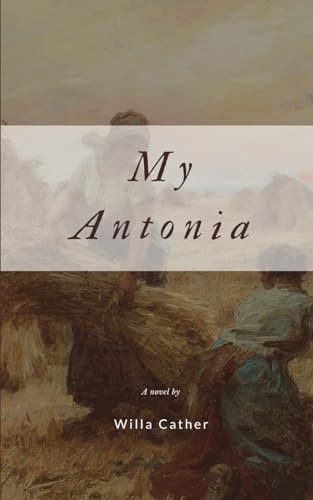
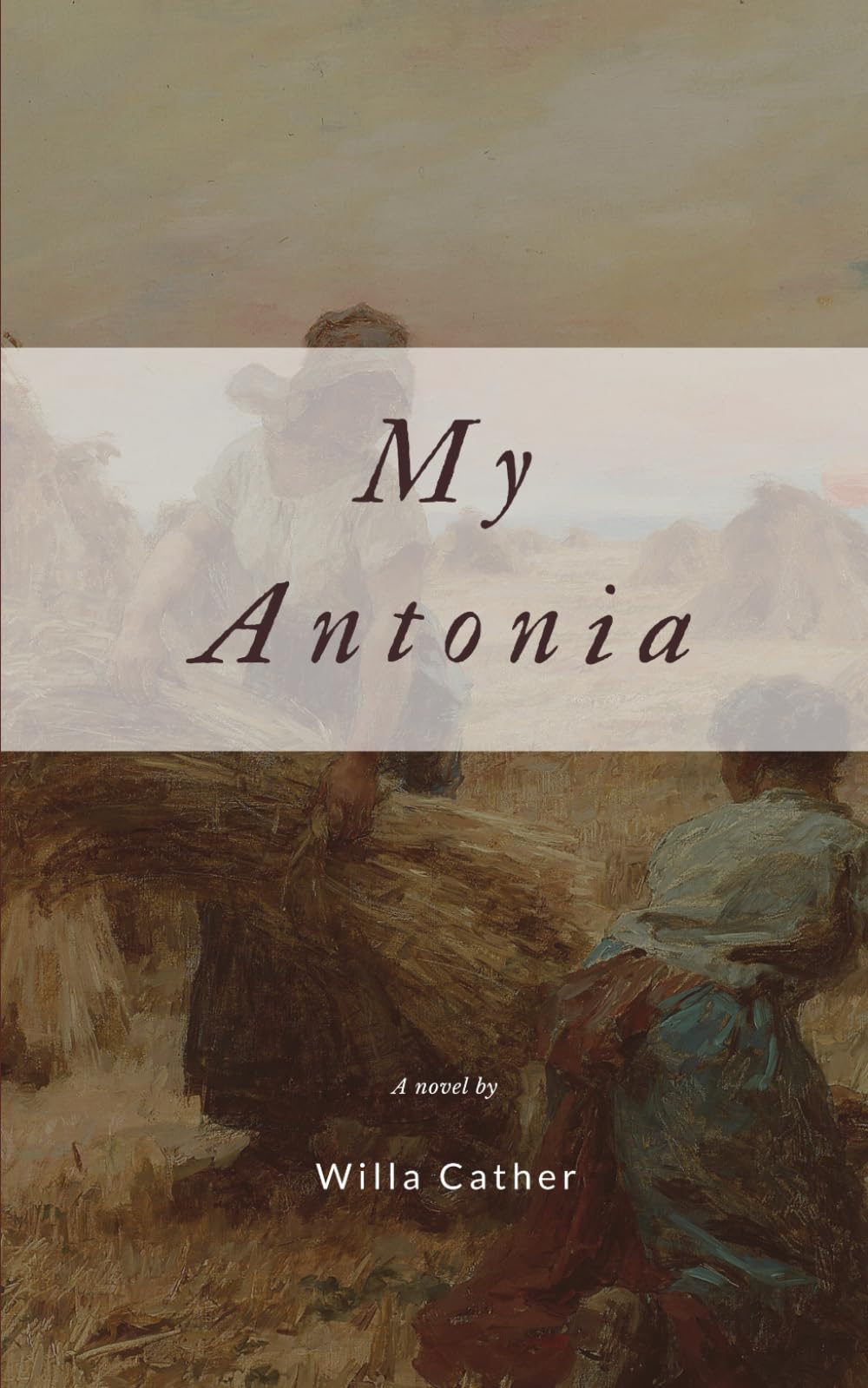
My Antonia [Cather, Willa] on desertcart.com. *FREE* shipping on qualifying offers. My Antonia Review: Enjoyable Classic - Wonderful book even on the 2nd go round. I thoroughly enjoyed the turn of phrase and descriptions of the terrain and seasons. Great characters too! Review: The best parts of this book - I read My Antonia in an attempt to catch up on important classics in American literature. After finishing it, I can see why it has deserved lasting popularity. It brings the reader close to the immigrant experience, and the pioneer experience, exploring the lives of early settlers in Nebraska, around the 1880's or so. It was published in 1918. The best parts of this book, for me, were the lyrical descriptions of nature, the seasons, and the way that these impact human emotions. Consider this description of the seasons in a small Plains town: "Winter lies too long in country towns; hangs on until it is stale and shabby, old and sullen. On the farm the weather was the great fact, and men's affairs went on underneath it, as the streams creep under the ice. But in Black Hawk the scene of human life was spread out shrunken and pinched, frozen down to the bare stalk." Lovely! This is a true modernist book, in that there isn't a lot of plot. Rather, the book moves forward through episodes, much as life does. I'm not sure that Willa Cather's decision to tell her story (which is based on her own childhood) in the voice of a man really works. I kept forgetting that the narrator was supposed to be male. Although I was tempted to stop reading in the middle, because my modern self objected to the lack of an elegant plot, I was really glad to have finished it. I enjoyed the roundedness of the novel, and the way it described not just individual people but an entire community, and the changes that occurred over several decades on the Great Plains themselves. You get a sense of scope from the novel. And it certainly made me want to see the beauty of Nebraska for myself some day.
| ASIN | B08DDYXLD1 |
| Best Sellers Rank | #92,596 in Books ( See Top 100 in Books ) #277 in Classic Literature & Fiction #1,046 in Coming of Age Fiction (Books) |
| Customer Reviews | 4.4 4.4 out of 5 stars (7,086) |
| Dimensions | 5 x 0.42 x 8 inches |
| ISBN-13 | 979-8669541828 |
| Item Weight | 15.2 ounces |
| Language | English |
| Print length | 166 pages |
| Publication date | July 26, 2020 |
| Publisher | Independently published |
E**E
Enjoyable Classic
Wonderful book even on the 2nd go round. I thoroughly enjoyed the turn of phrase and descriptions of the terrain and seasons. Great characters too!
G**F
The best parts of this book
I read My Antonia in an attempt to catch up on important classics in American literature. After finishing it, I can see why it has deserved lasting popularity. It brings the reader close to the immigrant experience, and the pioneer experience, exploring the lives of early settlers in Nebraska, around the 1880's or so. It was published in 1918. The best parts of this book, for me, were the lyrical descriptions of nature, the seasons, and the way that these impact human emotions. Consider this description of the seasons in a small Plains town: "Winter lies too long in country towns; hangs on until it is stale and shabby, old and sullen. On the farm the weather was the great fact, and men's affairs went on underneath it, as the streams creep under the ice. But in Black Hawk the scene of human life was spread out shrunken and pinched, frozen down to the bare stalk." Lovely! This is a true modernist book, in that there isn't a lot of plot. Rather, the book moves forward through episodes, much as life does. I'm not sure that Willa Cather's decision to tell her story (which is based on her own childhood) in the voice of a man really works. I kept forgetting that the narrator was supposed to be male. Although I was tempted to stop reading in the middle, because my modern self objected to the lack of an elegant plot, I was really glad to have finished it. I enjoyed the roundedness of the novel, and the way it described not just individual people but an entire community, and the changes that occurred over several decades on the Great Plains themselves. You get a sense of scope from the novel. And it certainly made me want to see the beauty of Nebraska for myself some day.
F**Y
A Very Beautiful, Peaceful Novel
"My Antonia" is a very lovely novel authored by Willa Cather. It is about farm and town life in Nebraska near the end of the Nineteenth Century. The story is told through a male narrator and Antonia is a central figure throughout. Willa Cather made me love both this title character and the novel. I have been reading Willa Cather novels in chronological order. This is the third of the so call Prairie Trilogy. I have found that these stories are not depended on each other and each can be read independently. I did enjoy all of them very much and am glad to have read all of them. I would say this is my favorite, however I liked all of them, and also particularly enjoyed "The Song Of The Lark". "The Song Of The Lark" is set in Colorado and the characters are different. It is markedly lengthier than "My Antonia". I read this particular novel while at the same time listening to an audiobook narrated by Jeff Cummings. Antonia and others are native Europeans. Mr. Cummings was excellent and used accents that really added to my enjoyment of the reading experience. I feel I have a mediocre inner narrator and a professional narrator often adds to my personal reading enjoyment. However, Miss Cather carefully paints portraits of scenery with words. When I arrive at such a point, I stop and carefully read the words at my own pace and take my time to picture the landscape. As a possible aside, I would like to mention that Willa Cather also authored one of the most poignant short stories that I have ever read. It is "Paul's Case". It is a short story, but it is not brief. It is set in Pittsburgh. Thank You.
S**R
'the closest, realest face'
"Her warm, sweet face, her kind arms, and the true heart in her; she was, oh, she was still my Antonia!" These are the words of narrator Jim Burden, a few years younger than his childhood friend, as they reconnect before he moves on with his college studies. Willa Cather weaves an engaging story of numerous characters. She saves her best for Antonia. This may be Cather's finest work, written masterfully in describing the Nebraska settlers in the 2nd half of the 19th century. Antonia has great self-confidence, strength, love of neighbor, and faithful friendship. She and all the settlers have to endure hardships which Cather fully develops. Some years later Jim returns for a visit. They quickly re-establish their deep friendship. Antonia says, "Ain't it wonderful, Jim, how much people can mean to each other?" Upon leaving, he writes, 'We reached the edge of the field, where our ways parted. I took her hands and held them against my breast, feeling once more how strong and warm and good they were, those brown hands, and remembering how many kind things they had done for me. I held them now a long while, over my heart. About us it was growing darker and darker, and I had to look hard to see her face, which I meant always to carry with me; the closest, realest face, under all the shadows of women's faces, at the very bottom of my memory." He reflects later, "Some memories are realities, and are better than anything that can ever happen to one again." His final visit to her takes place when she has 'ten or eleven' healthy, happy children on the farm with her husband, Anton. At first she doesn't recognize Jim. He stays and enjoys the love and friendship of her large family. He visits their old childhood play places before heading back to his work. His reflections are poignant. I believe this book is another of Cather's loving testament to the pioneers of America, especially the women, some no doubt as remarkable as Antonia. Readers like me, with a rural or small town background, likely will take away a special pleasure in her words. But anyone with an interest in the deep and noble character values of people should enjoy this book. Thanks Amazon for making it available.
V**L
My Ántonia by Willa Cather had me longing for the innocence of childhood— the happy nonchalance towards harsh circumstances that can only be the preserve of children and the naiveté of their conviction in the wonders of the future. Cather begins her masterpiece with a train journey during which two friends who chance upon each other converse about their mutual friend, Ántonia Shimerda, whom they both remember fondly. One of them entreats the other, a man named Jim Burden, to write about her and what follows is the story of this Bohemian girl and her immigrant family living in Nebraska, America. There’s not much I’d like to say about the plot but I do want to share what made me adore this beloved classic. The book takes a close look at the hardships faced by immigrant families in foreign lands. The problems of not knowing the native language, the constant sense of being ill-at-ease because of ‘looking different’ from the ‘original inhabitants,’ the urgency of adapting to harsh climatic conditions, sustaining on limited means, and above all an acute awareness of the wealth of your neighbours. Cather foregrounds these challenges with much eloquence and pathos. While reading the book, I was mesmerised by the friendship between Jim and Antonia. They were friends as children and the sweetness of their relationship remained invulnerable to time and distance. The fact that they loved each other was made more beautiful because that feeling wasn’t bound by a need for marriage. They continued to acknowledge what the other meant to them in front of their respective families even when they grew up. It’s rare to see such a relationship in books, let alone classics, and it warmed my heart to witness the splendour of friendship between a man and a woman without the underlying subtext of an obligation of matrimony. I think I picked up this book at the best possible time with its overarching theme of nostalgia for bygone times echoing our present-day yearning for a life that wouldn’t be so complicated and claustrophobic. My Ántonia’s wistful gaze at rustic lives, the glowing, sun-kissed prairies, the majestic farms, the canopy of trees, and the coexistence of humans and animals was a humbling reminder of there being a whole world that exists outside of us which desperately needs our attention.
K**M
Lively, engaging depiction of early pioneer and homesteading days in Nebraska. First rate character development. Highly recommended for its historical perspective.
C**N
Superbe !
P**R
Cather is sublime. Above all, her characters (here orphaned American boy Jim and Antonia, daughter of poor immigrant farmers) live on in the reader's mind and heart for ever. They are archetypes. Like the places visited in her books, from the prairies to the canyons, from New York to 17th-century Quebec, her characters come to life so naturally that they become unforgettable. The introduction to My Antonia, which, at just two or three pages, is actually a key part of the novel, is one of my favourite passages in all literature, and in this lovely Dover paperback you get a bit more of it than you do in other editions, where it is curtailed, reflecting a cut made to the passage by the author herself after publication - a rare misjudgement on her part. The relationship between the two central characters is also one of the loveliest relationships in literature. Cather and her characters have many qualities, one of which is strength, another lack of sentiment but great warmth. As a writer, Cather is economical but her prose is consistently fine. Her writing is a joy to read, and it is no exaggeration to call her great. What she has to say and how she says it are inseparable, indispensable, enduringly fine. When you have discovered her, you will struggle to find her equal. Her short stories are as good as the novels. For the full-length books, start with Antonia, Death Comes for the Archbishop, Shadows on the Rock, Song of the Lark, and One of Ours - and somewhere among them dip into the Collected Stories (including the magnificent Neighbour Rosicky and Tom Outland's Story, later incorporated into another of the novels: The Professor's House). For me the early novels Alexander's Bridge and the later Sapphira and the Slave Girl are less good, but overall Cather is one of the finest writers in the English language.
O**O
Il libro è arrivato con qualche minima imperfezione in copertina. Questo libro racconta di un America ancora rurale e poco sviluppata, dal punto di vista di immigrati. Il protagonista, Jim Burden entrerà in contatto con una famiglia di boemi, la cui figlia maggior, Antonia giocherà un ruolo essenziale nella sua vita. Questo romanzo fu pubblicato nel 1918 come parte della "Praire Trilogy" che includeva "O, Pioneers" e "The song of the Lark" e si basa, in parte, su delle reminiscenze della stessa autrice. Consigliato!
Trustpilot
1 week ago
2 months ago