We remain fully operational. Our teams are working around the clock to ensure your deliveries continue safely.

DOWNLOAD THE APP


Customer Services
Copyright © 2025 Desertcart Holdings Limited
DOWNLOAD THE APP
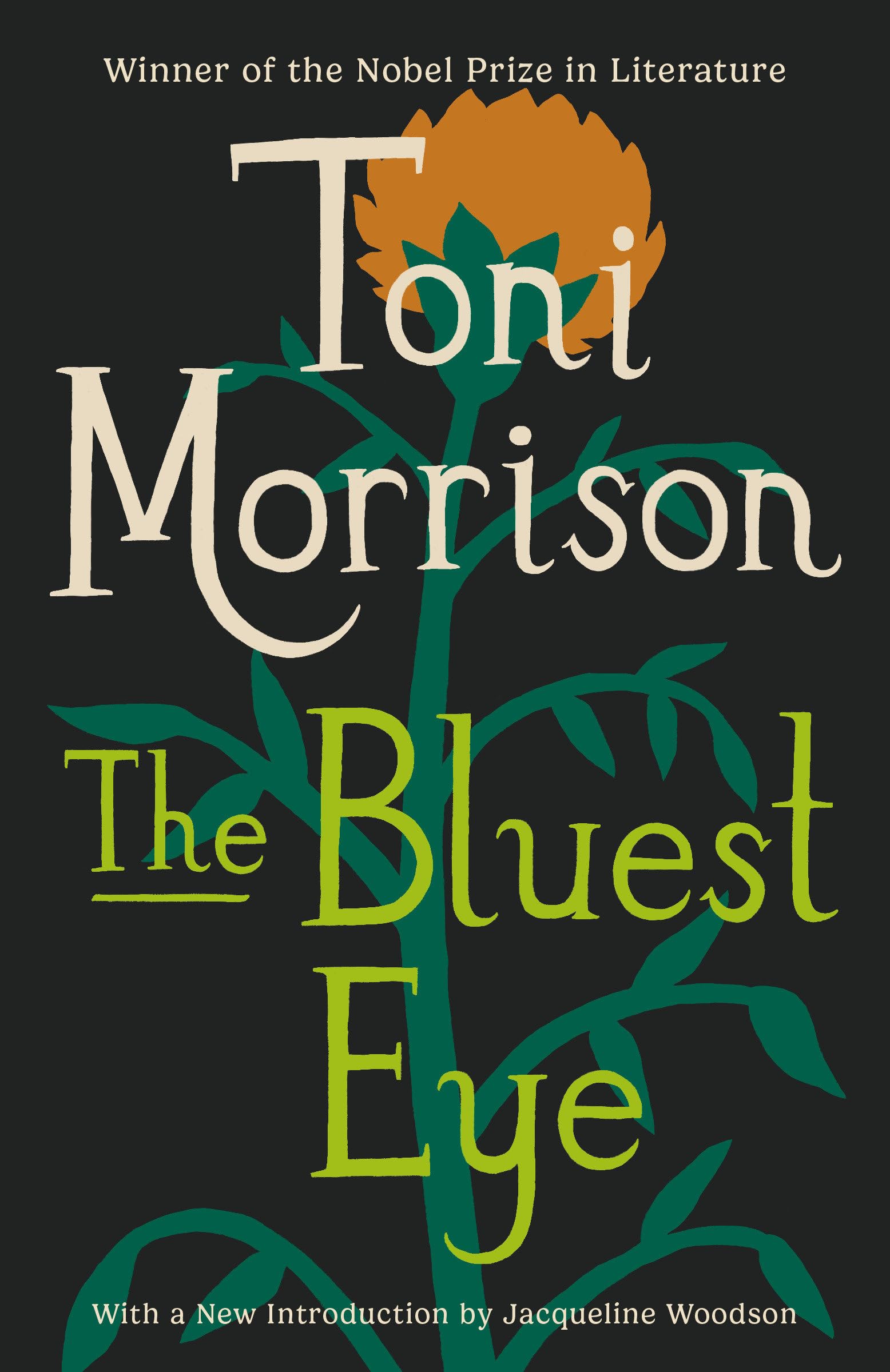
The Bluest Eye (Vintage International) [Morrison, Toni, Woodson, Jacqueline] on desertcart.com. *FREE* shipping on qualifying offers. The Bluest Eye (Vintage International) Review: A classic - The Bluest Eye is a classic for the powerful themes that continue to relate to society today. As Toni Morrison mentions in her foreword, we all know what it feels like to be disliked or rejected, be it for a moment or for a suspended period of time. Moving beyond this statement, we all know what it feels like to be dissatisfied with our appearance. Even if we are generally happy with how we look, there will be periods of time when we wish that we were "prettier." The media bombards with with images of the feminine (and masculine) ideal. Advertisements tell us how we can look sexier and be more confident (by buying their products). We are constantly told that we are not up to standard and ought to try harder to look like the ideal. The problem is that we can try our whole lives and never look like the "ideal." Toni Morrison's The Bluest Eye examines the intersectionality of race, class, gender, and age in the oppression of black people through beauty ideals and the pressure to conform to them. She does this through sketches in the lives of multiple characters of different backgrounds and across generations. Generally, I'm not very fond of novels that move around so much, as it makes it difficult to get to know any particular character, but this technique works for Morrison's novel. Rather than events moving the plot forward (like most novels), the plot takes us through the lives of different characters in order to show how the white beauty ideal influences black people of different temperaments, class, and circumstances . . . causing them to internalize racism. This does mean that there is a lot of narrating going on. At times, I even found it hard to focus on the page. For the most part, however, I felt that Morrison does a good job moving the plot forward. It definitely helps that her writing is strong and interesting with many, many beautiful, powerful lines that moved my heart. Once I started The Bluest Eye, I was reluctant to put down the novel for lengthy periods of time. Most importantly, these sketches show us how people come to be the people that they are today. Humans are not born to be terrible. The way our natures interact with the environment to which we are exposed shapes our character. There were characters who I disliked early in the book only to realize later that they were not such terrible beings. At least, not at first. Things happened, and maybe their response wasn't the healthiest, but they lived at some point in their lives. Until they internalized racism and began to believe that they deserved the bad things that happened to them. That people couldn't change. The most notable example of the influence of internalized racism is in the home of the Breedloves. Learning about the lives and thoughts of Mrs. and Mr. Breedlove helped me to better understand the environment in which Pecola grew up. Thinking about how Pecola and her brother's lives could have been different helped me to realize how oppression not only influences the people with whom it comes into immediate contact but also their children and the generations to come. (Compare the parenting Pecola receives to the parenting Claudia receives.) I also want to note how Morrison uses the Dick and Jane primer to emphasize the psychological element to oppression. The Dick and Jane primer portrays the ideal white family. The way its grammar and structure falls apart in the first pages of the novel reminds me of horror movies where a seemingly benign and pleasant scene falls apart to become something terrifying. In the same way, the lives of the black families, particularly that of the Breedloves, will upend in The Bluest Eye. The inclusion of distorted sections of the primer at the beginning of certain chapters foreshadows this. The Bluest Eye is haunting and beautiful. At the same time, it is terrible and brutal in its honest portrayal of the interlinking systems of oppression through race, class, gender, and age. There are explicit scenes of domestic violence, rape, and sex, as well as a pervasive sense of hopelessness. Nevertheless, there is life, love, and tenderness behind seemingly harsh acts. As Claudia says at the beginning of the novel, "since why is hard to handle, one must take refuge in how." Building upon this statement, if we can learn how things come to be, then we can learn how to ensure history does not repeat itself. We can learn how to keep future generations from sharing Pecola's end. Review: Well written social commentary about how we value others - This is the first novel I have read by Morrison, but I was aware of her iconic status as a writer before reading The Bluest Eye. Prior to reading this book, I read and was thoroughly impressed by “Red at the Bone” by Woodson. Woodson wrote that she was influenced and inspired by Morrison, which is primarily what led me to The Bluest Eye. Morrison’s legendary reputation is well earned. Her writing is superb and original. If someone gave me an excerpt written by Morrison, likely I could guess the author. Her writing is rich in description and raw truth. She does not placate or sugar coat. Morrison instead shocks and assaults the reader by shining a spotlight on the harsh truth. The Bluest Eye is uncomfortable, thought provoking and powerful. If you are considering reading The Bluest Eye, be aware there are some potentially triggering themes, including: incest, child molestation, one of the characters is a child predator, and some of the characters are sex workers. The major theme throughout the novel are the effects of pressure on women and young girls to conform to cultural and societal standards of beauty. Using a multi-generational storyline and a cast of female characters, Morrison challenges readers to think about where women get their sense of value and worth, and how that is impacted by the standards of beauty that are programmed into all of society. Morrison assumes the bitter truth that meeting societal standards of beauty results in better treatment and a higher social status. The story tackles how women’s lives are negatively affected if they cannot meet the beauty standard (such as having blue eyes, hence the novel’s title). In short, this novel offer rich social commentary about how we value people. I understand and agree wholeheartedly with the social commentary being made by Morrison. In summary, the story is about Pecola Breedlove, an 11-year-old black girl. Her mother, who she calls Mrs. Breedlove, works as a housekeeper and nanny for a wealthy white family. Her father, Cholly, is a drunk and does not work. The story begins and ends with Pecola, but Morrison gives extensive background on Pecola’s parents. Mrs. Breedlove was born and raised in the south and comes from a large family of origin. As a young woman, Mrs. Breedlove is a hard worker who cares for her family of origin despite it not being easy for her because she is born with a deformed foot. When she marries Pecola’s father and starts her own family, they move north. In her new community, Mrs. Breedlove feels isolated and alone. She is not accepted by the northern women who have different accents, clothes, and behavior expectations than where she came from in the south. When Mrs. Breedlove becomes pregnant with Sam, Pecola’s brother, during her pregnancy she loses two of her teeth. Once she loses her teeth, all hope of fitting in and belonging is lost to Mrs. Breedlove. In this pivotal event, she becomes resigned to the idea that she will never have friends. Mrs. Breedlove escapes into her work. Her only sense of belonging is with the family that pays her to clean their home and care for their daughter. There Mrs. Breedlove feels she has acceptance, appreciation, and control. In her own chaotic and unstable home, she feels out of control. In her employer’s home, she can adequately provide a safe, comfortable, organized, and orderly life. As a result, she comes to feel her own family and home are a nuisance to be endured, rather than a blessing. She sees her family as a burden and prefers caring for the white wealthy family’s home and daughter over her own home and children. Pecola’s father, Cholly Breedlove, had a traumatic childhood. His mother abandoned him on a trash heap when he was nine days old and likely was mentally ill. His father likely never knew about his existence, until Cholly seeks him out later when he’s a young adult, but his father summarily dismisses him with cursing. Spoiler alert - Cholly commits incest with Pecola while drunk and impregnates Pecola. With Pecola’s mother and father largely absent from her life and abusive when they are present, Pecola befriends and regularly visits sex workers that live nearby. They treat her to outings and food. The sex workers and some of her peers are her friends through whom she temporarily finds some comfort. However, through a mixture of media, friends, family, and cultural messaging Pecola is programmed to believe that she is “ugly.” She absorbs the cultural messaging that blue eyes are the prettiest eyes, and that hers do not meet the beauty standards. She learns to hate the way she looks. Woven throughout the story it is indicated how desperately Mrs. Breedlove and Pecola desire to possess the societal standard for physical beauty. Each are convinced it would change their lives if they could achieve having blue eyes and perfect teeth, for example. At one point, Pecola even approaches a former “Reverend “who is rumored to have a special connection with God, to request that she be given blue eyes. In what is arguably the weirdest scene in the book, the “Reverend” instead gives Pecola some poison, and tells her to feed it to a dog. When Pecola does this, the dog dies causing her even further trauma. Morrison does not spare Pecola and drives her point into readers until the end. Pecola eventually becomes unhinged and disengages from reality. Pecola’s former friends abandon her. She can no longer tell what is real and she creates a pretend friend who eventually abandons her too. Morrison is relentless in making her point and the tone of this novel is sad, hopeless, and desperate. She does not show her characters mercy in her pursuit to illustrate how the standards of beauty effect women and young girls. There are few redeeming characters, and no characters are spared the impact of the damage of not meeting societal beauty standards. Some characters that start out with some redeeming qualities are stripped of them by the end of the novel. This is not a light read but it is a literary wonder and may expose readers to new ways of seeing the world if they are brave enough to consider the raw perspectives of the characters.

| Best Sellers Rank | #905 in Books ( See Top 100 in Books ) #20 in Contemporary Literature & Fiction #33 in Coming of Age Fiction (Books) #129 in Literary Fiction (Books) |
| Customer Reviews | 4.5 4.5 out of 5 stars (17,659) |
| Dimensions | 8 x 5.25 x 0.8 inches |
| Edition | Reprint |
| ISBN-10 | 0307278441 |
| ISBN-13 | 978-0307278449 |
| Item Weight | 2.31 pounds |
| Language | English |
| Print length | 206 pages |
| Publication date | May 8, 2007 |
| Publisher | Vintage |
C**L
A classic
The Bluest Eye is a classic for the powerful themes that continue to relate to society today. As Toni Morrison mentions in her foreword, we all know what it feels like to be disliked or rejected, be it for a moment or for a suspended period of time. Moving beyond this statement, we all know what it feels like to be dissatisfied with our appearance. Even if we are generally happy with how we look, there will be periods of time when we wish that we were "prettier." The media bombards with with images of the feminine (and masculine) ideal. Advertisements tell us how we can look sexier and be more confident (by buying their products). We are constantly told that we are not up to standard and ought to try harder to look like the ideal. The problem is that we can try our whole lives and never look like the "ideal." Toni Morrison's The Bluest Eye examines the intersectionality of race, class, gender, and age in the oppression of black people through beauty ideals and the pressure to conform to them. She does this through sketches in the lives of multiple characters of different backgrounds and across generations. Generally, I'm not very fond of novels that move around so much, as it makes it difficult to get to know any particular character, but this technique works for Morrison's novel. Rather than events moving the plot forward (like most novels), the plot takes us through the lives of different characters in order to show how the white beauty ideal influences black people of different temperaments, class, and circumstances . . . causing them to internalize racism. This does mean that there is a lot of narrating going on. At times, I even found it hard to focus on the page. For the most part, however, I felt that Morrison does a good job moving the plot forward. It definitely helps that her writing is strong and interesting with many, many beautiful, powerful lines that moved my heart. Once I started The Bluest Eye, I was reluctant to put down the novel for lengthy periods of time. Most importantly, these sketches show us how people come to be the people that they are today. Humans are not born to be terrible. The way our natures interact with the environment to which we are exposed shapes our character. There were characters who I disliked early in the book only to realize later that they were not such terrible beings. At least, not at first. Things happened, and maybe their response wasn't the healthiest, but they lived at some point in their lives. Until they internalized racism and began to believe that they deserved the bad things that happened to them. That people couldn't change. The most notable example of the influence of internalized racism is in the home of the Breedloves. Learning about the lives and thoughts of Mrs. and Mr. Breedlove helped me to better understand the environment in which Pecola grew up. Thinking about how Pecola and her brother's lives could have been different helped me to realize how oppression not only influences the people with whom it comes into immediate contact but also their children and the generations to come. (Compare the parenting Pecola receives to the parenting Claudia receives.) I also want to note how Morrison uses the Dick and Jane primer to emphasize the psychological element to oppression. The Dick and Jane primer portrays the ideal white family. The way its grammar and structure falls apart in the first pages of the novel reminds me of horror movies where a seemingly benign and pleasant scene falls apart to become something terrifying. In the same way, the lives of the black families, particularly that of the Breedloves, will upend in The Bluest Eye. The inclusion of distorted sections of the primer at the beginning of certain chapters foreshadows this. The Bluest Eye is haunting and beautiful. At the same time, it is terrible and brutal in its honest portrayal of the interlinking systems of oppression through race, class, gender, and age. There are explicit scenes of domestic violence, rape, and sex, as well as a pervasive sense of hopelessness. Nevertheless, there is life, love, and tenderness behind seemingly harsh acts. As Claudia says at the beginning of the novel, "since why is hard to handle, one must take refuge in how." Building upon this statement, if we can learn how things come to be, then we can learn how to ensure history does not repeat itself. We can learn how to keep future generations from sharing Pecola's end.
K**Y
Well written social commentary about how we value others
This is the first novel I have read by Morrison, but I was aware of her iconic status as a writer before reading The Bluest Eye. Prior to reading this book, I read and was thoroughly impressed by “Red at the Bone” by Woodson. Woodson wrote that she was influenced and inspired by Morrison, which is primarily what led me to The Bluest Eye. Morrison’s legendary reputation is well earned. Her writing is superb and original. If someone gave me an excerpt written by Morrison, likely I could guess the author. Her writing is rich in description and raw truth. She does not placate or sugar coat. Morrison instead shocks and assaults the reader by shining a spotlight on the harsh truth. The Bluest Eye is uncomfortable, thought provoking and powerful. If you are considering reading The Bluest Eye, be aware there are some potentially triggering themes, including: incest, child molestation, one of the characters is a child predator, and some of the characters are sex workers. The major theme throughout the novel are the effects of pressure on women and young girls to conform to cultural and societal standards of beauty. Using a multi-generational storyline and a cast of female characters, Morrison challenges readers to think about where women get their sense of value and worth, and how that is impacted by the standards of beauty that are programmed into all of society. Morrison assumes the bitter truth that meeting societal standards of beauty results in better treatment and a higher social status. The story tackles how women’s lives are negatively affected if they cannot meet the beauty standard (such as having blue eyes, hence the novel’s title). In short, this novel offer rich social commentary about how we value people. I understand and agree wholeheartedly with the social commentary being made by Morrison. In summary, the story is about Pecola Breedlove, an 11-year-old black girl. Her mother, who she calls Mrs. Breedlove, works as a housekeeper and nanny for a wealthy white family. Her father, Cholly, is a drunk and does not work. The story begins and ends with Pecola, but Morrison gives extensive background on Pecola’s parents. Mrs. Breedlove was born and raised in the south and comes from a large family of origin. As a young woman, Mrs. Breedlove is a hard worker who cares for her family of origin despite it not being easy for her because she is born with a deformed foot. When she marries Pecola’s father and starts her own family, they move north. In her new community, Mrs. Breedlove feels isolated and alone. She is not accepted by the northern women who have different accents, clothes, and behavior expectations than where she came from in the south. When Mrs. Breedlove becomes pregnant with Sam, Pecola’s brother, during her pregnancy she loses two of her teeth. Once she loses her teeth, all hope of fitting in and belonging is lost to Mrs. Breedlove. In this pivotal event, she becomes resigned to the idea that she will never have friends. Mrs. Breedlove escapes into her work. Her only sense of belonging is with the family that pays her to clean their home and care for their daughter. There Mrs. Breedlove feels she has acceptance, appreciation, and control. In her own chaotic and unstable home, she feels out of control. In her employer’s home, she can adequately provide a safe, comfortable, organized, and orderly life. As a result, she comes to feel her own family and home are a nuisance to be endured, rather than a blessing. She sees her family as a burden and prefers caring for the white wealthy family’s home and daughter over her own home and children. Pecola’s father, Cholly Breedlove, had a traumatic childhood. His mother abandoned him on a trash heap when he was nine days old and likely was mentally ill. His father likely never knew about his existence, until Cholly seeks him out later when he’s a young adult, but his father summarily dismisses him with cursing. Spoiler alert - Cholly commits incest with Pecola while drunk and impregnates Pecola. With Pecola’s mother and father largely absent from her life and abusive when they are present, Pecola befriends and regularly visits sex workers that live nearby. They treat her to outings and food. The sex workers and some of her peers are her friends through whom she temporarily finds some comfort. However, through a mixture of media, friends, family, and cultural messaging Pecola is programmed to believe that she is “ugly.” She absorbs the cultural messaging that blue eyes are the prettiest eyes, and that hers do not meet the beauty standards. She learns to hate the way she looks. Woven throughout the story it is indicated how desperately Mrs. Breedlove and Pecola desire to possess the societal standard for physical beauty. Each are convinced it would change their lives if they could achieve having blue eyes and perfect teeth, for example. At one point, Pecola even approaches a former “Reverend “who is rumored to have a special connection with God, to request that she be given blue eyes. In what is arguably the weirdest scene in the book, the “Reverend” instead gives Pecola some poison, and tells her to feed it to a dog. When Pecola does this, the dog dies causing her even further trauma. Morrison does not spare Pecola and drives her point into readers until the end. Pecola eventually becomes unhinged and disengages from reality. Pecola’s former friends abandon her. She can no longer tell what is real and she creates a pretend friend who eventually abandons her too. Morrison is relentless in making her point and the tone of this novel is sad, hopeless, and desperate. She does not show her characters mercy in her pursuit to illustrate how the standards of beauty effect women and young girls. There are few redeeming characters, and no characters are spared the impact of the damage of not meeting societal beauty standards. Some characters that start out with some redeeming qualities are stripped of them by the end of the novel. This is not a light read but it is a literary wonder and may expose readers to new ways of seeing the world if they are brave enough to consider the raw perspectives of the characters.
J**O
dramático e pungente
J**E
I read this book because it was banned. I was looking to see why it was given that sentence. What I found was a story that reflected something that was neither black or white but struggle in an awful world. As white man I feel shame as what men do to women and we hold the colour of our skin over others as if we somehow should be elevated over them. We are all humans and should act that way! The Bluest Eye should be read by everyone. You will learn the power of words.
F**A
Non semplice da apprezzare. Studiarlo per un esame di letteratura l’ha reso più fruibile e alla fine mi è piaciuto molto. Consigliato.
S**R
Synopsis: Nine-year-old Claudia lives with her parents and her ten-year-old sister. In her nine-year-old narrative, she remembers Pecola who was placed with them by child care services. Pecola, who becomes a woman from a ten-year-old girl while she lives with them. Pecola's life with her family is shown next, where her brand of life makes her wish that she had the bluest eye thinking that it may have made her more loveable and more acceptable. But life is not that simple, as there are more hardships in the life of that little girl with unimaginable consequences. Review: This is my second Morrison and it doesn't get any easier. But in this case, the first book written by her, the difficult thing was to read it without it devastating me. There's this sense of impending doom even with the little bit of innocence that there is. This one starts with a description of a family, in the midst of war and depression in the 1940s, and its way of narration reminded me of this (which seems quite silly now) children's song in Hindi - Aao Milo Seelo Saalo. We used to clap animatedly, after pairing up with another person, while reciting the rhyme in a complete sing-song voice. Of course, this is a story narrated by a nine-year-old child which at once drips with innocence while carrying a vat of pain. The beginning itself will numb you because it's evident that this story is going to be full of agony. But it is equally interesting to note how such a complex, 'grown-up' story was narrated in part by such a young child. Especially when we often refuse to believe them to be worldly-wise and aware, to the extent of having banned the book then, in schools and libraries. "Jealousy we understood and thought natural – a desire to have what somebody else had; but envy was a strange, new feeling for us." What is beauty? Most of us, in one way or other, can be accused of defining beauty through unnatural standards. I share the blame for being harsh on not only others but myself. And however much we speak about inner beauty is the only thing that matters, some of us also have tried the rub-de-dub once in a while, for that glowing, fairer skin. An unnecessary legacy that resurfaces in almost all the dark-skinned Indian households every once in a while. Was that magical realism when Pecola wished for herself to disappear? How sad I felt for her, even before her major problems began. To be living with constantly feuding parents, to be wishing for death. Either for self or the others. And to feel such an inadequacy that she ended up wanting blue eyes, it was all so heart-breaking. "All were engrossed in early-night reminiscences about dreams, figures, premonitions. Their stuffed comfort was narcotic and had produced recollections and fabrications of hallucinations." Pecola's experience with the White Mr Yacobowski reminded me of Untouchable by Mulk Raj Anand. Quite the same premise, where shame at being less than deserving morphs into anger for the inequality that is there in the world. I was astounded at the way Morrison not only wrote about Pecola's inferiority complex of being an African-American in a White community but also inserted internalised racism in the form of a mixed-race girl and how a scale is brought out to measure who is lighter in the skin and prettier than whom. The overbearing – will do what I want to, others (especially women) be damned – men of this story need to be mentioned too. Pecola's father's childhood doesn't let me hate him, while his deeds do not make me like him! This was a female-dominated story, with a major chunk of the characters being female, especially the three prostitutes who are a major part of the story even after them not being one of the central characters. But will I call it a feminist story? I honestly don't know, since this is such a sad story where women don't seem to understand the plight of a young girl, where apart from men, women are also bringing down others of their kind, be it conditioning or judgement. "He responded to his father's controlled violence by developing hard habits and a soft imagination." Divided into four parts, each a season, the squalor in which them Black people live is described in stark detail. While it is Pecola's story, the weight of the narration falls on young Claudia's shoulders which she does in the first-person. But, interspersed is Cholly (Charlie) and Polly (Pauline) Breedlove's story in third-person narration. (I wonder as to the significance behind their names?) It is followed by a dialogue at the end, the same dialogue that wrecked me. "We looked for eyes creased with concern, but saw only veil." Maybe Sula wasn't it for me since The Bluest Eye hit me right where it hurt. I remember Baishakhi's @thebooklizz Instagram Post where she mentions feeling unsettled after reading a Morrison. That is what I felt too, after reading this one. It made me uncomfortable with its truth. P.S. I read this book as a part of Toni Morrison Book Club by Aayushi @_penandpapers, where we pick up one book by the author every month. This was the February pick. This is also my entry for Prompt 18 of the Reading Women Challenge 2018: A Book by a female Nobel Prize winner. Originally posted on: My Blog @ Shaina's Musings
W**.
I had always wanted to read Toni so I thought I'd begin with her debut novel and was blown away. It is an original story that's insightful, intimate, powerful, tragic but also achingly beautiful.
Trustpilot
3 days ago
2 weeks ago