We remain fully operational. Our teams are working around the clock to ensure your deliveries continue safely.

DOWNLOAD THE APP


Customer Services
Copyright © 2025 Desertcart Holdings Limited
DOWNLOAD THE APP
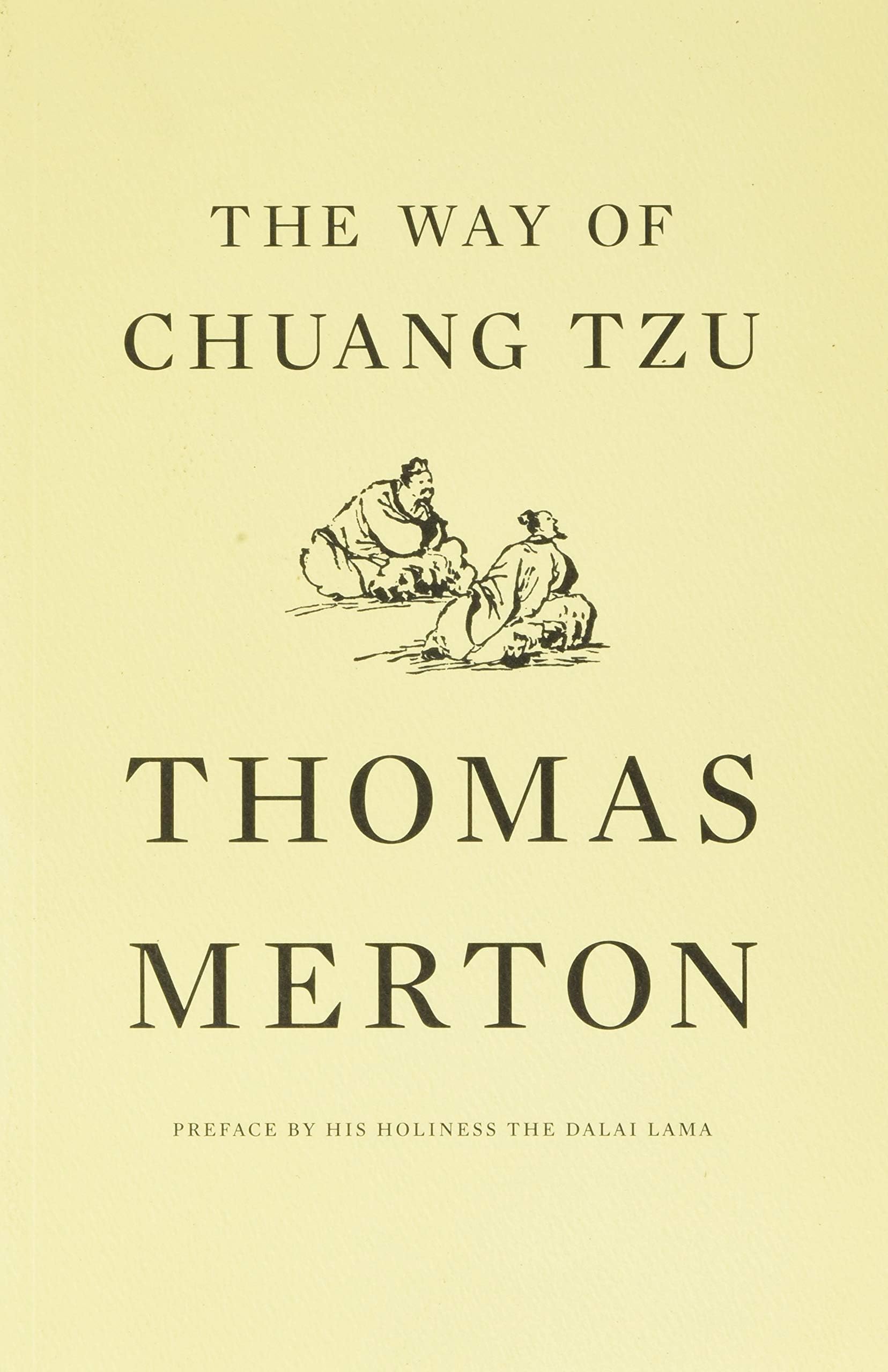

The Way of Chuang Tzu [Merton, Thomas, Dalai Lama XIV] on desertcart.com. *FREE* shipping on qualifying offers. The Way of Chuang Tzu Review: An Important Ecumenical Work - The Way of Chuang Tzu, by Thomas Merton, is the product of five years of immersion, study, prayer, and reflection on the work of Zhuangzi, one of the towering figures in Chinese Taoism (Daojia) who lived sometime between the Fourth and Third Century BC. According to Merton, the notes based on his meditative readings, "have acquired a shape of their own and have become, as it were, 'imitations' of Chuang Tzu." Merton goes on to describe these imitations as personal spiritual interpretations and should not be mistaken for scholarship. What evolves then becomes a multi-layered tapestry of the poetic, intuitive, provocative, and complex. Merton has found a kindred spirit in Chuang Tzu, and there is little doubt that Merton and Master Chuang share a viewpoint of life that may be common to many monastics across a broad spectrum of religious and philosophical disciplines. This kinship needs no justification by Merton, a towering figure of Twentieth Century Catholicism in his own right; and Merton goes on to say that he "may be pardoned for consorting with a Chinese recluse who shares the climate and peace of my own kind of solitude, and who is my own kind of person." To attempt an understanding of Chuang Tzu, it is essential to understand the world in which he lived. Confucianism was the dominant Chinese philosophy of Chuang Tzu's time; and while Chuang Tzu often ridiculed Confucianism as too restrictive, it would be too simplistic to state that Taoism stood in direct contrast to Confucianism. According to Merton, "if Chuang Tzu reacted against the Ju doctrine [of Confucianism], it was not in the name of something lower-the animal spontaneity of the individual who does not want to be bothered with a lot of tiresome duties-but in the name of something altogether higher. This is the most important fact to remember when we westerners confront the seeming antinomianism of Chuang Tzu or of the Zen masters." While Confucius could advocate for Tao, Chuang Tzu believed that he was not referring to what he believed was the "great Tao" which is invisible and incomprehensible-the Eternal Tao. For Chuang Tzu, the Eternal Tao was the source of all things. Chuang Tzu critiqued Confucius because he refused to focus his teachings on the Eternal Tao simply because it was unknowable. According to Chuang Tzu, only when one was connected in some way to the Eternal Tao (a connection beyond both words and silence), could one truly begin to understand how to live. Merton interprets Confucian understanding of Tao to be an "ethical Tao" or a "Tao of man," and he equates this understanding to be on par with the Christian interpretation of the Golden Rule. Merton concludes that this interpretation of Tao is not the Eternal Tao that Chuang Tzu espouses. Chuang Tzu eventually discarded this Confucian interpretation as illusory; where everything is distilled and categorized into a universal ethic of Tao (The Tao of Fatherhood is given as an example). Merton brilliantly synthesizes Chuang Tzu's critique of the Confucian ethic of the "Superior Man" with the example of the heroic and the virtuous public servant by explaining that even the good and the noble person: Engages in a self-conscious and deliberate campaign to 'do his duty' in the belief that this is right and therefore productive of happiness. He sees 'happiness' and 'the good' as 'something to be attained,' and thus he places them outside himself in the world of objects. In so doing, he becomes involved in a division from which there is no escape: between the present, in which he is not yet in possession of what he seeks, and the future in which he thinks he will have what he desires... Chuang Tzu believed that abstractions such as "happiness," "virtue," and "justice" were concepts placed into the world of objects to be attained, and should be considered ambiguous at best, dangerous at worst. Here he means that whatever one considers good (the good) to be attained (as outside of one's self), the more the good becomes abstracted and unattainable. Instead, Chuang Tzu advocated Wu Wei, or non-action. According to Chuang Tzu, Wu Wei is not concerned with conscious planning; in fact self-conscious action of any type is restrictive and stands opposed to the Eternal Tao. When you are in harmony with the Eternal Tao, right action, virtue, and good, which always manifest at the appropriate time without self-conscious deliberation, will intuitively become known to you, and you will act with Tao in full freedom. This concept of Wu Wei is reminiscent of the Gospel passage from Saint Matthew, "Then Jesus said to his disciples, "Whoever wants to be my disciple must deny themselves and take up their cross and follow me (MT 16:24)." Dying to one's self or dying to one's self-consciousness is essential. Similarly, Saint Paul echoes this theme in Galatians 2:20 when he says, "I have been crucified with Christ and I no longer live, but Christ lives in me." It is not difficult to imagine the phrase sounding like this: I no longer live, but Tao (the Eternal Tao) lives in me. Here is where I believe Merton finds a kindred spirit in Chuang Tzu. Merton recognizes that Chuang Tzu is actually moving into an area of mysticism which goes beyond mere object good, into metaphysical truth. He does not disdain virtue, good, happiness etc...He transcends them. I like that Merton recognizes in Chuang Tzu a man who challenges Merton's own vocation to solitude and contemplation, and I admire Merton all the more for confronting Chuang Tzu's critiques of contemplation and the interior life by deeply connecting his monasticism with Tao. "The true tranquility sought by the 'man of tao' is Ying ning, tranquility in the action of non-action, in other words, a tranquility which transcends the division between activity and contemplation by entering into union with the nameless and invisible Tao." I believe Merton equates this with divine union. Finally, it is critical to understand that for Chuang Tzu, Tao is found everywhere; in the same way that Christians believe that God is both omnipresent and omniscient (Proverbs 15:3 The eyes of the Lord are everywhere, keeping watch on the wicked and the good). Merton connected to this abstraction personally. In living out Wu Wei, Chuang Tzu advocated a non-action that was in complete harmony with Tao-in other words-perfect action. Merton described this as "action not carried out independently of Heaven and earth...in perfect harmony with the whole. It is not mere passivity, but it is action that seems both effortless and spontaneous because performed "rightly," in perfect accordance with our nature and with our place in the scheme of things. It is completely free because there is in it no force and no violence. It is not "conditioned" or "limited" by our own individual needs and desires, or even by our own theories and ideas." Today, when I read John 17:21, "that all of them may be one, Father, just as you are in me and I am in you. May they also be in us so that the world may believe that you have sent me," it is not difficult to think that Thomas Merton, perhaps more than any Catholic during the last century, truly recognized the common spiritual unity (the oneness of each other's souls as grounded in the Triune-One) we all share as brothers and sisters in this world. Reading The Way of Chuang Tzu, truly contemplating Merton’s interpretive message which is rooted in his own Christology, and then living it out through Chuang Tzu's idea of non-action, becomes a great way to continue the wonderful ecumenical work Merton engaged in so selflessly when he recognized how interconnected he was with his brother Chuang Tzu, and how God (Eternal Tao) ultimately connects all of us together in the oneness of mystery and truth. Review: This book is an excellent starting place in the study of the early writings ... - This book is an excellent starting place in the study of the early writings of the Tao. I have a lot of different translations of the works of Chuang Zi. None of them are exactly like the others. Translating from ancient Chinese must be a real challenge since all of them are quite different . Most of them however get the gist of the subject. Merton may get it more than many who try to translate word for word. This is a transliteration of Chuang's work. Kind of like Edward FitzGerald's transliteration of Omar khayyam's Rubaiyat. FitzGerald didn't translate Khayyam's work. But he did a truly remarkable job of getting the meaning of several of Khayyam's quatrains. And this is a remarkable book in the very same manner. I always have an extra or two on hand to give away to people who might get something from it. I've given away more than 50 to date. I think that much of it. Yes, Merton does see the Tao through Christian eyes but I allow for this and translate it back to the Tao in my head. Or, at least, my image of the Tao which, by definition, must be imperfect. But, as I said, I've read (and re-read) several translations of the Chuang Tzu, the Lieh Tzu, the Tao Te Ching, the Analects, the Doctrine Of The Mean, the Han Fei Tzu, the I Ching, and several other early works of the Tao, the Chan, and Zen, All of which come directly from these books. And Merton gets it. He doesn't get it all. Or, maybe, he doesn't present it all here, I can’t actually speak to what Merton gets or doesn’t get. But this book is an excellent starting place in the study of the early writings of the Tao. It's easy to read and easy to comprehend, but there is a lot in it. Every time you read it you will get something new out of it. Like most beginnings it can be re-examined and studied at most places along the way and It never fails to offer a good foundation. If you don't start here, it offers an alternative foundation that will, at least, be interesting. You can do a lot worse than buy this book. Reading it until you get all the meaning out of it will reward you greatly. Have fun. It’s worth it. [You will notice this book has only 1 (at this time of this review) negative review. I think that review speaks for itself. But like most of his ilk he seems uncomfortable with the English language and it’s uses, and sees conspiracy everywhere because he understands nothing. ‘Nuff said ‘bout this.]
| ASIN | 0811218511 |
| Best Sellers Rank | #85,921 in Books ( See Top 100 in Books ) #16 in Taoist Philosophy #18 in Taoism (Books) #40 in Zen Philosophy (Books) |
| Customer Reviews | 4.6 4.6 out of 5 stars (814) |
| Dimensions | 5.2 x 0.5 x 8 inches |
| Edition | Second |
| ISBN-10 | 9780811218511 |
| ISBN-13 | 978-0811218511 |
| Item Weight | 2.31 pounds |
| Language | English |
| Print length | 160 pages |
| Publication date | March 30, 2010 |
| Publisher | New Directions |
L**R
An Important Ecumenical Work
The Way of Chuang Tzu, by Thomas Merton, is the product of five years of immersion, study, prayer, and reflection on the work of Zhuangzi, one of the towering figures in Chinese Taoism (Daojia) who lived sometime between the Fourth and Third Century BC. According to Merton, the notes based on his meditative readings, "have acquired a shape of their own and have become, as it were, 'imitations' of Chuang Tzu." Merton goes on to describe these imitations as personal spiritual interpretations and should not be mistaken for scholarship. What evolves then becomes a multi-layered tapestry of the poetic, intuitive, provocative, and complex. Merton has found a kindred spirit in Chuang Tzu, and there is little doubt that Merton and Master Chuang share a viewpoint of life that may be common to many monastics across a broad spectrum of religious and philosophical disciplines. This kinship needs no justification by Merton, a towering figure of Twentieth Century Catholicism in his own right; and Merton goes on to say that he "may be pardoned for consorting with a Chinese recluse who shares the climate and peace of my own kind of solitude, and who is my own kind of person." To attempt an understanding of Chuang Tzu, it is essential to understand the world in which he lived. Confucianism was the dominant Chinese philosophy of Chuang Tzu's time; and while Chuang Tzu often ridiculed Confucianism as too restrictive, it would be too simplistic to state that Taoism stood in direct contrast to Confucianism. According to Merton, "if Chuang Tzu reacted against the Ju doctrine [of Confucianism], it was not in the name of something lower-the animal spontaneity of the individual who does not want to be bothered with a lot of tiresome duties-but in the name of something altogether higher. This is the most important fact to remember when we westerners confront the seeming antinomianism of Chuang Tzu or of the Zen masters." While Confucius could advocate for Tao, Chuang Tzu believed that he was not referring to what he believed was the "great Tao" which is invisible and incomprehensible-the Eternal Tao. For Chuang Tzu, the Eternal Tao was the source of all things. Chuang Tzu critiqued Confucius because he refused to focus his teachings on the Eternal Tao simply because it was unknowable. According to Chuang Tzu, only when one was connected in some way to the Eternal Tao (a connection beyond both words and silence), could one truly begin to understand how to live. Merton interprets Confucian understanding of Tao to be an "ethical Tao" or a "Tao of man," and he equates this understanding to be on par with the Christian interpretation of the Golden Rule. Merton concludes that this interpretation of Tao is not the Eternal Tao that Chuang Tzu espouses. Chuang Tzu eventually discarded this Confucian interpretation as illusory; where everything is distilled and categorized into a universal ethic of Tao (The Tao of Fatherhood is given as an example). Merton brilliantly synthesizes Chuang Tzu's critique of the Confucian ethic of the "Superior Man" with the example of the heroic and the virtuous public servant by explaining that even the good and the noble person: Engages in a self-conscious and deliberate campaign to 'do his duty' in the belief that this is right and therefore productive of happiness. He sees 'happiness' and 'the good' as 'something to be attained,' and thus he places them outside himself in the world of objects. In so doing, he becomes involved in a division from which there is no escape: between the present, in which he is not yet in possession of what he seeks, and the future in which he thinks he will have what he desires... Chuang Tzu believed that abstractions such as "happiness," "virtue," and "justice" were concepts placed into the world of objects to be attained, and should be considered ambiguous at best, dangerous at worst. Here he means that whatever one considers good (the good) to be attained (as outside of one's self), the more the good becomes abstracted and unattainable. Instead, Chuang Tzu advocated Wu Wei, or non-action. According to Chuang Tzu, Wu Wei is not concerned with conscious planning; in fact self-conscious action of any type is restrictive and stands opposed to the Eternal Tao. When you are in harmony with the Eternal Tao, right action, virtue, and good, which always manifest at the appropriate time without self-conscious deliberation, will intuitively become known to you, and you will act with Tao in full freedom. This concept of Wu Wei is reminiscent of the Gospel passage from Saint Matthew, "Then Jesus said to his disciples, "Whoever wants to be my disciple must deny themselves and take up their cross and follow me (MT 16:24)." Dying to one's self or dying to one's self-consciousness is essential. Similarly, Saint Paul echoes this theme in Galatians 2:20 when he says, "I have been crucified with Christ and I no longer live, but Christ lives in me." It is not difficult to imagine the phrase sounding like this: I no longer live, but Tao (the Eternal Tao) lives in me. Here is where I believe Merton finds a kindred spirit in Chuang Tzu. Merton recognizes that Chuang Tzu is actually moving into an area of mysticism which goes beyond mere object good, into metaphysical truth. He does not disdain virtue, good, happiness etc...He transcends them. I like that Merton recognizes in Chuang Tzu a man who challenges Merton's own vocation to solitude and contemplation, and I admire Merton all the more for confronting Chuang Tzu's critiques of contemplation and the interior life by deeply connecting his monasticism with Tao. "The true tranquility sought by the 'man of tao' is Ying ning, tranquility in the action of non-action, in other words, a tranquility which transcends the division between activity and contemplation by entering into union with the nameless and invisible Tao." I believe Merton equates this with divine union. Finally, it is critical to understand that for Chuang Tzu, Tao is found everywhere; in the same way that Christians believe that God is both omnipresent and omniscient (Proverbs 15:3 The eyes of the Lord are everywhere, keeping watch on the wicked and the good). Merton connected to this abstraction personally. In living out Wu Wei, Chuang Tzu advocated a non-action that was in complete harmony with Tao-in other words-perfect action. Merton described this as "action not carried out independently of Heaven and earth...in perfect harmony with the whole. It is not mere passivity, but it is action that seems both effortless and spontaneous because performed "rightly," in perfect accordance with our nature and with our place in the scheme of things. It is completely free because there is in it no force and no violence. It is not "conditioned" or "limited" by our own individual needs and desires, or even by our own theories and ideas." Today, when I read John 17:21, "that all of them may be one, Father, just as you are in me and I am in you. May they also be in us so that the world may believe that you have sent me," it is not difficult to think that Thomas Merton, perhaps more than any Catholic during the last century, truly recognized the common spiritual unity (the oneness of each other's souls as grounded in the Triune-One) we all share as brothers and sisters in this world. Reading The Way of Chuang Tzu, truly contemplating Merton’s interpretive message which is rooted in his own Christology, and then living it out through Chuang Tzu's idea of non-action, becomes a great way to continue the wonderful ecumenical work Merton engaged in so selflessly when he recognized how interconnected he was with his brother Chuang Tzu, and how God (Eternal Tao) ultimately connects all of us together in the oneness of mystery and truth.
B**E
This book is an excellent starting place in the study of the early writings ...
This book is an excellent starting place in the study of the early writings of the Tao. I have a lot of different translations of the works of Chuang Zi. None of them are exactly like the others. Translating from ancient Chinese must be a real challenge since all of them are quite different . Most of them however get the gist of the subject. Merton may get it more than many who try to translate word for word. This is a transliteration of Chuang's work. Kind of like Edward FitzGerald's transliteration of Omar khayyam's Rubaiyat. FitzGerald didn't translate Khayyam's work. But he did a truly remarkable job of getting the meaning of several of Khayyam's quatrains. And this is a remarkable book in the very same manner. I always have an extra or two on hand to give away to people who might get something from it. I've given away more than 50 to date. I think that much of it. Yes, Merton does see the Tao through Christian eyes but I allow for this and translate it back to the Tao in my head. Or, at least, my image of the Tao which, by definition, must be imperfect. But, as I said, I've read (and re-read) several translations of the Chuang Tzu, the Lieh Tzu, the Tao Te Ching, the Analects, the Doctrine Of The Mean, the Han Fei Tzu, the I Ching, and several other early works of the Tao, the Chan, and Zen, All of which come directly from these books. And Merton gets it. He doesn't get it all. Or, maybe, he doesn't present it all here, I can’t actually speak to what Merton gets or doesn’t get. But this book is an excellent starting place in the study of the early writings of the Tao. It's easy to read and easy to comprehend, but there is a lot in it. Every time you read it you will get something new out of it. Like most beginnings it can be re-examined and studied at most places along the way and It never fails to offer a good foundation. If you don't start here, it offers an alternative foundation that will, at least, be interesting. You can do a lot worse than buy this book. Reading it until you get all the meaning out of it will reward you greatly. Have fun. It’s worth it. [You will notice this book has only 1 (at this time of this review) negative review. I think that review speaks for itself. But like most of his ilk he seems uncomfortable with the English language and it’s uses, and sees conspiracy everywhere because he understands nothing. ‘Nuff said ‘bout this.]
D**G
A Clasisic on this Way of Thought
At first I had a bit of a problem getting into some of the ideas in the book. I was not familiar with this way of thinking. But I wanted to learned more about Tao and Thomas Merton. Once I got through the first part of the book, the rest was much easier to grasp. It is a classic piece if Spiritual literature and I am glad I read it.
P**E
Joya de taoísmo
T**K
good
C**N
no se como esta,yo no se ingles.compre el mismo en español,estos libros orientales son supercomplicados de leer,lo dice todo el mundo, a lo mejor es porque yo soy europeo,es otra mentalidad.
A**R
Bought to replace a mislaid version. These are Merton's versions of what are in effect Taoist parables. MMMakes you think.. Amazon delivered in a paper bag which was chucked over my gate in the rain. The book is therefore warped with water damage. Chuang Tzu would probably have written about this if he'd known.
M**N
Lovely texts of taoist philosophie, entertaining and poetic. The author made a wonderfull job of taught reconstruction here and made this text very accessible.
Trustpilot
5 days ago
1 month ago