
Buy anything from 5,000+ international stores. One checkout price. No surprise fees. Join 2M+ shoppers on Desertcart.
Desertcart purchases this item on your behalf and handles shipping, customs, and support to Nicaragua.
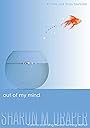
A New York Times bestseller for three years and counting! “A gutsy, candid, and compelling story. It speaks volumes.” —School Library Journal (starred review) “Unflinching and realistic.” —Kirkus Reviews (starred review) From award-winning author Sharon Draper comes a story that will forever change how we all look at anyone with a disability, perfect for fans of RJ Palacio’s Wonder.Eleven-year-old Melody is not like most people. She can’t walk. She can’t talk. She can’t write. All because she has cerebral palsy. But she also has a photographic memory; she can remember every detail of everything she has ever experienced. She’s the smartest kid in her whole school, but NO ONE knows it. Most people—her teachers, her doctors, her classmates—dismiss her as mentally challenged because she can’t tell them otherwise. But Melody refuses to be defined by her disability. And she’s determined to let everyone know it…somehow. Review: Sad, interesting & educative - Out of My Mind is the story of a pre-teen girl, Melody. It is a first-person narrative mostly about what's going on inside her mind, hence the name. Melody was born with cerebral palsy. She cannot stand. When she sits, she has to be strapped to her chair to prevent her from tumbling down. She has problems chewing and swallowing food or even drinking water. And she cannot speak. When she tries to talk, “the words explode in her brain, but all that comes out are meaningless sounds and squeaks.” But Melody’s brain has developed normally. In fact, her intelligence is well above average and she is always eager to learn. She is also blessed with a photographic memory. Her most painful problem is that she has no way of communicating her knowledge, thoughts or emotions to anyone. As she writes, “I can say “uh” and “ah” pretty clearly, and, if I concentrate, sometimes I can squeeze out a “buh” or a “huh.” But that’s it.” Very few things can be more frustrating than this inability to express or communicate. But even her frustration she cannot express! When I read some of her passages describing how she needed to communicate but even someone like her mother who was one person who came closest to understanding her, would often fail to understand, I was reminded of a poem- The Eve of St Agnes by John Keats in which he wrote: “No uttered syllable, or, woe betide! But to her heart, her heart was voluble, Paining with eloquence her balmy side; As though a tongueless nightingale should swell Her throat in vain, and die, heart-stifled, in her dell.” When Melody’s helplessness overwhelms her, her arms and legs get all tight and “lash out like tree limbs in a storm.” She begins to screech and scream and jerk. She writes: “These things—I call them my “tornado explosions”—are pieces of me. All the stuff that does not work gets balled up and hyped up. I can’t stop, even though I want to, even though I know I’m freaking people out. I lose myself. It can get kinda ugly.” Melody does go to school. But there is a class for special needs children and she sits there. Feeling miserable because often she is treated as an imbecile because she drools, needs to be taken to the toilet by an attendant and doesn’t speak or even raise her hand. A teacher joins the school who introduces the concept of “inclusive periods” where for some sessions she sits in the same class as normal needs children. That is not an unmixed blessing either. As Melody writes, “But “inclusion” doesn’t mean I’m included in everything. I usually sit in the back of the room, going crazy because I know answers to things and can’t tell anybody. “What’s the definition of the word ‘dignity’?” one of my teachers asked a few days ago. Of course I knew, so I raised my hand, but the teacher didn’t notice the small movement I’m able to make. And even if she were to call on me, what then? I can’t very well yell out the answers. It’s really frustrating.” Because Melody does not speak, others just presume that she has nothing to say. As her classmate Claire once said, “I’m not trying to be mean—honest—but it just never occurred to me that Melody had thoughts in her head.” Many of us would have come across special needs people. While we do feel sympathy for them, I realised after reading this book that what such people need most is not our sympathy or even kindness; they need to be treated as just another person. As Melody’s mother once says, “A person is so much more than the name of a diagnosis on a chart!” No person’s illness should be treated as her identity. It’s a sad story but the book is very readable and also very educative. Review: Great book about a girl (NO SPOILERS!). - The story was very nice and heart-warming


| Best Sellers Rank | #20,140 in Books ( See Top 100 in Books ) #5 in Children's Fiction on Physical Disabilities #9 in Children's Fiction on Disability #11 in Children's Nonfiction on Disability |
| Customer Reviews | 4.6 out of 5 stars 17,027 Reviews |
Y**A
Sad, interesting & educative
Out of My Mind is the story of a pre-teen girl, Melody. It is a first-person narrative mostly about what's going on inside her mind, hence the name. Melody was born with cerebral palsy. She cannot stand. When she sits, she has to be strapped to her chair to prevent her from tumbling down. She has problems chewing and swallowing food or even drinking water. And she cannot speak. When she tries to talk, “the words explode in her brain, but all that comes out are meaningless sounds and squeaks.” But Melody’s brain has developed normally. In fact, her intelligence is well above average and she is always eager to learn. She is also blessed with a photographic memory. Her most painful problem is that she has no way of communicating her knowledge, thoughts or emotions to anyone. As she writes, “I can say “uh” and “ah” pretty clearly, and, if I concentrate, sometimes I can squeeze out a “buh” or a “huh.” But that’s it.” Very few things can be more frustrating than this inability to express or communicate. But even her frustration she cannot express! When I read some of her passages describing how she needed to communicate but even someone like her mother who was one person who came closest to understanding her, would often fail to understand, I was reminded of a poem- The Eve of St Agnes by John Keats in which he wrote: “No uttered syllable, or, woe betide! But to her heart, her heart was voluble, Paining with eloquence her balmy side; As though a tongueless nightingale should swell Her throat in vain, and die, heart-stifled, in her dell.” When Melody’s helplessness overwhelms her, her arms and legs get all tight and “lash out like tree limbs in a storm.” She begins to screech and scream and jerk. She writes: “These things—I call them my “tornado explosions”—are pieces of me. All the stuff that does not work gets balled up and hyped up. I can’t stop, even though I want to, even though I know I’m freaking people out. I lose myself. It can get kinda ugly.” Melody does go to school. But there is a class for special needs children and she sits there. Feeling miserable because often she is treated as an imbecile because she drools, needs to be taken to the toilet by an attendant and doesn’t speak or even raise her hand. A teacher joins the school who introduces the concept of “inclusive periods” where for some sessions she sits in the same class as normal needs children. That is not an unmixed blessing either. As Melody writes, “But “inclusion” doesn’t mean I’m included in everything. I usually sit in the back of the room, going crazy because I know answers to things and can’t tell anybody. “What’s the definition of the word ‘dignity’?” one of my teachers asked a few days ago. Of course I knew, so I raised my hand, but the teacher didn’t notice the small movement I’m able to make. And even if she were to call on me, what then? I can’t very well yell out the answers. It’s really frustrating.” Because Melody does not speak, others just presume that she has nothing to say. As her classmate Claire once said, “I’m not trying to be mean—honest—but it just never occurred to me that Melody had thoughts in her head.” Many of us would have come across special needs people. While we do feel sympathy for them, I realised after reading this book that what such people need most is not our sympathy or even kindness; they need to be treated as just another person. As Melody’s mother once says, “A person is so much more than the name of a diagnosis on a chart!” No person’s illness should be treated as her identity. It’s a sad story but the book is very readable and also very educative.
P**R
Great book about a girl (NO SPOILERS!).
The story was very nice and heart-warming
A**0
Gives food for thought.
Looking at the world through Melody's eyes. Thought provoking, humbling and heartbreaking too. It's excruciating to be not able to communicate or be dependent on others for the basic needs.
S**R
the best
touching.awesome.beautifully written with a great twist absolutely loved Melody and cute Penny vivid description a great story about determination, chasing your dreams and last but not the least a story about trust wonderful read recommended by me
M**♡
Outstanding read for children
Mind blowing read for everyone... Lovely story we will finish in one go. My daughter really liked this awesome book. Recommended for all children to instil empathy in their minds in childhood itself.📚❤❤💕
I**G
Wonderful
Wonderful writing
S**A
For fans of Wonder
It's a wonderful story. Had me teary eyed at many places. God bless all the people who try hard and make life and world a slightly better and easy place for people with disabilities.
K**Y
Good
My daughter loved reading this book. Worth the buy
R**S
Ótimo
Veio de acordo com o solicitado.
き**ょ
大切な思いを言葉で伝えられることの幸せに、気づかせてもらえる作品。
一気に読みました。面白かった! 思いを言葉にして表せることの幸せを改めて教えてもらいました。 主人公が両親に I love you. と伝える場面では思わず涙が・・・。
S**E
Ponctualité et très bon état du livre
Préparation de la rentrée scolaire
T**N
Loved it
I could not put down this book. I would highly recommend it. The book shows the determination of a young girl who just wants to fit in with the real world. But the real world wasn't ready for her. It reminded me of my school years, as I'm dyslexia and had a hard time at school. Not fitting in with the cool gang. Everybody has a disability and it's OK, but we learn from it. The book teaches that it's OK not to fit in with the normal (what is normal) world.
C**A
Good
Good
Trustpilot
2 weeks ago
1 week ago