Buy anything from 5,000+ international stores. One checkout price. No surprise fees. Join 2M+ shoppers on Desertcart.
Desertcart purchases this item on your behalf and handles shipping, customs, and support to Nicaragua.
🎶 Own the authentic Irish vibe with every note!
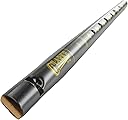
The Clarke Original D Tinwhistle is a traditionally crafted Irish penny whistle featuring a polished black tin body with gold diamond accents and a wooden mouthpiece. Engineered in England, its tapered metal design and wooden fipple produce a warm, mellow tone ideal for Celtic music in the key of D. This whistle offers smooth octave transitions and easy playability, making it a favorite among both beginners and seasoned musicians seeking authentic sound and style.
| ASIN | B001B9JZ78 |
| Brand | Clarke Tinwhistle |
| Brand Name | Clarke Tinwhistle |
| Color | D-Black/GoldDiamonds |
| Customer Reviews | 4.4 out of 5 stars 1,874 Reviews |
| Finish Type | Polished |
| Global Trade Identification Number | 00001302660077, 00604945307622, 00611534014380, 00877412000016, 05020679574164, 05060122440844, 08774120000166 |
| Instrument Key | D |
| Item Dimensions | 12.5 x 1 x 0.8 inches |
| Item Weight | 0.1 Pounds |
| Manufacturer | The Clarke Tinwhistle Company |
| Manufacturer Part Number | SBDC |
| Material | Metal |
| Material Type | Metal |
| Model Name | SBDC Pennywhistle |
| Model Number | SBDC |
| Style | Traditional |
| UPC | 001302660077 604945307622 877412000016 611534014380 634041451844 |
| Unit Count | 1.0 Count |
| Warranty Description | Contact manufacturer. |
J**H
Nice mellow sound, taper design doesn't require varying air pressure. Headpiece a bit uncomfortable
This review will be in comparing this whistle to: Clarke Celtic, Feadog pro, Feadog, Generation, Sondern whistles. First, The Clarke whistles are tapered, the others I have are not. What I have discovered this means is that in order to get a good sound in lower registers, you have to blow a little harder though the Sondern whistles are very tolerant, the Clarke whistles will make a good tone quality with constant blowing pressure. I believe this has something to do with the tapered design. My straight tube whistles require more air for higher tones. The feel of the whistle is nice. Though it is metal, it is a bit textured so the whistle doesn't slide around so it is easy to keep your fingers in the same position. The whistle isn't nearly as loud as brass or nickel. Not sure if it is the paint, the taper, or because of the piece of wood in the head, but it has a softer woody type sound, so for tunes calling for a softer, rich tone, this is my go-to in the key of D. The wood piece mentioned...one of the things I do not like about this whistle is the feel of the piece of wood against my lip, at first it was rough...after playing it a bit, the wood wore down some (along with my lip at first) The wood does absorb some moisture which helps prevent condensation buildup in the fipple, but it does reach a saturation point where the wood swells a little and then it doesn't play right until you let the wood dry out. The headpiece does not feel good on the lips, but. that piece of wood that is uncomfortable also I think is responsible for several pros. The wood piece is cut at an angle and is directly in line beneath the fipple...having taken physics classes on sound. I know that what this does is it causes the acoustic length of the whistle to match the actual length. What this means...is that when you go from the first to the second octave, there is not a cavity of pressurized air in the hollow whistle head that causes a crazed sound during the transition. So...all that science talk just to say that you do not need to 'tweek' this whistle with a piece of tack to soften the sound, it has a soft sound with nice smooth octave shift out of the box. Recap, when just learning a song I use this whistle because the tapered design will let me hit notes while blowing softly, and it is not overly loud, also the second octave has a softer tone and is not screechy and I think this is because of the wood piece and the paint. Con...I don't like the feel of the headpiece and when the wood gets too moist, it has to be dried before it can be played...takes a good hour or so to reach this point, but you'll know it when it happens.
J**R
This is a real musical instrument
I taught myself to play recorder at an early age (12) and played in group with adults playing good recorders (theirs were of wood, mine was plastic). I also now play the Boehm flute (silver flute). I also bought from Amazon another brand of tin whistle. The Clarke Original (painted black) is the real deal. I had trouble adjusting to the cedar block in my mouth. Recorder wood is finished and leaves no taste. The unfinished cedar has a strange taste, but I'm used to it now. I do not consider it a deal breaker. The instrument is conical - wide at the top (where the block is) and narrower at the bottom. This is similar to the bore of recorder & unlike the Boehm flute which is cylindrical. I believe baroque fultes also had a conical bore. There is a seam at the back of the Clarke. Cylindrical whistles have a seamless ture. I recall reading that the Boehm flute "caught on" in France & the rest of Europe didn't much care for it. Some of the early French makers used a seamed tube for their early product line because it was cheaper that a seamless tube. I think the reason it is a feature of the Clarke design is that it is easer and cheaper to create a folded and seamed cone than one that has no seam. Again, I do not find this to be a deal breaker. I adjust. The tin whistle is classed as a duct flute. The block is used to create a narrow windway tdirected at the lip which will vibrate in the stream of air the player controls. As with wind instruments generally, the player is the most important element in tone production. I had to learn to reduce the wind stream. I try to control it so I get a pure tone. The tone is the result of the air volume within the flute itself. There is a magic moment when you are playing and the sweet and pure sound of the note comes through. I had to learn not to push the note. The upper octave dpends on a stronger pressue of air than the first octave. I still cannot get the full effect I want above high g. I need to practice more. But I can do so much more with the Boehm flute so much more easily that I find myself drifting in that direction rather than working of the more delicate sound of the Irish tin whistle. Also, from my long history (over 70 years) of recorder playing, I find it easy just to play one of my plastic Alto or Soprano recorders. However, tin whistle is fascinating in its own right. I found out about tin whistle jive, a 1950's influence on African music. Even Harry Belafonte has a song about it that used tin whistle - Kwela. Amazon music has it & so does YouTube. YouTube has a great video of tin whistle players on a street in South Africa. It changed my image of tin whistle music forever.
C**X
Do NOT buy unless you want to tweak it!
TLDR: I love my (old) Clarke C whistle, but this is definitely different. Don't buy unless you plan to "tweak" (modify) it. If you do, Clarkes are so beautiful. Background: I have been playing tin whistle about half a year, so I'm new, but I picked it up immediately and highly recommend learning to play. When I was researching a first whistle, I loved the sound of the Clarke OG, but many people recommended not to buy it because of the large air use and difficulty for beginners. I bought a Sweettone. It's cheaper, sounds nice, and is super easy to play. I then found an old, used, key of C Clarke OG on Ebay for cheap, and wanted to try it. And I LOVE IT! It sounds great, and isn't much harder to play than the Sweettone. I finally decided to buy a new D Clarke OG because I was tired of playing D songs on a whistle that sounds worse to me. It arrived, and... The whistle is almost unplayable (compared to my other whistles). It takes SO MUCH AIR and you can literally hear the rushing air leaking. There is a continuous background of wind noise beneath the music. We want chiff and free/wild sound, not wind! Now I see where all the advice was coming from. Tweaking principles: Fortunately, we can tweak! We want to: 1) lower the mouthpiece 2) flatten and lower the fipple Jerry Freeman has a YT video on this that has decent explanation, but his post on Chiff and Fipple is a better explanation. Do not be deceived by his video sound. The whistle arguably sounds *better* (in real life) after tweaking, still has the free/wild chiff, and is 10 times easier to play! My tips/principles that I found from tweaking: 1) We will try to balance breath requirement and chiff. Generally higher breath requirement has more chiff and windy/free sound. Less breath sounds more pure/"recorderish". 2) Lowering the mouth channel (above the wood block) lowers wind requirement. 3) The fipple (blade the air hits that is shaped like an "M") must be at/below the end of the mouthpiece at all points. 4) The more M shape, the more breath lost/chiff gained, the flatter the fipple the smoother the sound, less breath, less chiff. 5) The lower the mouthpiece airway and fipple, the easier it is to play the 2nd octave (high notes). So I personally prefer to: 1) Flatten the top of the airway (compress the sides so they do not bulge!). 2) Lower the fipple to just above the wood block (when looking into the mouthpiece, about a 3rd up the gap between wood and airway roof). 3) Leave some small "M" shape in the fipple (not completely flat). Old Clarke C vs new Clarke D comparison: There are other differences between my old C and the new D that make the old whistle better: 1) The new block is clearly pine, and is quite rough. The old I believe is also pine, but the grain is much tighter and feels nicer. 2) The new block is flush with the tin, the old sticks out some and has slightly rounded edges. I like the feel of the old block sticking out slightly. 3) The old block is pressed into the tin, the new is glued. 4) The old airway is much flatter, the new started super high and round. 5) The old fipple had a much less pronounced "M" shape. The new is overdone. It's possible the old whistle I bought had been modified by someone previously, but it didn't seem to have been played much (the wood block still smelled and wasn't worn in, now after a few months of playing it has lost its smell and is worn smooth) so that seems unlikely. However, the shape of the mouthpiece/fipple looks much more hand-positioned and imprecise/uneven. However, the result is MUCH better. So either it was modified a bunch, or they used to make the whistles much better than they do now. I will post some pictures. The black is the old C. The silver is the new D. All pictures are *after* flattening the mouthpiece, which I did immediately because the whistle wasn't playable, but taken *before* flattening the fipple. I have included a screenshot from Jerry Freeman's video to show how rounded the mouthpiece was before flattening. Mine was similar.
J**V
Must have for whistle players.
This whistle is a bit different from most. It's not cut from a cylindrical tube, it's a conical deign. It has to have that little ridge because of this, it's barely noticeable and it actually gives a better positioning grip when playing. I love this. The sound is impressive. It's just a tad bit warmer than most tin whistles I have. I don't know if that's a by-product of the conical design, or the wooden fipple insert, or both, but it's clearly a remarkable whistle. The tin whistle is such a fun instrument because you can collect quite a few of them while it still being inexpensive to do so. This one was a bit more than some cheaper ones (which most still sound & play well) and it truly sounds good enough to record with. Clear in both registers. When you think of all the great whistle melodies from prolific artists of classic folk songs, this Clarke sounds like the real thing. I would imagine most experienced players would have at least one of these Clarke's in their arsenal. If you're reading reviews to decide; this is clearly not a toy, I doubt anyone that can play these would be disappointed in any way by this quality instrument for such an affordable price. ~JSV
K**Y
clark celtic to the OG 200th Special upgrade, beginner
This is my second whistle. I had been curious to try out a second whistle because I wasn't sure how bad I was at playing, or if it was my other whistle. I had a clark celtic that I got for a great price and had amazing reviews and I have enjoyed using it, up until I lost it at an irish festival over the weekend. So i used that as an opportunity to upgrade a bit. Still wanted to stick with a "D". When this one came in the mail I was first impressed with how cool it looked, I was sort of bored with the celtic knot on my old one and I like that this one doesn't have any plastic on it. I was surprised by the wooden mouth piece built into the metal, but it smells so good, like fresh cut wood. it has a smell and a taste that will be hard to ever replace. I feel like getting the low D sound is so easy with this one, just effortless so now i am thinking that while I am still not a great player at all, I do think my playing has improved just by using this new whistle. Well worth the $15 upgrade. It has a much smoother sound, less breathy if that makes any sense. I do find moments where I am missing the note completely and not making much sound, but I think that's a wood fipple thing, and I think once that is mastered you likely just become a more solid player.
V**A
Key of C, lovely rich full tone
I have a fair number of professional tin whistles, but I couldn't resist this collector edition model. Also, it is the key of C which is sort of novel as it's not the traditional key (and resembles a fife in that way). I am so glad I bought this. It has a lovely tone and actually sounds and plays much better than the similar collector model, keyed in D. It sounds much nicer than many other types of tin whistles. It could just be because I am playing it, but I'm going to say it's due to this being a quality flute. What a pleasant surprise! It's a great product.
B**Z
tin whistle
i have always enjoyed the sound of the tin whistle and finally decided to order one. i chose this particular one because i didn't need anything that looked fancy just a basic whistle. when i got it however i realized they sent me the wrong one. instead of the basic silver one i got their black and gold one. it was in the same key i wanted and sounded good and that's all i really cared about. so didn't really care they sent me the wrong looking one just glad it sounded good. but it still was sloppy to send the wrong one that's why i gave them a three. as far as everything else goes. whistle quality and delivery, i was very pleased. i have played it everyday since i got it (driving my wife and friends crazy) all in all i would say its a very fun and easy instrument to play.
J**A
Fun
Fun whistle, arrived in good working condition
D**N
Quality as good as I hoped.
As advertised. Would buy again.
S**T
Un son chaleureux et authentique !
Un son unique ! Feutré et boisé. Jouer de ce whisle est un régal ! Je le recommande à tous ceux rebutés par côté métallique des flutes habituelles. Ici le son est chaleureux. Il faut maîtriser son souffle sur la longueur car le corps de l'instrument est plus large et son bec à embout de bois peut donner la sensation d'une déperdition de l'air. Mais on accède rapidement à une grand souplesse de jeu ! La justesse des notes hautes reste à façonner dans l'intensité du souffle comme toujours, pas de surprise. C'est vraiment une très belle acquisition !
A**D
Klassiker
Im Whistle- Bereich der absolute Klassiker. Durch die historische Bauart (eckiger Holzblock), kommt ein sehr "rauchiger/ rauschender" Ton zustande. Das kommt dadurch, dass relativ viel Luft verloren geht. Demgemäß benötigt man auch recht viel Luft. Die Lautstärke würde ich eher geringer einstufen (vergleichsweise zu mir bekannten anderen W.) . Kann auch zum Vorteil sein: Nachbarn, Familie etc. Da sind andere Instrumente deutlich durchdringender und können dadurch natürlich auch schon mal nerven. Die Stimmung ist nicht erstklassig, jedoch liegt sie noch im vertretbaren Rahmen. Wenn man das Mundstück ordentlich mit den Lippen umschließt, geht etwas weniger Luft verloren und die Töne stimmen dann auch. Dann ist sie auch lauter. Stimmung C ist klassisch, wie bei den ersten Exemplaren von Clake. D Stimmung ist angebrachter, sofern es die einzige Whistle bleiben soll. Nettes Instrument,,,,,,,,,macht Spaß.......... 5 Sterne deshalb, weil eine Original- Clarke einfach etwas besonderes ist und weil man dieses Instrument nicht mit modernen Whistels vergleichen darf. Wer authentische Musik, ohne Profi- Charakter machen möchte, liegt hier nicht falsch. Wem der klassische Aspekt wurscht ist, nimmt besser eine Plastikwhistle oder ein Modell mit Kunststoffmundstück. Diese kommen meist mit weniger Luft aus und klingen klarer. (Gibt es auch von Clarke / z.B. die Sweetone....diese ist aber auch etwas "rauschend") Also immer noch richtig irisch. Im Internet finden sich Videos.....einfach mal ansehen / hören. Ich möchte die Whistle, mit den genannten "Einschränkungen", sehr empfehlen!
F**T
Why didn't I buy this whistle first ?
This very fine whistle arrived very well packaged and on time 2 days ago. I took up the Irish whistle 4 weeks ago and started with the basic brass type which was inexpensive and squawky in sound and it was unbearable for those listening. I kept at it and bought a Clarke Sweetone D whistle and the difference in tone was instantaneous. It's softer in sound and when you go to the next octave it behaves better than the brass whistle I started out with. I learned a few Irish and Scottish tunes and and people were now saying how much better I sounded. This improved my confidence and after seeing a video on YouTube about this Original Clarke Irish Whistle, I thought I'd purchase one. And am I glad I did. I'm now up in the higher octave and getting the notes right. It is a quieter whistle than the Clarke D but that's part of its charm. I switch between whistles for different volumes and tone. And, I even now find myself playing the brass whistle again now that I have improved my fingering and seem to have gained more control overall. Make this your first whistle and fly.....!!!
N**A
Hard to clean
There is a wooden piece inside which makes it difficult to sanitize or clean
Trustpilot
1 day ago
1 week ago