

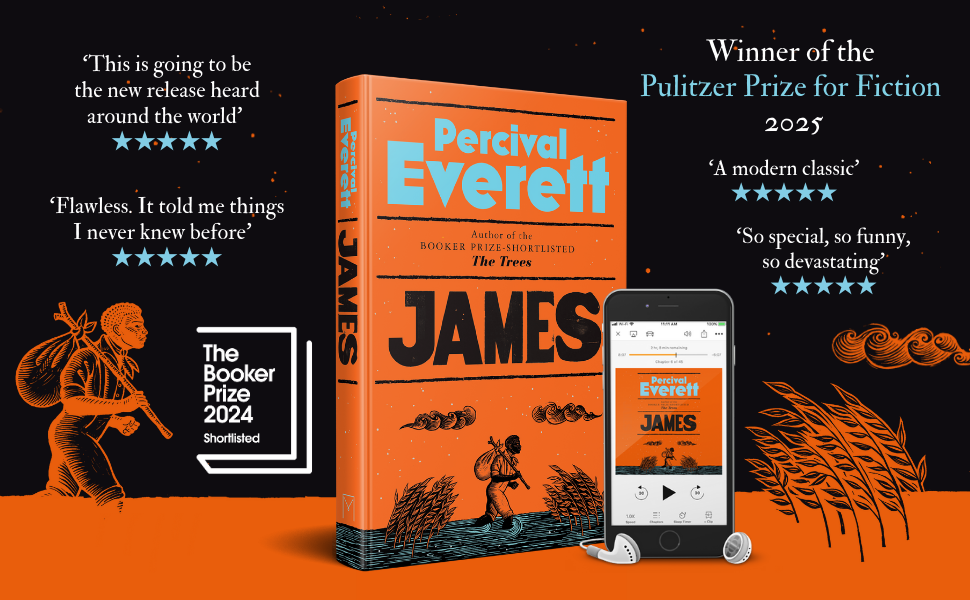
James: Winner of the 2025 Pulitzer Prize for Fiction
Product ID: 734369682
🏆2025 Pulitzer Prize Winner
📚Sunday Times Bestseller
🚤Epic Mississippi River Journey
Buy anything from 5,000+ international stores. One checkout price. No surprise fees. Join 2M+ shoppers on Desertcart.
Desertcart purchases this item on your behalf and handles shipping, customs, and support to Nicaragua.
📖 Dive into the Pulitzer Prize-winning journey that everyone’s talking about — don’t miss the story redefining American classics!
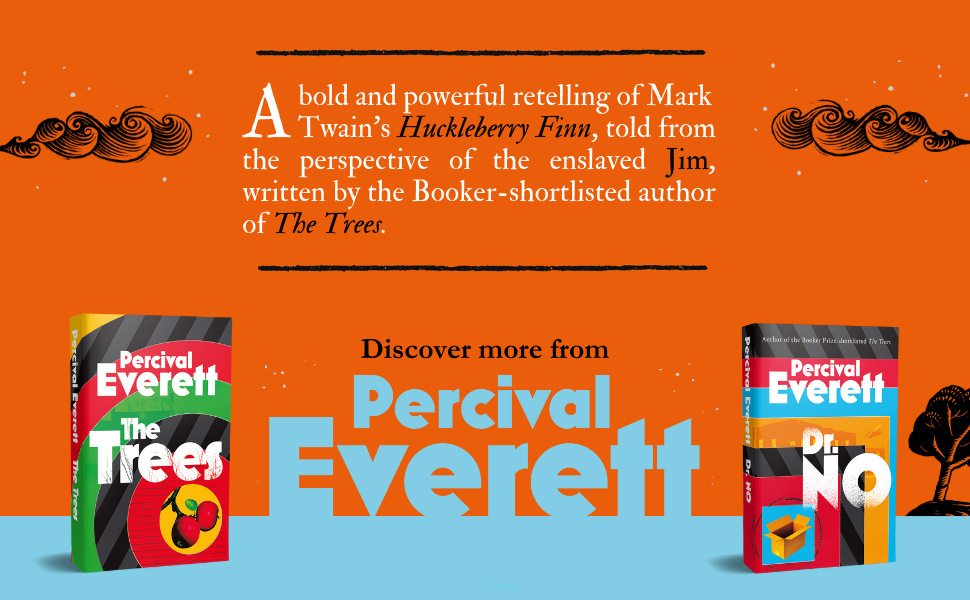
James by Percival Everett is a 2025 Pulitzer Prize-winning novel that reimagines The Adventures of Huckleberry Finn from the perspective of James, an enslaved man fleeing bondage. This Sunday Times bestseller combines sharp humor, philosophical depth, and a gripping narrative set along the Mississippi River in 1861. Critically acclaimed and widely celebrated, it challenges historical narratives while delivering a powerful story of freedom, identity, and resilience.
| Best Sellers Rank | 160 in Books ( See Top 100 in Books ) 1 in Rural Life Humour 3 in Parodies (Books) 9 in Adventure Stories & Action |
| Customer Reviews | 4.5 out of 5 stars 101,860 Reviews |
J**W
Great book - people “take the lies they want and throw away the truths that scare them."
JAMES, by Percival Everett, has a wonderfully profoundly sharp line: people “take the lies they want and throw away the truths that scare them.” This is not just a throwaway — it’s a key to the novel’s heart, brilliantly reflecting a story that challenges what we choose to believe. The book is a reimagining of ‘Huckleberry Finn’ but told from the perspective of James (originally Jim), a runaway Black slave who is far more complex than his counterpart in Twain’s original. He is literate, thoughtful, and strategic — he carefully performs a submissive “slave speech” around white people, but in private speaks and thinks in elegant, formal English. - On his escape, James meets Huck, who has faked his own death, and together they travel down the Mississippi River. Their journey is full of adventure and danger, but also deeply reflective moments. James wrestles with dehumanization, terror, and freedom, while carrying a stolen pencil and notebook — his tools for writing himself into being. In dream-like philosophical conversations, he debates with thinkers like Voltaire, showing just how intellectually rich his inner life is. Everett doesn’t shy away from the horror of slavery: the violence, the constant threat, the psychological toll. But the novel also delivers satire, humour, and a powerful twist that I won’t reveal but changes how you perceive the story. - This book is not just a retelling — it’s a reclamation. It gives voice, agency, and dignity to a character who was marginalized in the original. James is beautifully written, emotionally gripping, and intellectually profound. - My favourite line was the following when a group of people were swallowing tall tales and stories that two conmen were trying to exclaim as true stories: - JAMES: “Yes, but then people liked it, Jim. Did you see their faces? They had to know it was a lie, but they wanted to believe. What do you make of that?” “Folks be funny, like that. They take the lies they want and throw away the truths that scare them.”
A**R
harrowing tale of slavery and bravery
James is a slave, and one day he overhears that he will soon be sold. So he runs. Huckleberry Finn heard his dad is back. His dad may kill him. So he runs. The two journey together, South along the Mississippi River. Along the way they encounter other slaves, masters, musicians, criminals and overseers. Life is dangerous, and more than once they get separated. Huck wants an adventure, James wants to earn enough money to buy his wife and daughter. The goal? Freedom. This “Uncle Tom’s cabin” meets “Tom Sawyer and Huckleberry Finn” novel is both full of horrifying events and also hope for the future. I liked the writing style and the narrative. The dialogue is clever and draws you in. But gruesome (but obviously realistic) in parts. Still recommend.
M**S
Brilliant
Great book. If you have read huck fin it helps. Easy read and great story. Deserved all the awards it won.
A**6
Keep learning
Superb read and I love the history, the imagination, linking up with Huck Finn, the whole white / black injustice that gets some resolution, little wins, standing up against oppression, very relevant today of wealthy, misuse of power because they can without accountability. James stands up and holds them accountable. His self taught how to read which is another lesson, education is a valuable asset, keep learning and watch out when someone in power wants to limit your learning. Thank you Bill Nygh for recommending Purcell Everett, I look forward to reading more of his writing and messages.
J**T
Thoroughly enjoyable
It’s a sensitive topic told through different eyes giving a heartfelt perspective.A great read.
P**T
Thought provoking
A well written book. Evocative and thought provoking. Also a reminder (not to be forgotten) of how things used to be. A must read.
C**A
Magnificent
this book is just fantastic. A must read. A magnificent book. A chilling reminder of the past. Lovely to have a book that tells ot like it is from an enslaved persons perspective.
D**R
Ranges from okay to superb; mostly good, but with one big issue
I was in two minds about whether to give this a go as I thought it might spoil the original (although Twain himself had already managed that with a weak ending). For the first many chapters I was relieved that the relationship between Jim and Huck was still magical, and it was for a long time highly enjoyable. Sadly that didn't last; hints appeared of a way to devalue it, and then once they were confirmed it was made ten times worse than expected, stripping all the value out of their friendship across the divide. That was disappointing, but the book still has a lot to offer, although it makes it a story about different characters from Twain's. Viewed as such, it remains a good read and has satisfying events to conclude it, but that ain't Huck, and that ain't Jim, even though it sho felt like them early on.
J**.
Inspiring
Insightful, witty and, at times, damn funny in spite of the horrific tragedy of American slaves that the author has portrayed in this wonderfully worded book. An exceptionally great author.
J**E
I give this a grade of SUPERB!
James Percival Everett 2024 - Doubleday Is this really the best of all possible worlds? ‘Cause frankly, this world kind of sucks! I was born in Missouri. As a teenager, I grew up in northeast Missouri, in a small town called Milan, a two-hour drive from the Mississippi River. I once dated a guy from Edina, which is just due south of Memphis, where my favorite brother currently lives. Both towns have some complicated histories with slavery. Frankly, most of North Missouri does. For all of the talk of the southern half of the state being the “Little Dixie” part of Missouri, things weren’t that much different up close to the Iowa border. I heard stories growing up and knew the tales of Mark Twain. What might have once been a scandal to the fine folk of Missouri is now embraced as part of our culture! Tom Sawyer and Huck Finn evoke proud nostalgia for a past full of boyhood pranks and adventures. Hannibal has practically built an entire tourist industry off of it. What no one talks about, however, is the very dark face of what built those stories and that heritage they now embrace so fervently. And yes, I mean that in both senses of the word. James, the Pulitzer Prize-winning novel by Percival Everett, dives into that darkness and says the quiet part out loud. It is so much more than a retelling of Twain’s classic story from the perspective of the slave, Jim, it is both a picaresque novel in its own right, while at the same time serving as a loud critique not only of its source material, but how we conveniently ignore the stories of the suffering and indignation of those around us because we don’t focus on them. When the light is turned on, we see a whole different world, revealing that how we think the world works is not how it works at all. Jim is a slave, owned by Miss Watson, one of the guardians for young Huckleberry Finn. His survival depends on his ability to act and present himself to the white world as just what they expect him to be. He speaks in broken, vernacular English, he affects a supernatural fear of the world, and pretends he is an ignorant black slave, unthreatening and harmless. It is an affectation Jim and his fellow slaves put on to survive, knowing that if they ever break it, their white masters will see it as a threat, and it could mean their lives. Yet, when he arrives in the safety of his home with his wife and daughter, Jim code-switches to speak with them in standard English, displaying that far from being ignorant, he is a cultured, well-spoken, well-read man, who looks to philosophy to give him some sort of answer for the reasons why the world is the way it is, only to find that the philosophy of the educated white man is empty and meaningless for a man who has always been enslaved. It is when Sadie overhears that Miss Watson is contemplating selling Jim that his world is shattered, and he decides to flee in the hopes of escaping his enslavement and maybe, just maybe, getting his wife and daughter out. It is while he is on the run that he happens upon Huck, who is himself escaping Miss Watson, though for very different reasons. Huck is himself also attempting to understand the world and why it is the way it is, especially for slaves, and looks to Jim for answers. This forces Jim to further contemplate the nature of identity and power and how those with the power chip away at the identities of those they subjugate to keep their stranglehold on them. As Jim and Huck venture down the Mississippi, their adventures reveal more and more of the nature of what it means to be black and what it means to be white in the world. As Jim comes into his own, Huck, too, has to accept hard truths, as Jim urges the young boy to make free choices and to see himself as a free man. It is with this in mind that James now claims his own identity, no longer fearing or being bound by the shackles of white expectations, but claiming himself and his family as his right. Everett’s retelling of what has been called the “great American story” is daring, and it lives up to the audacity of even trying. Far from the caricature of a slave that is the Jim of Twain’s novel, James is a full-fleshed out man, who has claimed what human dignity he could he a world that expects him to behave differently. He’s educated himself and his community, he has a family, and a mysterious past that is only barely explained in the ending, one that makes him so tantalizingly relatable and…well, human. And this is the key to the heart of the story. Of course, James is human, but under the systems of racism and slavery in America, Jim was not. This leads to the performative existence, this split identity (or dual consciousness, if you will), between the true self and the self of the colonizer, this dance between who I feel I am and who they expect me to be. As James makes his way down the Mississippi with Huck, that identity only becomes more complicated, as he sees the experiences of other enslaved people, and their dehumanization, and how the systems are rigged to continue that dehumanization, no matter who is at the wheel. Freedom is not an identity that can be given to James; he has to take it and claim it, to make a choice to be free. Media of late has decried several anti-slavery television shows and films exploring slavery, reveling in the horror of it for the shock value, overriding the very real message they say they are trying to express. Everett does not stoop to this level. James’s experiences feel truthful; he is seeing the everyday slights, humiliations, and tortures of so many other slaves for no other reason than being black, and thus, property, not truly human. Even those few people who claim they are “enlightened” and forward-thinking are not to be trusted. The minute their superiority as whites is questioned, the punishment comes. This dance for James underscores the African American experience in America, the inability they have always had to just be completely themselves, as whole people, accepted for who and what they are, because that existence is seen as threatening to the whites who hold the reins of power. For all of the darkness of slavery that James explores, the story also has its humor and its powerful insight. Huck’s childish observations are still as amusing in Everett’s expert hands as they were in Twain's (Everett is himself a very funny raconteur), and provide a lighter grounding in the world. As a child, Huck explores these harder truths with the wide-eyed innocence of youth, even as he struggles to make sense of the senseless. James himself is not without a sense of sardonic humor, particularly in his observations of irony, satire, and the puffed-up vanity of the so-called “better” whites, notably Judge Thatcher. His conversations with the likes of John Locke, Jean-Jacques Rousseau are both cheeky and philosophical, most notably, Voltaire, whose novel, Candide, clearly influenced how Everett shaped this book. James argues vociferously with each in his dreams and hallucinations, noting that each of these men was born white and free. How could they possibly understand what it is to feel the lash or know inhumanity? His most pointed argument is with Voltaire directly, a man who spoke of the freedom of men, and yet believed in a racial hierarchy. These sequences not only allow us to see James’s inner philosophical life, but they let us see his wit and intellect, especially as we see him making his points. Even with Cunégonde’s warning ringing in his ears, knowing that the system is rigged against him ever being completely free, James makes free choices as a completely actualized man, who chooses who he wants to be and no longer allows for others to define who he is - not his enslavers, not white society, and not Mark Twain, either. If the Adventures of Huckleberry Finn is a story of poor, white childhood, James is its grown-up counterpart, the half of the story that Huck, in all of his childish, self-centered naivete, could not see. It is a nimble, funny, powerful exploration of what the other half of that great American novel was all about, the untold story of the man who was created to play before a polite, white audience. Jim was a mere caricature in Huck’s story. James is a fully realized man, one who has a voice and a mind, for all that the structures of whiteness and power have tried to strip him of it. While he will always be black, he no longer has to play at being what society tells him he is. He can now make the free choice to be himself.
L**R
A must-read story for even non-readers
This captivating work of black literature is a must-read for everyone, young and old alike. Its brilliance resonates across generations and invites all minds to explore its profound themes and messages.
B**M
Worth the hype.
After this book I want to read everything by this author. Super read.
C**Y
Excellent and thought provoking retelling of an American classic
Excellent and thought provoking retelling of The Adventures of Huckleberry Finn by Mark Twain through the eyes of a key character, James (Jim), a slave.
Trustpilot
1 month ago
3 weeks ago