
Buy anything from 5,000+ international stores. One checkout price. No surprise fees. Join 2M+ shoppers on Desertcart.
Desertcart purchases this item on your behalf and handles shipping, customs, and support to Nicaragua.
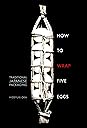
Traditional Japanese packaging is an art form that applies sophisticated design and natural aesthetics to simple objects. In this elegant presentation of the baskets, boxes, wrappers, and containers that were used in ordinary, day-to-day life, we are offered a stunning example of a time before mass production. Largely constructed of bamboo, rice straw, hemp twine, paper, and leaves, all of the objects shown here are made from natural materials. Through 221 black-and-white photographs of authentic examples of traditional Japanese packaging—with commentary on the origins, materials, and use of each piece—the items here offer a look into a lost art, while also reminding us of the connection to nature and the human imprint of handwork that was once so alive and vibrant in our everyday lives. This classic book was originally published under the title How to Wrap Five More Eggs in 1975. The eminent American designer George Nelson praised the work featured here, saying, “We have come a long, long way from the kind of thing so beautifully presented in this book. To suit the needs of super mass production, the traditional natural materials are too obstreperous . . . and one by one we have replaced them with the docile, predicable synthetics. . . . What we have gained from these [new] materials and wonderfully complicated processes to make up for the general pollution, rush, crowding, noise, sickness, and slickness is a subject for other forums. But what we have lost for sure is what this book is all about: a once-common sense of fitness in the relationships between hand, material, use, and shape, and above all, a sense of delight in the look and feel of very ordinary, humble things. This book is thus . . . a totally unexpected monument to a culture, a way of life, a universal sensibility carried through all objects down to the smallest, most inconsequential, and ephemeral things.” Now, over thirty years later, this revived classic on the art of traditional Japanese packing may leave us with the same response, and the same appreciation for the natural and utile packaging presented in this book. Review: Inventive - Recommended by Kevin Kelly (dubbed 'The Most Interesting Man in the World' by Tim Ferriss). The author of this book wanted to catalog techniques with organic materials (fibers, wood, paper, etc...) that were disappearing, so this book gives a snapshot of how mostly small products, especially food products, would be packaged before Japan completely modernized. Aside from the opening comments and notes in the back, you just have full page photos for most of the book. One nitpicking detail is that you will look at an image and need to go to the back of the book to read about it. This probably was the correct choice aesthetically, but it can get annoying. Review: Beautiful soft cover edition of my treasured old copy. - This book is a basic must have for people interested in graphic design, tapestry, decorative arts or just beauty. Have owned this book since college, it was required reading. Bought this as a gift for a friend who is a gifted chef and pastry maker. She loved it!
| Best Sellers Rank | #320,244 in Books ( See Top 100 in Books ) #316 in Decorative Arts #684 in Arts & Photography Criticism #871 in Paper Craft |
| Customer Reviews | 4.3 out of 5 stars 105 Reviews |
B**K
Inventive
Recommended by Kevin Kelly (dubbed 'The Most Interesting Man in the World' by Tim Ferriss). The author of this book wanted to catalog techniques with organic materials (fibers, wood, paper, etc...) that were disappearing, so this book gives a snapshot of how mostly small products, especially food products, would be packaged before Japan completely modernized. Aside from the opening comments and notes in the back, you just have full page photos for most of the book. One nitpicking detail is that you will look at an image and need to go to the back of the book to read about it. This probably was the correct choice aesthetically, but it can get annoying.
F**0
Beautiful soft cover edition of my treasured old copy.
This book is a basic must have for people interested in graphic design, tapestry, decorative arts or just beauty. Have owned this book since college, it was required reading. Bought this as a gift for a friend who is a gifted chef and pastry maker. She loved it!
L**P
Wrap it up, I'll take it
I have been trying to find an affordable copy of the original "How To Wrap Five Eggs" from the 1960s, and this is a very satisfying compromise. It includes wonderfully descriptive photographs, and provides insight into the deceptively-simple art of Asian packaging, as well as a primer on Why We Love Paper. Elegance, style, simplicity, function. Terrific!
C**T
Packaging Meets Art
The Japanese have raised gift and utilitarian packaging to an art form. Travelers note how they take time to carefully fold and hand over even a modest purchase such as a small bag of pastry. Quality and courtesy rule. This book features past practice through black and white photos from a now out-of-print book, updated with additions, showcasing a variety of traditional packaging. All are shown against a plain background so they stand out, more often than not just one or two items to a page. The pages are uncluttered by text yet commentary on each page is easily accessed at the back of the book. I love Japanese objects so I like this book. Favorites are a set of ten shrimp tied in straw, a confection wrapped in a leaf, and a handmade paper bag with a silk drawstring. Materials include straw, bamboo, wood, cloth, string, paper, leaves, some enhanced with calligraphy and other art. Artists and designers looking for inspiration for packaging would find some here. Students of creativity and innovation could as well.
K**M
Love this book
Beautiful
E**S
Great purchase, good condition, 1967 edition, good service
I am so happy I bought How to Wrap Five Eggs. This is the first edition in English from 1967: I had emailed the seller to make sure before I bought it. It is in good condition and it was reasonably priced. My mind is already swarming with ideas on how to incorporate wrapping into my own art.
G**.
Not a how-to guide
This book has tons of very interesting photos of ingenious and creative Japanese wrapping and packaging of different objects, but please note that it is not a how-to manual. It does not include instructions on how to wrap anything, so you have to interpret and maybe try stuff on your own. It's an interesting tome for historical reasons, but not really an instruction manual.
A**Z
Lovely, Imaginative
I have always wanted to own a copy of this beautiful book. There is a kind of reverence and gratitude with which the Japanese treat simple objects, that is both intriguing and inspiring. A celebration of the everyday that invites the viewer to appreciate the qualities of things we often take for granted...
C**N
Imperdibile
Bellissimo!
P**T
Très beau livre
Très beau livre de photos. L'emballage traditionnel Japonais est un art. Je le recommande, ce n'est pas qu'un livre pour les emballeurs
A**R
Five Stars
amazing book! a must have for all designers, design students and people interested in design!
K**E
Good
Lectura para empaque tradicional, muy bueno
A**Y
Missing pages
There are 17 missing pages in the book I've received. These are really important pages with commentaries on the photographs. Unfortunately I just started to read it (the book was bought in May), so I can't process a return. Obviously they were not ripped out and it's probably a defect got during the printing process (see the photo). Anyway, it's a pity that the seller doesn't know what he/she is selling.
Trustpilot
1 month ago
3 weeks ago