


DT1260-TUN
Product ID: 67414406
Details
- BrandDynaTrap
- Colorred
- Is ElectricNo
- MaterialTungsten
- Number of Pieces1
- Product Dimensions11.5"L x x
💡UV light + CO2 lure
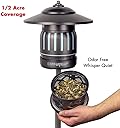
🦟½ acre coverage
🛠️All-weather tungsten build
🦟 Outsmart mosquitoes before they crash your summer vibe!
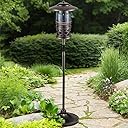
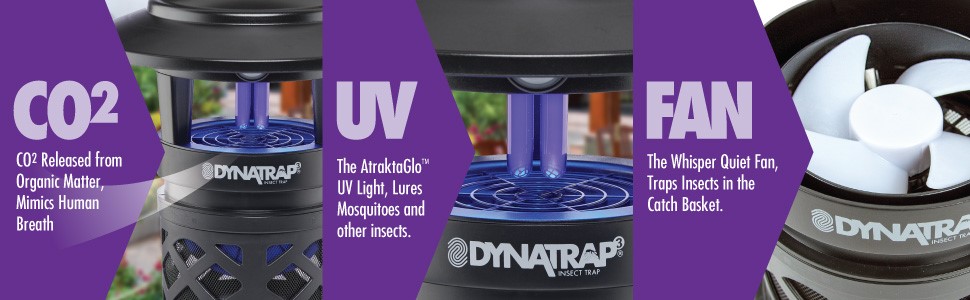
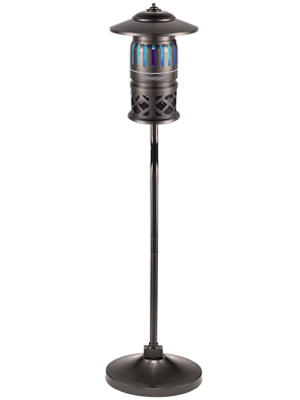
The DynaTrap DT1260-TUNSR is a stylish, tungsten-finished mosquito and flying insect trap designed for indoor and outdoor use. Covering up to half an acre, it uses a triple lure system—UV light, carbon dioxide, and a quiet fan—to attract and trap mosquitoes, flies, wasps, gnats, and more without harmful chemicals. Its durable, weather-resistant construction and easy pole-mount setup make it a seamless addition to any patio or yard, providing continuous, eco-friendly insect control all season long.






| Brand | DynaTrap |
| Color | red |
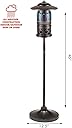
| Item Dimensions L x W x H | 11.5"L x 11.5"W x 44"H |
| Material | Tungsten |
| Material Type | Tungsten |
| Number of Pieces | 1 |
| Power Source | Corded Electric |
| Product Dimensions | 11.5"L x 11.5"W x 44"H |
| Style | ½ Acre Tungsten Trap with Pole Mount |
| Style Name | ½ Acre Tungsten Trap with Pole Mount |
| Target Species | Beetle, Fly, Gnat, Hornet, Mosquito, Moth, Wasp |
E**C
Set clear expectations
When you buy this, there are a few things you should know. 1. Keep it running all the time. The trap catches insects easily, but it takes days for them to die. If you have it on a timer or are turning it off during the day, you are letting the bugs free to keep doing their thing. 2. The bulb lets off CO2 to mimic human breath. This only lasts 90 days. You will need to replace the bulb every three months. Just because the bulb is still lighting up, does not mean it is still working. 3. You will need to let this run for 2-3 weeks before you will notice fewer mosquitoes. It takes that long to decrease the population of insects. If you understand these few things, you will be satisfied with it's effectiveness. I am.
S**N
It works!!!
Every year I always have some mosquitos but this year it was TERRIBLE! There were SWARMS of them and they were really aggressive. I couldn't be outside even briefly without being bitten. I was desperate. I was a little skeptical of this product due to some of the reviews, but frankly I HAD TO do something so I gave it a try. Within only a few days (!) the mosquitos were almost entirely gone and have stayed away. I don't see the mosquitos in the trap (it's almost all moths), so I don't know if they're being disintegrated by the fan that sucks them down or if they crumble into little tiny pieces when they die or what. All I know is this has really REALLY worked for me. As I mentioned the bugs in the trap are almost all moths with a few other bugs mixed in. I'm not seeing any bees (honey or bumble) which is a relief. It attracts chafer beetles (aka june bugs) which are unfortunately too fat to get inside the trap, but at least they gather around and then the raccoons come by and snack on some of them, so indirectly the trap helps reduce the population of those bugs too!
A**N
It definitely caught insects!
This product did its job! There is no doubt that it caught a lot of insects in our back yard from mosquitos, to flies, to moths. The design is stylish enough that it didn't clash with our backyard decor. It is very sturdy and never fell over in high winds or rain storms. The only reason we didn't give it a 5 is because the price point is pretty high, and the need to be plugged into a power outlet is a bit inconvenient. Overall, we are happy with this purchase and look forward to using it again next year.
R**T
What a horrible design
So I was excited that this might help reduced the gnats and mosquitos plaguing my yard. It was fairly easy to assemble and deploy but the black light bulb that was advertised as lasing 4 months only lasted 3 days. Well, that's ok because I had also purchased replacement bulbs. So, following instructions, I disassembled the appliance to change the bulb. What a horribly designed piece of equipment. If something requires maintenance every four months, it should be designed to facilitate said maintenance. This, however is the worst. This model came with a stand and the cord is an integral part of the stand so you cannot simply remove the head to change the bulb, you have to deal with the cumbersome, weighted stand and try to turn the whole thing upside down or completely disassemble the stand! Then, you have to remove the fan assembly to access the bulb. It cautions you to not get the wires in the way during reassembly which is actually impossible to get them in the way because the wires are so short. The fan assembly WILL become unplugged and once that happens, there is absolutely no way to ever plug it back in. The wires are too short, the plug is deep inside a narrow grove that no fingers fit. This may have gone together on the assembly line but not in the wild. For the 3 days it worked, it did capture all manner of flying bugs from moths to gnats to mosquitos to flies and a few who-knows-whats but it certainly isn't worth the aggravation it brings in maintenance. This was my first DynaTrap product and because this was so poorly designed, I will never buy another DynaTrap product.
N**S
I'm not food for Mesquitoes now!
We have had this product for over a month and have been impressed. Within a week it was completely full (because of our location). There are a couple of wooded acres behind our house and a still creek. We bought this to keep the wasp, horse flies, and mesquitoes, under control, and away from us. One of the best purchases we've made for our land so far. I plan on getting a couple more for the property. This was easy to assemble and sturdy. The price is justified when you research similar products. Most need a plethora of short-term refills to continue to work. This item includes the bait to help attract the bugs, however it last much longer than the other products that I researched. The uv light also attracts bugs, so this product can function without bait refills, which is great when you are in between paychecks. The only con is that this item needs to be plugged in to function. That is a minor inconvenience for no longer being a feast for Mesquitoes and horse flies though.
A**N
Doesn't Catch Mosquitos
After using it for more than 6 months here's my thoughts. Works great for catching flys of all kind and even a few yellow jackets. BUT it didn't solve my mosquito problem and I'm fairly confident it hasn't caught a single mosquito. I'm happy with the quality, it's pretty quiet and the bulb has lasted. I ran it 24 hours a day for the whole summer and into the fall without issues. I'm disappointed that it was specifically advertised as helping eliminate mosquitos and yet as far as I could tell I wasn't able to find any mosquitos in the large pile of flys it would catch. Not to mention consistently seeing and get bit by mosquitoes while being in the area of this product. Buy this if you need to eliminate flys that are attracted to light. Don't buy if you're trying to eliminate blood thirsty mosquitoes.
C**N
DT1260-TUN is a poor design, but DynaTrap customer service guided me to a better one!
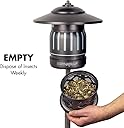
WHY I CHANGED FROM ONE STAR TO FIVE STARS -- After reading my review complaining about the DT1260-TUN, DynaTrap's customer service department suggested that I instead try the "DynaTrap 3" model DT1100-TN19. I did try it, and can say with delight that the model DT1100-TN19 has many design improvements. You can put the DT1100-TN19 on a patio table, hang it from a hook or mount it with the included wall bracket. There is also an optional "trap hanger / shepherd's hook" that you can stick into the ground. The DT1100-TN19 is much easier to operate and maintain than the DT1260-TUN. Even so, HEED THIS ADVICE:: As soon are your DT1100-TN19 arrives, TEST THE TINY SCREW THAT GIVES YOU ACCESS TO THE BULB to make sure that you will be able to remove this screw when the bulb wears out in four months. On my DT1100-TN19, this critical screw was jammed in so tight that I stripped the Philips head of that screw and also stripped the tip of the little Philips screwdriver that was supplied by DynaTrap. [DynaTrap seems to have a manufacturing problem with overly-tightened screws; see the original review below.] I eventually forced open the bulb housing and was able to remove the naughty little screw (it obviously had been damaged during assembly at the factory). I replaced the bad screw with a screw from my toolbox. If you are not handy, this issue might cause you to return the DT1100-TN19 to the manufacturer, so you should test this important screw right away. As for me, I am very happy now with my DT1100-TN19 and the DynaTrap customer service department! ORIGINAL REVIEW OF THE DT1260-TUN -- The user is instructed to replace the bulb every four months, so I figured I would teach myself how to do it before I put it outside on the patio. To replace the bulb, as well as to do a thorough cleaning, you have to unscrew two bolts that hold a metal harness that goes around the unit. The harness holds the bug-catcher to the pole. Getting the two harness bolts back in place after cleaning or bulb replacement) is difficult -- it is hard to get the holes to line up, and I eventually was only able to re-install one of the bolts. Now that we have the harness removed, we are told to "remove the four screws securing the fan housing to the light housing." There are no instructions regarding the location of these four screws. I discovered that they are Philips-head screws at the bottom of the unit, almost impossible to see because they are so tiny and deeply recessed in the black plastic unit. They were also screwed in so tightly at the factory that I had to put a Vise-Grip on the screwdriver in order to get enough leverage to loosen them. They easily fall out of the unit and if you are on your patio or deck, good luck finding them! Having removed the tiny screws, you can then separate the fan unit from the bulb unit for cleaning and bulb replacement. The bulb itself is far inside the unit, and affixed with another tiny screw deep in the housing; removal/replacement is going to be a challenge. Be warned: This unit does not kill the bugs that it catches; they starve to death eventually.. The instructions admit that the not-yet-starved bugs may fly out when you empty the trap and sure enough, they do! Users are told to quickly dump the contents into a trash bag and hope you are not stung by any not-yet-dead yellowjackets. The solution: Spray the collection bin with insecticide before you unscrew it.
R**Y
DynaTrap DT1260-TUN...it works.
Bought this mosquito trap/stand combo last week. It arrived on Wednesday afternoon, and I immediately set it up in the back yard. Construction wasn't too complicated, but it would have been a LOT easier if any of the instructions were in English. These must be popular in several other countries, but we had it plugged in and running in about 15 minutes. Seems like a quality product. My wife even found it attractive and it fight right in with the landscape. I only cared if it caught mosquitoes. Unlike many on here who say it took days or weeks to start catching, I took a picture of our first nights victims. Unfortunately, there is quite a bit of by-kill...many moths, several beetles, and a couple yellow jackets. Just for fun, I pulled out a magnifying glass and counted mosquitoes. I stopped squinting at 50. I'm happy to report that, for a first night, I would consider this a successful yard tool. Looking forward to even better catches, but if it only stays at 50/night, I'll take it!
C**G
Excelente
Al parecer todo funciona correctamente
R**S
No atrapa muchos insectos.
No atrapa muchos mosquitos. La lampara dura poco pues es para 120 Volts y en México tenemos 127 V.
A**R
No funciono
Hice la devolucion del producto y porque no funciono el 28 de septiembre 2020, no he recibido ningun mensaje ni el deposito de reembolso. porfavor alguien me puede ayudar?
Trustpilot
3 weeks ago
3 weeks ago