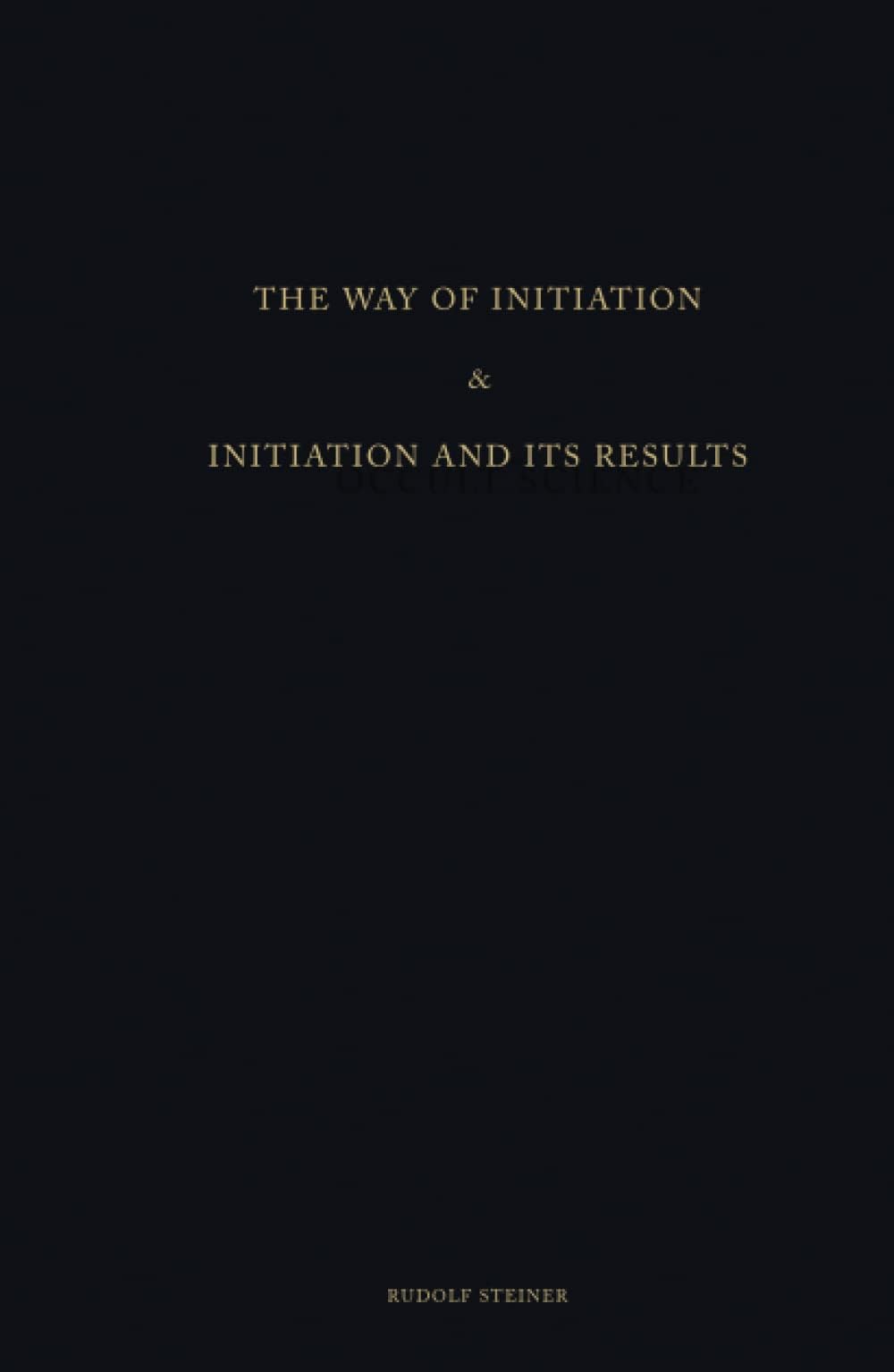
The Way of Initiation & Initiation and its Result: Steiner's Initiation Serie (2 books in 1)
Product ID: 591731619
Buy anything from 5,000+ international stores. One checkout price. No surprise fees. Join 2M+ shoppers on Desertcart.
Desertcart purchases this item on your behalf and handles shipping, customs, and support to Nicaragua.
The Way of Initiation (or, How to Attain Knowledge of the Higher Worlds) and Initiation and its Result (a Sequel to The Way of Initiation) are two life-changing books from Rudolf Steiner , the founder of anthroposophy. Having 2 books in 1 will allow you to trace between the exercises and “trials” set forth in The Way of Initiation and the means of vivification of the astral organs (chakras) described in Initiation and its Result . "There is, in truth, no difference between esoteric knowledge and all the rest of man's knowledge and proficiency. This esoteric knowledge is no more of a secret for the average human being than writing is a secret for those who have never learned it." —Rudolf Steiner Review: Book Review: The Way of Initiation & Initiation and Its Results - Book Review: The Way of Initiation & Initiation and Its Results In the preface to Rudolf Steiner’s 1908 book, The Way of Initiation, translator Max Gysi asserts that no statement in the book “is made which is not based on the personal experience of the author, who is…both a mystic and an occultist.” The apparent verity of his claim is reinforced throughout this short book by Steiner’s authoritative treatment of the subjects, wherein he certainly appears to speak from direct first-hand experience. Steiner begins with the assertion that people can experience nothing of the supersensible worlds until they develop the necessary supersensory organs within themselves. For his students, this news seems to indicate a long and imposing road ahead for eager seekers as Steiner relates the many varied stages that, he asserts, lie before each member of humanity as we progress upon our spiritual paths. He explains that “As long as the human race has existed, there have been lodges and schools in which those who possessed these higher faculties have given instruction,” and that the resulting “mystic knowledge is no more a secret for the average man than writing is a secret to him who has never learned to read.” Steiner focuses on the requirements of devotion and self-education on the part of the aspiring student, and insists upon the need to acquire a genuine occult teacher. Of this latter he states, “All genuine teachers of Occultism agree as to the essential character of these rules, although they do not always express them in the same words.” He proceeds to describe the rules for discipleship and the “three steps by which the goal may be attained: Probation, Enlightenment, and Initiation.” As one who has achieved all three, he next provides the reader with useful explanations that can be used as literal instructions into Steiner’s methods of developing the sensory apparatus necessary to follow him into the supersensible worlds he describes. Steiner then offers a consolation for those who may be unable to proceed upon the path he prescribes, with the suggestion that “There are many various paths to the summit of insight, but a right selection is invaluable.” Steiner closes the book with the seven conditions for occult training, which relate to the esoteric psychology and outward behavior required of each disciple. The short book, Initiation and Its Results, was the result of Steiner’s lectures and is considered to be a sequel to The Way of Initiation. Published in 1909, Steiner provides an introduction to the chakra centers, which he uniquely places within the astral body rather than the etheric body which is more typical of theosophic writers. The astral body, which he calls the “organism of the soul” is perceptible only to the clairvoyant and each chakra center contains a different number of petals that are each in varying stages of development. Interestingly, Steiner asserts that half of the petals have already been opened and do not require the conscious application of energy as the others do. This differs slightly from the action of the petals as described in the theosophy of Alice A. Bailey, but the overall effect appears to be very similar; as the soul gains greater control over the personality, the petals begin to open and the chakras begin to spin with activity. Steiner next provides insight and instructions on developing the various types of clairvoyances he is familiar with, and offers instructions for the proper attention to eight soul functions relating to ideas, control of resolutions, speech, action, life-management, human endeavor, life-lessons, and deep reflection. He then provides the “four attributes” which must be developed by all who would walk the probationary path. Steiner next presents two “Guardians of the Threshold” who include a lesser and a greater. The former, Steiner asserts, is actually a being constructed by our own thoughts and actions over countless lifetimes, while the latter represents an enigmatic beings who is represents a much higher degree of consciousness. Steiner here provides stirring dramatic monologues that deliver the primary message that each brings to the soul of the aspirant. Throughout the text, Steiner creates a beautiful vision for the reader of worlds upon worlds; of new colors visible only to clairvoyants, and he makes the esoteric assertion that “Religions have presented in their ceremonies, their sacraments, and their rites, external visible pictures of the higher spiritual beings and events.” Steiner repeatedly stresses the inadvisability of passing judgment upon his marvelous descriptions of the supersensible worlds until one achieves the necessary development to experience them oneself. To this end, Steiner assures the unenlightened reader that “By concentration and meditation a person works upon his own soul and develops within it the soul-organs of perception.”
| Best Sellers Rank | #2,463,825 in Books ( See Top 100 in Books ) #4,274 in New Thought #5,152 in Occultism |
| Customer Reviews | 5.0 out of 5 stars 3 Reviews |
P**L
Book Review: The Way of Initiation & Initiation and Its Results
Book Review: The Way of Initiation & Initiation and Its Results In the preface to Rudolf Steiner’s 1908 book, The Way of Initiation, translator Max Gysi asserts that no statement in the book “is made which is not based on the personal experience of the author, who is…both a mystic and an occultist.” The apparent verity of his claim is reinforced throughout this short book by Steiner’s authoritative treatment of the subjects, wherein he certainly appears to speak from direct first-hand experience. Steiner begins with the assertion that people can experience nothing of the supersensible worlds until they develop the necessary supersensory organs within themselves. For his students, this news seems to indicate a long and imposing road ahead for eager seekers as Steiner relates the many varied stages that, he asserts, lie before each member of humanity as we progress upon our spiritual paths. He explains that “As long as the human race has existed, there have been lodges and schools in which those who possessed these higher faculties have given instruction,” and that the resulting “mystic knowledge is no more a secret for the average man than writing is a secret to him who has never learned to read.” Steiner focuses on the requirements of devotion and self-education on the part of the aspiring student, and insists upon the need to acquire a genuine occult teacher. Of this latter he states, “All genuine teachers of Occultism agree as to the essential character of these rules, although they do not always express them in the same words.” He proceeds to describe the rules for discipleship and the “three steps by which the goal may be attained: Probation, Enlightenment, and Initiation.” As one who has achieved all three, he next provides the reader with useful explanations that can be used as literal instructions into Steiner’s methods of developing the sensory apparatus necessary to follow him into the supersensible worlds he describes. Steiner then offers a consolation for those who may be unable to proceed upon the path he prescribes, with the suggestion that “There are many various paths to the summit of insight, but a right selection is invaluable.” Steiner closes the book with the seven conditions for occult training, which relate to the esoteric psychology and outward behavior required of each disciple. The short book, Initiation and Its Results, was the result of Steiner’s lectures and is considered to be a sequel to The Way of Initiation. Published in 1909, Steiner provides an introduction to the chakra centers, which he uniquely places within the astral body rather than the etheric body which is more typical of theosophic writers. The astral body, which he calls the “organism of the soul” is perceptible only to the clairvoyant and each chakra center contains a different number of petals that are each in varying stages of development. Interestingly, Steiner asserts that half of the petals have already been opened and do not require the conscious application of energy as the others do. This differs slightly from the action of the petals as described in the theosophy of Alice A. Bailey, but the overall effect appears to be very similar; as the soul gains greater control over the personality, the petals begin to open and the chakras begin to spin with activity. Steiner next provides insight and instructions on developing the various types of clairvoyances he is familiar with, and offers instructions for the proper attention to eight soul functions relating to ideas, control of resolutions, speech, action, life-management, human endeavor, life-lessons, and deep reflection. He then provides the “four attributes” which must be developed by all who would walk the probationary path. Steiner next presents two “Guardians of the Threshold” who include a lesser and a greater. The former, Steiner asserts, is actually a being constructed by our own thoughts and actions over countless lifetimes, while the latter represents an enigmatic beings who is represents a much higher degree of consciousness. Steiner here provides stirring dramatic monologues that deliver the primary message that each brings to the soul of the aspirant. Throughout the text, Steiner creates a beautiful vision for the reader of worlds upon worlds; of new colors visible only to clairvoyants, and he makes the esoteric assertion that “Religions have presented in their ceremonies, their sacraments, and their rites, external visible pictures of the higher spiritual beings and events.” Steiner repeatedly stresses the inadvisability of passing judgment upon his marvelous descriptions of the supersensible worlds until one achieves the necessary development to experience them oneself. To this end, Steiner assures the unenlightened reader that “By concentration and meditation a person works upon his own soul and develops within it the soul-organs of perception.”
Trustpilot
2 weeks ago
1 month ago