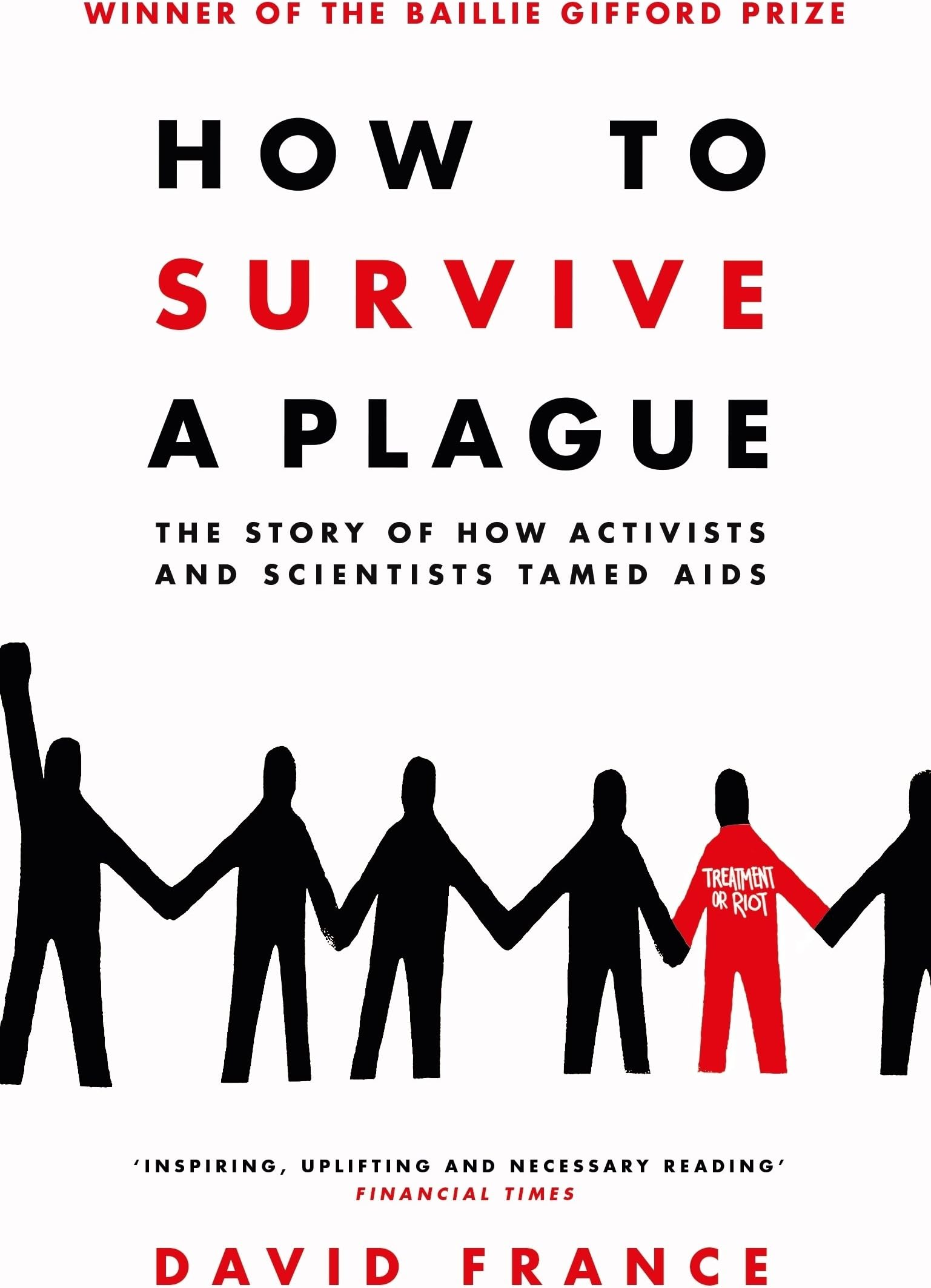
How to Survive a Plague: The Story of How Activists and Scientists Tamed AIDS
Product ID: 51017312
Buy How to Survive a Plague: The Story of How Activists and Scientists Tamed AIDS Main Market by France, David (ISBN: 9781509839407) from desertcart's Book Store. Everyday low prices and free delivery on eligible orders. Review: Wonderful but upsetting read - This is a really important book that highlights the devastation that took place to the gay community in America and gives the sense of how quickly it took hold and how out of step the medical and political establishment were. However due to the nature of the subject matter and how personally involved the author was, it is a distressing read but one I think most people should make the effort to engage with before this just becomes another facet of history Review: Important, emotional and powerful work. - David France has produced an incredible piece of work here. Social, scientific and political history are beautifully combined with personal memories to form an emotionally charged and powerful book .
| Best Sellers Rank | 54,293 in Books ( See Top 100 in Books ) 833 in Medical Sciences A-Z 1,091 in Social & Cultural History 1,403 in Medical & Healthcare Practitioners |
| Customer reviews | 4.7 4.7 out of 5 stars (511) |
| Dimensions | 12.9 x 4.9 x 19.7 cm |
| Edition | Main Market |
| ISBN-10 | 1509839402 |
| ISBN-13 | 978-1509839407 |
| Item weight | 424 g |
| Language | English |
| Print length | 640 pages |
| Publication date | 21 Sept. 2017 |
| Publisher | Picador |
| Reading age | 18 years and up |
N**H
Wonderful but upsetting read
This is a really important book that highlights the devastation that took place to the gay community in America and gives the sense of how quickly it took hold and how out of step the medical and political establishment were. However due to the nature of the subject matter and how personally involved the author was, it is a distressing read but one I think most people should make the effort to engage with before this just becomes another facet of history
B**V
Important, emotional and powerful work.
David France has produced an incredible piece of work here. Social, scientific and political history are beautifully combined with personal memories to form an emotionally charged and powerful book .
A**R
Interesting
Really enjoying this so far - especially during covid
D**D
It's all about New York
Very New York. Which is OK because the other big history of AIDS is so San Francisco.
M**N
Fantastic!!
Fantastic book, makes you aware of what really is happening around world....it's a must read book...
K**S
Five Stars
brilliant book
D**E
A glorious history of the community that fought AIDS
The granularity of this book it is one of its great strengths. We learn something of the individuals who became major players in the fight, many of whom died and thus David Frances allows us to touch something very personal about them as people including their humour as well as their sufferings. The sheer time and work commitments added to stress levels which accelerated declines in CD4 counts down to fatal levels. We learn of the heroism, technical expertise and humanity of this people central to this immensely and tragically epic 18 year period in the history of activism and the rights of LGBQT+ people. The book has much of the harrowing detail of the horror of AIDS and the early responses to its victims from wider society. But it also reminds us of the long-term benefits that we still enjoy over and above just the successful management of HIV in high income countries. It is at testament to how these people did not die in vain! AIDs had not got away internationally but at least in the West we owe these people to whom David France pays due tribute to those heroic people to whom we owe a massive debt of gratitude. Oh and it's not true to say that in chronicling ACT UP, he disregards the contribution of women, and learning gained from the history of activism in the Civil Rights and Wormen's Liberation movements!
J**S
Incredible read
Genuinely one of the best books I've ever ready. Truly comprehensive in its scope, he covers the period of the AIDS crisis (early 90s to the mid 90s); covers both the human and scientific aspects, interweaving aspects of his personal life into the larger context. I laughed, I cried, I grieved for people I had never heard of before - but most of all I came away feeling angry about the neglect shown by the government, and motivated to work to ensure it never happens again.
H**R
Buen regalo
N**N
David France has been involved in the New York gay scene since, by coincidence, almost precisely the time that the AIDS epidemic was first noted in the press in July 1981. So, aside from the previous decade following the 1969 Stonewall Riots, as a journalist he saw the plague and the gay community’s devastation by it and fight against it first hand. In 2012, he wrote, produced and directed a film documentary by the same name that was so outstanding it was nominated for an Academy Award. For me, that documentary remains, even since this book, uniquely incredible and a hard act to follow. It is a brilliantly compelling and moving account, with a lot of archival footage, of the ACT UP (AIDS Coalition to Unleash Power) movement composed of mostly AIDS sufferers from its March 1987 founding. By that point, tens of thousands of mostly homosexual men in the U.S. had already died horrible deaths, everyone infected was doomed to the same fate, and there was no effective cure or treatment in sight. But ACT UP’s highly publicized civil disobedience actions at the White House gates, the National Institutes of Health and elsewhere and its success in gaining inclusion on official boards evaluating experimental treatment options, is widely credited, including by the nation’s foremost public health official Dr. Anthony Fauci, with playing a critical and indispensable role the discovery of an effective treatment by 1996. In late 1996 when, having been an early post-Stonewall gay activist myself, I learned that Time magazine had named Dr. David Ho, a long-time AIDS researcher, its ‘Person of the Year,’ I breathed a deeper sigh of relief than for any time in the previous 15 years. It was an affirmation that, indeed, a life-saving treatment for the hideous AIDS had been found. Dr. Ho is not even mentioned in France’s documentary or book because to France’s mind, and undoubtedly in reality, it was the ACT UP activists and the researchers willing to work with and learn from them who finally came up with the right combination of protease inhibitor treatments that produced an immediately efficacious and enduring life-saving treatment. From France’s work it is shown how without the input of a faction of ACT UP that formed itself as the Treatment Action Group (TAG) to work on technical research issues the existing efforts whether by the National Institutes of Health or private pharmaceutical companies were fragmented and out of touch with one another. Despite annual world conferences on AIDS research, “there was no global strategy,” so TAG members had to devise a “National AIDS Treatment Agenda” to put the disparate research efforts into one comprehensive strategy. It was in 1995, after the first discovery of the “protease inhibitor” that an “activist- proposed drug design” combining therapies was introduced, and almost immediately began to work wonders. Within 30 days, very ill patients became symptom free, Fauci said, calling it “a Lazarus effect.” The treatment was provided to hundreds of thousands of AIDS patients in the U.S. and then overseas, especially in Africa, and began saving literally millions of lives. As with his film documentary, France does an excellent job of telling the story in his book, including with some key information the documentary didn’t include, such as exactly how ACT UP came to be formed in 1987. Earlier activist split offs from existing gay organizations, like the Lavender Hill Mob and the Swift and Terrible Retribution Committee, had begun “zaps,” spontaneous street theater and office takeover demonstrations, following a solemn but massive, 200,000-strong June 1986 Gay Pride parade that was greeted with newspaper headlines reporting that a Supreme Court decision had ruled 5-4 to uphold a Georgia gay sex ban. That December, an anonymous effort pasted lower Manhattan with three thousand black posters with an inverted pink triangle and the words “Silence = Death.” Larry Kramer, having been on a hiatus after the highly-successful production of his hard-hitting AIDS-themed play, “The Normal Heart,” decided it was time to spark something new. Ah yes, Larry Kramer! This man had enraged the official gay community in 1978 with the publication of his best selling novel, Faggots, because it exposed the depths of sexual promiscuity and depravity that much of the New York and other urban gay scenes had descended to by then. He was subjected to a massive display of denial and angry insistence on keeping such “secrets” away from the outside world. The leadership, such as it was, of the so-called gay movement then was composed mostly of gay sex club, bathhouse and bar owners, many with ties to the Mob, in an alliance with the sex-addicted often-nightly patrons of their establishments insisting that gay liberation was synonymous with massive amounts of anonymous sex. Kramer was like an Old Testament prophet sounding an alarm. Many never forgave him from that time forward, but the evidence is clear from the wider corpus of his work that he was motivated not out of hate, anger or personal repression, but out of a deep love and compassion for gay people. (It is relevant that science learned just this year that the HIV virus that causes AIDS was present in the blood of many gay men collected in the early 1970s, at the time the “sexual revolution” first broke out. The HIV did not enter the picture in the mid-1970s, as previously thought, by introduction to the U.S. probably from Africa. It had been here much earlier, and sexually-active gay men were playing Russian roulette since 1970 not only with all the other STDs of the day, but unbeknownst to them, also a virus that would wind up killing at least 600,000 of them.) This was shown when the first public reports of a gay “cancer” was first reported in July 1981. It was Kramer to leaped into action to organize a grass roots political response, the formation of the Gay Men’s Health Crisis. But in a subculture swimming with petty jealousies and fear, Kramer’s insistence on strident action was too much, and he became marginalized. Still, that only led to his authorship and production of a quasi-autobiographical “The Normal Heart,” the powerful play that exposed the plight of sick and dying gay men, and a pathetic lack of government response, to a much wider audience. Then, in 1987, when the effort against AIDS was going absolutely nowhere, it was Kramer, again, who provided the spark for the formation of ACT UP that ultimately got the gay community activated to get the results it needed. Due to a last-minute cancellation, Kramer got to fill the program for the March 1987 meeting of a monthly speaker series at the Gay and Lesbian Community Center. This was the opportunity he needed, and he didn’t miss it. He organized an array of activists to show up. “I’m going to try to organize a civil disobedience group,” Kramer said to a friend, as France quoted him. “I’m putting friends in the audience as plants. When I call for people to help me organize a demonstration, I need you to stand up and join in and rabble rouse.” Some 250 gay men showed up. As France wrote, “Kramer’s savage oratory power, honed over his years of screed writing, swelled as he read his prepared remarks. ‘If my speech tonight doesn’t scare the s*** out of you, we’re in trouble,’ he told them. ‘I sometimes think we have a death wish. I think we must want to die. I have never been able to understand why we have sat back and let ourselves literally be knocked off man by man without fighting back. I have heard of denial, but this is more than denial – it is a death wish!” France wrote that the presentation morphed the group into a “Capraesque town hall meeting” full of energy and animated talk. He wrote, “The fuse caught fire…Kramer’s strategy had worked. Something brand new was afoot.” Still, people accused Kramer of wanting to become famous for this effort. It is a sad thing, but a reality that people who can only think in terms of such things, or in terms of hate or vengefulness, can only assign similar motives to others. To an observer like me, it is clear that everything Kramer did, including his stridency, was done more out of love than anything else. The world still won’t acknowledge that, in the context of how bad the AIDS plague was, he was right from the start and almost all the others were wrong. France is ambiguous about Kramer in his book. On the one hand, he wrote in his introduction, “No individual was more responsible for galvanizing the AIDS movement than Kramer. His plays, books and essays over the years pushed the gay community to demand that the world take notice.” But in another place he claimed that Kramer did almost more harm than good, although not with the viciousness of gay blogger Andrew Sullivan in his review of France’s book in the New York Times Book Review of Nov. 27. Sullivan wrote, “There was the despised Larry Kramer, fresh off excoriating gay men’s sex lives in his novel, Faggots, who bravely confronted the core problem of transmission, but who also displayed a personal viciousness that derailed the movement as much as galvanized it.” In his book, France underscored his ambiguity about Kramer by quoting a gay leader who wrote a highly critical letter to Kramer, saying, “You should beg the forgiveness of every gay man who you have caused pain,” but then credited Kramer “with raising the visibility of the epidemic like no one else by working to become, ‘like Goethe, the personification of an era much linked with sadness and death.’” The most serious shortcoming of France’s work is in his effort at applying pop psychology to Kramer and others in the struggle, saying Kramer owed his stridency to a “stern father,” and his tendency “to see the world as a battle between aloof parent figures and rejected children.” How about the fact that an entire generation of gay men were being wiped out by the most heinous of incurable diseases being his motivator? The pop psychology is just so much BS and really a terrible take-down of Kramer’s motives. There is a valid point to the charge of “tone policing” that feminists are increasingly talk about. It is a silencing tactic that protects privilege and silences people who are hurting, often targeting women. (In Keith Bybee’s book, How Civility Works, he notes that feminists, Black Lives Matter protesters, and anti-war protesters have been told to “calm down and try to be more polite.” He argues that tone policing is a means to deflect attention from injustice and relocate the problem in the style of the complaint, rather than to address the complaint.”) Kramer continues to be a huge target of this kind of “tone policing.” Surely, the heroic role of many in the ACT UP struggle cannot be ignored, the work of Peter Staley, Bob Rafsky, Mike Harrington, Greg Consalves, Spencer Cox, Jim Eigo, Ann Northrup, Iris Long, David Barr, Derek Link, Gregg Bordowitz, Bill Bahlman, and of course, their predecessors like Joe Sonnabend, Michael Callen, Richard Berkowitz, Mathilda Krim and many others. Something that France’s book does not include is the added level of pain above the medical and physical pain of AIDS victims, worst of all being the brutal and complete rejection of young AIDS victims by their own parents and families throughout that period. France tells the stories of a couple AIDS victims who were being cared for by their parents as they expired. But there were many, many more cases of total rejection of AIDS victims by their own parents, and left to die with an emptiness in their hearts even more painful than their physical illness. Even today, the rejection of young gay men and women by their families is heartbreaking, with an estimated full 25 percent of homeless persons being young gays. The story of ACT UP is not so much about glorified heroism as about a resolve to live. Staley said when he and others were about to toss the ashes of loved ones over the White House fence in 1992 that, “Some are making something beautiful out of the epidemic, but there’s nothing beautiful about a box of ashes and bone chips. There’s no beauty in that.” When France wrote of the real breakthrough being found in 1996, he confessed, “It had been many years since I had cried – maybe I hadn’t shed a tear since Doug’s memorial service – but now tears rolled down my cheeks. When I caught my breath again, it came in sobs. Was it over? Was the long nightmare passed?” “Tears filled Spencer Cox’s eyes,” he wrote. “’We did it,’ he whispered to the person sitting beside him. ‘We did it. We’re going to live.’” I knew the feeling, as every gay man in the nation must have that day. Final point, I suggest that France’s work be examined from the standpoint of what he doesn’t say about how a new plague might be avoided.
V**R
Um incrivel relato da luta lgbt em busca de sobrevivência. Sempre fomos forjados na luta. Que esse sentimento nunca se apague
D**N
This book a well written, easy read, and comprehensive narrative of the AIDS epidemic. It should be a must read for anybody who has an interest in the history of the disease and it's devastating toll on a whole generation of gay men. The similarities to the covid pandemic are beyond obvious. For people who didn't live through it the book is an indictment of another president who refused to even acknowledge the disease and the impact it was having on the country. It took him 6 years to even say the word "AIDS" and he eventually did it only because Elizabeth Taylor devoted a lot of energy and time convincing him to take the blinders off. In covid we all saw the tragedy of patients dying without their loved ones being able to be with them at the end. For many people this was a reminder of the thousands of AIDS patients who died alone except for medical staff. The difference between the two diseases is that AIDS patients' loved ones choose not to be there.
B**E
This is an astonishing book. Including the glossary and notes, it tops 600 pages. I am not a fast reader, and I read it in a week. I should say at the outset that I had a personal interest in the material, having lost a partner to AIDS in Boston in 1984 and many friends in the subsequent years. This book has frequently been compared to Randy Shilts' "And the Band Played On" but is more tightly focussed on the formation of ACT UP and its impact on the ultimate development of life-saving drugs. Despite a staggering amount of detail, I was never bored and rarely confused, a testament to Mr. France's meticulous presentation of material. While it often reads as a chronicle of failures, both by government officials and pharmaceutical companies, the author never lets the reader move away from a connection to real people doing deeply committed work under the worst possible circumstances. I cared about them personally and ached for their suffering as year after year passed with only AZT, a drug toxic for most patients and with terrible side effects, to turn to. I hope that there is a special place in Hell for Burroughs-Wellcome executives, Ronald Reagan, Archbishop John O'Conner and Senator Jesse Helms, people who intentionally held back progress on finding a cure for AIDS for their own financial benefit or out of some perverted religious belief. I bought a copy of the documentary of the same name last year and was deeply moved. There is a visceral difference between reading about Peter Staley scaling the entrance to buildings at the FDA and the NIH and seeing a video taken of the event. I watched the dvd again after finishing the book and felt devastated all over again. Reading the book had deepened my understanding of what happened and my love for the people involved, and seeing them on film, so many of whom died, broke my heart. It's worth having your heart broken to read this book.
Trustpilot
1 month ago
1 month ago