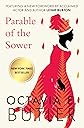
Parable of the Sower
Product ID: 341427151
Desertcart purchases this item on your behalf and handles shipping, customs, and support to Nicaragua.
This acclaimed post-apocalyptic novel of hope and terror from an award-winning author "pairs well with 1984 or The Handmaid's Tale" and includes a foreword by N. K. Jemisin (John Green, New York Times). When global climate change and economic crises lead to social chaos in the early 2020s, California becomes full of dangers, from pervasive water shortage to masses of vagabonds who will do anything to live to see another day. Fifteen-year-old Lauren Olamina lives inside a gated community with her preacher father, family, and neighbors, sheltered from the surrounding anarchy. In a society where any vulnerability is a risk, she suffers from hyperempathy, a debilitating sensitivity to others' emotions. Precocious and clear-eyed, Lauren must make her voice heard in order to protect her loved ones from the imminent disasters her small community stubbornly ignores. But what begins as a fight for survival soon leads to something much more: the birth of a new faith . . . and a startling vision of human destiny. Review: Thought provoking - For a good society and better world, the entire community (ies) must prosper, and we must take one another along. This is so relevant today and will always be... Review: Recieved a good copy. - The book was in good shape.
| Best Sellers Rank | #291,368 in Books ( See Top 100 in Books ) #86 in Dystopian Fiction #502 in Post-Apocalyptic Science Fiction (Books) #925 in Humorous Science Fiction (Books) |
| Customer Reviews | 4.5 out of 5 stars 22,521 Reviews |
T**A
Thought provoking
For a good society and better world, the entire community (ies) must prosper, and we must take one another along. This is so relevant today and will always be...
P**T
Recieved a good copy.
The book was in good shape.
P**R
Incredible book!
It’s amazing how this book written in the 1990s is predictive of what the world might be in 2025-27! Written as diary journals of a young girl it is the story of survival, and partnership and love and losses! Must read if you are into dystopian worlds!
A**N
SO GOOD
I read it a couple of months ago and it was strange when I looked at the date and realized I was briefly in real time, especially with how things IRL keep getting worse and worse.
M**A
Butler is a force of nature. A must-read
The year is 2025 and the world has been thrown into chaos. Rich communities are being destroyed by thugs and drug dealers, people raped and murdered and houses looted and burnt down to cinders. Amidst all of the chaos, Lauren Olamina dreams of a society of her own and calls it Earthseed (Biblical reference). As she is forced to flee her walled community (the same wall that is supposed to keep evil out of their doorstep) with a handful of people, Lauren realizes that the world is more than people using their mind and resources on petty crimes. Parable of the Sower is essentially a survival story. Lauren's hyperempathy makes it difficult to harm another soul but in order to survive, she has to pick up that gun and shoot. Lauren looses her brother to mindless violence and then her family to a tragic incident. Being from a Black, Hispanic family and travelling with both white and black people, Lauren tries to decide what kind of work each of them are suitable for, if they decide to join this community of hers, built from personal experiences and empathy. Butler exclaims how as a Black person, the only job available is that of a slave, no matter the year. This story was written way back when Dystopia wasn't even a genre, but what Butler builds through this story is plausible and extremely scary. Butler questions the laws around worker's safety, religious preachings and dirty politics, considering them to be a major reason for the degradation in societal norms to the extent where no one is safe. Parable of the Sower is an apocalyptic novel that highlights a government that has failed it's people. There is a lack of basic amenities and the loss of life seems to be a casual affair. Lauren, however, stands strong with her idea of a world where there's harmony, safety and happiness.
T**A
Waste of time
Made me sad reading this. No point of this at all, depressing and not the least bit intriguing or entertaining.
A**E
Must read sci-fi
Never miss out on Octavia Butler
C**N
Amazon: péssimo serviço
A Amazon me entregou o livro em péssima condição, com as páginas completamente deterioradas nos lados. Pedi substituição e me entregaram a mesma coisa! O defeito já é bastante evidente, me entregarem assim uma vez já achei bem ruim, duas vezes achei clara má-fé.
W**I
The book is like a prophecy of what we are experiencing now.
A tale about dystopian future very riveting and gripping tale by Octavia E butler.
C**N
Of public interest
This is a tough SciFi - the events describe are not so far-stretched, and it definitely hits home. I loved the jornal narrative and Lauren's reflections on religion & community. Highly recommend, but be mindful that we are in a apocalyptic scenario.
T**T
Great Climate Fiction Novel
Growing up I had never been exposed to much about religion. To this day my thoughts on religion are never substantial; sometimes I’ll have an occasional deep thought, but a fleeting one at that until I turn back to the life in front of me. Lauren Olamina, the protagonist in Parable of the Sower by Octavia E. Butler, on the other hand was brought up into an intensely religious household that she learned to resent. Lauren’s father was a Baptist minister, raising her and her brothers in an intensely religious fashion in a post-apocalyptic time outside of Los Angeles. The post-apocalyptic America is not one ravaged by supernatural creatures or extreme weather conditions, but an extremely plausible world set into motion by drought and racial tensions. America is at the bottom of a downward spiral with Lauren’s gated California neighborhood being the only thing keeping the drug addled maniacs and thieves from raiding her community on a daily basis. Disaster is constantly right outside of Lauren’s gate causing the extremely bright but mentally damaged young woman to attempt to find her place in collapsing America. Refusing to believe in the religion her father preaches to her daily, Lauren begins establishing her own beliefs in God that translate into what she calls Earthseed. To Lauren, God is change. Earthseed presented through Lauren is Butler’s way of examining our own society. By predicting what will become of our society if it does not overcome individualism, racism, and tendencies towards violence, Butler presents her solution through Earthseed. When society crumbles, so does 99% of the population. Anyone not protected in a gated or guarded society immediately turns towards looting, pillaging, rape, and especially arson. A new drug has been introduced on the streets dubbed “pyro” that makes watching a fire more exhilarating and enjoyable than having sex. Lauren being born in 2009 (the novel was written in 1993) has known only this nightmarish America her entire life. Racial tensions are at an all-time high, water is more expensive than food, and the government has basically collapsed. While the adults are fine with attempting to live life the way it used to be, preaching the same bible verses over again, and still believing things may eventually return to “normal”; Lauren is the next generation learning to live in this new society. Living in this new society and not understanding the old, Lauren rejects her father’s God. Lauren believes in a new religion she has discovered entitled Earthseed. Lauren claim’s she has not invented or made it up, but discovered it. There is no all mighty being or supernatural element to the God in Earthseed, God is only change. The book presents little Earthseed scripture and its beliefs throughout, which later make more sense towards the end of the novel. Earthseed believes that praying does nothing but assist the prayer, and that effort should be put into action to make change. The more the proverbs are read in the book the more the reader is able to comprehend Lauren’s beliefs. Lauren literally believes that God is change. Some of Earthseed’s texts give more insight into her complex thinking “We do not worship God. We perceive and attend God. With forethought and work, we shape God.” And “God is Power- infinite, irresistible, inexorable, indifferent. And yet, God is Pliable- trickster, teacher, chaos, clay. God exists to be shaped. God is Change”. I really loved the thought put into Lauren’s complex world view and it makes complete sense considering the dangerous world she learned to grow up in. Lauren is forced to leave the only home she has ever known when crazy drug addled arsonists come to pillage and destroy her neighborhood. If I grew up in that type of world I am not sure what I would believe in, but Lauren’s views are all justified and change is the belief and system that keeps her alive in post-apocalyptic California. Butler, through Lauren, is expressing that she believes that to get through the hard times any nation is facing, they need to be adaptable, diverse, and learn to embrace change. Another quote from Earthseed demonstrates Butler’s thoughts on diversity, “Embrace diversity. Unite—or be divided, robbed, ruled, killed by those who see you as prey. Embrace diversity, or be destroyed”. My main issue with Butler’s Earthseed is the way that she presents it. At first Earthseed is not exactly referred to as a religion by Lauren until other people she meets on her journey refer to it as such. My problem with Butler deciding to refer to Earthseed as a religion is that it is too distinctly different from any other religion to be classified as such. A religion is classified by most sources as a set of beliefs concerning the cause, purpose, and nature of the universe; and the Gods that preside over it. Earthseed perfectly fits the set of beliefs and practices used and agreed on by a group of people, but when addressing its God of Change, it is not actually referring to a deity as is every other religion. Also converting the people Lauren traveled with to even accept the idea of something they were referring to as a religion would not go as quickly as it did in the book. It is hard enough reaching out to someone without a religion to think about one, but trying to convince a devout religious individual about a new way of thinking seems like it would not be possible. Reading Butler’s essay “Devil Girl From Mars”: Why I Write Science Fiction, made it clear where Lauren’s attitude and beliefs came from. Butler believes in a well-educated, literate, news observing, and accepting society. Butler seems to view society on a macro level more so than a micro one, focusing on big picture issues and the state of the human race as a whole. Butler understands that global warming issue an issue in our society which is why she chose to have that be the cause of the draughts and erratic weather in her novel. From focusing on global warming in many of the novels we have read so far I believe Butler paints the most realistic picture of the consequences of ignoring global warming. I agree with Butler’s focus on the continuing productive existence of the human race. I often also have thoughts about human society as a whole and believe Butler made well educated and productive points, the things that she exaggerated for the sake of her novels are actual issues we need to be focusing on today. Overall Parable of the Sower was one of the more realistic and enjoyable post-apocalyptic books I’ve read. The religious undertone was present but not abrasive, and focused more on religion as a general concept. Instead of focusing on one religion, Butler commented on religion as it fits into society as a whole.
J**S
good post apocalyptic scifi
I enjoyed it a lot but i did not care for the ending. Endings are hard i understand that, and i believe there are sequels. Worth reading if you like post apocalyptic sci-fi. If you liked The Road, it is similar but parable is way less dark. A much probable and realistic post apocalypse for the post atomic age. Very insightful and interesting. Worth a read 100%
Trustpilot
2 weeks ago
4 days ago