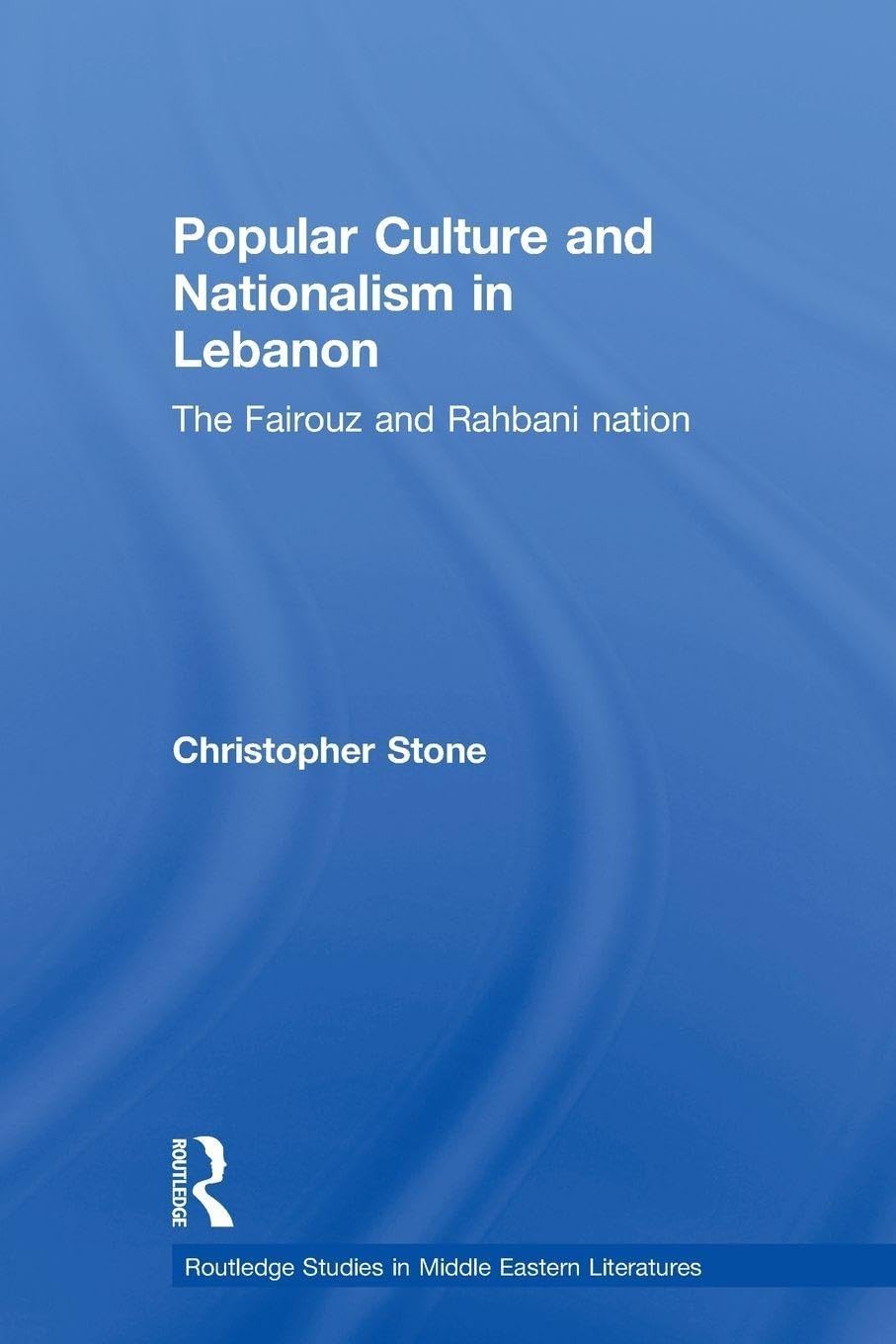
Popular Culture and Nationalism in Lebanon (Routledge Studies in Middle Eastern Literatures)
Product ID: 30965054
Buy anything from 5,000+ international stores. One checkout price. No surprise fees. Join 2M+ shoppers on Desertcart.
Desertcart purchases this item on your behalf and handles shipping, customs, and support to Nicaragua.
Based on an award-winning thesis, this volume is a pioneering study of musical theatre and popular culture and its relation to the production of identity in Lebanon in the second half of the twentieth century. In the aftermath of the departure of the French from Lebanon and the civil violence of 1958, the Rahbani brothers (Asi and Mansour) staged a series of folkloric musical theatrical extravaganzas at the annual Ba‘labakk festival which highlighted the talents of Asi’s wife, the Lebanese diva Fairouz, arguably the most famous living Arab singer. The inclusion of these folkloric vignettes into the festival’s otherwise European dominated cultural agenda created a powerful nation-building combination of what Partha Chatterjee calls the ‘appropriation of the popular’ and the ‘classicization of tradition.’ The Rahbani project coincides with the confluence of increasing internal and external migration in Lebanon, as well as with the rapid development of mass media technology, of which the Ba'labakk festival can be seen as an extension. Employing theories of nationalism, modernity, globalism and locality, this book shows that these factors combined to give the project a potent identity-forming power. Popular Culture and Nationalism in Lebanon is the first study of Fairouz and the Rahbani family in English and will appeal to students and researchers in the field of Middle East studies, Popular culture and musical theatre. Review: Expensive and does not deliver on the title - I find this book extremely expensive at $132. If its pages were made of gold I would buy it. But it is a thin volume of fewer than 200 pages of text. However, it has a grand title and I decided to hit the unievrsity library and borrow it. And I did. The first observation I should make is that it is a good book on the subject matter and the author is honest in his attempt to link music to culture and national identity. Yet it is largely descriptive and poor on intellectual content. The author seems to draw heavily from the plays and musicals of Fairuz and Rahbanis, which is good if the reader is into theatre, but the title promises to talk about nationalism, which is not seen anywhwere in the book. One would expect at least a discussion of the debate on lebanese identity inside Lebanon and the various disagreements over its history and how music was a main component of modern identity in the country, etc., while citing standard texts from Arab and western sources on culture and the nation. But this was missing. I felt starved of a nice intellectual discussion while reading this book. It is entertaining anyway, and I did not waste my time.
| Best Sellers Rank | #2,977,654 in Books ( See Top 100 in Books ) #85 in African & Middle Eastern Literature #611 in Middle Eastern Literature (Books) #993 in Political Ideologies |
| Customer Reviews | 4.6 out of 5 stars 3 Reviews |
S**R
Expensive and does not deliver on the title
I find this book extremely expensive at $132. If its pages were made of gold I would buy it. But it is a thin volume of fewer than 200 pages of text. However, it has a grand title and I decided to hit the unievrsity library and borrow it. And I did. The first observation I should make is that it is a good book on the subject matter and the author is honest in his attempt to link music to culture and national identity. Yet it is largely descriptive and poor on intellectual content. The author seems to draw heavily from the plays and musicals of Fairuz and Rahbanis, which is good if the reader is into theatre, but the title promises to talk about nationalism, which is not seen anywhwere in the book. One would expect at least a discussion of the debate on lebanese identity inside Lebanon and the various disagreements over its history and how music was a main component of modern identity in the country, etc., while citing standard texts from Arab and western sources on culture and the nation. But this was missing. I felt starved of a nice intellectual discussion while reading this book. It is entertaining anyway, and I did not waste my time.
Trustpilot
3 weeks ago
3 weeks ago