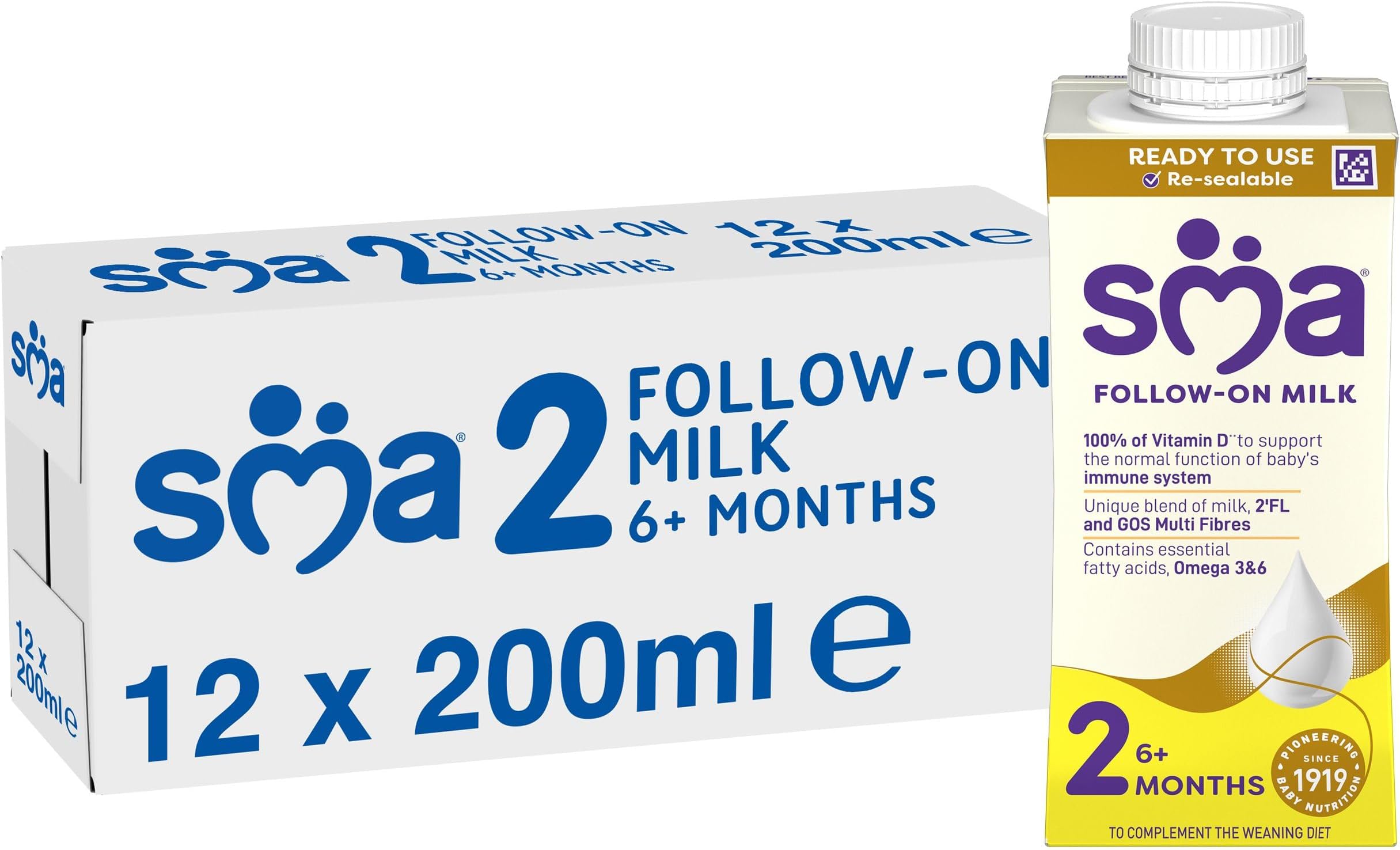
Talk to your health visitor who will confirm this. Follow-on formula can be a confusing area, with many people believing that it is a necessary next step after first infant formula. This article which was first published in the NHD Magazine May 2017 supplement covers the advertising law, nutritional content and uses of follow-on infant formulas. Follow on formula can be used with infants from the age of six months alongside appropriate complementary feeding1. Although there are some nutritional differences between infant formula and follow-on formula, for the majority of infants there is no benefit from switching to a follow-on formula2. There has been a considerable amount of controversy surrounding the advertising practices related to follow-on formula; for example in the UK it is illegal to advertise infant formula to the general public, however the advertisement of follow-on formula is permitted3. Public Guidelines: The World Health Organisation (WHO)4 and the UK Department of Health (DH)1 report that follow-on formula is unnecessary and an unsuitable substitute for breastmilk or first infant milk. Specifically, the UK government advise that “breast milk is the best form of nutrition for infants and exclusive breastfeeding is recommended for around the first six months of an infant’s life*” and unless advised by a health professional ‘first milk’ is the only suitable alternative for breastmilk and “the only type of formula an infant requires until the age of 12 months when cow’s milk can be introduced as a main drink into the diet”. *However the British Dietetic Association (BDA)5 and the European Society for Paediatric Gastroenterology, Hepatology, and Nutrition (ESPGHAN)6 advise that complementary feeding can be introduced from 4 – 6 months of age and the Scientific Advisory Committee on Nutrition (SACN)7 is currently working on updating the UK recommendations on complementary feeding. UK Statistics As displayed in Table 1, the UK Diet and Nutrition Survey of Infants and Young Children, 20111 identified that although follow-on formula was most commonly given to infants aged seven to 11 months, 32% of babies aged four to six months were given follow-on formula. Furthermore, this survey found that by 10 to 11 months 69% of all mothers had given their baby follow-on formula at some stage; which is an increase from 53% in 2005. Table 1: UK Use of Follow-On Formula1 Age Group Percentage Use of Follow-on Formula 4 – 6 months 32% 7 – 9 months 56% 10 – 11 months 59% 12 – 18 months 16% SACN’s analysis of the 2005 UK Infant Feeding Survey8 found that younger mothers, those from lower socioeconomic groups and those with lower educational levels were the least likely to try and to continue breastfeeding, were more likely to use follow-on formula and were more likely to provide this at at an earlier age. SACN also reported that at 4-6 months the main reasons given for switching to follow-on formula included: Past experience using this with previous children (23%) Believing it was better for the baby as it provides more nutrients (20%) Thinking that the baby was still hungry after being fed ordinary infant formula (18%) Recommendations from doctors or health visitors (22%) Nutritional Content Follow-on formula is often advertised for use by ‘hungrier babies’ as it is casein based which may take longer to digest than whey based formulas; however this claim is not supported by the evidence base8. Follow-on formulas can be higher in protein, energy, calcium, iron, and other micronutrients compared to breast milk9. According to the American Academy of Paediatrics Committee on Nutrition and the Australian National Health and Medical Research Council there are no established advantages of follow-on formula over breast milk in relation to changes in its fat, protein, carbohydrate, calcium and sodium composition10. WHO has highlighted that follow-on formula can be higher in protein than those recommended for adequate growth and development of infants and young children”4. Research is emerging that most infants in high income countries exceed their protein requirements and a higher protein intake in early life may be associated with a higher risk of obesity in later life6. For this reason and also because the current minimum protein level permitted in follow-on formula (1.8g/100 kcal) remains higher than that found in breast milk, the European Food Safety Authority (EFSA) has recently completed a public consultation to consider lowering this minimum level to 1.6 g/100 kcal and have also lowered the maximum permitted protein level from 3.0 to 2.5 g/100 kcal6. Follow-on formulas may be useful for those with low iron levels or a poor weaning diet over the age of 6 months; however the majority of infants won’t need the additional iron that these formulas provide if they have an adequate weaning diet9-10. There is mixed evidence from studies which compared iron supplemented follow-on formulas with cognitive outcomes, and also dietary iron intake in infants and cognitive outcomes6. There is some evidence that follow-on formula supplemented with DHA (an omega 3 fatty acid which is included in most infant formulas in the UK) may improve short-term visual function in infants, which is important as some European infants and young children may be at risk of a low omega-3 intake. However genotype and fish intake also play a role in DHA status and studies using DHA-enriched egg yolk as part of complementary feeding have also been shown to increase DHA levels6. Table 2: Nutritional comparison of breast milk, infant formula & follow-on formula per 100ml11-12 Nutrient RNI for infants 6-12 months** Breast milk per 100ml Infant Formula per 100ml Follow-on Formula per 100ml Energy (kcal) 710 – 960 69 60 – 70 60 – 70 Protein (g) 12.7 – 14.9 1.3 1.8 – 3 1.8 – 3.5 Fat (g) approx. 28 – 37 (i.e. 35% total energy) 4.1 4.4 – 6 4 – 6 Carbohydrate (g) approx 89 – 120 (i.e. 50% total energy) 7.2 9 – 14 9 – 14 Iron (mg) 4.3 – 7.8 0.07 0.3 – 1.3 0.6 – 2 Calcium (mg) 524 34 50 – 140 50 – 140 Sodium (mg) 276 – 345 15 20 – 60 20 – 60 Vitamin A (ug) 350 58 60 – 180 60 – 180 Vitamin D (ug) 8.5 – 10 (safe intake) 0.2 – 3.1 1 – 2.5 1 – 3 Vitamin C (mg) 25 4 10 – 30 10 – 30 Thiamine (mg) 0.18 – 0.23 0.02 0.06 – 0.3 0.06 – 0.3 Riboflavin (mg) 0.4 0.03 0.08 – 0.4 0.08 – 0.4 Niacin (mg) 4 – 5 0.2 0.3 – 1.5 0.3 – 1.5 Vitamin B6 (mg) 0.2 – 0.4 0.01 0.035 – 0.175 0.035 – 0.175 Linoleic acid (mg) >1% total energy13 560 300 – 1200 300 – 1200 Linolenic acid (mg) >0.2% total energy13 72 50 50 **This is a combination of the nutritional requirements of age groups 4-6 months, 7-9 months and 10-12 months from the Great Ormond Street guide ‘Nutritional Requirements’14; this is not suitable for devising nutritional requirements. Advertising Law Numerous studies have found that the labelling and marketing of follow-on formula can persuade parents to switch from breastfeeding to follow-up formula unnecessarily when their baby reaches six months4,8, 16-17 and that the advertising surrounding follow-on formula may be contributing to the low levels of breastfeeding found in the UK8 (the 2010 infant feeding survey reported: 81% breastfeeding initiation, 69% breastfeeding at one week, only 34% breastfeeding at 6 months18). Follow-on formula can also be confused with first infant formula; SACN (2008) identified that this is most likely to occur in lower socioeconomic groups and in general that “many mothers are unclear about the distinction between the different types of formula”2,8. Therefore, in 2010 the World Health Assembly Resolution appealed to “infant food manufacturers and distributors to comply fully with their responsibilities under the International Code of Marketing of Breastmilk Substitutes and subsequent relevant World Health Assembly Resolutions” as these marketing strategies were undermining optimal infant feeding4,15. The UK government now mandate that the labelling of follow-on formula must state3,19: “The product is suitable only for particular nutritional use by infants over the age of six months” “The product should form only part of a diversified diet” “Infant formula and follow-on formula shall be labelled in such a way that it enables consumers to make a clear distinction between such products so as to avoid any risk of confusion between infant formula and follow on formula” (including the age range in an appropriate font size) The superiority of breastfeeding via an “Important Notice” Although it is illegal to advertise or promote infant formula (with the exception of information for a scientific or trade publication), there are no restrictions on the promotion of follow on formula beyond the rules related to packaging described above; however more stringent promotion laws have been called for by SACN in order to reduce the amount of parents switching their babies on to follow-on formula at a young age8,19. Conclusion It is clear that the follow-on formula market is thriving despite the limited supporting evidence for their nutritional use, with the exception of a potential benefit for some infants over 6 months with anaemia or an inadequate weaning diet. Although there are clear labelling laws related to this type of formula in the UK, the fact that there are few advertising restrictions increases the risk that infants may be inappropriately switched to a follow-on formula. As health professionals it is our role to remain consistent that that ‘breast is best’ until at least 12 months and where formula is used there is no benefit of switching from infant formula to a follow-on formula for the majority of infants. (All the above from Dietetically Speaking website)