

Automate the Boring Stuff with Python: Practical Programming for Total Beginners
Product ID: 14231459
Buy anything from 5,000+ international stores. One checkout price. No surprise fees. Join 2M+ shoppers on Desertcart.
Desertcart purchases this item on your behalf and handles shipping, customs, and support to Nicaragua.
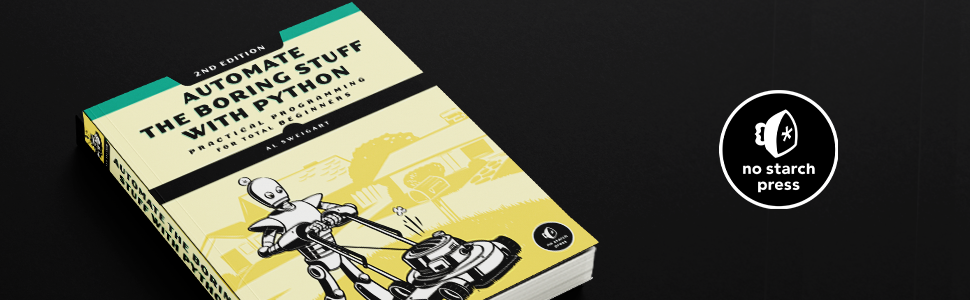
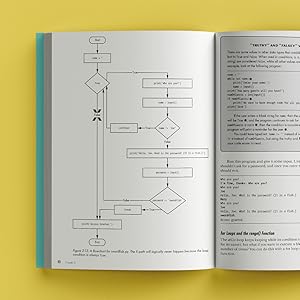
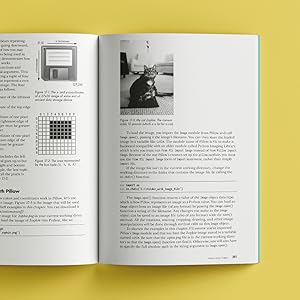
If you’ve ever spent hours renaming files or updating hundreds of spreadsheet cells, you know how tedious tasks like these can be. But what if you could have your computer do them for you? In Automate the Boring Stuff with Python , you’ll learn how to use Python to write programs that do in minutes what would take you hours to do by hand—no prior programming experience required. Once you’ve mastered the basics of programming, you’ll create Python programs that effortlessly perform useful and impressive feats of automation to: –Search for text in a file or across multiple files –Create, update, move, and rename files and folders –Search the Web and download online content –Update and format data in Excel spreadsheets of any size –Split, merge, watermark, and encrypt PDFs –Send reminder emails and text notifications –Fill out online forms Step-by-step instructions walk you through each program, and practice projects at the end of each chapter challenge you to improve those programs and use your newfound skills to automate similar tasks. Don’t spend your time doing work a well-trained monkey could do. Even if you’ve never written a line of code, you can make your computer do the grunt work. Learn how in Automate the Boring Stuff with Python . Note: The programs in this book are written to run on Python 3. Review: Best Programming Book I've Read - I am only a chapter into this book, but it has so far been the best programming book I have yet read. His examples are clear, and he does not just say, "now add x between a and b" as previous coding books have done, instead he lays out the code line by line, notes the line which code is on, and references the lines as he goes through it. He even repeats the code several times in examples in order to address different issues and explains why some things don't work. I feel as if, unlike other books I have read from other publishing companies, that No Starch Press actually proofreads and tests what they are putting into the world, and I think this author actually understands how to communicate and teach via a written medium. As I have moved further into this book, I can re-confirm my thoughts on it: It is by far the best programming book I have read. I have not yet encountered any errors or mistakes in it, and the author wrote his code and explained it line by line so that even someone as inexperienced as I am can learn from the code. I will absolutely be purchasing future books from No Starch Press as they publish quality material. I have moved further into this book, and I am still convinced that it is the best programming book I have read. While there are still points at which I am confused, or stumble, these are no way the fault of the author; but rather my own shortcomings and lack of experience with various aspects of computer programming. I plan on purchasing the second edition of this book so as to support the author for his incredible work in teaching and software development. Review: Great Book for Beginners - This is a great book for those who know how to use computer basics but are super beginners to programming in general. There are some issues I have with the book's methods, but I am giving it 5 stars because the author explicitly mentions these defects as an intentional part of the book, and the methods still really helped me get to the "meat" of programing basics. The book takes you through the basics of programming with python, a bit of history about the language, and takes the user through some of the most common functions. Sweigart explains the definitions of basic concepts, such as strings, integers, functions...etc... There are lots of review sessions and the projects at the end of the chapters really help you work out the syntax on your own. As the book progresses into more and more complex usages of the language all the while giving the user great examples of potential uses for programming for general office use, or as time saving techniques. The Pros: -easy to read, to the point but with enough description to teach you the concepts. -great introduction to programming in general, as well as the language -a supplemental website and reddit forum that can really help users with some of the concepts of the book. The Cons: -the style leaves out some common programming rules I discovered with supplemental work (he openly admits this is done to keep to the basics of syntax and language usage, it is an effective way to teach newbies). -some things should have had a little more attention. I feel the role of functions is so big, there should have been a little more emphasis on the scope of the use of the functions I would highly recommend this book if you: A. are looking to do programming but do not know where to start and B. are comfortable with computers (you don't have to know the command line or be able ot build one from the ground up, but know how to use basic functions) C. Don't mind the stripped down explanation of things, sticking to concepts rather than form, or the "do's and don'ts" of proper usage


| Best Sellers Rank | #233,969 in Books ( See Top 100 in Books ) #119 in Introductory & Beginning Programming #179 in Python Programming #196 in Software Development (Books) |
| Customer Reviews | 4.7 out of 5 stars 1,559 Reviews |
K**E
Best Programming Book I've Read
I am only a chapter into this book, but it has so far been the best programming book I have yet read. His examples are clear, and he does not just say, "now add x between a and b" as previous coding books have done, instead he lays out the code line by line, notes the line which code is on, and references the lines as he goes through it. He even repeats the code several times in examples in order to address different issues and explains why some things don't work. I feel as if, unlike other books I have read from other publishing companies, that No Starch Press actually proofreads and tests what they are putting into the world, and I think this author actually understands how to communicate and teach via a written medium. As I have moved further into this book, I can re-confirm my thoughts on it: It is by far the best programming book I have read. I have not yet encountered any errors or mistakes in it, and the author wrote his code and explained it line by line so that even someone as inexperienced as I am can learn from the code. I will absolutely be purchasing future books from No Starch Press as they publish quality material. I have moved further into this book, and I am still convinced that it is the best programming book I have read. While there are still points at which I am confused, or stumble, these are no way the fault of the author; but rather my own shortcomings and lack of experience with various aspects of computer programming. I plan on purchasing the second edition of this book so as to support the author for his incredible work in teaching and software development.
K**R
Great Book for Beginners
This is a great book for those who know how to use computer basics but are super beginners to programming in general. There are some issues I have with the book's methods, but I am giving it 5 stars because the author explicitly mentions these defects as an intentional part of the book, and the methods still really helped me get to the "meat" of programing basics. The book takes you through the basics of programming with python, a bit of history about the language, and takes the user through some of the most common functions. Sweigart explains the definitions of basic concepts, such as strings, integers, functions...etc... There are lots of review sessions and the projects at the end of the chapters really help you work out the syntax on your own. As the book progresses into more and more complex usages of the language all the while giving the user great examples of potential uses for programming for general office use, or as time saving techniques. The Pros: -easy to read, to the point but with enough description to teach you the concepts. -great introduction to programming in general, as well as the language -a supplemental website and reddit forum that can really help users with some of the concepts of the book. The Cons: -the style leaves out some common programming rules I discovered with supplemental work (he openly admits this is done to keep to the basics of syntax and language usage, it is an effective way to teach newbies). -some things should have had a little more attention. I feel the role of functions is so big, there should have been a little more emphasis on the scope of the use of the functions I would highly recommend this book if you: A. are looking to do programming but do not know where to start and B. are comfortable with computers (you don't have to know the command line or be able ot build one from the ground up, but know how to use basic functions) C. Don't mind the stripped down explanation of things, sticking to concepts rather than form, or the "do's and don'ts" of proper usage
J**N
Bad name for a great beginners book on Python 3
"Automate the Boring Stuff..." is a bad way to start the title for a great book on programming in Python. I love this book, it introduces Python programming to absolute beginners in programming in a gentle way, with a bit of humor. You can use this book for programming on a Mac, PC, or Raspberry Pi. My favorite computer right now is the Raspberry Pi, and it has Python 3. Do yourself a favor, and avoid Python 2. For teaching young kids to program, Python 3 on a Raspberry Pi, represents a low cost solution for educators and parents. The first half of the book is learning python the language in a logical progression for a beginner. The second half of the book shows beginners how to apply Python to doing many common (and not so common) tasks, or as Al Sweigart, would say, "Automate the Boring Stuff". You will learn how to read and write files, work with spreadsheets, emails, and reading data from the web (scraping the web). I plan on using this book to teach Python to others.
A**A
Good, almost great
It was a great book until page 188, where the author began using aspects of Python in examples that were not (yet) introduced/explained in the book AND not listed in the index, which tripped up the flow of the content. This book was reading at 5-star pace until... *page 188 (with usage of "%s") *page 126 (usage of ".pyw" extension, where author says to see Appendix for more details, but there are none) *page 193 (usage of "str(list())", but there is not (yet) an explanation about that type of use of str()) I'm on page 209 now. The few aforementioned issues tripped me up enough to cause this review to be written. If it were not for those errors, the first 209 pages would be 5-stars. PROS: * the explanation of regular expressions is enlightening, clear and simple. Better intro than several other books. *the practice questions are excellent, working through each them is rewarding to one's understanding. *the writing is clear and simple, direct, no typos, and flows well through each topic and chapter.
A**R
Useful and entertaining projects!
Finally, an intro programming book that is entertaining. The example projects are useful. Actually useful. And, quick to program. I have been programming for many years. I have been working with databases for the past 8 years, so my other programming skills have not kept pace mostly because I have no specific day to day use for Python or any other non-database language in my job. But, for some unknown reason, I wanted to learn Python. So, I tried a number of the usual "Learn Python in 36 Seconds" intro methods -- books and on-line tutorials. Boring. So, I would put in a one or two hours and never return. When I got "Automate the Boring Stuff", I skimmed over the intro: basic Python syntax chapters. Then, I hit the projects. I quickly realized my error when I could not remember basic syntax: like put that dreaded colon at the end of an IF or FOR statement. Every language wants to do that differently for some reason. So, I re-started the intro chapters. But, I quickly got back to the projects. First project was a copy to the clipboard task. Cool technology. Not exceptionally useful, but entertaining. And, it sure beat the heck out of the usual intro chapters of beginner books. By the time I hit the Excel chapter, I was hooked. And, automating data into and out Excel had a very high appeal to me. I have now completed 2 Excel projects of my own complete with modules to support the code. Each of my projects will save hours of tedious work every month. Also, I learned the limits of the Python Excel module: openpyxl. That was frustrating -- but a very good indicator that I had actually learned it. And, that pesky colon syntax now naturally comes at the end of IF and FOR statements -- another good indicator that I had learned something. I have to recommend this book to anyone who gets bored trying to learn a new language. Based on how the material is presented, this book should also serve well for first time programmers. And, automating a few tedious tasks does not hurt.
J**H
A fantastic book you shouldn't buy
Here's the thing, this book was GREAT. It kick started my projects and eventually I developed the skills needed to code in python as a job. The author makes a lot of great points throughout the book about how you can apply the lessons beyond the one you're tasked with - and it brings perspective I think a lot of books just don't bother to show you. BUT DON'T BUY IT FOR FULL PRICE. This book regularly goes on sale - along with many others for python - on humblebundle.com. A collection of data science and python books can be yours (digitally) for about $5. The author also gives away free copies every few months on Reddit! A real hoopy frood who knows where his towel is.
J**L
A fantastic book - highly recommended
This is a fantastic book! I started the book with some pretty advanced knowledge of Python and purchased it because I wanted more experience with the specific use cases described in the book. The first six chapters start with the basics of Python like functins, lists, dictionaries and flow control. While some of this is basic, I still learned some new things and so found it valuable. The really interesting stuff starts at chapter seven where the book covers things like pattern matching, reading and writing files, working with Excel files and so on. I love the practical guidance and examples in these chapters. For example, I used the learnings from the Excel section to create a Python program to parse an Excel file for work and it saved me hours of manual work. In short, I love this book and would highly recommend it. It has saved me significant time and was worth every dollar of what I spent. As others have mentioned, this book is also available online for free here: https://automatetheboringstuff.com/. I still like to have a paper copy for reference, but the choice is yours.
N**M
Provides good foundation on python automation
It is a decent enough book, but a surprising amount of the python code is outdated and functions have been replaced by the developers of python, pyxl and other python modules referenced in this book. It would be nice to see some updates. Ignoring outdated modules in the examples, the author does a great job of explaining why python is important and gives so many ideas on how computing tasks can be greatly simplified, by accessing API's from software (like MS Office) that we use all of the time. This information provides an excellent foundation into python and the automation of tasks that make python such a powerhouse. Overall, this is good book; the foundation is great, while the examples are below average due to the outdated functions used in the examples.
P**O
Buenisimo para una aplicación directa del contenido
Es mejor tener alguna idea de los conceptos básicos de Python antes de empezar a leerlo, porque si no igual los primeros capitulos, que están dedicados a esto, se pueden hacer algo pesados. Los capitulos de usos de módulos específicos para diferentes tareas son muy buenos
L**I
Das beste Buch um Python zu lernen!
Nachdem ich verschiedenste Bücher und Kurse begonnen habe um Python zu lernen und jedesmal nach kürzester Zeit wieder aufgehört habe, bin ich über dieses Buch gestolpert. Es ist wahnsinnig unterhaltsam und kurzweilig geschrieben. Der erste Teil ist eine kurze aber umfassende Einführung in die Programmiersprache, der zweite dann (wie der Titel schon sagt) über verschiedene Automatisierungensprozesse. Die Beispiele sind kurz genug um nicht überfordert zu sein und sehr geanu und ausführlich erklärt. Diesem Buch habe ich es zu vedanken, dass ich Programmieren gelernt habe. Auf jeden Fall eine ganz klare Kaufempfehlung!
S**A
Very good book for beginners
Excellent book on python for beginners. Easy to understand layout and flow
A**I
bom e pratico
É um ótimo livro introdutório. bem pratico.
B**R
Best Python Book If You Really Want To Learn
If you are really looking to learn Python and you already have a good level of computer knowledge this book is for you. It takes you through the basics and gets you doing work that you do in real life (spreadsheets, lists, databases, web).. By the time you are in the second half of the book you are doing "useful" projects such as a password wallet. I know how to program - but I am constantly having to lean new languages and ways of doing things. I bought this particular book - I wrote in the margins - I studied it for a month. The most important advice I can give is alter their examples so that it reflects something you are interested in. For example - there is a magic 8-ball program.. I changed it into a prayer bot then I changed it into something that mimicked a bit of "artificial intelligence". If you are looking for a job I recommend spending a lot of time on spreadsheets. Python is usually one of the languages used at a company - it doesnt do a good job at web work - Angular JS would be a good framework to learn in conjunction.
Trustpilot
2 months ago
1 month ago