![Franklin Barbecue: A Meat-Smoking Manifesto [A Cookbook]](https://m.media-amazon.com/images/I/A1qF4IPic3L._AC_SL3840_.jpg)
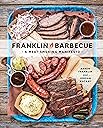
Franklin Barbecue: A Meat-Smoking Manifesto [A Cookbook]
Product ID: 13778256
🍖Meat-Centric Recipes
📖Expert Techniques
🔥Smoky Flavor Mastery
Buy anything from 5,000+ international stores. One checkout price. No surprise fees. Join 2M+ shoppers on Desertcart.
Desertcart purchases this item on your behalf and handles shipping, customs, and support to Nicaragua.
🔥 Ignite Your Passion for Barbecue!
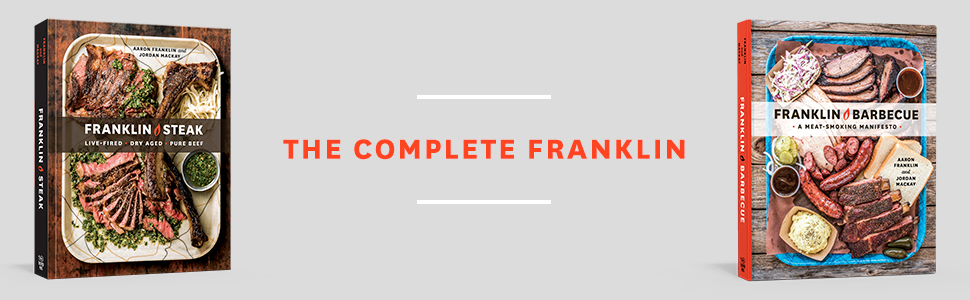
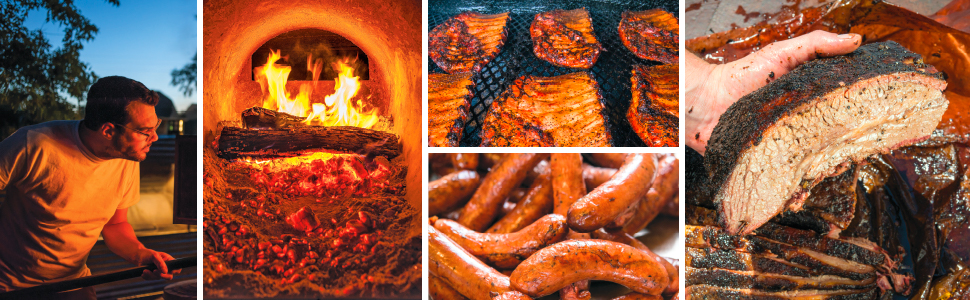
Franklin Barbecue: A Meat-Smoking Manifesto is a comprehensive cookbook that offers over 75 expertly crafted recipes and techniques for smoking meat, designed for both beginners and seasoned grill masters. Authored by the renowned pitmaster Aaron Franklin, this manifesto is your ultimate guide to mastering the art of barbecue.

| Best Sellers Rank | #9,629 in Books ( See Top 100 in Books ) #7 in Meat Cooking #10 in Barbecuing & Grilling #13 in Southern U.S. Cooking, Food & Wine |
| Customer Reviews | 4.7 out of 5 stars 11,382 Reviews |
S**G
My favorite book on smoking meat
Franklin Barbecue by Aaron Franklin and Jordan Mackay I thoroughly enjoyed reading this book. If you want a barbecue cookbook that has lots of unique, creative recipes, this is not your book. This book is for people who enjoy smoking and eating meat and who enjoy reading about the experiences of someone who learned how to smoke meat and soon opened an extremely popular restaurant. There are four barbecue recipes, and they don’t start until page 147. The recipes are for brisket, pork spare ribs, beef (plate) short ribs, and turkey breast. At page 174, he’s on to other topics. There are also recipes for four sauces and three sides. He winds up with recommendations for beer to drink with your barbecue. Chapter One is Aaron’s life story – how he learned how to build and adapt things, including barbecue smokers, how he bought used equipment and started his restaurant on a shoestring budget. And he reviews some of the great BBQ restaurants in Central Texas. Chapter Two gives a brief description of several types of smokers – the original pits, the offset smokers, and the upright drum smoker. He does not mention the Weber Smokey Mountain or any similar vertical types that have a fire chamber in the bottom, a water pan above that, and food grates above that. I suppose I could consider these to be variations of the upright drum smoker. All of Aaron’s smokers are offset. He started on a very cheap, flimsy New Braunfels Hondo. After that all of his smokers were offsets homemade from 500 gallon or 1000 gallon propane tanks. He briefly mentions the Big Green Egg and similar kamado style cookers. Not surprisingly, his cookers have names – Number One, Number Two, Muchacho, Rusty Shackleford, MC5, Nikki Six, and Bethesda. Then he tells quite a bit about how to build your own offset smoker – how to procure a used 1000 gallon propane tank, add doors, grates, legs, chimney, and fire chamber, including the necessary welding and cutting equipment. Not many readers of this book are going to take this on, I’ll bet. The most useful information here is his recommendation for a thermometer – the Tel-Tru Barbecue Thermometer BQ300. (p 62) Chapter Three is Wood. All of Aaron’s smokers are made to burn wood, not charcoal. He likes all kinds of hardwoods but mostly uses post oak, because he likes it and it is plentiful around Austin. He started out shopping for wood in Craig’s List, and found that a lot of sellers were dishonest. They would stack wood in such a way to make to look like a cord when it was much less. Then he found a seller who was honest and dependable and stayed with him. There is a glut of oak available in central Texas because the drought is causing trees to die. It is best to cut down a live tree, cut and slit it into smaller pieces, and let it dry for 6-12 months, until it is about 20% water. But sometimes you go with trees that died from drought. Mesquite is pretty strong. Hickory is strong, but not as strong as mesquite. Fruit tree wood is milder. Wood should be dried for a few months, or it will be too green, it will have too much water in it, and won’t burn well. Green wood is heavier and you can feel that it is heavier. Chapter Four is Fire + Smoke – how to start the fire and keep it going with good smoke. Aaron lights a few charcoal briquettes in a chimney starter, puts them in the fire chamber, and puts some wood on top of them, and they light. He only uses wood for cooking. You don’t get smoke from charcoal, gas, or electricity. You need wood for smoke. Most other books say to use charcoal plus a few chunks of wood to get the smoke. I do that with my Weber Smokey Mountain and I think it works fine. Smoke contains solids, liquids, and gases. The gases are invisible, but they do the most to penetrate into the meat and give it flavor. Chapter Five is Meat. Aaron always gets Angus, grade prime, which is ethically raised, with no growth hormones or antibiotics, not frozen and never been frozen. Freezing breaks down fibers and makes the meat floppy and mushy. The lesser grades, in order, are choice and select, and they have less marbling fat. Aaron keeps his briskets 14 to 21 days after the packing date before he cooks them. Dry aging means hanging it or putting it on a rack to dry. Wet aging is done in a vacuum-sealed package. You don’t want dry aged for barbecue. Aaron doesn’t want a lot of rock-hard fat on the outside of the brisket – it is a sign of growth hormones and antibiotics. Yellowish, not white, fat indicates grass-fed beef. There are three cuts of beef ribs: chuck, rib, and plate. Ribs 1-5 are chuck, 6-12 are rib. He says “We go for the plate ribs 6, 7, 8 – right in the middle of the rib cage, which have the longest, widest, meatiest bones, like brontosaurus ribs.” Aaron really doesn’t like pork ribs that have been “enhanced” – injected with water and salt. He likes pork from a hybrid heritage breed – a mix of Chester White and Duroc. Six is the cook. This pretty much puts it together and gives specific instructions for pork ribs, beef ribs, brisket, and turkey breast. He likes to cook at 275 degrees, hotter than some pitmasters that use 225 degrees. He uses a lot of rub – mostly just pepper (16 mesh) and Morton kosher salt at a 1:1 or 2:1 ratio. He doesn’t like fresh ground pepper. He wants it ground a few days or a few weeks before using, because he doesn’t want the flavor to be strong, but he wants to use a lot of pepper because it helps the smoke to stick to the meat. Before applying rub, you can optionally apply slather – mustard, water, oil, or vinegar. He uses an offset smoker, but always uses a water pan to add humidity. He explains the smoke ring on brisket. He gets slightly technical here, but don’t worry, he is always clear. Chapter 7 is Serving + Eating, and mostly from the restaurant point of view, but helpful when you are serving friends and family. I have read several books on barbecue and smoking, mostly borrowed from the library, and this is far and away my favorite. I liked it so much I bought it after reading a library e-book. It seems odd that I like it so much, since Aaron exclusively uses offset smokers fired with wood, and I use a Weber fired with charcoal, but so much of the information here is going to be useful with any equipment. Another thing that adds to the enjoyment of the book is that you can google Aaron Franklin and find lots of barbecue information on the web, and you can find his TV show on Public Broadcasting – so after a while you feel like you know him personally.
E**K
The undisputed Bible of barbecue, written by the master himself
Franklin Barbecue: A Meat-Smoking Manifesto is not just a cookbook—it’s a graduate-level course in the gospel of smoke, written by the undisputed authority in the craft. Aaron Franklin doesn’t hand out shortcuts or gimmicks here. What he offers is a deep, obsessive dive into the why and how behind legendary Texas barbecue, with the kind of detail and conviction that only comes from a man who lives and breathes post oak and brisket bark. This book is exceptional because it doesn’t start with recipes—it starts with philosophy, with fire, with wood grain, welds, airflow, and meat sourcing. Franklin walks you through the architecture of a proper smoker, the behavior of different woods, the nuances of smoke density and heat control—all the unglamorous fundamentals that separate true pitmasters from backyard dabblers. There’s an entire chapter just on fire management, and it’s more compelling than most entire cookbooks. When you finally reach the sections on meat, seasoning, and cook time, you’re fully equipped to understand not just what to do, but why it works. Franklin’s brisket method alone is worth the price of the book, and it’s delivered with zero ego—just unfiltered, hard-won truth. The recipes are straightforward but uncompromising. If you want shortcuts, look elsewhere. If you want mastery, you’ve found the right place. Visually, the book is stunning. Clean, bold photography and layout reflect the clarity of Franklin’s approach—no fluff, no filler. Every page feels intentional. It’s also surprisingly readable, thanks to Jordan Mackay’s collaboration. The voice is confident but approachable, technical yet totally engaging. This isn’t a book you use once a summer. It’s a manual you’ll study, mark up, revisit, and build your own traditions around. Whether you’re fabricating your own offset smoker or just trying to elevate your weekend cook, Franklin Barbecue is the closest thing to sitting down with the pitmaster himself and getting the real story, step by step. Bar none, this is the definitive modern text on American barbecue. Nothing else compares.
C**M
Good book, but you'll learn more about Franklin than about how you can make great BBQ
If you are looking for specific directions telling you how to make perfect smoked meat, this book is not for you. If you are interested in learning how Franklin's hard work and perseverance paid off, this is a great read. Yes, Franklin does provide some useful information in how to improve your skills and offers a few recipes, but the truth is that unless you spend a lot of time and money getting the right wood, the right equipment, and the right grade of brisket (organic prime--very expensive), you are never going to make barbecue like Franklin's. one of my favorite parts of Franklin's book are the very detailed instructions on how to build your own large, offset smoker out of used propane tanks. The thing is that Franklin's barbecue isn't great because of a secret process or recipe. It is great because he does everything he can do to make it great. I am not intending to make a living selling barbecue, so I am never going to go to the lengths Franklin does to make the perfect barbecue. But he does not hold back in the book and tells you most of what you need to know to replicate his success. He cannot tell you everything you need to know because, as he explains, a lot of it must be learned intuitively from smoking meat again and again and learning from your mistakes. And sometimes, you can do everything right and still turn out mediocre brisket because the brisket was mediocre before you ever put it on the smoker--this is something Franklin experienced when his regular, very expensive, high-quality brisket was not available from his favorite supplier. I use a Weber Smokey Mountain bullet smoker and buy choice packer briskest from a nearby Amish market. (Prime are hard to come by.) Post oak is not available where I live, and it is expensive to order online, so I make due with hardwood lump charcoal and regular oak. I commit a lot of time and attention to my brisket and watch the temperatures closely, and while it might not be Franklin's, it is pretty darn good. I highly recommend you buy the Maverick dual probe wireless thermometer so you can monitor your smoker from inside the house and get very reliable readings. Also, start out with something very forgiving, like pork shoulder, until you understand your smoker and how to control the temperature. And read this book because it is an interesting and impressive story.
S**.
Looking For Top-Secret Super Complicated Recipes and Rubs? Yes? Then This Book Isn't for You....
This was a great book. Just a word to the wise, if you're buying this book thinking there are a lot of great recipes inside, look elsewhere, this is a book on how to smoke meat the TEXAS way, which means super simple. You will not find anything about brown sugar, sweet bbq sauce, mopping, or anything else like that. Franklin shows you how to make the meat be the star of the show. This book is great for beginners and people brand new to smoking meat, as for myself I have been smoking meat for a couple of years now and I found the information in this book to be very helpful, even though some of it I had already picked up. My favorite chapters were on the meat, or how to pick meat, the different cuts, what is good meat what to avoid that was very helpful, the cook and smoke chapter were also very helpful, Franklin delves into the science of smoke and what good smoke and bad smoke is. He also addressees some very common problems that might arise during the cook and how to fix or avoid it, he also stresses that it takes a lot of trial and error. On the flipside the chapters I did not care for much were the ones on the types of smoker and the wood chapter, very good chapters for the uninitiated, but we those of us who know a thing or two are initiated aren't we? All in all very good book if you are thinking about how to go about smoking a brisket or some spareribs when you have never touched a smoker in your life, this is the go to book, or if you aren't a stranger to smoking meats and want a few tips from the man himself, I would also suggest this book. If, however you are looking for some type of golden ticket top secret recipes or way to smoke meat, look somewhere else, Franklin prides himself on being super simple (salt and pepper mostly), and letting the meat speak for itself, this is also not a book geared toward competition bbqing, Franklin does not really endorse the use of fruit woods or fancy shmancy stuff like that. If you wanna make TEXAS BBQ at home that tastes fantastic and is super simple to make pick this gem up.
A**R
Narrowly focused, in a good way
This book was actually a pleasure to read, as there are a number of entertaining stories throughout, and not just instructions or recipes. Aaron Franklin offers his particular no-compromise take on barbecue and doesn't include any concessions to please the masses. This includes using offset smokers and using nothing but wood as fuel. While I can appreciate this as a reader and a "barbecue spectator," it's less helpful to me as a home barbecuer. For example, the book explains how the best source of clean, high-quality smoke is burning wood that is allowed to fully combust, not smoldering wood that has a limited oxygen supply; unfortunately, I have a bullet water smoker that relies on dampening air flow to regulate temperature and smoldering wood to create smoke. It would have been helpful to have some pointers on how to make the best of this type of situation. As advertised, this is Aaron Franklin's personal manifesto, but I would have appreciated a nod to us backyard cooks who aspire to make the best meat we can with our limited setups. That said, I think narrowly focused books like this fill a void in the market, which tends to be flooded with cookbooks that try to a little bit of everything, and thus not quite enough of anything. Overall, this book is a good mix of personal narrative, instruction, scientific explanation, and historical background. I personally would have preferred more in-depth scientific content, but I can see how this would have made the book less appealing and accessible. Mr. Franklin won't hold your hand while you smoke your meat, but he gives you enough to educate you on the process so that you can figure out how to improve on your own. Finally, the print quality is surprisingly good for a hardcover of this price. It's printed on sturdy paper with lots of full color pages. I recommend covering it in clear contact paper so that you can easily wipe your brisket-fat handprints off of it.
J**H
The First Barbecue Book You'll Need
We've all preordered this book and so far, everyone is in agreement: it's a 'must buy' for aspiring pitmasters, whether pros or backyard entertainers. Franklin says that beyond certain cooker features (details), the secret is in being obsessive about other details. His text bears this out. I was quickly convinced that THIS IS THE ONE BARBECUE BOOK YOU MUST HAVE on your shelf (I have others.) We've all seen good barbecue books written by competition pitmasters--the 'secrets' they share focus on rubs and recipes for sides. Aaron Franklin goes the other way and says salt, pepper, quality smoke and wood selection plus unwavering focus on fire consistency go almost all the way toward making outstanding 'cue. Read this and you'll be a believer. Franklin is a brisket expert but his restaurant is also known for its beef ribs (on Saturdays), pork ribs, sausage and turkey. He takes us through all the details on how he serves as much as 2000 pounds of meat PER DAY to happy customers. Readers can tell he sets a killing pace for himself. He has also trained a deep and talented bench to keep up with the volume (and to permit him to be an advocate for barbecue around the country.) This book seems to be just what would be ideal as a training manual for his staff. He begins with a detailed (what else?) discussion of issues in sourcing meat and wood. He describes the cookers he has known, how to 'tune' a typical big-box store purchase and exactly how he has made his own cookers. The biographical aspects of the book make it clear that he has always been a Do-It-Yourself guy and that he has had to wring the most out of every dollar and bit of material he could find in order to realize his restaurant dream. The book deals with how he trims each cut and why, what temperature(s) he cooks at and why; the need to start with a tacky surface and how to best apply a rub; how long to smoke each type of item and how to tell when it has taken up enough smoke; wrapping and finishing the cook; slicing and or serving the meat. Rather than giving a bunch of recipes, Aaron Franklin talks in terms of proportions and 'building your own' rub and then tells how he does his. He gives a few recipes for classic Texan barbecue sides--slaw, potato salad, beans. Again, this is not a book with extensive recipes for separate dishes but anyone who uses this book will know how to create a pretty fine plate of barbecue with sides that satisfy. I've been smoking hams and bacon and barbecuing ribs for years at home and I have a good offset cooker for barbecue or grilling. Reading this book gives me a good few ideas for improving my barbecue...but...I wonder...: Mr. Franklin writes in terms of restaurant quantities and commercial-sized pits. He talks in terms of 'cooks' taking 10 or 12 hours (it's done when its tender and each item takes its own time.) He wraps and continues cooking for quite a while after bark and color are 'right.' And he 'rests' his packages of meat for 30 minutes or an hour or until the meat cools to 140 degrees (say). When cooking for a family or doing a brisket for a party, this timing may not really help. If you've done it like I've done it at home, you will already know a bit about timing. What you can learn from this book is how to be more consistent about pulling your brisket, ribs, etc., at the right stage and about being more consistent in finishing the cook and about resting to retain juiciness.
M**H
Absolutely fantastic book. I bought 1 for myself
Absolutely fantastic book. I bought 1 for myself...and then bought 1 for my Dad and one for my Father in Law...Probably get one for my Stepdad Soon as well. I laughed when I read the 1 star reviews. This is NOT a cookbook. This book is about how Aaron Franklin ascended to his position as being one of the best BBQ Cooks in the Nation. He talks about what he did, why he did it, and what he learned along the way. He talks about his victories and defeats and how he gained just a little bit of knowledge during each cook. What he could use he kept, what didn't work, he noted it, and tossed it aside. This is a great book on the science and theory of what is actually happening when you smoke something. The different kinds of wood that is used, the kind of smoker he likes, what temperature he prefers (275'), what he spritz's his meats with while they cook, when to pull the meat off, when to wrap it, what to wrap it with, how and why to rest it..etc. etc...I have been grilling for 20+ years, and been smoking meat for about 10, and this book really really taught me a lot of things, and cleared up some things that I have noticed, but hadn't really figured it out. He explains how to smoke meat in very simple terms. It IS simple to smoke meat...but you can totally screw it up if you don't do it right. A perfect example that he talks about, and I did this when I first started, but luckily figured it out years ago is the fact that rookies see that Beef is done at 160-165 degrees and they think, welp, its done, might as well pull it off. They pull it off and let it sit, and when they slice into it, its tough or if its pork, it doesn't pull or shred at all, and none of the fat has rendered and they think "What happened?? Well what happened is that yes, the meat reached a safe temp to eat, but not the OPTIMAL temp for BBQ. You want the internal temp at 203 degrees instead so the fat can liquefy and give the meat its juiciness and tenderness. That is just one example. He lays it all out there for you, and doesn't hold anything back. This is a simple process, but the devil is in those details, and he is adamant about them. There are a few recipes in the book, but this isn't a cook book per se. I did like the recipes on the BBQ sauces though and Ive made them all. Aaron keeps it straightforward and simple. If you don't learn anything from this book then you aren't paying attention. I read a 1 star review and the guy goes, "Yeah, I learned to use salt and pepper and post oak....lame" If you have that sort of mentality, then this book is definitely not for you, but if you want to reach in to what BBQ is, and how it is done right, and then you actually DO what he talks about, you will never screw up a piece of meat again.
J**.
Awesome! Perfect! Great for Beginners!
I felt so compelled to write this review after reading some of the negative reviews. I think the chief complaint is the lack of recipes in this book or that Aaron left out some of his “secrets.” While the latter may be true, he’s very clear that it’s mostly salt and pepper. It’s also all about meat selection according to him. I truly believe this is a very integral part. I doubt many of us have the meat suppliers he has. Now on to the reason I bought this book. A friend of mine helped me build my first side-by-side wood smoker. I am new to this and had no clue on how to move forward with cooking a brisket. This book has great reviews and I’ve heard a lot about his BBQ place. I don’t live in Texas, New Mexico to be exact, but I do have family in Austin. I hope to try that some day, but I really don’t think I’ll wait 3 hours of more. What this book gives me is a very detailed step-by-step process in getting started. I have cooked 3 briskets following his instructions. My first attempt was edible, which is about all I can say. It wasn’t that great at all. I figured out that I cooked it about an hour longer than I should have before wrapping it. The bark had formed about as well as it was going to. It was hard to judge, because the pepper I used was too course. The book calls for 16 MEH pepper. I had no idea what that was. I also used hickory to cook this first one. One day at Costco I found a pepper that was slightly less course, but not fine. I’m pretty sure its 16. I used that pepper in my rub (salt/pepper) on my second brisket. I also used oak like he mentions for smoking briskets. Following his instructions, my second brisket was PERFECT. I was very impressed that I could cook something that great. My wife loved it as well. I only cooked it for me and her, as I wanted to get this somewhat perfected before inviting family and friends. Dinner and leftovers for a week were amazing. My third and most recent brisket I cooked for New Years. I did all of the same stuff, invited family and friends over, and all but 5 pieces of the brisket was left. My meat selection was just “select.” I didn’t want to spend too much money in case I messed it up. My next brisket will definitely be a prime grade. I definitely rate this book 5 stars, because without it I would not be anywhere near where I am today in cooking briskets. As for making dry rubs for your brisket, there are plenty other books on the market to help you accomplish that. This is definitely a book worth buying if you are starting out like I am.
P**N
-
-
D**R
Outstanding book with guaranteed success !!!
The Bible for all BBQ enthusiasts, I'm looking forward to the day I get to Austin TX and get in line early in the morning. Then I can compare whether the recipes in the book reflect reality. Great book with instructions and recipes. !!! Clear purchase recommendation!!! Five stars *****
A**K
The definitive guide to a single style of BBQ cooking
Let's start off with what this book is NOT. It's NOT a book on grilling. It's NOT a book on general BBQ. It's NOT a book full of recipes. So what is it? It is an exceptionally detailed look, almost story, of how Aaron Franklin cooks his BBQ. He must be doing something right as people regularly wait in line for hours, every day, just to get a taste of his BBQ. What is his BBQ? It's central-Texas-style BBQ that involves very minimal rubs (mostly salt and pepper) and smoke from a real wood fire. This book is about how to recreate that BBQ. It starts off with a brief history of his experience in BBQ before launching into the details of smoking. It starts with the different kind of BBQs, with a strong focus on offset smokers. He details how and why his smokers work and what the home enthusiast can do to maximize the performance of theirs. He then talks about different kinds of wood. Then fire and smoke. Then meat. Then cooking in general. Then recipes for briskey, spareribs, and turkey breast. And finally a brief bit about recipes for BBQ side dishes. Each of those sections gets its own chapter. So yes, there's an entire chapter on how the fire should burn. There's an entire chapter on selecting the right kind of wood or meat. And all of the recipes are central-texas style recipes, although he does very briefly mention how a cook could modify them to other styles. So if you are looking for any of the things this book is not (as listed above), then this book is a bust. There are much better general guides to cooking BBQ (I like Ray Lampe's book, but also have Raichlin's, Kirk's, and others). But if you are looking for a really detailed guide on how to recreate some really unique BBQ, or how to just plain cook better with wood smokers, then this book is hard to beat. The writing is interesting and personal, but also informative. I usually cook with lump charcoal in my offset smoker, but this book has me seriously considering switching to just wood. BBQ is Aaron's passion, and by the end of this book, it's hard not to be affected by that passion. Any book that can pass that along to its readers is a very good book, so I'm giving this book 5 stars, even if it's focus is quite narrow.
J**T
Nooit ontvangen
Ik heb mijn artikel nooit ontvangen. Er staat al een tijdje op bezorgd. Maar is niet bezorgd.
A**N
A must have for any BBQ Enthusiast!
I like Mr. Franklin's approach to BBQ: simple, local, fire, meat, smoke. Now if you are looking for recipes and "the secret", you will not like this book at all. There are maybe 6 recipes in the book and the rubs, and mops are real simple. What you will find in this book however, is a scientific approach to the Art of Smoke. He specializes in Briskets (takes time and lots of Oak) so people in Japan might have difficulty trying to make Brisket that way however, you have to look at the processes in place. That's the beauty of this book. I've said too much already. All in all I appreciate the simplicity of Mr. Franklin's approach and endeavor to use more wood in my future cooks. Peace and Smoke, A.D.
Trustpilot
4 days ago
2 months ago