

They Called Us Enemy
Product ID: 130003963
Desertcart purchases this item on your behalf and handles shipping, customs, and support to Nicaragua.
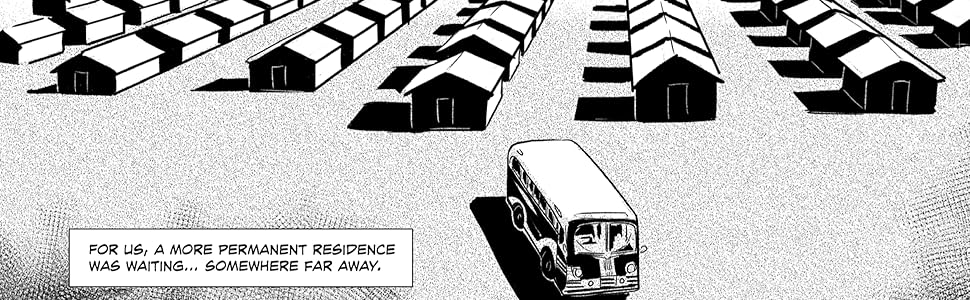
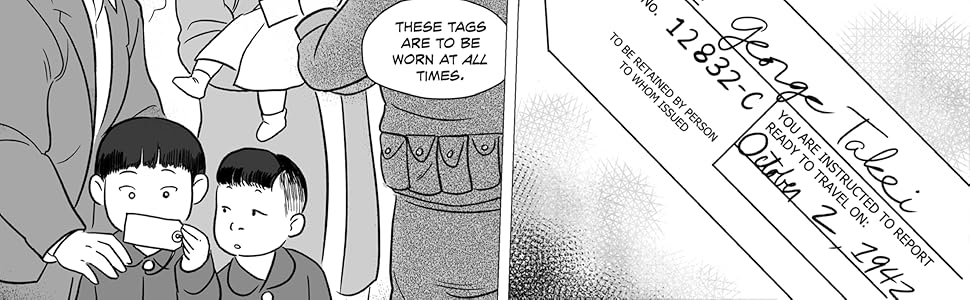
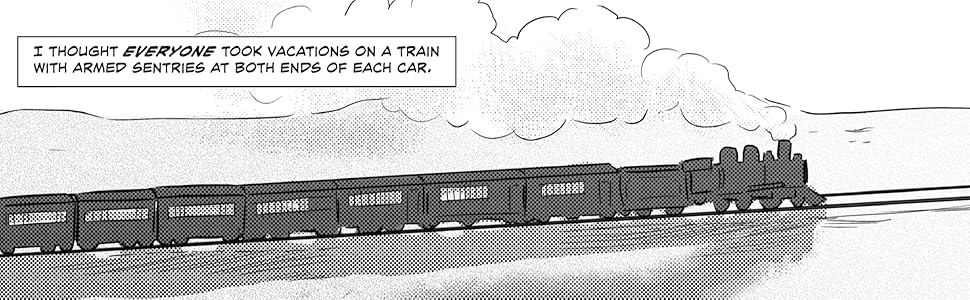
New York Times Bestseller! Discover this award-winning masterpiece before the release of George Takei's deeply personal follow-up, It Rhymes With Takei (June 2025). A stunning graphic memoir recounting actor/author/activist George Takei's childhood imprisoned within American concentration camps during World War II. Experience the forces that shaped an American icon -- and America itself -- in this gripping tale of courage, country, loyalty, and love. George Takei has captured hearts and minds worldwide with his captivating stage presence and outspoken commitment to equal rights. But long before he braved new frontiers in Star Trek , he woke up as a four-year-old boy to find his own birth country at war with his father's -- and their entire family forced from their home into an uncertain future. In 1942, at the order of President Franklin D. Roosevelt, every person of Japanese descent on the west coast was rounded up and shipped to one of ten "relocation centers," hundreds or thousands of miles from home, where they would be held for years under armed guard. They Called Us Enemy is Takei's firsthand account of those years behind barbed wire, the joys and terrors of growing up under legalized racism, his mother's hard choices, his father's faith in democracy, and the way those experiences planted the seeds for his astonishing future. What does it mean to be American? Who gets to decide? When the world is against you, what can one person do? To answer these questions, George Takei joins co-writers Justin Eisinger & Steven Scott and artist Harmony Becker for the journey of a lifetime.

| Dimensions | 6.61 x 0.67 x 9.06 inches |
| Edition | First Edition |
| Grade Level | 10 - 12 |
| Isbn 10 | 1603094504 |
| Isbn 13 | 978-1603094504 |
| Item Weight | 1.14 pounds |
| Language | English |
| Part Of Series | They Called Us Enemy |
| Print Length | 208 pages |
| Publication Date | July 16, 2019 |
| Publisher | Top Shelf Productions |
| Reading Age | 10+ years, from customers |
User
Must Read
challenging, emotional, informative, inspiring, reflectivemedium-pacedThis was such an informative but sad read. I was not fully aware of the camps and treatment Japanese Americans were subjected to during World War II.George Takei was a very young boy when his family was forced to move out of their home. He takes us on a journey in this memoir of that time. His young mind at first saw it as a vacation, but then quickly learned that was not the case. His parents did what they could to shield him and make the circumstances as normal as possible in this new, unknown time. He was able to give the story depth through POVs from his dad, his mom, and even his own. George has not allowed the way he and his family were treated by the US to cloud his life. He has shown in his acting and charitable ventures that we can all be better.Although this happened over 80 years ago, reading this and reflecting on how America is today. It feels like history is repeating itself with all the racism that still exists.I recommend that this graphic novel be read by all.Reasons I enjoyed this book:Inspirational, Page-turner, Realistic, Tear-jerker, Tragic
User
A great lesson
This was so touching even in the most simplistic form. It's direct, which is great for making an easily digestible comic for those who don't normally read comics. The pain of what Japanese interned people faced is in plain view with a first hand account from George Takei. The story illustrates the need to study history and stick together so that we don't repeat history. Unfortunately we are seeing history repeat and perhaps it never stopped if you consider the prison industrial complex. My hope is that people read this and see how propaganda bred discontent among the American people and they grow better at changing that.
User
A well written survivors tale with a happy ending.
I am a huge Star Trek fan. This book about George Takei’s childhood is both moving and heartbreaking. His family went through so much simply because of the way they looked. This was a disgraceful chapter in American history, told by someone who lived through it. Happily he went on to have a bright and positive future as an extremely talented actor. But this is a part of our nation’s past that should not be forgotten.
User
What a depressing book. But there was no way to sugar coat the facts.
Presented as a graphic novel with simple line drawings similar to what you’d find in Japanese comic books, They Called Us Enemy is George Takei’s memoir focusing on his experience as a child living with his family in Japanese Internment Camps during WWII. Less a poetic piece of writing, it’s a mostly chronological collection of memories and events of that time, framed as part of a recent TED Talk speech he’s apparently given at least once before.What’s both great and hard-to-take about what he shares are the details. He frames most of his memories from two perspectives. First, the memories are described with the wonder and excitement of a naive child who had no context for why his family was forced to quickly pack up their belongings, move out of their L.A. area home, board trains with hundreds of other Japanese-American families, and be relocated to live in a one-room shack in Arkansas. Then at the same time, he adds how he now realizes how his parents had felt then, shamed yet working hard to shelter and care for their three young children against the harsh existence they now were forced to live.I wish the transitions between his memories were more gracefully handled, like in similar autobiographical graphic novels like the Holocaust memoir Maus and Congressman John Lewis's Civil Rights Movement memoir March. But that’s nitpicking. It also can't be helped that the book presents a very stark parallel to how Mexican immigrant families crossing the border illegally are currently looked at by our government, i.e. enemy aliens, to use Takei’s term.A side note: Takei also addresses the actions taken by politicians immediately after Pearl Harbor towards Japanese-Americans. He cites FDR’s swift action to sign legislation ordering the forced relocation of those of Japanese descent as well as then California Attorney General Earl Warren’s support of the “lock up the Japs” attitude that grew out of the Pearl Harbor bombing. I just saw a meme on Facebook recently lauding Warren who, after he became Chief Justice of the Supreme Court, criticized gun rights advocates for not truly understading the 2nd Amendment, at least the way he interpreted it. I thought Warren was a cool dude until I read Takei’s book and thought to reconsider.The book does end with a few pages devoted to his years after they were freed, including brief anecdotes about getting cast in Star Trek. This is a worthwhile book to read to learn about someone’s first-hand account of living in these camps, obviously a shameful period in our recent American history. And today, an increasingly familiar one too. (I said this was a depressing book, right?)
User
We need to remember
This is a hard graphic novel to review. It is about the "Japanese Internment Camps" the US had during WWII. It is a part of our history that was never taught when I was in school and we need to know about and not forget about them. While we might understand why it happened, it does not make it any less wrong.The story itself is interesting. George Takei shares about his life and the lives of his family growing up in these camps. The art work is simple and stylized, but makes it point well. I have always enjoyed listening to George Takei speak and he has a wonderful sense of humor and timing. For some reason this seems to be lacking in the Graphic Novel, making it a little dryer read than it needs to be. Takei may have done this because of the seriousness of the subject, but sometimes a bit more humor drives home the point of the more serious points, and I would have liked to have seen just a little bit more of that.This is not to say there are not a few humorous parts in the book and it may be that what is really missing is Takei's easily seen roll of the eyes, or sarcastic smile, and the inflection of his voice as he makes a point. The narrative portion of the story is written in a way that I have a hard time hearing his voice in my head as I read it.It is still a good read, but it could have been a great read. And no matter what, I hope that in these troubled times it help us to remember our history, so we don't repeat it again.
User
A Story I’ve Never Heard
There is a lot packed into this book that I had no clear understanding of. I knew about the internment, but that’s it. Mr Takei did an excellent job of telling the whole story of his life. I loved the emphasis on democracy.
User
An absolute must read for anyone interested in history!
So I want to start off by saying that I may be a touch bias in this review in that I’m both a massive fan of Star Trek, and also the granddaughter of a man who was in an internment camp himself, so this book felt extremely personal. I got it because I wanted to get a better idea on what the camps were like, and how things actually went down. I hadn’t been told my grandpa was in a camp until after he had passed, so this was a resource in understanding my own family history in a way that I had otherwise never gotten in any comprehensive way.It was a bittersweet read, as the art is beautiful, the story is extremely well told, and it felt like a really good mix of personal and historical, as it was both very much the story of a man’s family and childhood, while also being a view into the inner workings of the camps, and the politics involved during and after for Japanese Americans who lived through such an unwarranted tragedy. It was very personally touching, I read it in 3 days, I could hardly get myself to put it down.I recommend it to everyone, especially anyone with a strong interest in first-hand accounts of historical events, anyone who is related to a survivor of these camps who wants to better understand what happened and what their relatives experienced, or just anyone who wants to educate themselves or their children on this specific event in US history.
User
great autobiographical graphic novel
This graphic novel is informative, thought provoking and visually appealing! I didn’t really know any of this history so I’m glad I got to!
User
Recommend
I loved to learn about it as i had never heard about it before. The story was sad but interesting. Pictures great quality and so was the book material.
User
Couldn't out it down
I loved reading this GN. I bought this book with no idea what it would be about and I was not at all disappointed. I finished this book in one sitting because of what I was learning with each page turn!
User
Memory as Resistance
They Called Us Enemy is a deeply personal and politically urgent graphic memoir by George Takei, co-written with Justin Eisinger and Steven Scott, and illustrated by Harmony Becker. It recounts Takei’s childhood experience in Japanese American internment camps during World War II, offering a firsthand account of injustice, resilience, and the contradictions of American democracy. Told with clarity and emotional nuance, the book invites readers to witness history through the eyes of a child grappling with betrayal by his own country.The artwork is clean and expressive, allowing the emotional weight of the story to shine through without distraction. More than a memoir, it’s a call to remember and reckon—with the past and with the systems that allowed such violations to occur. It’s a powerful resource for classrooms, libraries, and anyone seeking to understand how personal history intersects with national trauma.
User
A must read for everyone
I recommend this splendid graphic bio for all Americans, Japanese and Trekkies.
User
- They called us enemy (racconto illustrato) -
Il libro è arrivato oggi, in condizioni perfette, con un po' di ritardo rispetto alla data prevista; ma non è un problema: può succedere. Grazie mille !!!
Trustpilot
2 months ago
3 weeks ago