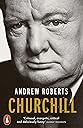
Churchill: Walking with Destiny
Product ID: 103745663
Desertcart purchases this item on your behalf and handles shipping, customs, and support to Nicaragua.
THE INTERNATIONAL BESTSELLER A SUNDAY TIMES, THE TIMES, ECONOMIST, DAILY TELEGRAPH, EVENING STANDARD, OBSERVER BOOK OF THE YEAR 'Undoubtedly the best single-volume life of Churchill ever written' Dominic Sandbrook, Sunday Times A magnificently fresh and unexpected biography of Churchill, by one of Britain's most acclaimed historians Winston Churchill towers over every other figure in twentieth-century British history. By the time of his death at the age of 90 in 1965, many thought him to be the greatest man in the world. There have been over a thousand previous biographies of Churchill. Andrew Roberts now draws on over forty new sources, including the private diaries of King George VI, used in no previous Churchill biography to depict him more intimately and persuasively than any of its predecessors. The book in no way conceals Churchill's faults and it allows the reader to appreciate his virtues and character in full: his titanic capacity for work (and drink), his ability see the big picture, his willingness to take risks and insistence on being where the action was, his good humour even in the most desperate circumstances, the breadth and strength of his friendships and his extraordinary propensity to burst into tears at unexpected moments. Above all, it shows us the wellsprings of his personality - his lifelong desire to please his father (even long after his father's death) but aristocratic disdain for the opinions of almost everyone else, his love of the British Empire, his sense of history and its connection to the present. During the Second World War, Churchill summoned a particular scientist to see him several times for technical advice. 'It was the same whenever we met', wrote the young man, 'I had a feeling of being recharged by a source of living power.' Harry Hopkins, President Roosevelt's emissary, wrote 'Wherever he was, there was a battlefront.' Field Marshal Sir Alan Brooke, Churchill's essential partner in strategy and most severe critic in private, wrote in his diary, 'I thank God I was given such an opportunity of working alongside such a man, and of having my eyes opened to the fact that occasionally such supermen exist on this earth.' Review: A sweeping, detailed, readable masterpiece. - I was born in 1956. For a brief period, though I did not know it but Churchill was my Prime Minister in the twilight of his Parliamentary years. My interest in Churchill started in 1965 watching his funeral on television, aged nine with my mother and father tight lipped and my father obviously upset. His upset filtering to me, so that without knowing why I was tearful and sad. At that early age, a sense of the enormity of the event came home to me. I have read many biographies of Churchill since; some good, some average but only one really awful (Boris Johnston). Most are a product of when written and the source material available to them. I confess to having missed Andrew Roberts biography on publication I have only just got round to reading it now. The first thing is this book, at 982 pages in paperback is not at first glance for the faint hearted. Roberts however benefits in his research from memoirs public records and diaries which have been released in recent years to provide up to date analysis. It is testament to the author that he has produced a text which is addictive reading, mixing as it does the sweep of history at home and abroad and Churchill's part in them. Roberts is no fawning biographer. He is both even in his analysis of Churchill's flawed and impetuous judgement as he is in demonstrating Churchill's extraordinary foresight and achievements. Churchill we must remember he was a man of his time and those times are long gone. Yet cometh the hour he was the man. There have been no comparators to Churchill in post war politics; indeed by comparison how small and inconsequential our modern day leaders are. Churchill was fond of quoting Shakespeare, and even on occasion, fooling friends with made up verses, but surely no quotation from Hamlet still applies “He was a man, take him for all in all, I shall not look upon his like again.” An excellent biography. I cannot see it being surpassed as the definitive one volume history of Churchill's life. HIghly readable and highly recommended. Review: A good book - A great read
| Best Sellers Rank | 12,611 in Books ( See Top 100 in Books ) 15 in Political Leader Biographies 19 in World War II Biographies (Books) 23 in British Historical Military Biographies |
| Customer Reviews | 4.7 out of 5 stars 5,642 Reviews |
D**D
A sweeping, detailed, readable masterpiece.
I was born in 1956. For a brief period, though I did not know it but Churchill was my Prime Minister in the twilight of his Parliamentary years. My interest in Churchill started in 1965 watching his funeral on television, aged nine with my mother and father tight lipped and my father obviously upset. His upset filtering to me, so that without knowing why I was tearful and sad. At that early age, a sense of the enormity of the event came home to me. I have read many biographies of Churchill since; some good, some average but only one really awful (Boris Johnston). Most are a product of when written and the source material available to them. I confess to having missed Andrew Roberts biography on publication I have only just got round to reading it now. The first thing is this book, at 982 pages in paperback is not at first glance for the faint hearted. Roberts however benefits in his research from memoirs public records and diaries which have been released in recent years to provide up to date analysis. It is testament to the author that he has produced a text which is addictive reading, mixing as it does the sweep of history at home and abroad and Churchill's part in them. Roberts is no fawning biographer. He is both even in his analysis of Churchill's flawed and impetuous judgement as he is in demonstrating Churchill's extraordinary foresight and achievements. Churchill we must remember he was a man of his time and those times are long gone. Yet cometh the hour he was the man. There have been no comparators to Churchill in post war politics; indeed by comparison how small and inconsequential our modern day leaders are. Churchill was fond of quoting Shakespeare, and even on occasion, fooling friends with made up verses, but surely no quotation from Hamlet still applies “He was a man, take him for all in all, I shall not look upon his like again.” An excellent biography. I cannot see it being surpassed as the definitive one volume history of Churchill's life. HIghly readable and highly recommended.
M**R
A good book
A great read
M**S
Absolute delight, a highly readable adventure with one of the greatest men
I very much enjoyed reading this book. I wanted an in-depth account that didn't pull punches in examining Churchill, and this book did that. As a very controversial figure, Churchill is usually either overly lionized or critisized, and I think this book does a good job of highlighting his all-too-human faults as well as his outstanding achievements both as a world-moving figure and as what sounds like a wonderful man. Like most great men, I wouldn't have wanted to work for him, but his vision and courage were truly astounding. I highly recommend this read to learn more.
C**W
Almost perfect.
The praise heaped on this book is well deserved indeed. It is an absolutely excellent, and highly enjoyable, account of the life of an extraordinary man. The only fault that nags me, and stops it getting 5 stars, is that for some inexplicable reason Andrew fails to give us a true picture of the serious downside to the great man's wartime leadership style. Alanbrooke was engaged in a relentless, titanic struggle to curb Winston's impetuous schemes, and meddling interference with the running of the military side of the war. Ironically, Alanbrooke himself pondered whether any future historian could ever paint Winston in his true colours, and sad to say, Andrew hasn't quite managed it.
G**N
Churchill owned the 'Pulp Fiction' wallet saying "Bad mother......
Not a single chapter was finished before I said "Damn, he makes me proud to be English". This books is warts and all, very objective and beautifully written, luring you in from the first page. I can promise that you will laugh regularly, you will be inspired, you will wish you could have had a whiskey and soda with him. I didn't realize Churchill was such an adrenaline junkie which only adds to his character. Winston wasn't perfect but what colossus was? It's a victory that a single volume of Churchill can be so amazing and a testament to Roberts' talent that he could make it so. It's fashionable to hate Churchill (racism, imperialism, etc) and some moments are questionable in modern eyes but many moments to applaud. Really his legions of haters, past and present, hate their own inferiority when compared to his remarkable character. I miss him already.
R**Y
A fox, not a hedgehog
Andrew Roberts has produced a thorough and up-to-date account of the life of this great statesman. Referring to sources that have only recently become available, such as the diaries of King George VI, he examines some of the views of the revisionists and apologists that have sought to undermine the man and his legacy. Roberts refers to Churchill as philosemitic and a supporter of Zionism. In an article written for the Sunday Herald in February 1920, called ‘Zionism versus Bolshevism’, Churchill praises Jews for their indispensable contribution to the betterment of mankind. In particular, he likes the ‘Nationalist’ Jew and the Zionists. Nevertheless, he criticises ‘Internationalist’ Jews and their infiltration into Bolshevism. “Although Churchill wanted to relax the 1939 White Paper policy against Jewish immigration into Palestine… He had little or no support from the Cabinet, Foreign Office, military or Civil Service, much of which had no sympathy for Jews (or worse). His efforts were consistently frustrated by those around him.” Far from being anti-Semitic, he faced the antisemitic establishment in the UK and was a warrior for the formation of Israel. Churchill was more than willing to go it alone, sometimes in the face of an establishment that was pro-appeasement. He prepared the Navy and sounded the alarm in WWI, while others were asleep at the wheel. He called for re-armament in WW2, while others put their faith in Hitler. Even when both wars were over, his speech in Washington on ‘the iron curtain’ was badly received, even though he was proved right in the end. What comes through time and again, is that he had an uncanny ability to foresee events. For instance, at the age of sixteen, he predicted that he would be called upon to save London and England. He also said that he would die on the same date as his father. His visions indicate that he was intuitively tuned into man’s psyche, and as an historian, could anticipate the likely turn of events. “Want of foresight, unwillingness to act when action would be simple and effective, lack of clear thinking, confusion of counsel until the emergency comes, until self-preservation strikes its jarring gong – these are the features which constitute the endless repetition of history.” As to his view of human nature he wrote “their virtues and their wisdom have not shown any notable improvement as the centuries have rolled. The brain of a modern man does not differ in essentials from that of the human beings who fought and lived here millions of years ago. The nature of man has remained hitherto practically unchanged. Under sufficient stress – starvation, terror, warlike passion, or even cold intellectual frenzy – the modern man we know so well will do the most terrible deeds, and his modern woman will back him up.” As to charges of racism, it is undoubted that his views fitted in with those of political progressives of the era. As an admirer of the Democratic party in the USA, he was for a time a Social Darwinist and a Eugenicist. Those views were the norm at the time. His views on Gandhi were rather personal, and more to do with his feared destruction of India, the jewel in the crown of the Empire. In the end, Churchill’s fears were realised when the partition of India cost the lives of 500,000 people. He was a fanatical advocate of the Empire and the Commonwealth. Likewise, he promoted the coming together of the English-speaking people. Through his passion and rhetoric, he was able to inspire a nation to hold out against far superior forces. When addressing a large crowd in 1945, ‘This is your victory,’ he began, and the crowd roared back, ‘No – it’s yours!’ Towards the end of the book, Andrew Roberts argues that rather than being a one-trick-pony, “Churchill was a quintessential fox, who knew and did many things, not a hedgehog.”
A**E
WC - a true hero
Unfortunately, I am almost finished this terrific book. Although I'm not an historian by profession, I have enjoyed most of it. The bits I didn't enjoy were the - often too many - details of the political wranglings and their sequelae. What was most enjoyable was WC's childhood background, his resilience in the face of stupidity and resistance, and his incredible insight into what could - and did - happen. Even while not particularly admiring WC's sense that imperialism is generally a 'good thing', it's forgivable in the light of his sense of altruism. What I would dearly loved to have known is why and how someone whose parents were clearly not supportive of him - in fact, the opposite (except in later years, his mother) - managed to not only survive into a grand old age, but was an amazing leader in a time of crisis. But then, the writer isn't a psychologist, I suppose. All in all, a very balanced view of the great man (who, I confess I hadn't much time for before reading the book). It highlights human nature at its best and worst.
A**R
‘Walking with Destiny’: best Churchill biography ever?
Andrew Roberts’ biography of the man who tens of millions worldwide regarded in 1945 as “probably the greatest man alive” is a highly literate page-turner full of fresh perspectives. While not eschewing controversies which dogged Churchill’s reputation throughout his career (most of them exaggerated and stoked by jealous political rivals), Roberts presents the facts & detailed evidence in each case, allowing the reader to draw his/her own conclusions. Among hundreds of previously-published biographies of Churchill, this might justifiably claim to be the best-ever, certainly in a single volume. Roberts’ narrative structure is that of traditional classic biography with a chronological timeline. Alongside the public parliamentary battles and legion of detractors Churchill created by ‘crossing the floor’ not once but twice before 1922 (to more effectively champion his centrist/liberal positions in support of home rule for Ireland, women’s suffrage, the introduction of the welfare state and House of Lords reform), mistakes in the conduct of the First World War are not glossed over but recounted in forensic detail which never fails to engage. Subsequent years ‘in the wilderness’ prior to his celebrated leadership through WW2 are matched by deep insights into Churchill's personal life, chronic financial difficulties and highly supportive marriage. The reader is reminded again and again of Churchill’s great resilience, legendary capacity for work and formidable oratory skill: in the 40 years prior to becoming PM in 1940, Churchill had given more than 1,000 public speeches in Parliament, at formal meetings or out ‘on the stump.’ One factor of which I was previously unaware was the great number of personal injuries Churchill suffered, particularly in his early 20s, including a four-times dislocated shoulder and many broken bones. Fearless - some might say foolhardy - in the presence of physical danger, Churchill was often under enemy fire right up to 1916 when as a serving MP with already a long record of active military service he nevertheless volunteered for the western front following the failure of the Dardanelles venture. He once observed: “Nothing in life is so exhilarating as to be shot at without result” and he was, indeed, shot at without result on numerous occasions. Churchill’s legendary impish wit and clever insight shines through even in situations of the gravest adversity. Roberts’ book is a fine lesson in how biography ought to be written and is highly recommended, especially to readers interested in this remarkable and important figure of the 20th century and not intimidated by the book’s >1,000 pages’ length. It’s an impressive achievement.
K**I
Great book
Instant favourite. Great book overall.
P**R
Very well depicts one of the great (evil but great) minds of the century
While the book highlights all the great stuff about Winston, it also sugar coats all the evil stuff he ever did. All in all, a good read!
V**T
Une biographie remarquable sur ce personnage hors du commun
Churchill était vraiment quelqu'un de 'larger than life', une des personnalités les plus marquantes du 20e siècle sans aucun doute. Ouvrage très instructif et bien écrit que je recommande sans hésitation.
J**A
Churchill paramount bio
Amazing biography by an amazing author. Dr. Roberts is a true storyteller. What I've enjoyed the most, is how he delivers insights about Churchill's private life. A true British icon indeed, and one of the best biographies I've read.
P**N
An In-Depth Biography
Andrew Roberts covers just about every aspect of Churchill`s life. The reader also ends up, being taken through the leading events of the 20th Century. In particular, the political aspects of The Great War and WWII is very interesting. Churchill gets himself involved, in all the important events of the early 20th Century. Churchill has a wide-ranging skill set. Public speaking, writing, painting, pilots aircraft, warrior, historian, and above all, political skills lead him through life. Churchill will need all these skills, to lead England through the darkest moments of WWII. Roberts also points out the many flaws included in Churchill`s character. He has trouble delegating authority and has many conflicts with his subordinates. Churchill also endured many setbacks and hardships in his life. But all these events just seem to increase his depth of character. Churchill had the fortitude to stand up against public opinion. He attempts to warn his country against the pending threat of Nazi Germany. But he is only publically ridiculed for his warnings. The book is close to a thousand pages, so it is going to take a while. I also left a lot of ink in margins, which added to the time frame. But it is time well spent. Almost every page provides something of interest. The book ends with many lead-ins to today`s current issues. Churchill is against joining an early form of the EU. He is also against the formation of a European army. The Brexit debates are currently raging in England. Churchill also preached against the evils of socialism. The Labour government nationalizes key industries in England. By the 1960s England has become a socialist basket case. The IMF has to bail out a bankrupt England twice in the 1960s and in 1976. Churchill even has one speech, which is an early criticism of politically correct speech formats. This biography receives my highest recommendation.
Trustpilot
3 weeks ago
2 months ago