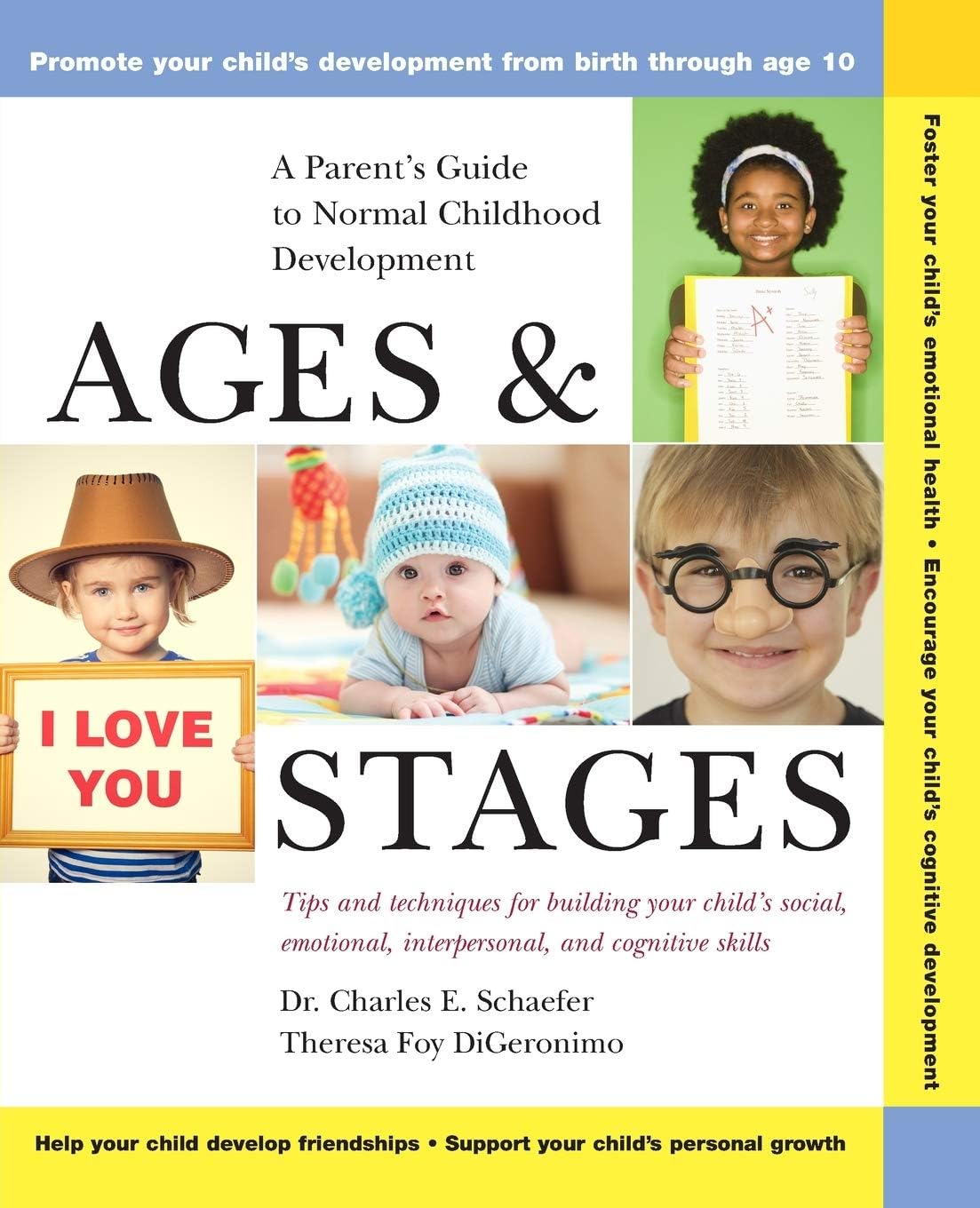
Ages and Stages: A Parent's Guide to Normal Childhood Development
Product ID: 1744091
Buy anything from 5,000+ international stores. One checkout price. No surprise fees. Join 2M+ shoppers on Desertcart.
Desertcart purchases this item on your behalf and handles shipping, customs, and support to Nicaragua.
A comprehensive parent's guide to your child's psychologicaldevelopment from birth through age 10 Written in an engaging,practical style, Ages and Stages offers you the benefits of themost current research on child development, featuring helpful tipsand techniques to foster your child's maturation. Charles Schaeferand Theresa Foy DiGeronimo tell you what behaviors you can expectas your child grows and how you can help him or her to advance tothe next level of development. They include numerous examples,stories, and activities you can use immediately to positivelyinfluence your child's development. The book's structure (dividedinto four stages of child development―birth to 18 months, 18 to 36months, 36 months to age six, and six to ten years) allows you tomonitor your child's progress, identify the reasons for emotionaland psychological differences in siblings, and even determine howyour parenting strategies should change as your child grows. Covers all five areas of psychological health--emotional,cognitive, friendship/relationships, personal growth, and morality Filled with easy-to-follow Do's and Don'ts, plus fun activitiesand exercises to encourage your child's development Helps you assess if and when your child may need professional intervention Review: Great for Teachers & Parents - This book was recommended by a fellow educator and I love it for students and my own children. Easy to read. Great book. Helpful. Review: Therapists favorite quick resource. My go-to for self and clients - As a busy child therapist, this is my go to...for myself! It’s quick, has a wonderfully pleasing layout, and isn’t inundated with too much information (sometimes I just need to know that what is happening with my kiddos is normal and what I can do, fast!). It reads more like a child development book with tips for parents. It’s such a value-add to my life!
| Best Sellers Rank | #101,602 in Books ( See Top 100 in Books ) #17 in Exercise & Fitness for Pregnancy #275 in Medical General Psychology #2,443 in Psychology & Counseling |
| Customer Reviews | 4.5 out of 5 stars 370 Reviews |
L**S
Great for Teachers & Parents
This book was recommended by a fellow educator and I love it for students and my own children. Easy to read. Great book. Helpful.
K**I
Therapists favorite quick resource. My go-to for self and clients
As a busy child therapist, this is my go to...for myself! It’s quick, has a wonderfully pleasing layout, and isn’t inundated with too much information (sometimes I just need to know that what is happening with my kiddos is normal and what I can do, fast!). It reads more like a child development book with tips for parents. It’s such a value-add to my life!
H**R
Good morsels if info on development and methods for success
I do agree with previous posters that there are some shocking things in terms of the scientific, non-sentimental way the author states what babies know & understand at certain stages. Eg Newborn/infant doesn't know the value of a personal touch just needs primal needs to be met (fed, dry, warm, etc) - this isn't the exact wording but the gist is there. It sounds harsh but its kind of true when you think of it in terms of you can hug & kiss a crying baby all you want, but if s/he has a dirty diaper or is hungry, tired, gassy or constipated, s/he is not going to feel better or stop crying just because you hold/kiss/cuddle them. So much of what we've experienced with our daughter now at 15 months is SPOT ON either in terms of the things she's done at various ages and stages or ways we can best help her learn, adjust and function in this world by understanding her point of view. As someone who is a scientist but also has experience with kids, I've learned a good deal from this book and have found it helpful in communicating with my daughter, help to ease her frustration in learning/communicating (by understanding her perspective & wants) and have more enjoyment & productivity (both parent & toddler) in our day to day life.
R**V
Great book!
This is exactly what I was looking for. It explains each age range (Infant to 18mos), etc. and in several categories including, emotional, physical, mental, etc. It tells you what to expect from your child and things you should and shouldn't do to encourage growth at each stage. It's written well, but simply so it's not too wordy and confusing. The first age section was only about 10 pages, just enough to give me the info without overwhelming me. I found it helpful for hints about my 8 month old son. Most things I knew, but helpful hints like to allow them to be a little frustrated with a toy, but not let them get into a full meltdown. A little frustration is good to help them learn and if you swoop in to help at the slightest problem it's not good for them. So, it's good to know these things so my good intentions don't actually do more harm. I'll be referencing this book for a long time.
L**N
Good book
Bought for a college class, good book.
D**N
Great guide to help parents not over or underestimate their child's capabilities
I downloaded this a while back and only started reading it now that my son is 2.5. I wish I had looked at it before. The content isn't overly long and it gets right to the point about what you can expect developmentally at certain ages. It also gives straight-forward ideas if there is an area that you want to focus. After one evening of reading I was full of all kinds of ideas of things to try. Some things will hopefully help areas where we are running into trouble (like not wanting to go to preschool, which he loves when we are there). Other suggestions are simply things that I never thought to try, but as soon as I read about them, I knew my son was ready and would probably enjoy (like simple daily chores).
M**O
Great Book for Students of Early Childhood Education and for Parentsd
Children do not come with instructions and Parents need to be informed and guided through there young child's first years which are crucial to their growing up to be loving, caring contributing members of society. Most parents want to do the right thing and many depend on books like this to guide them. I used this in my college yeaars, Associates, Bachelor's and Masters Degrees and I gave this as a gift to my best friend's granddaughter who recently became a first time mother, and she wass very grateful because she found it helpful to her and the baby's Dad.
J**.
Good overview, but contradictory information
We had one of those "baby's first year" books, but when the baby in question turned 1, it was time for a sequel. I chose this one based on reviews that it was kind of dry and objective, which is what I wanted. There are plenty of options for books of cute anecdotes - I just wanted to generally know what our little guy might be developmentally ready for in the next few years. This one fits the bill, more or less. It's just over 200 pages covering 10 years, so not a ton of detail. It's super easy to read and kind of has a "For Dummies" look and layout. That's all ok. What bugged me is that in the first section (0-18 months) there are already some contradictions. Page 9: "Consistently and immediately respond to your baby's cries of distress." Page 43: "Responsible adults take care of an infant's need for food, affection, and physical comfort as soon as possible. They don't let babies scream themselves into a fit to teach them who's in charge." ... except if the distress is regarding bedtime, apparently: Page 41: "let your baby cry for about 10 minutes to lull himself to sleep. The crying won't hurt him, and the experience will nurture his sense of autonomy." Regardless of which side of the CIO debate you're on, I'd like to see consistency within the same book. Some of the advice also goes against things I've read in other places. It recommends talking about yourself in the 3rd person "Mommy's going to give Katie a bath!" (p29), whereas other research supports using natural language with kids ("I'm going to give you a bath!"). It also promotes "self-soothing", which other sources claim is a biological impossibility until the part of the brain responsible for emotional regulation matures, which doesn't happen until school age (and possibly beyond). That said, plenty of the infant section did agree with things I'd already learned. So, like any book/blog/article, take it with a shaker of salt. I got a general idea of what toddlers and pre-schoolers are like, which is what I was looking for.
A**R
Fab book. Would highly recommend.
Great book. Everything you need to know about your kids growing up. Very handy reference tool and would recommend it to all parents.
A**R
Excellent and practical
Really well written and approachable. Easy-to-apply tips with smart, research-based context. Would highly recommend this to anyone wanting to better understand a iid's motivations and how to handle the tricky situations.
C**S
Excellence
I personally believe this book is excellent for understanding children and how they think. The Author does an excellent job at detaching you from YOUR way of thinking and placing you in the mind of a stage you are reading. It gives practical examples you can adopt to help cater to the growth and development of your beautiful child. I highly recommend this book.
S**R
Excellent book
Excellent book
K**R
Will recommend this.
A good guide for new parents.
Trustpilot
1 month ago
2 months ago