We remain fully operational. Our teams are working around the clock to ensure your deliveries continue safely.

Descargar la aplicación


Servicios al cliente
Sobre nosotros
Copyright © 2025 Desertcart Holdings Limited
Descargar la aplicación
Buy anything from 5,000+ international stores. One checkout price. No surprise fees. Join 2M+ shoppers on Desertcart.
Desertcart purchases this item on your behalf and handles shipping, customs, and support to Nicaragua.
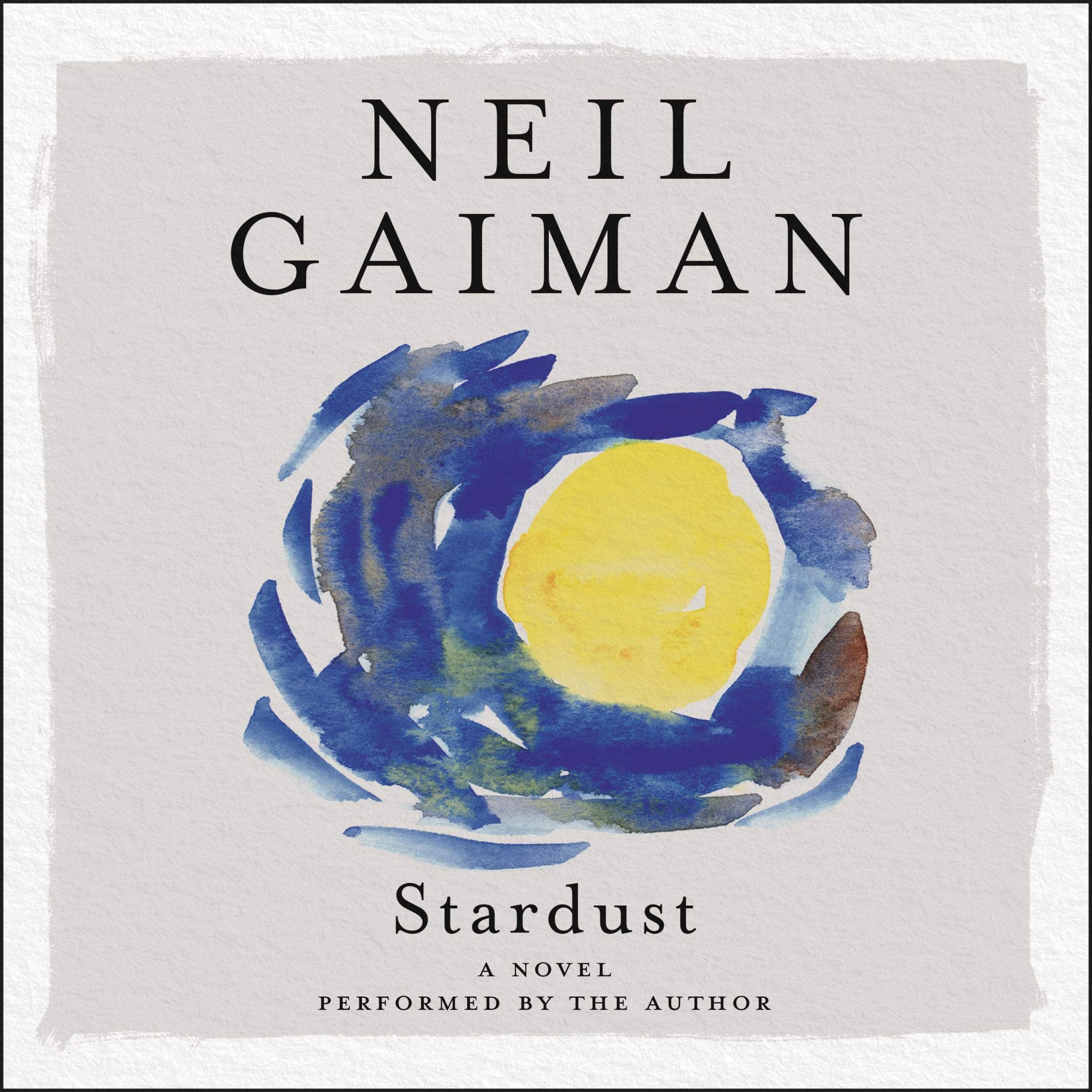
desertcart.com: Stardust (Audible Audio Edition): Neil Gaiman, Neil Gaiman, William Morrow: Books Review: An old fashioned Fairy Tale without the PC nonsense - Okay, maybe not the kind of Fairy Tale you would read to your very young children, but after delving through horror and dark fantasy, I found Stardust to be a refreshing, childlike break; minus the hangover of feeling like I was exposed to an excess of sugar and cotton candy. After all, Fairy tales used to be a bit brutal in their own right, and taking away all of the blood and violence in order to conform to today's "Politically Correct" standards also takes away from the lesson to be learned. IMHO. This tale is told with a simple exuberance, yet manages to hold up under the scrutiny of all us die hard Neil Gaiman fans, showing us that he has the talent to lead us along gentler slopes of the same deadly peaks and chasms he has taken us to in his other works. His playfulness shows through in Stardust as a novel, the way his chapbooks "Wolves In The Walls" and "The Day I Swapped My Dad For 2 Goldfish" did with his graphic novels. Tristin Thorn lives in the English town of Wall, right next to, well, the Wall. There is only one way through the Wall, a gap which is constantly guarded by the village folk of Wall; not to keep people from coming in, but to keep the inhabitants of Wall from crossing over into the land of Faerie. Once every nine years there is a huge fair within the field beyond the gap, and only then do the peoples from each of the lands mingle. Tristin is not aware that half of his lineage is from across the Wall, and when the day comes that he watches a falling star with the girl he wishes to marry, and promises to bring her back that very same star, his father Dunstan helps him to cross the gap into Faerie. Over in Faerie, it is time for the Lord of Stormhold to die, and pass along his Reign to one of his sons. Unable to determine which of his surviving sons is worthy, the old Lord tosses the Power of Stormhold (a topaz set in an amulet) up into the air and tells his sons that whoever finds the amulet will rule after him. This won't be easy for the offspring of the old Lord, for already four of his seven sons were dead, killed off by the living brothers in order to eliminate their claim to Stormhold. Also in Faerie live the Lilim, three ancient women who have lived on and on for forever, revitalizing their youth by eating the hearts from fallen stars. When the star falls, one of the ancient crones makes herself young again and sets out after the star. Tristin is helped along in his quest by some, and treated rudely by others, but always manages to get along by determination and, surprisingly, innocence. When he is transported by a magic candle to where the star had fallen, he is shocked to see that the Fallen Star is a girl, and she has a broken leg to boot. The adventures of Tristin in his journey back to The Wall and the market within the field are magical, fantastical, and sometimes just a tiny bit scary. Though the plot really does have a transparent ending, it still does not take away from the total enjoyment of Tristin's adventures and the predicaments he falls in and out of. All of the main characters coalesce in the ending, but the side characters we meet along the way are just as fleshed out and real to me as Tristin, Yvaine the Star, and Madame Semele with her mysterious bird. Go ahead and step through the Gap with Tristin, you won't be sorry you tagged along. Enjoy! Review: A Faerie Tale for Young at Heart Adults - STARDUST is the most recent of Neil Gaiman's back catalog that I find myself working though. Like everything of his that I have read, it is high fantasy, very interesting, at turns humorous and sometimes dark, and very, very well written. STARDUST, unlike some of his others (for example CORALINE AND THE OCEAN AT THE END OF THE LANE are clearly for children or young adults) could be read by mature young adults, but as it contains a couple of (relatively tame by modern standards) semi-explicit sex scenes and some 4 letter words, I titled my review for as I did. This one is a real faerie tale, taking place in some parallel late 19th century England, where just outside the walled city of Wall lies a magical land populated by witches, various nasty creatures, ghosts, evil lords and queens and the like. Our hero, young Tristran Thorn, goes on a quest to retrieve a star that he and the girl he loves watch fall the ground. He promises to bring her back the fallen star to get her to give him his heart's desire - maybe a kiss, maybe her hand in marriage, it's not all that clear to us or to Tristran. Tristran himself is of mysterious origins, having been delivered to the gates of Wall as a newborn 9 months after his father, Dunstan, had a tryst with one of the mysterious denizens of the outlying faerie lands during one of the once-every-9-years wall openings for a fair during which humans and fae comingle. The fallen star turns out to have the form (in Fae land) of a beautiful young girl, Yvaine, with a broken leg from the fall, and most of the novel is about the growing relationship between Tristran and Yvaine and a mutual coming of age and falling in love. Plus of course witches and other baddies getting in the way. The imagery is beautiful as it usually is for Neil Gaiman and there are many standard fairy tale tropes abounding, but all given that special little Gaiman twist. A very nice, enjoyable light read for mature young adults and grown ups of every age. Oh, one last thing. For $1.99 Kindle download for 368 pages, this has got to be one of the best deals out there in fantasyland. Highly Recommended. J.M. Tepper
S**Y
An old fashioned Fairy Tale without the PC nonsense
Okay, maybe not the kind of Fairy Tale you would read to your very young children, but after delving through horror and dark fantasy, I found Stardust to be a refreshing, childlike break; minus the hangover of feeling like I was exposed to an excess of sugar and cotton candy. After all, Fairy tales used to be a bit brutal in their own right, and taking away all of the blood and violence in order to conform to today's "Politically Correct" standards also takes away from the lesson to be learned. IMHO. This tale is told with a simple exuberance, yet manages to hold up under the scrutiny of all us die hard Neil Gaiman fans, showing us that he has the talent to lead us along gentler slopes of the same deadly peaks and chasms he has taken us to in his other works. His playfulness shows through in Stardust as a novel, the way his chapbooks "Wolves In The Walls" and "The Day I Swapped My Dad For 2 Goldfish" did with his graphic novels. Tristin Thorn lives in the English town of Wall, right next to, well, the Wall. There is only one way through the Wall, a gap which is constantly guarded by the village folk of Wall; not to keep people from coming in, but to keep the inhabitants of Wall from crossing over into the land of Faerie. Once every nine years there is a huge fair within the field beyond the gap, and only then do the peoples from each of the lands mingle. Tristin is not aware that half of his lineage is from across the Wall, and when the day comes that he watches a falling star with the girl he wishes to marry, and promises to bring her back that very same star, his father Dunstan helps him to cross the gap into Faerie. Over in Faerie, it is time for the Lord of Stormhold to die, and pass along his Reign to one of his sons. Unable to determine which of his surviving sons is worthy, the old Lord tosses the Power of Stormhold (a topaz set in an amulet) up into the air and tells his sons that whoever finds the amulet will rule after him. This won't be easy for the offspring of the old Lord, for already four of his seven sons were dead, killed off by the living brothers in order to eliminate their claim to Stormhold. Also in Faerie live the Lilim, three ancient women who have lived on and on for forever, revitalizing their youth by eating the hearts from fallen stars. When the star falls, one of the ancient crones makes herself young again and sets out after the star. Tristin is helped along in his quest by some, and treated rudely by others, but always manages to get along by determination and, surprisingly, innocence. When he is transported by a magic candle to where the star had fallen, he is shocked to see that the Fallen Star is a girl, and she has a broken leg to boot. The adventures of Tristin in his journey back to The Wall and the market within the field are magical, fantastical, and sometimes just a tiny bit scary. Though the plot really does have a transparent ending, it still does not take away from the total enjoyment of Tristin's adventures and the predicaments he falls in and out of. All of the main characters coalesce in the ending, but the side characters we meet along the way are just as fleshed out and real to me as Tristin, Yvaine the Star, and Madame Semele with her mysterious bird. Go ahead and step through the Gap with Tristin, you won't be sorry you tagged along. Enjoy!
J**R
A Faerie Tale for Young at Heart Adults
STARDUST is the most recent of Neil Gaiman's back catalog that I find myself working though. Like everything of his that I have read, it is high fantasy, very interesting, at turns humorous and sometimes dark, and very, very well written. STARDUST, unlike some of his others (for example CORALINE AND THE OCEAN AT THE END OF THE LANE are clearly for children or young adults) could be read by mature young adults, but as it contains a couple of (relatively tame by modern standards) semi-explicit sex scenes and some 4 letter words, I titled my review for as I did. This one is a real faerie tale, taking place in some parallel late 19th century England, where just outside the walled city of Wall lies a magical land populated by witches, various nasty creatures, ghosts, evil lords and queens and the like. Our hero, young Tristran Thorn, goes on a quest to retrieve a star that he and the girl he loves watch fall the ground. He promises to bring her back the fallen star to get her to give him his heart's desire - maybe a kiss, maybe her hand in marriage, it's not all that clear to us or to Tristran. Tristran himself is of mysterious origins, having been delivered to the gates of Wall as a newborn 9 months after his father, Dunstan, had a tryst with one of the mysterious denizens of the outlying faerie lands during one of the once-every-9-years wall openings for a fair during which humans and fae comingle. The fallen star turns out to have the form (in Fae land) of a beautiful young girl, Yvaine, with a broken leg from the fall, and most of the novel is about the growing relationship between Tristran and Yvaine and a mutual coming of age and falling in love. Plus of course witches and other baddies getting in the way. The imagery is beautiful as it usually is for Neil Gaiman and there are many standard fairy tale tropes abounding, but all given that special little Gaiman twist. A very nice, enjoyable light read for mature young adults and grown ups of every age. Oh, one last thing. For $1.99 Kindle download for 368 pages, this has got to be one of the best deals out there in fantasyland. Highly Recommended. J.M. Tepper
E**N
Ich bin auf das Buch gestoßen, nachdem ich den gleichnnamitgen Film gesehen habe, der mir sehr sehr gut gefallen hat. In "Stardust" geht es um den jungen Tristan, der seiner schwärmerischen Jugendliebe unbedingt beweisen will, wie viel sie ihm bedeutet und ihr daher verspricht, ihr den gefallenen Stern einer Sternschnuppe zu bringen. Doch dazu muss der junge Mann die Mauer überschreiten, die sein Heimatdörfchen Wall von der mystischen Welt auf der anderen Seite trennt. Und dort erwarten ihn so einige Abenteuer, denn Tristan ist nicht der Einzige, der hinter dem Stern her ist und ob es sich dabei um einen ganz stinknormalen Felsbrocken handelt, steht buchstäblich noch in den Sternen. Obwohl auch hier natürlich die typischen Fantasy-Elemente, wie ein mittelalterlich angehauchtes Königreich, der große Kampf Gut gegen Böse und ein junger, unerfahrener "Auserwählter" auftauchen, schafft Gaiman es doch, all diese Elemente zu einer ganz neuen Art von Fantasy zu vermischen, mit vielen lustigen, spannenden und überraschenden Elementen und einer bezaubernden Liebesgeschichte. Auch der moralische Aspekt der Geschichte ist eindeutig erkennbar - um nicht zu viel zu verraten nur so viel: Es ist eben nicht alles Gold, was glänzt. Für mich persönlich immer wieder ein Highlight, sowohl für jüngere, als auch für ältere Leser.
A**S
El tamaño es algo pequeño para mi gusto esta para mi entre un libro de tamaño normal y uno de bolsillo, algo que me decepciono mucho es que tiene algo de daño en el lomo en el paquete venia otro libro así que puede que se haya causado en el envío dado que este no tenía nada de plástico protector de ningún tipo.
K**R
Did you, as a child, hold your breath when Jack reached the top of the bean stalk?....or when Snow White opened the door to the witch's cottage?....or when the farm house landed in the middle of Oz? If you did then, as an adult, that same breath will be held when the hero, Tristran, crosses through the gaurded notch and enters into the land of Faerie. Witches, hairy little men, ghosts, talking trees and the land of Stormhold await his presence. While due to a few mild sexual innuendos this book is not advised for young children, Neil Gaiman shows himself, again, to be a superb and imaginative story teller. I recommend this, and all other Gaiman tales, to those who, like me, enjoy pure fantasy as a means to not only as an escape from reality but a means through which we can view reality in a slightly different light.
M**R
Neil Gaiman made two stabs at telling this story -- once in this novel, and once with the film of the same name. In doing so, he works to the established tradition that fairy tales should be told and retold. If you are coming to this from the film, be aware that it is _not quite the same_. The book is more complex, more thoughtful, and more demanding. The film is more exciting, simpler, and finishes with a very satisfying thump. Which is to say that the book is better at what books do, while the film is better at what films do. If you're wondering whether you will enjoy this or not, then you probably will. This is not out-and-out fantasy writing, in the sub-Tolkien genre which fills entire cases at book shops with elaborate tales of complex societies in worlds entirely divorced from our own. (If you enjoy those books, you will probably still enjoy this one, but some people are put off by them). Stardust is set in a world very close to our own, and which understands its own relationship to our own world. Its main protagonist is (largely) from this world, and so has to discover what he needs to know as he goes, which also gives us the time to discover it as well. This is also a book about real emotions and relationships, with a good line in dialogue, banter and characterisation. It's also a remarkably visual book, despite the fact that this particular edition misses the illustrations. For some reason, Gaiman works hard to make this an adult fairy tale (even to the extent of including one swear-word, printed very small but in capital letters). He discusses this in the epilogue, as well as acknowledging his debt to predecessor authors such as CS Lewis. Even after reading the explanation, I'm still not sure I understood why he wanted to exclude children from reading it, and my guess is that very few teenagers will be put off. If I really had to choose, I would say that Gaiman _did_ improve his story for the film. However, this is still a beautifully conceived adult fairy tale, and you can read it (as I did) straight after watching the film without any loss of enjoyment. And you definitely won't know how it ends, because the plot climax is entirely different. Warmly recommended.
G**I
leggero e piacevole, fantastico e umoristico, romantico e avventuroso
Trustpilot
Hace 1 día
Hace 2 semanas