
Descargar la aplicación


Servicios al cliente
Sobre nosotros
Copyright © 2025 Desertcart Holdings Limited
Descargar la aplicación
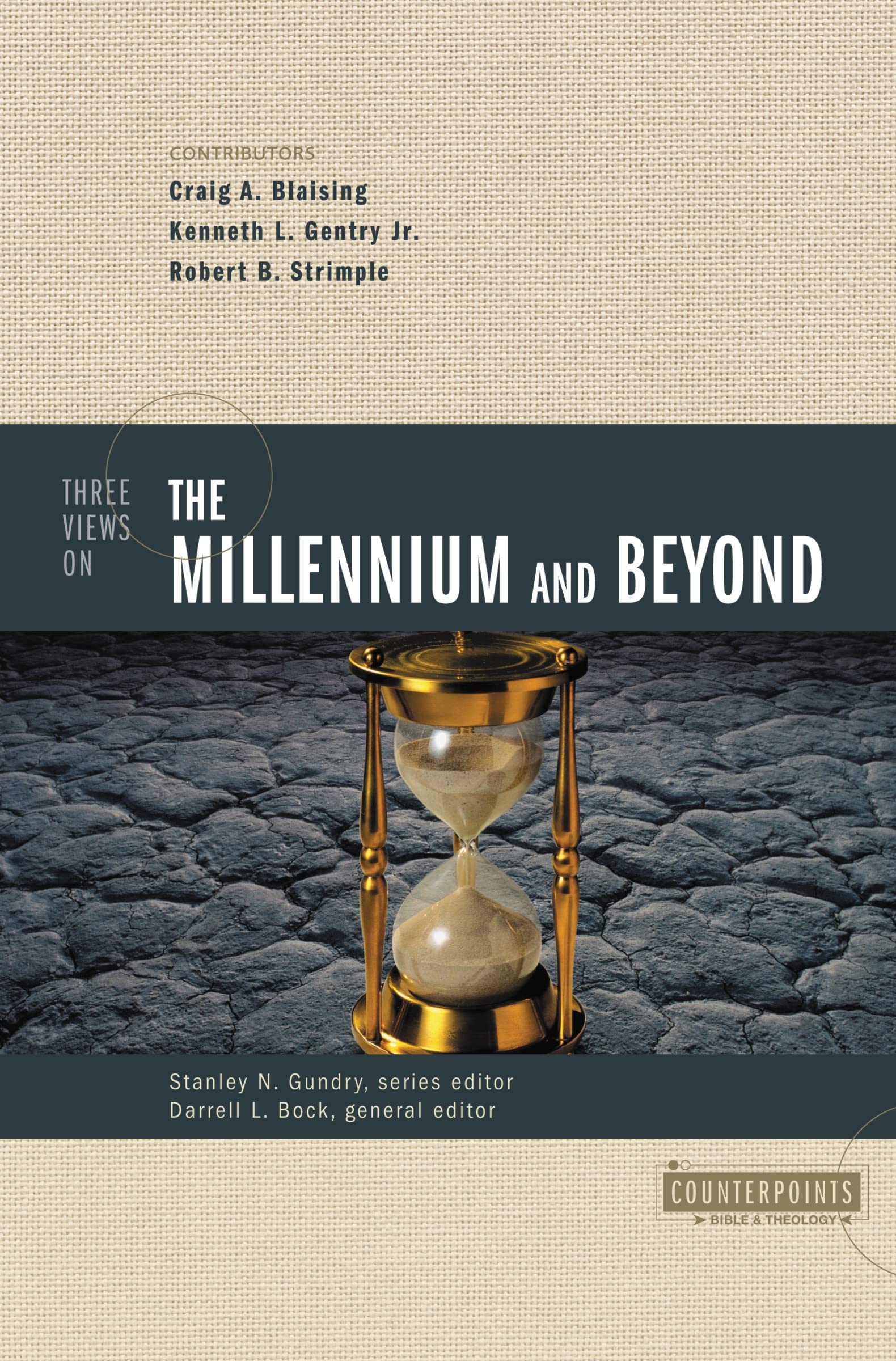
Three Views on the Millennium and Beyond [Darrell L. Bock, Stanley N. Gundry, Kenneth L. Gentry Jr., Robert B. Strimple, Craig A. Blaising] on desertcart.com. *FREE* shipping on qualifying offers. Three Views on the Millennium and Beyond Review: Great way to study and compare views on the Millennium - I am a big fan of the Counterpoints: Bible and Theology series. The series is fairly consistent in quality and the format of presentations followed by rebuttals gives the reader an excellent opportunity to contrast and compare the different viewpoints. This is one of the better volumes in the series that I have come across. The Millennium is a fascinating topic and has broken outside of the boundary of academic theology, most commonly in our day and time through the "Left Behind" series, although "The Late, Great Planet Earth" by Hal Lindsay was quite popular in its day as well. This book attempts to get past all of the clutter and let proponents of the three major millennial schools, pre-millennialism, post-millennialism, and Amillinealism, each make their case. I live in the Southern part of the United States, and the pre-millennial view seems to be the predominant viewpoint of most of the Christians I know. I was interested to see how each side would present their case and find the scriptural basis for their beliefs. In addition, the responses to each author open up several doors of debate and help to sharpen the differences between the different viewpoints. If I was judging this as a three-way prizefight, I would say that Robert Strimple (amillennial) won by a knockout over Craig Blaising (pre-millennial) and that Strimple won by points over Kenneth Gentry (post-millennial). The crux of this debate is greatly influenced by the interpretation of Revelation 20: 1-6. It seems to be that the pre-millennial viewpoint takes Revelation 20:1-6 and tries to make the rest of scripture fit with the passage. On the other hand, the ammillennial viewpoint takes the whole of scripture and tries to make sense of Revelation 20:1-6 that way. As far as I could tell the post-millenial viewpoint was not based on any specific passage but on a general sense of how things ought to be. All in all a very interesting and well-done book that will be of great help to anyone wishing to understand the different viewpoints about the millennium. Review: Helpful Overview - I enjoyed reading this book. Eschatology is the area of theology that I am probably weakest in. While I had a basic knowledge related to the three main positions in relation the the Millenium, I can now better understand the differing views. This book is also helpful, even if you've already made your choice on where you stand on this point, to better grasp why others believe what they believe. For those seeking to get a better handle on eschatology and the millennium I definitely recommend this read. It was a bit technical in some parts and I found myself getting a bit bogged down in places, which is why I gave it 4 stars, but in a book of this nature that could be unavoidable.











| Best Sellers Rank | #83,524 in Books ( See Top 100 in Books ) #69 in New Testament Criticism & Interpretation #127 in Christian Prophecies #158 in Christian Eschatology (Books) |
| Customer Reviews | 4.4 out of 5 stars 164 Reviews |
R**H
Great way to study and compare views on the Millennium
I am a big fan of the Counterpoints: Bible and Theology series. The series is fairly consistent in quality and the format of presentations followed by rebuttals gives the reader an excellent opportunity to contrast and compare the different viewpoints. This is one of the better volumes in the series that I have come across. The Millennium is a fascinating topic and has broken outside of the boundary of academic theology, most commonly in our day and time through the "Left Behind" series, although "The Late, Great Planet Earth" by Hal Lindsay was quite popular in its day as well. This book attempts to get past all of the clutter and let proponents of the three major millennial schools, pre-millennialism, post-millennialism, and Amillinealism, each make their case. I live in the Southern part of the United States, and the pre-millennial view seems to be the predominant viewpoint of most of the Christians I know. I was interested to see how each side would present their case and find the scriptural basis for their beliefs. In addition, the responses to each author open up several doors of debate and help to sharpen the differences between the different viewpoints. If I was judging this as a three-way prizefight, I would say that Robert Strimple (amillennial) won by a knockout over Craig Blaising (pre-millennial) and that Strimple won by points over Kenneth Gentry (post-millennial). The crux of this debate is greatly influenced by the interpretation of Revelation 20: 1-6. It seems to be that the pre-millennial viewpoint takes Revelation 20:1-6 and tries to make the rest of scripture fit with the passage. On the other hand, the ammillennial viewpoint takes the whole of scripture and tries to make sense of Revelation 20:1-6 that way. As far as I could tell the post-millenial viewpoint was not based on any specific passage but on a general sense of how things ought to be. All in all a very interesting and well-done book that will be of great help to anyone wishing to understand the different viewpoints about the millennium.
K**R
Helpful Overview
I enjoyed reading this book. Eschatology is the area of theology that I am probably weakest in. While I had a basic knowledge related to the three main positions in relation the the Millenium, I can now better understand the differing views. This book is also helpful, even if you've already made your choice on where you stand on this point, to better grasp why others believe what they believe. For those seeking to get a better handle on eschatology and the millennium I definitely recommend this read. It was a bit technical in some parts and I found myself getting a bit bogged down in places, which is why I gave it 4 stars, but in a book of this nature that could be unavoidable.
R**N
Excellent source for foundation of the 3 views of the millennium
I have really enjoyed the counterpoint series. I have read about 6 or 7 thus far. This book is probably my favorite. Not only was I able to read this one with the most open mindset, but I also think this one may well be the most challenging in terms of understanding. There are so many other doctrines that seem to come into play when forming a belief system concerning the millennium. Doctrines such as ecclesiology, Israel, and the resurrection for example play a major role in determining one's position on the millennium. This is a book that I will most likely be reading again soon.
D**D
Good, friendly discussion about the Millennium
Ken Gentry did a nice job trying to scripturally present the post-millennial position. He expressed confidence in the presence and sovereignty of God with the church as they share the gospel throughout the world. Robert Strimple try defending the amillennial position, but since the word "amillennial" means "no millennium", he didn't really have anything to defend, he spent most of his time picking apart the pre-millennial position. Craig Blaising got off to a less than blazing start, choosing to focus on the history of millennial interpretation for the first part of his essay. Then he comes back strong scripturally. I was disappointed he did not try to show how a literal millennium fulfills God's promises to Israel. Each presenter had an opportunity to rebuff the other presenter, and they all made good points.I thought it was a little facetious that they criticize the premillennialist for only having Revelation 20, but in reality, if it wasn't for Revelation 20, there would be no need for this book at all. Everyone would be out of a job :-) I came away from the book with a renewed appreciation for the post-millennial position, but came away more convinced than ever that the pre-millennial interpretation is probably the right one.
R**S
Uneven presentation; OK discussion, but not concise
In investigating the issue of the millennium, where should you start? Ultimately, I think this book makes the wrong choices in answering this question. While the discussion is interesting at times, I can't help but feel that Darrell Bock's summary essay should have been re-worked and presented at the beginning of the work. Basically, Bock writes that one's hermeneutical approach (the prism by which one interprets Scripture) largely determines what you believe the end times looks like. Bock notes how each passage deals with eschatological texts, and what questions each feels are key to understanding the nature of Jesus' return. If he had placed this at the beginning, I think it would be more helpful to the reader. Perhaps he could have then placed another essay "wrapping things up" at the end. Kenneth Gentry Jr. contributes the postmillennial perspective, but does a much better job critiquing the positions of the others than advancing his own case. In his own essay, he really needed to a) explain his own hermeneutical approach in a coherent and distinctive fashion, rather than use generalities, and b) take the time to formulate a detailed explanation of how postmillennialism interprets Revelation 20 (the key text). As someone who considers himself sympathetic to postmillennialism's expectation that God's Kingdom is irrestibly advancing even in this current age, I really wanted Gentry to make a solid case. After all, Jonathan Edwards (arguably the greatest American mind ever) was post-mil, so surely it's a reasonable position. Alas. Robert Strimple presents the amillennial position and does an excellent job presenting his overall hermeneutic and understanding of key passages. Of all the essays, his is probably the best. He boldly tackles Romans 11 to explain how amillennialism understands what is usually read as regarding a future conversion of Israel (although it seems Strimple only represents a portion of amil proponents who feel that Paul is not speaking 'prophetically' here). Craig Blaising advances the premillennial position, and does a fair job with the exegesis portion, but I agree with the reviewer below who feels that premillennial positions come in basically two varities, and that each should have been allowed to speak for itself individually. Blaising spends too much on time on the history of thought regarding the nature of the eras beyond our own, and not enough time directly discussing the hermeneutics involved in how premillenialists arrive at the premillennial understanding of Revelation 20. In fairness, he is representing both the "George Ladd" premil folks (like me), and the much more strictly literal approach dispensationalist interpreters, so he's got to couch his argument in the shared understanding of the central text. At any rate, I recommend Stanley Grenz's The Millennial Maze instead of this book. Grenz, although he is an amil guy, is extremely fair. Each position's history and hermeneutic is discussed in concise fashion, and followed with a targeted critique. I'm not finished reading it yet, but I actually thought that in presenting postmillennialism, he made a much better argument than Kenneth Gentry did in this book. In addition, I feel like I understand dispensationalism a WHOLE lot better than I ever did.
R**Y
Open Hand
Nice look into differing views of the “Millennium”. Gives you info and insight into main line views. Offers rebuttal from varying views. More of a discussion in the family than trying to win a argument
J**S
Book answers many questions
The many questions I had concerning biblical prophesies and the ultimate outcomes of all things considered, one by one have been answered. Excellent book. Excellent read.
S**.
Read it so you can know what you believe.
I'm an amillennialist, but I didn't know it or understand it, till I read this book. Great book for sorting out the "end times" theologies. Easy to read and understand for the lay person like me. This book reminded me that it does matter what we believe, because we live it out in our daily lives.
Trustpilot
Hace 1 mes
Hace 3 semanas