
Descargar la aplicación


Servicios al cliente
Sobre nosotros
Copyright © 2025 Desertcart Holdings Limited
Descargar la aplicación
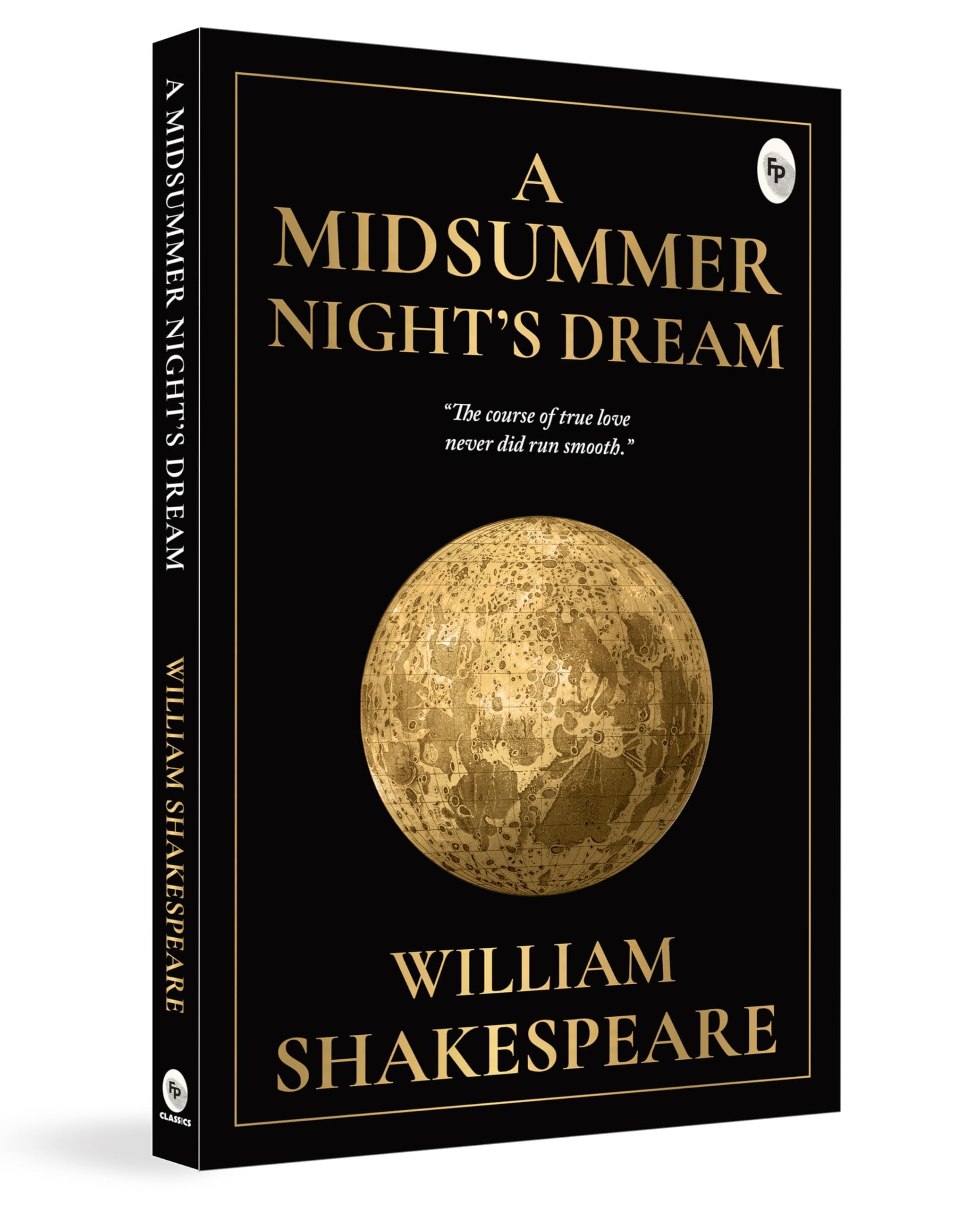
Escape to an enchanted forest where Athenian nobles and mischievous fairies navigate love's twists and magical realities. Discover Shakespeare's classic romantic comedy. Review: Lucid Dream - Most editors are well disposed towards the plays they are asked to edit and Peter Holland is no exception - he tells us that there was no other title he'd have chosen in preference. Not everyone would agree with him about the play's merits, however. His undergraduate friend considered it 'a pappy play', and there have been plenty of other disparaging comments across the centuries. (Famously, Pepys described Dream as 'the most insipid ridiculous play', while for Malone it was unbelievably thin and trite.) After reading this exemplary edition, which reveals much of its full complexity, Dream should not be mistaken for such simple and unsubstantial fare again. Holland begins with a succinct account of modern dream theories, before tackling Classical, medieval and Renaissance views. Particularly interesting is his discussion of treatments of dream in the literature of Shakespeare's contemporaries, where Robert Greene's dismissive stance approximates to that of the rational (but limited) Theseus, while Thomas Lodge's more credulous acceptance of dreams and their mystery aligns him more closely with Hippolyta. The Introduction is astute as well as comprehensive. It observes that doubling the roles of Theseus/Oberon and Hippolyta/Titania has become routine since the 60s, but is critical of those who see this revival of doubling primarily as a solution to financial or pragmatic problems, insisting that it originally had an 'interpretative' function. Holland sees the Elizabethan practice of doubling as a structural device, where 'the audience's recognition of an actor was used to underline the interconnectedness of a series of roles he performed in a play.' Although I'm no historian of critical thought, it seems to me at least that Holland anticipates some of the more influential work of recent scholars. Louis Montrose's study of the Elizabethan theatre's subversion of patriarchal values is hinted at in this edition's Commentary. (See the note on Bottom's apparently innocent use/misuse of the word 'deflowered', p247n, for example.) Equally praiseworthy are the references made to those filmed versions of Dream, like Reinhardt's (1935), that might be considered too dated for extensive, post-Peter Brook discussion. Arden's forthcoming Dream will have a difficult job surpassing its Oxford competitor, first published in 1994. It's just a shame that in the intervening 17 years OUP haven't managed to reference page numbers mentioned in at least three sections of the book: Introduction, Editorial Procedures and Commentary. 'See p000' might suffice at proof stage, but it really isn't good enough so many years on. Peter Holland's informed and constantly illuminating edition deserves better. Review: The Bard of England - Do I have to say it? Shakespeare knew how to write! I grew up quite near to where his mother's house and his own house are located (my Nanna lives in the same village his Mum used to live in) and have grown up learning about the Bard of England. I have read some of his novels for my Shakespearean Literature course at uni and though I enjoyed a few, and disliked others, I absolutely loved A Midsummer Night's Dream. I liked it so much that I chose to do an oral presentation on his use of mythology in the novel. I highly recommend it!!


| ASIN | 8175994509 |
| Best Sellers Rank | 8,510 in Books ( See Top 100 in Books ) 34 in Drama (Books) 417 in Fiction Classics (Books) 1,516 in Literary Fiction (Books) |
| Customer reviews | 4.6 4.6 out of 5 stars (3,119) |
| Dimensions | 19.61 x 1.02 x 12.6 cm |
| Grade level | 2 - 1 |
| ISBN-10 | 9788175994508 |
| ISBN-13 | 978-8175994508 |
| Item weight | 134 g |
| Language | English |
| Print length | 132 pages |
| Publication date | 4 Jan. 2017 |
| Publisher | Fingerprint! Publishing |
| Reading age | 13 - 17 years |
J**S
Lucid Dream
Most editors are well disposed towards the plays they are asked to edit and Peter Holland is no exception - he tells us that there was no other title he'd have chosen in preference. Not everyone would agree with him about the play's merits, however. His undergraduate friend considered it 'a pappy play', and there have been plenty of other disparaging comments across the centuries. (Famously, Pepys described Dream as 'the most insipid ridiculous play', while for Malone it was unbelievably thin and trite.) After reading this exemplary edition, which reveals much of its full complexity, Dream should not be mistaken for such simple and unsubstantial fare again. Holland begins with a succinct account of modern dream theories, before tackling Classical, medieval and Renaissance views. Particularly interesting is his discussion of treatments of dream in the literature of Shakespeare's contemporaries, where Robert Greene's dismissive stance approximates to that of the rational (but limited) Theseus, while Thomas Lodge's more credulous acceptance of dreams and their mystery aligns him more closely with Hippolyta. The Introduction is astute as well as comprehensive. It observes that doubling the roles of Theseus/Oberon and Hippolyta/Titania has become routine since the 60s, but is critical of those who see this revival of doubling primarily as a solution to financial or pragmatic problems, insisting that it originally had an 'interpretative' function. Holland sees the Elizabethan practice of doubling as a structural device, where 'the audience's recognition of an actor was used to underline the interconnectedness of a series of roles he performed in a play.' Although I'm no historian of critical thought, it seems to me at least that Holland anticipates some of the more influential work of recent scholars. Louis Montrose's study of the Elizabethan theatre's subversion of patriarchal values is hinted at in this edition's Commentary. (See the note on Bottom's apparently innocent use/misuse of the word 'deflowered', p247n, for example.) Equally praiseworthy are the references made to those filmed versions of Dream, like Reinhardt's (1935), that might be considered too dated for extensive, post-Peter Brook discussion. Arden's forthcoming Dream will have a difficult job surpassing its Oxford competitor, first published in 1994. It's just a shame that in the intervening 17 years OUP haven't managed to reference page numbers mentioned in at least three sections of the book: Introduction, Editorial Procedures and Commentary. 'See p000' might suffice at proof stage, but it really isn't good enough so many years on. Peter Holland's informed and constantly illuminating edition deserves better.
M**L
The Bard of England
Do I have to say it? Shakespeare knew how to write! I grew up quite near to where his mother's house and his own house are located (my Nanna lives in the same village his Mum used to live in) and have grown up learning about the Bard of England. I have read some of his novels for my Shakespearean Literature course at uni and though I enjoyed a few, and disliked others, I absolutely loved A Midsummer Night's Dream. I liked it so much that I chose to do an oral presentation on his use of mythology in the novel. I highly recommend it!!
L**E
Excellent, quality edition
Excellent Introduction Excellent notes Clear layout I used this edition for my University studies in 2002… Twenty years later, I am homeschooling my friend’s girl, so I bought her this edition so that we could study, ‘A Midsummer Night’s Dream’ for her own education (she’s thirteen years-old).
I**Y
Good
Very good play. Good edition. Shakespeare is always fun to read. Go and read this play and enjoy it. Entertaining.
K**K
Lovely book
This is such a beautiful little book with a fantastic introduction.
A**Á
Just lovely
A great read and essential for every household. Lovely introduction for anyone further interested in the backround of this play!
G**I
goes on a bit
hmmm, Shakespeare is more fun when you just get to read it and don't have to study the fun out of it, reading meaning into every tiny archaic word, but still.... for a short book it does go on a bit. SPOILERS AHEAD!! Bottom and his chums were pretty annoying when they were prancing about rehearsing there play - just shut up and get on with it, please! But then when they performed it, those stuck up fancy folk were sooo rude it made me hate them too. I mean, they play is rubbish, but at least they put the effort in, be polite at the very least, instead of sitting there trying to show everyone how smart you are by poking fun at the working class. It is not as if they weren't leaping around like nutters half the night before falling in and out of love at the whim of slightly confused fairies. And I do worry about this poor Indian boy who we never actually see.
C**T
Clear and simplified.
A good solid way of reading Shakespeare without feeling intimidated, plenty of suggestions for workshop/class games/activities, photos included too which help to visualise the piece. Well worth the investment if you are nervous about dipping you toe into Shakespeare or you need a hand with it for school exams.
ا**ي
👍
B**K
I don't remember this being one of my favourite Shakespeare plays, but I enjoyed re-reading it. It's in his "early" style, so a lot of rhyme within speeches, patterned speeches between the characters and so on; if you prefer the sinewy blank verse of his later style then you might find this one a little saccharine. Also just the right amount of the comic relief characters; sometimes those parts can drag a bit (see Touchstone in As You Like It, for example). The movie with Michelle Pfeiffer & Kevin Kline isn't too bad; has Stanley Tucci as an unexpectedly good Puck (if Tucci has ever been bad in a movie, I haven't seen it; he's even good in those Transformers movies). --Brooke Clark, author of Urbanities
M**M
good
L**A
Prodotto arrivato come nuovo ma al piccolo prezzo dell'usato. Spedizione rapida e il libro è arrivato ben prima della data prevista. Decisamente soddisfatta!
J**H
A Midsummer Night's Dream was written 420 years ago so it's syntax of Elizabethan English is quite different and foreign to our modern American English. William Shakespeare was brilliant but his writing reflects his time so it is imperative to have a guide of sorts to breakdown his syntax into our modern syntax making the experience of reading Shakespeare more fulfilling. This is where A Midsummer Night's Dream (Shakespeare Made Clear) comes in handy as it is the ultimate accompanying guide to the famous story. This accompanying guide version makes understanding Shakespeare easier and more enjoyable. The guide includes an introductory discussion of the play's themes and characters, its dramatic structure, its history and historical context and of course its author and insightful summary at the end. This accompanying guide makes understanding Shakespeare easier and useful by having a new modern interpretation and translation of Shakespeare's original text underneath the original text provided line by line on every page of the play. This is then followed by a detailed explanation featuring insights in Shakespeare's original text with historical facts and deeper motives. As the accompanying guide concludes there is a very helpful and intriguing insight into the play's major themes. I highly suggest that if you want to not only grasp understanding the complexities of Shakespeare's A Midsummer Night's Dream but also gain a deeper appreciation for it then buy this most helpful of all accompanying guides to this timeless touching, playful and insightful story.
Trustpilot
Hace 3 semanas
Hace 5 días