We remain fully operational. Our teams are working around the clock to ensure your deliveries continue safely.

Descargar la aplicación


Servicios al cliente
Sobre nosotros
Copyright © 2025 Desertcart Holdings Limited
Descargar la aplicación
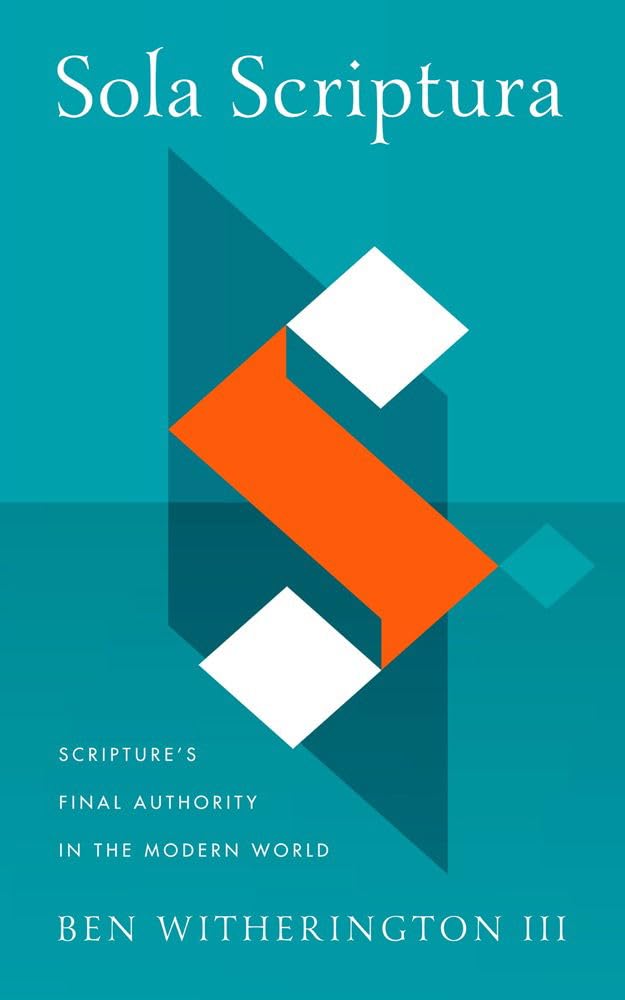
Sola Scriptura: Scripture's Final Authority in the Modern World [Witherington III, Ben] on desertcart.com. *FREE* shipping on qualifying offers. Sola Scriptura: Scripture's Final Authority in the Modern World Review: Scripture is the final authority - In Sola Scriptura, Ben Witherington sets out to define what the term really means and what its implications are for Christianity today. I was surprised to discover that it was a Catholic person who coined the phrase and the doctrine, because I’ve always associated it with reformed theologians. He notes that from the very beginnings of early Christianity, sacred texts were crucial to Christian identity and the fount of Christian doctrine. He states that the 39 books of our Old Testament were already revered as sacred writ by 70 A.D in Judaism and early Christianity. He further notes that early Christians before and after the heretic Marcion cited New Testament documents in an authoritative way. At the same time, he says there is no evidence that early Christians cited other documents in a way which authenticated those books as scripture (someone might wonder about the status of 1 Enoch in Jude 14–17?). Ben concludes that in the writings of early Christians, we see Prima Scriptura rather than Sola Scriptura, Scripture as the primary and final authority, not that other Christian traditions cannot have some authority, as long as the authority is based in scripture. He notes that the ecumenical councils focus more on theological matters that derived from Scripture rather than trying to define the authority of scripture itself. As Ben moves through the 15th and 16th and 17th centuries, he knows that among those who cried Sola Scriptura, there was debate over which translation of the Scriptures should be considered most authoritative. He states that the strongest Puritan advocate of Sola Scriptura was William Bradshaw who said that the Word of God as found in the prophets and the apostles is the sole Canon and rule of all matters of religion. John Wesley revered the word of God not as the sole authority, but as the sole FINAL authority. He recognized the authority of scripture, but he also had a list of recommended non canonical books that could be helpful to Christians. There is a chapter where Witherington warns about attacks on the authority of Scripture, such as the changing of the definition of marriage, and the acceptance of LGBTQ ideology in the church. Witherington says at the end of the book “Sola Scriptura meant and means Scripture alone only for some Christians at and after the Reformation and into the modern era. De facto, what it normally means even in those circles is that Scripture is supposed to be the final authority on all matters of faith and practice, on things the Bible actually teaches.” Cynics might suggest that Ben has changed the definition of Sola Scriptura, but from my perspective, he clarifies it rather than alters it. This is a crisp, compelling, fast reading survey through Christian history, clarifying the meaning of Sola Scriptura. I highly recommend it.
| Best Sellers Rank | #508,343 in Books ( See Top 100 in Books ) #845 in Christian Historical Theology (Books) #2,164 in History of Christianity (Books) #2,766 in Christian Church History (Books) |
| Customer Reviews | 5.0 5.0 out of 5 stars (9) |
| Dimensions | 5 x 0.92 x 8 inches |
| ISBN-10 | 1481320467 |
| ISBN-13 | 978-1481320467 |
| Item Weight | 13.6 ounces |
| Language | English |
| Print length | 230 pages |
| Publication date | October 15, 2023 |
| Publisher | Baylor University Press |
D**D
Scripture is the final authority
In Sola Scriptura, Ben Witherington sets out to define what the term really means and what its implications are for Christianity today. I was surprised to discover that it was a Catholic person who coined the phrase and the doctrine, because I’ve always associated it with reformed theologians. He notes that from the very beginnings of early Christianity, sacred texts were crucial to Christian identity and the fount of Christian doctrine. He states that the 39 books of our Old Testament were already revered as sacred writ by 70 A.D in Judaism and early Christianity. He further notes that early Christians before and after the heretic Marcion cited New Testament documents in an authoritative way. At the same time, he says there is no evidence that early Christians cited other documents in a way which authenticated those books as scripture (someone might wonder about the status of 1 Enoch in Jude 14–17?). Ben concludes that in the writings of early Christians, we see Prima Scriptura rather than Sola Scriptura, Scripture as the primary and final authority, not that other Christian traditions cannot have some authority, as long as the authority is based in scripture. He notes that the ecumenical councils focus more on theological matters that derived from Scripture rather than trying to define the authority of scripture itself. As Ben moves through the 15th and 16th and 17th centuries, he knows that among those who cried Sola Scriptura, there was debate over which translation of the Scriptures should be considered most authoritative. He states that the strongest Puritan advocate of Sola Scriptura was William Bradshaw who said that the Word of God as found in the prophets and the apostles is the sole Canon and rule of all matters of religion. John Wesley revered the word of God not as the sole authority, but as the sole FINAL authority. He recognized the authority of scripture, but he also had a list of recommended non canonical books that could be helpful to Christians. There is a chapter where Witherington warns about attacks on the authority of Scripture, such as the changing of the definition of marriage, and the acceptance of LGBTQ ideology in the church. Witherington says at the end of the book “Sola Scriptura meant and means Scripture alone only for some Christians at and after the Reformation and into the modern era. De facto, what it normally means even in those circles is that Scripture is supposed to be the final authority on all matters of faith and practice, on things the Bible actually teaches.” Cynics might suggest that Ben has changed the definition of Sola Scriptura, but from my perspective, he clarifies it rather than alters it. This is a crisp, compelling, fast reading survey through Christian history, clarifying the meaning of Sola Scriptura. I highly recommend it.
Trustpilot
Hace 1 mes
Hace 1 mes