We remain fully operational. Our teams are working around the clock to ensure your deliveries continue safely.

Descargar la aplicación


Servicios al cliente
Sobre nosotros
Copyright © 2025 Desertcart Holdings Limited
Descargar la aplicación

Buy anything from 5,000+ international stores. One checkout price. No surprise fees. Join 2M+ shoppers on Desertcart.
Desertcart purchases this item on your behalf and handles shipping, customs, and support to Nicaragua.
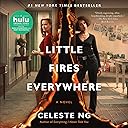
desertcart.com: Little Fires Everywhere (Audible Audio Edition): Celeste Ng, Jennifer Lim, Penguin Audio: Audible Books & Originals Review: A thought-provoking story with controversial themes - “Little Fires Everywhere” was the tv series I planned to watch next after finishing “Big Little Lies”. But right then the lockdowns due to the pandemic started, I began writing in earnest and had to drop the pastime that used to be my favourite for many years. So, when the book deal for “Little Fires Everywhere” by Celeste Ng landed in my mailbox, I downloaded it. The book turned out to be exactly my kind of read. I appreciate that the author didn’t cut short on fleshing out the characters. Some might call it ‘tell not show’, but I loved it. The characters – and what a diverse set of them there is in the book! – felt real, even though not always their motivations were crystal clear, which is absolutely fine with me. Words exist to explain things. And it is impossible to explain everything about a character and their past through dialogue in the scenes set in the present. I understand that not everyone likes such a style when some parts of characters’ lives are described as a narrative rather than some bits and pieces of it get thrown between the ‘action.’ Yet, it works for me, and thus, I enjoyed learning about the inhabitants of Shaker Heights, their dark and not-so-dark secrets, the dreams they pursued and the ones they decided to leave behind. The book draws a wide canvas of life in an upmarket suburb of Cleveland, Ohio – Shaker Heights – focusing on the Richardsons and the Warrens. The Richardsons are a perfect American family, with a big and beautiful house, two successful parents, and four teenage children. While the Warrens are a single mother Mia and her daughter Pearl. The Warrens become the tenants of the Richardson’s, renting from them a house Mrs Richardson has inherited from her parents. However, the relationship between the two families doesn’t stay within the tenant-owner limits. I found the dynamics between Mia and the Richardsons’ children especially fascinating. It might seem that the privileged and somewhat spoiled teenagers who live the American dream their parents have created for them would not even see a struggling artist who never stays in one place for long and has to supplement her income by doing low-paid jobs. It also might seem logical that the daughter of the nomadic mother would inevitably become an outsider in the uppity school of a planned community such as Shaker Heights. Yet, it doesn’t happen this way. On the contrary, the rich get drawn to the poor, and the ties that form between them become so strong that it’ll bring tremendous heartbreak to everyone when they are forced to cut them. At first, the plotline with the teenager crises, such as pining for a boy out of your league and being left alone at the party thrown when the parents are out of town, frustrated me. But then the whole picture came together, and this part clicked into place in the overall narrative. I didn’t feel that the author forced a certain point of view on the readers. All the characters in the book have their flaws, as well as their share of disappointment. To me, it was compelling that I couldn’t firmly take someone’s side. Mia, a nomadic artist, certainly followed her heart and creative dreams. Still, even though the Richardsons’ children were drawn to her due to the stark difference she presented with their own mother, was Mia’s choice of lifestyle beneficial for her daughter Pearl? As much as I can relate to Mia’s passion for art, I can’t wholeheartedly support the idea of sacrificing one’s child’s comfortable life because of it. True, Mia had other reasons for not staying in one place for long – her back story is exciting and, like everything else in the book, controversial. I didn’t feel that the author wanted the readers to condemn Elena Richardson, an ideal Shaker Heights resident, a wife, a mother – a working one at that – who has her life planned. After all, Elena has built a great life for herself and her family. There is no denying that. Only those who haven’t experienced real poverty can declare that a comfortable home, stable, higher-than-average family income, the ability to buy a car for your child’s sixteenth birthday, etc. are not real values. While the real ones are following your dream and staying true to your nature. Perhaps the perspective slightly shifts only if one has gone through a real financial struggle when buying food and paying utility bills become an insurmountable task. “Little Fires Everywhere” touches upon some controversial topics I found intriguing to explore. It also made me realise my position on some of them differs from the accepted by the mainstream. I recommend this book to those who don’t mind the gradual immersion in the story and appreciate delving deep into the characters’ backstories and motivations. Review: I really need to find a better balance of work reading versus pleasure reading - This month in my book club, it was my pick. I have been dying to read Little Fires Everywhere going on a year now – seriously – but just haven’t had the time with review work obligations. I really need to find a better balance of work reading versus pleasure reading, especially as my TBR pile has multiplied to a ridiculous amount, spilling from my bedside table onto my desk, with the excess stacked up in two dangerously tall piles in my library. Little Fires Everywhere did not disappoint. And I’m glad of it, since my pleasure reading time is so precious to me. I’m also always a little nervous when picking a book for my book club. I’d hate to pick a dud (my friend Kelley did one month and we haven’t let her live it down yet, ha ha!) and I’m always conscious of everyone else’s reading preferences. We are a bit of an eclectic mix who fall into several different reading preference categories, but the four of us generally can agree if a book is good or bad. I’ve been waiting on pins and needles to hear if they liked Fires as much as I did and luckily, they enjoyed it nearly as much as I did. This book was . . . well, overall, it was simply a portrait of human character. It carefully and thoughtfully peeled back the layers of the contributing factors give a person their personality, whether it be person, place, thing, or idea. Whether it be setting or circumstance. Time or space. Or all of the above. It detailed the nuances that keep a personality in its place, and what sways a person to make the decisions they make. It got raw, and it got dirty. At times, it was hauntingly real in the way that the author could slice right down the middle of the character’s insecurities and lay them open and bare. Of course, there were some instances where the details got a little too deep and a little too particular. There were so many characters that the back and forth of points of view became a bit tedious, your mind wandering from this person to that. It was hard to get attached to any one character, but in reflection, I wondered if this was the author’s intent. We discussed it in my book club . . . how the characters could sometimes feel a little flat. Again, I argued that perhaps this was the intention all along. Shaker Heights is a real place, and author Celeste Ng grew up there. Was she poking fun at her traditional and ideally flawless little town? This book was not perfect, but it was a page-turner. There was a plethora of winding and twisty turning story-lines constantly weaving in and out of one another, making it feel like you were wrapped up in a daytime soap opera. They nestled into one another like Russian dolls, each character’s path fitting inside the others with flush precision. And the ending . . . well. It was an ending, I can say that much. The town of Shaker Heights is full of little houses made of ticky-tacky, just like the song suggests. The people there are the epitome of cookie-cutter, even in the standard way they strive for diversity and range. Everything has its place and its purpose; every shade of skin color is accounted for in much the same way that the colors of the houses are chosen. It is a masterfully planned community, right down to the studs. There are rules in Shaker Heights, rules on how many trees you have to have in your yard or where your garbage can can be (and at what time it can be there). Rules on speed limits and how many animals each home can handle. And for the most part – it all works. The residents of Shaker Heights take their community and its way of life as something to be treasured; it is a Utopia and must be treated as such. Mrs. Richardson grew up in Shaker Heights and never had any desire to leave the comforting motherly embrace the town provided. She thrived on the structure and glory that the town slowly embedded in her over the years; Shaker Heights carefully watched as she grew from adolescent into woman, and Elena Richardson hoped her children would grow up in her image. After all, who could want more than a tidy little existence in a tidy little town? No surprises, no nastiness, everything remained clean and beautiful and idyllic. Trip and Moody Richardson are her sons, and they are the epitome of what embodies the Shaker Heights Young Man. Trip plays sports and has rugged good looks that have captured the eye of many a young lady. Moody lives up to his name and spends feverish afternoons writing in his journal or riding around the quiet tree-lined streets on his bike. Mrs. Richardson’s oldest daughter Lexie is equally appealing with her WASP’ish good looks and beauty queen smile. But then there’s Izzy, the black sheep . . . the odd girl out . . . the child who must always question everything and insists on going her own way, especially if its against the grain. Izzy is the child who always has a problem shoved up her sleeve, always ready to throw it like a bomb on a battlefield. Izzy has always been difficult, even a as a young child. Mrs. Richardson even insists that she knew Izzy would be trouble even as the infant floated around in her womb. Thankfully she has become a little more manageable since the Warren family came to town, spending her after-school hours as a pseudo assistant to the enigmatic artist instead of plotting her next revenge. Mia Warren and her daughter Pearl drove into Shaker Heights from God knows where and planted themselves in the Richardson’s investment property, renting out the upstairs space and setting down some not-so-firm roots. Mia is a photographer of some sort, a job that the formally educated Mrs. Richardson could never understand. The whimsical Mia, with her peasant skirts and thrift store bracelets, spends her days creating what she calls art from nothing . . . fragments of their little town distorted into images manipulated in a dark room to suit Mia’s whim and fancy. Her daughter Pearl possesses a quiet shyness that borders on socially awkward, never having been in one place long enough to make friends organically. But Pearl and Moody, they have caught on like fire, and it feels as if you can’t find one without finding the other since the Warren’s move to Shaker Heights. It doesn’t take long for the wounds to begin showing through the worn bandage, the blood vivid and shiny. While Shaker Heights appears perfect on the outside, scratching softly upon the surface allows what’s underneath to show. When a prominent family in town announces their impending adoption of a little Asian baby, the real trouble begins. Mia Warren quietly and deftly inserts herself into the equation, urging those around her to do the same. She knows who that baby really belongs to and she knows the situation is going to get messy. But she’s been in messy places before, she’s had to make hard choices in her dark past, and she knows that she can’t walk away from what is in front of her. Not like she did before. The case of the baby will split the town into two equal pieces, throwing neighbors in separate chasms and pitting lifelong friends against one another. Mia Warren will be at the center of it all, her daughter an extension, and Mrs. Richardson’s family threaded into the scandal as purveyors of what they believe to be true justice. Will the ties that bind be enough to keep the family together, or will Izzy burn it all down around them – as is her custom? Little Fires Everywhere is the newest novel by Celeste Ng, and has taken book clubs around the country by storm. Hulu has announced an impending development of the book into a limited television series, and Reese Witherspoon and Kerry Washington have attached themselves to the project. A quick and enticing read, Fires catches the reader from early on, allowing its burn to spread and gather as the pages turn and the story builds on top of itself. Layer upon layer is applied, in a touch so tender you barely see it coming. It is appropriate for ages 15+, and touches on relationships from that particular age group all the way into adulthood. There are more than a few frank discussions about sex and pregnancy, but it is all very relevant to the plot and situation that readers of all ages will be able to relate to. The takeaway in my book club for this particular novel was that while the book was an easy and fun read, it was also viewed by some as a story was a little too young for their taste; a touch too YA fiction instead of adult. While the plot is split between points of view, and quite a few of those characters are indeed teenagers, I personally didn’t find it to be an issue. For me personally, the overall feeling was that of an adult fiction novel. That’s probably what I love best about my book club – we are all such different readers coming from different walks of life and points of view, and we can be hit by the same book in totally conflicting ways. It makes for a great group discussion, and our differences always lead to growth in my book comfort zone. I give Little Fires Everywhere 4.5 out of 5 stars and recommend it to those who like easy and fast reads that are engaging and full of mystery. It is both plot and character driven which makes it semi-unique, and while the development is not strong in the character sense, the plot more than makes up for it. Readers who enjoyed Liane Moriarty’s Big Little Lies or Ann Patchett’s Commonwealth would equally enjoy Little Fires Everywhere.


B**D
A thought-provoking story with controversial themes
“Little Fires Everywhere” was the tv series I planned to watch next after finishing “Big Little Lies”. But right then the lockdowns due to the pandemic started, I began writing in earnest and had to drop the pastime that used to be my favourite for many years. So, when the book deal for “Little Fires Everywhere” by Celeste Ng landed in my mailbox, I downloaded it. The book turned out to be exactly my kind of read. I appreciate that the author didn’t cut short on fleshing out the characters. Some might call it ‘tell not show’, but I loved it. The characters – and what a diverse set of them there is in the book! – felt real, even though not always their motivations were crystal clear, which is absolutely fine with me. Words exist to explain things. And it is impossible to explain everything about a character and their past through dialogue in the scenes set in the present. I understand that not everyone likes such a style when some parts of characters’ lives are described as a narrative rather than some bits and pieces of it get thrown between the ‘action.’ Yet, it works for me, and thus, I enjoyed learning about the inhabitants of Shaker Heights, their dark and not-so-dark secrets, the dreams they pursued and the ones they decided to leave behind. The book draws a wide canvas of life in an upmarket suburb of Cleveland, Ohio – Shaker Heights – focusing on the Richardsons and the Warrens. The Richardsons are a perfect American family, with a big and beautiful house, two successful parents, and four teenage children. While the Warrens are a single mother Mia and her daughter Pearl. The Warrens become the tenants of the Richardson’s, renting from them a house Mrs Richardson has inherited from her parents. However, the relationship between the two families doesn’t stay within the tenant-owner limits. I found the dynamics between Mia and the Richardsons’ children especially fascinating. It might seem that the privileged and somewhat spoiled teenagers who live the American dream their parents have created for them would not even see a struggling artist who never stays in one place for long and has to supplement her income by doing low-paid jobs. It also might seem logical that the daughter of the nomadic mother would inevitably become an outsider in the uppity school of a planned community such as Shaker Heights. Yet, it doesn’t happen this way. On the contrary, the rich get drawn to the poor, and the ties that form between them become so strong that it’ll bring tremendous heartbreak to everyone when they are forced to cut them. At first, the plotline with the teenager crises, such as pining for a boy out of your league and being left alone at the party thrown when the parents are out of town, frustrated me. But then the whole picture came together, and this part clicked into place in the overall narrative. I didn’t feel that the author forced a certain point of view on the readers. All the characters in the book have their flaws, as well as their share of disappointment. To me, it was compelling that I couldn’t firmly take someone’s side. Mia, a nomadic artist, certainly followed her heart and creative dreams. Still, even though the Richardsons’ children were drawn to her due to the stark difference she presented with their own mother, was Mia’s choice of lifestyle beneficial for her daughter Pearl? As much as I can relate to Mia’s passion for art, I can’t wholeheartedly support the idea of sacrificing one’s child’s comfortable life because of it. True, Mia had other reasons for not staying in one place for long – her back story is exciting and, like everything else in the book, controversial. I didn’t feel that the author wanted the readers to condemn Elena Richardson, an ideal Shaker Heights resident, a wife, a mother – a working one at that – who has her life planned. After all, Elena has built a great life for herself and her family. There is no denying that. Only those who haven’t experienced real poverty can declare that a comfortable home, stable, higher-than-average family income, the ability to buy a car for your child’s sixteenth birthday, etc. are not real values. While the real ones are following your dream and staying true to your nature. Perhaps the perspective slightly shifts only if one has gone through a real financial struggle when buying food and paying utility bills become an insurmountable task. “Little Fires Everywhere” touches upon some controversial topics I found intriguing to explore. It also made me realise my position on some of them differs from the accepted by the mainstream. I recommend this book to those who don’t mind the gradual immersion in the story and appreciate delving deep into the characters’ backstories and motivations.
T**E
I really need to find a better balance of work reading versus pleasure reading
This month in my book club, it was my pick. I have been dying to read Little Fires Everywhere going on a year now – seriously – but just haven’t had the time with review work obligations. I really need to find a better balance of work reading versus pleasure reading, especially as my TBR pile has multiplied to a ridiculous amount, spilling from my bedside table onto my desk, with the excess stacked up in two dangerously tall piles in my library. Little Fires Everywhere did not disappoint. And I’m glad of it, since my pleasure reading time is so precious to me. I’m also always a little nervous when picking a book for my book club. I’d hate to pick a dud (my friend Kelley did one month and we haven’t let her live it down yet, ha ha!) and I’m always conscious of everyone else’s reading preferences. We are a bit of an eclectic mix who fall into several different reading preference categories, but the four of us generally can agree if a book is good or bad. I’ve been waiting on pins and needles to hear if they liked Fires as much as I did and luckily, they enjoyed it nearly as much as I did. This book was . . . well, overall, it was simply a portrait of human character. It carefully and thoughtfully peeled back the layers of the contributing factors give a person their personality, whether it be person, place, thing, or idea. Whether it be setting or circumstance. Time or space. Or all of the above. It detailed the nuances that keep a personality in its place, and what sways a person to make the decisions they make. It got raw, and it got dirty. At times, it was hauntingly real in the way that the author could slice right down the middle of the character’s insecurities and lay them open and bare. Of course, there were some instances where the details got a little too deep and a little too particular. There were so many characters that the back and forth of points of view became a bit tedious, your mind wandering from this person to that. It was hard to get attached to any one character, but in reflection, I wondered if this was the author’s intent. We discussed it in my book club . . . how the characters could sometimes feel a little flat. Again, I argued that perhaps this was the intention all along. Shaker Heights is a real place, and author Celeste Ng grew up there. Was she poking fun at her traditional and ideally flawless little town? This book was not perfect, but it was a page-turner. There was a plethora of winding and twisty turning story-lines constantly weaving in and out of one another, making it feel like you were wrapped up in a daytime soap opera. They nestled into one another like Russian dolls, each character’s path fitting inside the others with flush precision. And the ending . . . well. It was an ending, I can say that much. The town of Shaker Heights is full of little houses made of ticky-tacky, just like the song suggests. The people there are the epitome of cookie-cutter, even in the standard way they strive for diversity and range. Everything has its place and its purpose; every shade of skin color is accounted for in much the same way that the colors of the houses are chosen. It is a masterfully planned community, right down to the studs. There are rules in Shaker Heights, rules on how many trees you have to have in your yard or where your garbage can can be (and at what time it can be there). Rules on speed limits and how many animals each home can handle. And for the most part – it all works. The residents of Shaker Heights take their community and its way of life as something to be treasured; it is a Utopia and must be treated as such. Mrs. Richardson grew up in Shaker Heights and never had any desire to leave the comforting motherly embrace the town provided. She thrived on the structure and glory that the town slowly embedded in her over the years; Shaker Heights carefully watched as she grew from adolescent into woman, and Elena Richardson hoped her children would grow up in her image. After all, who could want more than a tidy little existence in a tidy little town? No surprises, no nastiness, everything remained clean and beautiful and idyllic. Trip and Moody Richardson are her sons, and they are the epitome of what embodies the Shaker Heights Young Man. Trip plays sports and has rugged good looks that have captured the eye of many a young lady. Moody lives up to his name and spends feverish afternoons writing in his journal or riding around the quiet tree-lined streets on his bike. Mrs. Richardson’s oldest daughter Lexie is equally appealing with her WASP’ish good looks and beauty queen smile. But then there’s Izzy, the black sheep . . . the odd girl out . . . the child who must always question everything and insists on going her own way, especially if its against the grain. Izzy is the child who always has a problem shoved up her sleeve, always ready to throw it like a bomb on a battlefield. Izzy has always been difficult, even a as a young child. Mrs. Richardson even insists that she knew Izzy would be trouble even as the infant floated around in her womb. Thankfully she has become a little more manageable since the Warren family came to town, spending her after-school hours as a pseudo assistant to the enigmatic artist instead of plotting her next revenge. Mia Warren and her daughter Pearl drove into Shaker Heights from God knows where and planted themselves in the Richardson’s investment property, renting out the upstairs space and setting down some not-so-firm roots. Mia is a photographer of some sort, a job that the formally educated Mrs. Richardson could never understand. The whimsical Mia, with her peasant skirts and thrift store bracelets, spends her days creating what she calls art from nothing . . . fragments of their little town distorted into images manipulated in a dark room to suit Mia’s whim and fancy. Her daughter Pearl possesses a quiet shyness that borders on socially awkward, never having been in one place long enough to make friends organically. But Pearl and Moody, they have caught on like fire, and it feels as if you can’t find one without finding the other since the Warren’s move to Shaker Heights. It doesn’t take long for the wounds to begin showing through the worn bandage, the blood vivid and shiny. While Shaker Heights appears perfect on the outside, scratching softly upon the surface allows what’s underneath to show. When a prominent family in town announces their impending adoption of a little Asian baby, the real trouble begins. Mia Warren quietly and deftly inserts herself into the equation, urging those around her to do the same. She knows who that baby really belongs to and she knows the situation is going to get messy. But she’s been in messy places before, she’s had to make hard choices in her dark past, and she knows that she can’t walk away from what is in front of her. Not like she did before. The case of the baby will split the town into two equal pieces, throwing neighbors in separate chasms and pitting lifelong friends against one another. Mia Warren will be at the center of it all, her daughter an extension, and Mrs. Richardson’s family threaded into the scandal as purveyors of what they believe to be true justice. Will the ties that bind be enough to keep the family together, or will Izzy burn it all down around them – as is her custom? Little Fires Everywhere is the newest novel by Celeste Ng, and has taken book clubs around the country by storm. Hulu has announced an impending development of the book into a limited television series, and Reese Witherspoon and Kerry Washington have attached themselves to the project. A quick and enticing read, Fires catches the reader from early on, allowing its burn to spread and gather as the pages turn and the story builds on top of itself. Layer upon layer is applied, in a touch so tender you barely see it coming. It is appropriate for ages 15+, and touches on relationships from that particular age group all the way into adulthood. There are more than a few frank discussions about sex and pregnancy, but it is all very relevant to the plot and situation that readers of all ages will be able to relate to. The takeaway in my book club for this particular novel was that while the book was an easy and fun read, it was also viewed by some as a story was a little too young for their taste; a touch too YA fiction instead of adult. While the plot is split between points of view, and quite a few of those characters are indeed teenagers, I personally didn’t find it to be an issue. For me personally, the overall feeling was that of an adult fiction novel. That’s probably what I love best about my book club – we are all such different readers coming from different walks of life and points of view, and we can be hit by the same book in totally conflicting ways. It makes for a great group discussion, and our differences always lead to growth in my book comfort zone. I give Little Fires Everywhere 4.5 out of 5 stars and recommend it to those who like easy and fast reads that are engaging and full of mystery. It is both plot and character driven which makes it semi-unique, and while the development is not strong in the character sense, the plot more than makes up for it. Readers who enjoyed Liane Moriarty’s Big Little Lies or Ann Patchett’s Commonwealth would equally enjoy Little Fires Everywhere.
S**A
Great book about life, womanhood, growing up, race, and great storytelling all thru the book
P**.
Buen libro! Entretenido
C**P
The layering of relationships in a small community unfolds beautifully delving into pain, reality and fantasy of its players. The author writes grippingly about the shallows and depths of teenager thinking and it’s consequences. From a literary perspective , this author is a gifted storyteller who ticks all the boxes of structure, theme, heart, research , reader engagement and probing emotional depths of her characters. At first I found her writing to be unsophisticated but her ability to probe relationships compensated for a simpler writing style.
K**R
My kind of book. Refreshing to follow teenage characters through the same era I was that age with the music, fashion, telly, technology and other cultural references. This coming of age novel doesn't feel overly YA-ish though with a strong theme of motherhood throughout. I can see how it would work well as a television drama with so many characters, plots and subplots. It's also a very visual book with one character as a photographic artist and descriptions of the Shaker Heights community. At times subtle but never sneaky, Ng lays out opposing views on emotive issues through her characters. There were moments that made me glad to live in the UK in 2018 when reference was made to Elena's employers being good for giving her 6 weeks maternity leave after each child. SIX WEEKS!? Be fair. The plot involving a baby born to a Chinese single mother fighting for custody of her baby from a wealthy white couple broke my heart. My cousin has been through the adoption process and it was so much more thorough and if there had been even a whiff of the birth family wanting to keep the child the adoption wouldn't have gone through. The idea that wealth trumps actually giving birth to a child with zero support from the state is appalling no matter how desperate the couple are or how good they'd be as parents. And don't get me started on race. It's an issue that's threaded throughout but never fully resolved. Which I'm fine with. There's a good courtroom bit that addresses the assumptions of some characters. Elena and her mate with Mirabelle could do with reading Picoult's Small Great Things. They need to check their privilege. The ending was fairly loose and open and I wonder if a sequel could or would work. Set in 2018, the teenage characters would now be in their mid 30s, some would have their own children, how have relationships developed, have the people who didn't want yo be found get found, does SPOILER ALERT May return to the US, what happened to Bebe, did the house get rebuilt, etc. It's about sacrifice, love, teenage relationships (took me back to sneaking around with my boyfriend), families, community, motherhood, power, the impact of newcomers, surrogacy, adoption, race. I've scored it high because I enjoyed it. It might not be the best book in the world ever but star rating' s are a flawed system.
L**N
Se cerchi un libro da leggere in vacanza, questo è un'ottima scelta. È facile da leggere e ti tiene incollato alle pagine. Ho ordinato la versione inglese e mi è piaciuto molto.
Trustpilot
Hace 2 meses
Hace 1 semana