We remain fully operational. Our teams are working around the clock to ensure your deliveries continue safely.

Descargar la aplicación


Servicios al cliente
Sobre nosotros
Copyright © 2025 Desertcart Holdings Limited
Descargar la aplicación
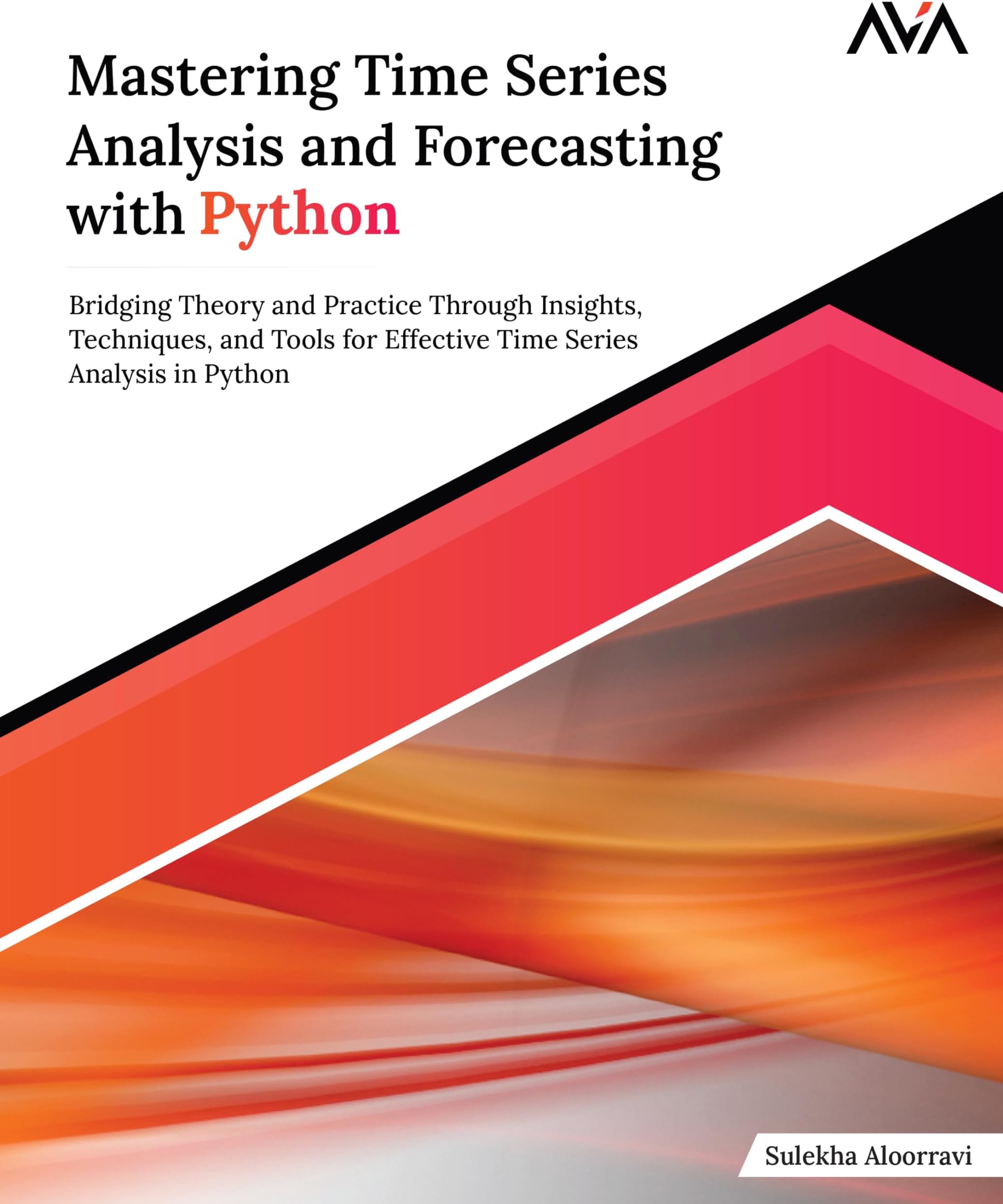


Buy anything from 5,000+ international stores. One checkout price. No surprise fees. Join 2M+ shoppers on Desertcart.
Desertcart purchases this item on your behalf and handles shipping, customs, and support to Nicaragua.
Full description not available




C**R
For a book supposed to bridge theory and practice there is ZERO theory - avoid
I don't normally write reviews but if i can save someone else spending £30 on this book then i have to.I got this book to prepare myself for my first time series project in work after completing a module on the subject at university a few years ago. There are lots of things wrong with this book, here are a few:* There are many plots in the book, in the printed version they are in black and white which means you cannot tell lines apart. Even in colour with the removal of legends before plotting this would be tough to see.* There is no discussion after the plots AT ALL other than saying this plot can be used to drive domain-specific decisions. How? In what way? What am i looking at and why will it help me?* Each section in the book is a paragraph of the most high level discussion imaginable on the topic, with no theory, no maths, nothing to give actual knowledge or understanding of why you are creating features for example. After the paragraph there is usually a single example in Python with no analysis of the output and how it is beneficial.* A lot of the text feels like it is written by AI with excessive use of words like delve* The author chooses values of p, d, and q for the ARIMA models without telling us why those values.* There are full pages dedicated to listing every single parameter in a function.* In the deep learning chapter there is no discussion on what an optimiser is, what the learning rate is etc.* There is so much repetition in the book, from code blocks, to definitions of things like lags.* Lots of unnecessary code output.* The evaluation metrics are formally defined on page 296 out of 298 despite being used loads of times.From about page 200 the author actually starts discussing the outputs, model metrics and the plots. If they had done this throughout the whole book it would be getting a much higher rating. For example MSE, RMSE and MAE had been discussed numerous times without a thorough explanation of what they are and what the specific output values imply, then on page 210 there in a really in-depth discussion on this. Why was this not done throughout the whole book? Even this positive is dampened by the further discussions being copy and pastes with only the values altered.In summary, if you want to know theory or want an in-depth discussion on methods relating to time series then this is not the book for you. This book showed me a lot of different methods but that could've been done with a google search and a look at documentation.
Trustpilot
Hace 3 semanas
Hace 1 mes