We remain fully operational. Our teams are working around the clock to ensure your deliveries continue safely.

Descargar la aplicación


Servicios al cliente
Sobre nosotros
Copyright © 2025 Desertcart Holdings Limited
Descargar la aplicación
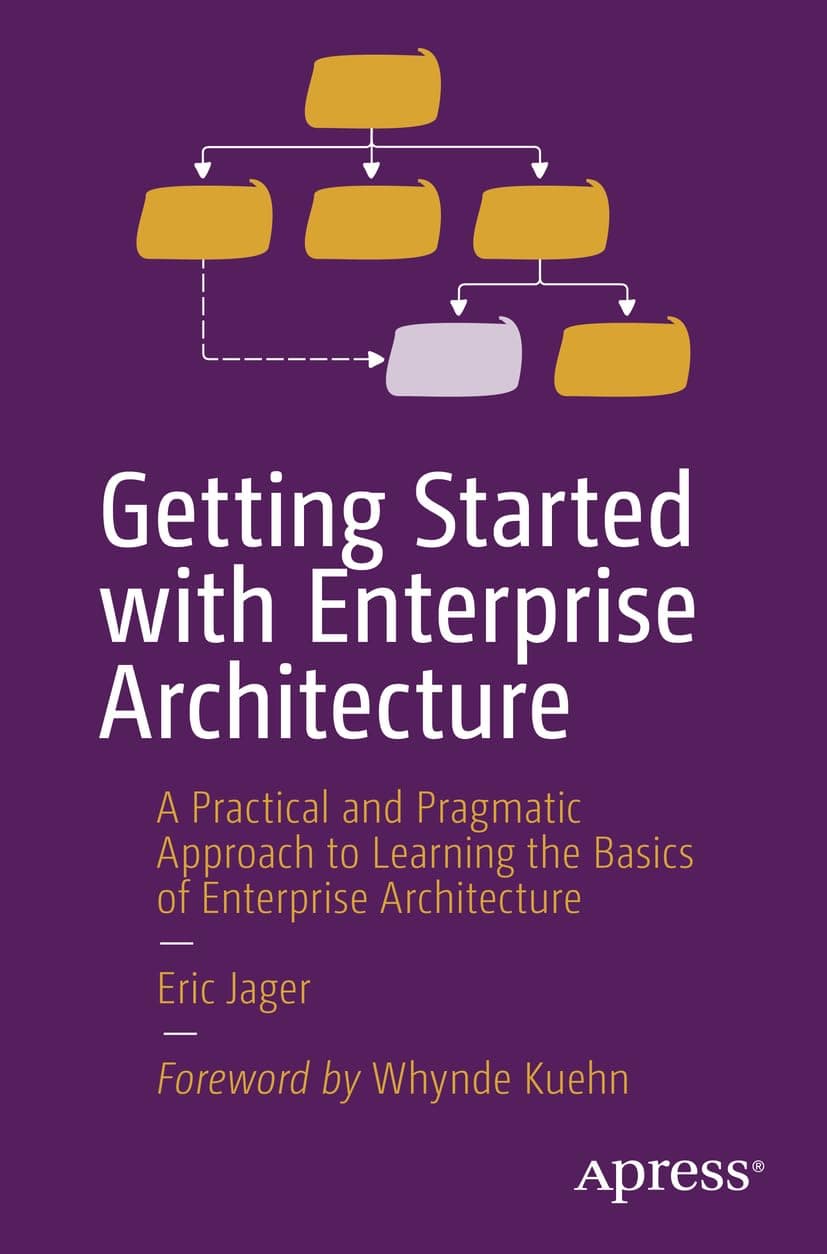
Buy Getting Started with Enterprise Architecture: A Practical and Pragmatic Approach to Learning the Basics of Enterprise Architecture by Jager, Eric online on desertcart.ae at best prices. ✓ Fast and free shipping ✓ free returns ✓ cash on delivery available on eligible purchase. Review: A Practical Roadmap for Real-World EA Implementation - As an IT Consultant & Enterprise Architect working in diverse industry's sectors, I often find that EA textbooks are either too academic or too focused on massive corporate environments. However, Eric Jager’s "Getting Started with Enterprise Architecture" is a breath of fresh air for those of us on the ground. I recently applied the principles from this book—specifically the Enterprise Architecture Implementation Wheel—to a recent EA implementation project for a social welfare hospital. In a non-profit healthcare setting, resources are lean, and the pressure to deliver "patient-first" results is high. This book was a game changer for several reasons: The Implementation Wheel: This isn't just a static diagram; it's a living framework. It helped us move beyond theoretical blueprints and actually execute a continuous cycle of strategy, design, and operation. It kept our project from stalling in the "planning phase." Pragmatism over Perfection: Jager’s emphasis on "just enough" architecture was vital. In our hospital project, we couldn't afford to spend months modeling. We needed to solve interoperability and data-sharing issues immediately to improve patient care, and this book showed us how to prioritize those high-value wins. Stakeholder Language: The book provides excellent guidance on how to bridge the gap between technical infrastructure and clinical/business outcomes. It helped me communicate the value of EA to hospital administrators and medical staff who care about outcomes, not just diagrams. If you are looking for a "how-to" guide that actually works in complex, high-stakes environments like healthcare, this is it. It turned our EA practice from a "documentation exercise" into a core driver of our hospital's digital transformation. Highly recommended for any architect or IT Consultant who wants to see their designs actually come to life. Review: straightforward and well-structured - This book is an excellent starting point for anyone new to Enterprise Architecture (EA). It breaks down what can often feel like a complex and abstract discipline into clear, practical, and easy-to-understand concepts. The author focuses on explaining the fundamentals without overwhelming the reader with excessive jargon or overly technical detail. What I appreciated most is the pragmatic approach. Instead of diving too deeply into theory, the book emphasizes how Enterprise Architecture supports business strategy and organizational alignment. The explanations of core architectural layers and the role of an enterprise architect are especially helpful for beginners or IT professionals transitioning into EA roles. The writing style is straightforward and well-structured, making it suitable for students, business managers, and technology professionals alike. While it does not go deeply into advanced frameworks or modeling techniques, it delivers exactly what it promises—a solid foundation. Overall, this is a practical, accessible, and highly recommended introduction to Enterprise Architecture.
| Best Sellers Rank | #49,691 in Books ( See Top 100 in Books ) #71 in Databases & Big Data #113 in Software Design, Testing & Engineering #292 in Management Science |
| Customer reviews | 4.8 4.8 out of 5 stars (61) |
| Dimensions | 15.5 x 1.68 x 23.5 cm |
| Edition | 1st ed. |
| ISBN-10 | 1484298578 |
| ISBN-13 | 978-1484298572 |
| Item weight | 1.05 Kilograms |
| Language | English |
| Print length | 290 pages |
| Publication date | 2 December 2023 |
| Publisher | APress |
K**M
A Practical Roadmap for Real-World EA Implementation
As an IT Consultant & Enterprise Architect working in diverse industry's sectors, I often find that EA textbooks are either too academic or too focused on massive corporate environments. However, Eric Jager’s "Getting Started with Enterprise Architecture" is a breath of fresh air for those of us on the ground. I recently applied the principles from this book—specifically the Enterprise Architecture Implementation Wheel—to a recent EA implementation project for a social welfare hospital. In a non-profit healthcare setting, resources are lean, and the pressure to deliver "patient-first" results is high. This book was a game changer for several reasons: The Implementation Wheel: This isn't just a static diagram; it's a living framework. It helped us move beyond theoretical blueprints and actually execute a continuous cycle of strategy, design, and operation. It kept our project from stalling in the "planning phase." Pragmatism over Perfection: Jager’s emphasis on "just enough" architecture was vital. In our hospital project, we couldn't afford to spend months modeling. We needed to solve interoperability and data-sharing issues immediately to improve patient care, and this book showed us how to prioritize those high-value wins. Stakeholder Language: The book provides excellent guidance on how to bridge the gap between technical infrastructure and clinical/business outcomes. It helped me communicate the value of EA to hospital administrators and medical staff who care about outcomes, not just diagrams. If you are looking for a "how-to" guide that actually works in complex, high-stakes environments like healthcare, this is it. It turned our EA practice from a "documentation exercise" into a core driver of our hospital's digital transformation. Highly recommended for any architect or IT Consultant who wants to see their designs actually come to life.
M**F
straightforward and well-structured
This book is an excellent starting point for anyone new to Enterprise Architecture (EA). It breaks down what can often feel like a complex and abstract discipline into clear, practical, and easy-to-understand concepts. The author focuses on explaining the fundamentals without overwhelming the reader with excessive jargon or overly technical detail. What I appreciated most is the pragmatic approach. Instead of diving too deeply into theory, the book emphasizes how Enterprise Architecture supports business strategy and organizational alignment. The explanations of core architectural layers and the role of an enterprise architect are especially helpful for beginners or IT professionals transitioning into EA roles. The writing style is straightforward and well-structured, making it suitable for students, business managers, and technology professionals alike. While it does not go deeply into advanced frameworks or modeling techniques, it delivers exactly what it promises—a solid foundation. Overall, this is a practical, accessible, and highly recommended introduction to Enterprise Architecture.
F**I
Practical, Clear, and Inspiring — A Must-Read for Architects and Leaders
Eric Jager’s Getting Started with Enterprise Architecture is one of the most practical and accessible books I’ve read in this field. Unlike many dense and abstract resources on enterprise architecture, this book strikes the perfect balance between theory and practice. What impressed me most is how Eric simplifies complex frameworks like TOGAF and ArchiMate, making them approachable without diluting their value. The Enterprise Architecture Wheel is an excellent tool — it connects strategy to execution in a way that feels actionable and relevant for real-world projects. As someone who has worked on government digital transformation initiatives, I found the book’s pragmatic style particularly refreshing. The examples, visuals, and step-by-step structure make it easy to translate concepts into implementation, whether you’re just starting out or refreshing your EA practice. This book is not only for architects — it’s equally valuable for C-level leaders who want to understand how enterprise architecture bridges business and IT to drive strategic success. In short: a practical companion, a reference you’ll return to, and a resource that makes enterprise architecture less abstract and far more impactful. Highly recommended.
B**N
In Eric Jager’s book, “Getting Started with Enterprise Architecture”, he takes the reader on a journey from setting the stage of Enterprise Architecture (EA) from the history to the current state and where it fits amongst other architectures. Once the stage is set, you dive into the practical steps of setting up an enterprise architecture. It is clear Eric has vast knowledge is setting up this practice in different organizations due to his examples given which is tremendously valuable for the reader as this book does not go through an academic, cookie cutter process that every organization should follow, but instead, understands that every organization is different and may have to begin at different points. The third phase he takes you on is then the next steps you can take once you have the architecture setup as it doesn’t stop there! Personally, I read this from the Business Architecture lens to widen my knowledge of what else would be helpful to implement and how. Eric made this book so relatable I instantly was pulled in to see the similarities in what I had setup for the business architecture and how it relates to pieces of the enterprise architecture. The EA Wheel brought to light my feelings on Documentation and Define being like the chicken and the egg – which came first?! In reality, as he states, you can start anywhere, as I did with mile wide and inch deep on Documentation and Define, and now use Control to track going back to Documentation and Define. I really dove in on Execute on Strategy for value and it opened my eyes to not just the overlap between business architecture and EA, but also the additional pieces I should review further for the most value! Overall, I highly recommend this book to both novice and experienced practitioners that want practical, real world insights on pieces to implement and mature in an enterprise architecture, as well as ideas on how to navigate steps the best way for your organization. Even if you are not implementing the enterprise architecture yourself, this book is highly beneficial for anyone that should be collaborating with EA or just wants to know more about the scope. Invest in yourself and take a journey in this book!
A**R
Book is for anyone and everyone who wants to get started with enterprise architecture. Book focuses on initial implementation of EA in an existing organization. Book Content goes with its name - Getting started to EA, it touches most of common terminologies, we hear most often - definition, roles, drivers, goals, objectives, measures, roadmap, architecture functions, positioning/ purpose, capability, principles, framework, stakeholders, artifacts, modeling and many more. It starts with definition of EA, popular EA frameworks and sets the context of TOGAF for rest of the book. It will be helpful to anyone who want to understand how TOGAF standard is organized. which content covers the outline (what) and further down to series guides (How) which are more detailed explanation. It talks about the ADM and the Architecture domains that TOGAF recommends. Chapter 8 which is almost more than half of book, covers Enterprise Architecture Implementation wheel maps ADM phases to 4 stages and their subsequent steps. I enjoyed reading this book and found this book helpful in making TOGAF concepts more clear.
F**.
Brilliant Part 1 gives a good summary of the frameworks in place and presents Archimate in a clear and concise way. The book is easy to understand and provides a good summary of what needs to be done in an enterprise architecture approach. The EAwheel, which I think is an excellent idea, allows you to understand and use Togaf in a practical way.
K**L
Eric Jager’s Getting Started with Enterprise Architecture provides a structured introduction to the fundamentals of Enterprise Architecture and its role in connecting strategy with execution. The book explains key EA concepts in a clear and accessible way, making it approachable for readers who are new to the discipline. One interesting aspect is the use of simplified fictional scenarios, such as the “Lemon-A-de” example, to demonstrate how EA artifacts and practices can be applied. These examples help illustrate the concepts, although they are intentionally simplified compared to real enterprise environments. Overall, it’s a useful introductory resource for practitioners looking to understand the basics of establishing an EA practice and the role architecture plays in supporting organizational strategy.
F**E
There's no shortage of EA literature, but most of it assumes you either already know the basics or are willing to bounce between framework manuals hoping the fundamentals surface somewhere along the way. This book is a rare exception. The practical and pragmatic approach the title promises is genuine. There's no posturing, no framework evangelism, just a clear-headed walk through the fundamentals. Some of the deeper questions that come with experience may remain open, but it will make sure you're asking the right ones. Whether you're finding your footing or looking to recenter on first principles when things get noisy, this belongs on your list.
Trustpilot
Hace 2 semanas
Hace 1 mes