🌌 Own the night sky—stargaze smarter, not harder!
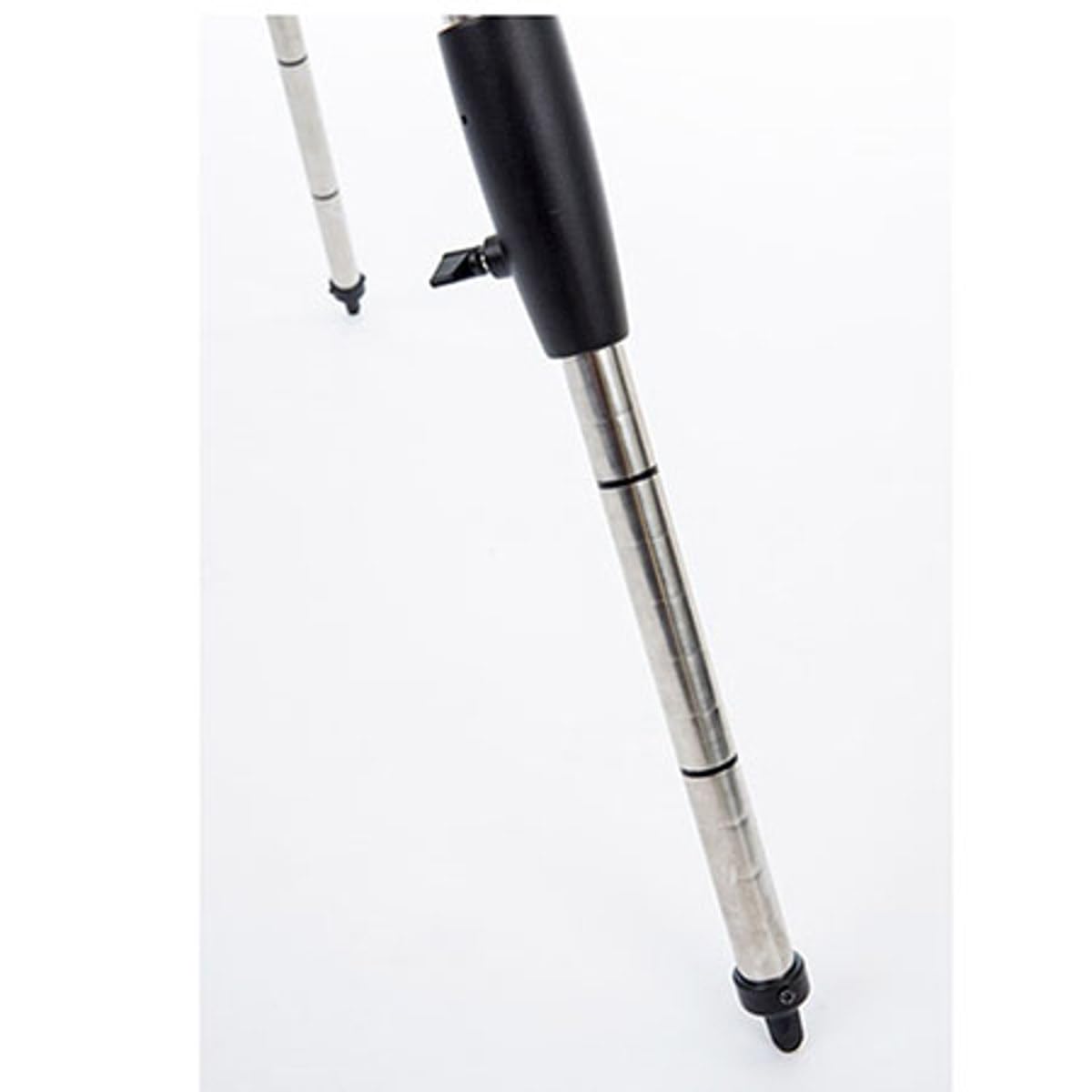
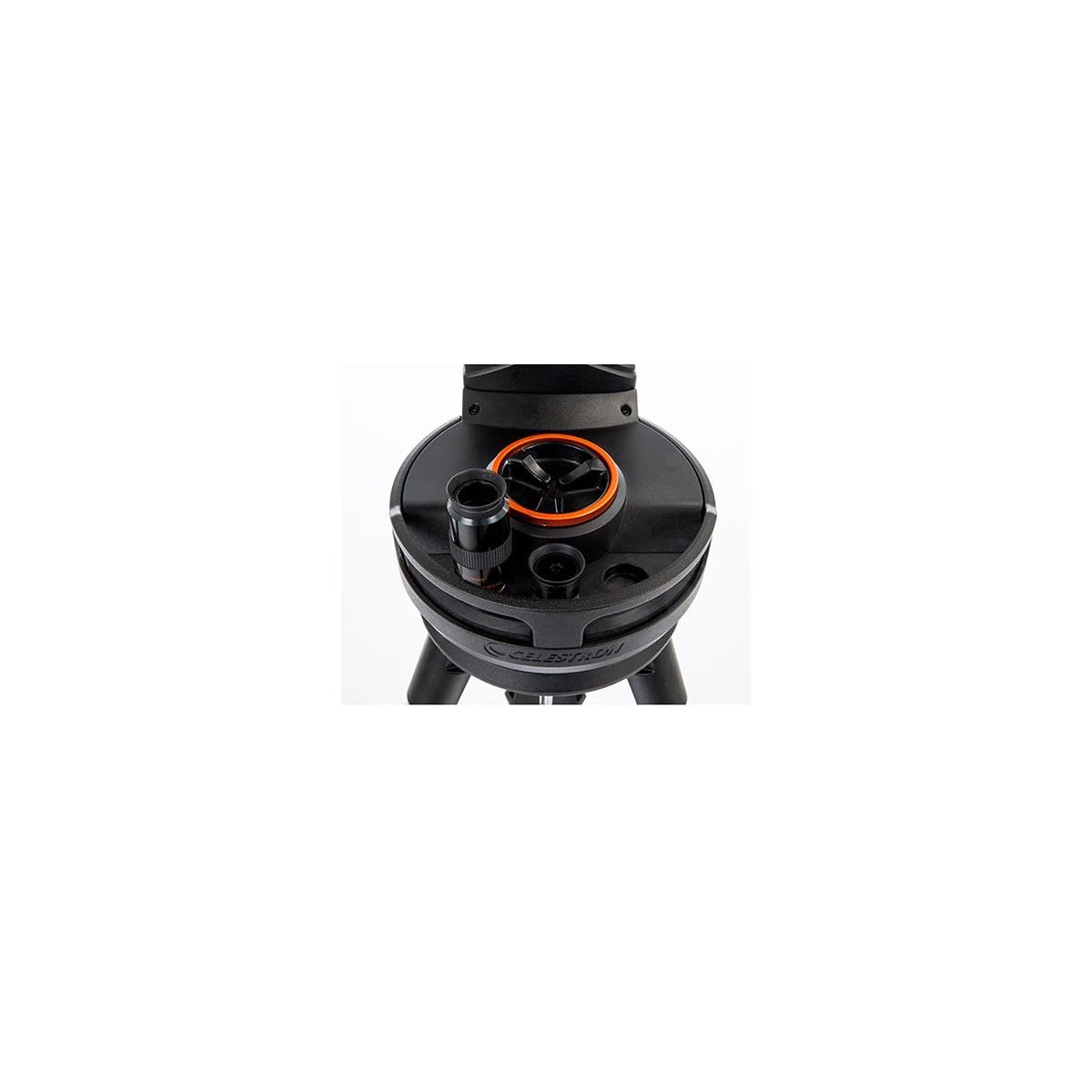
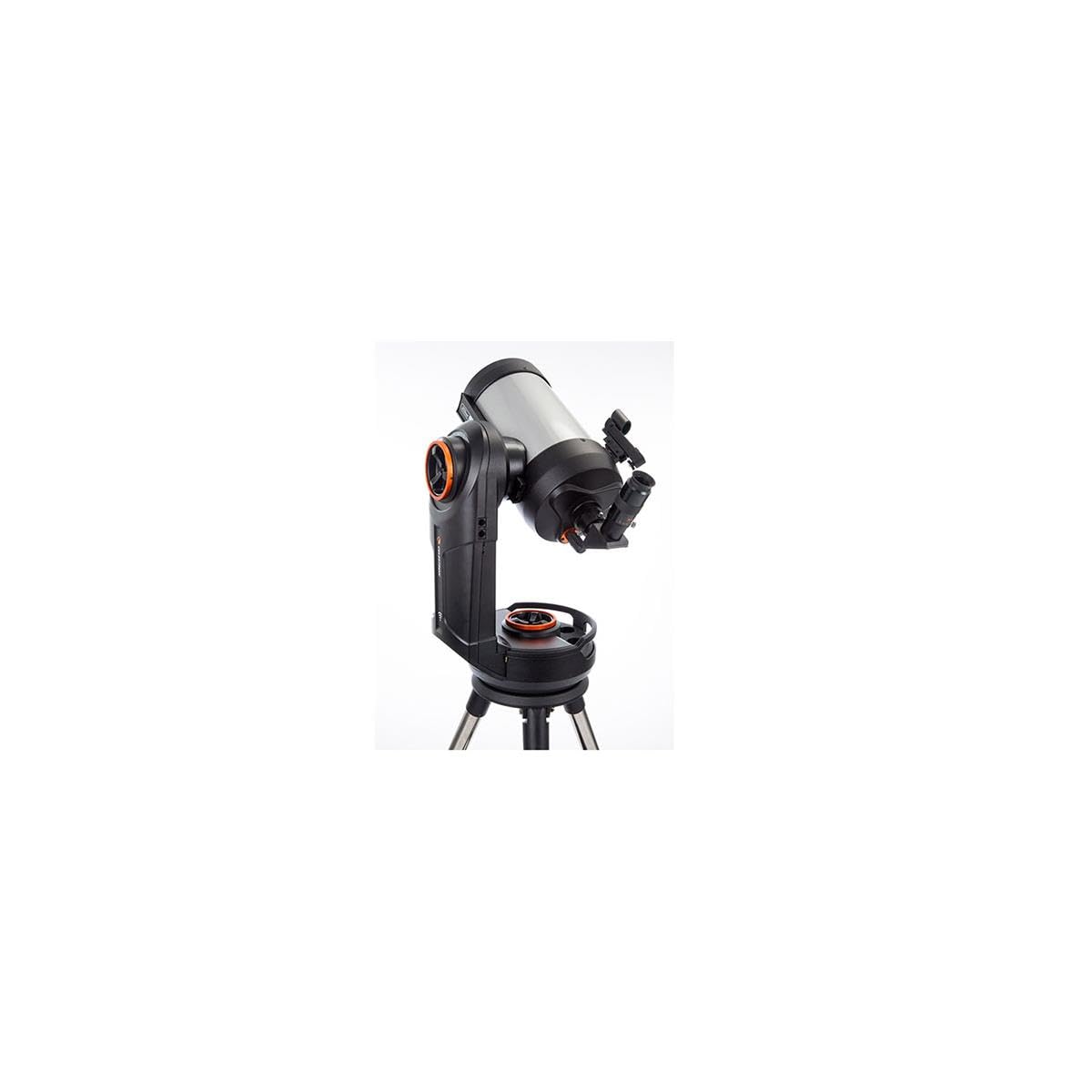
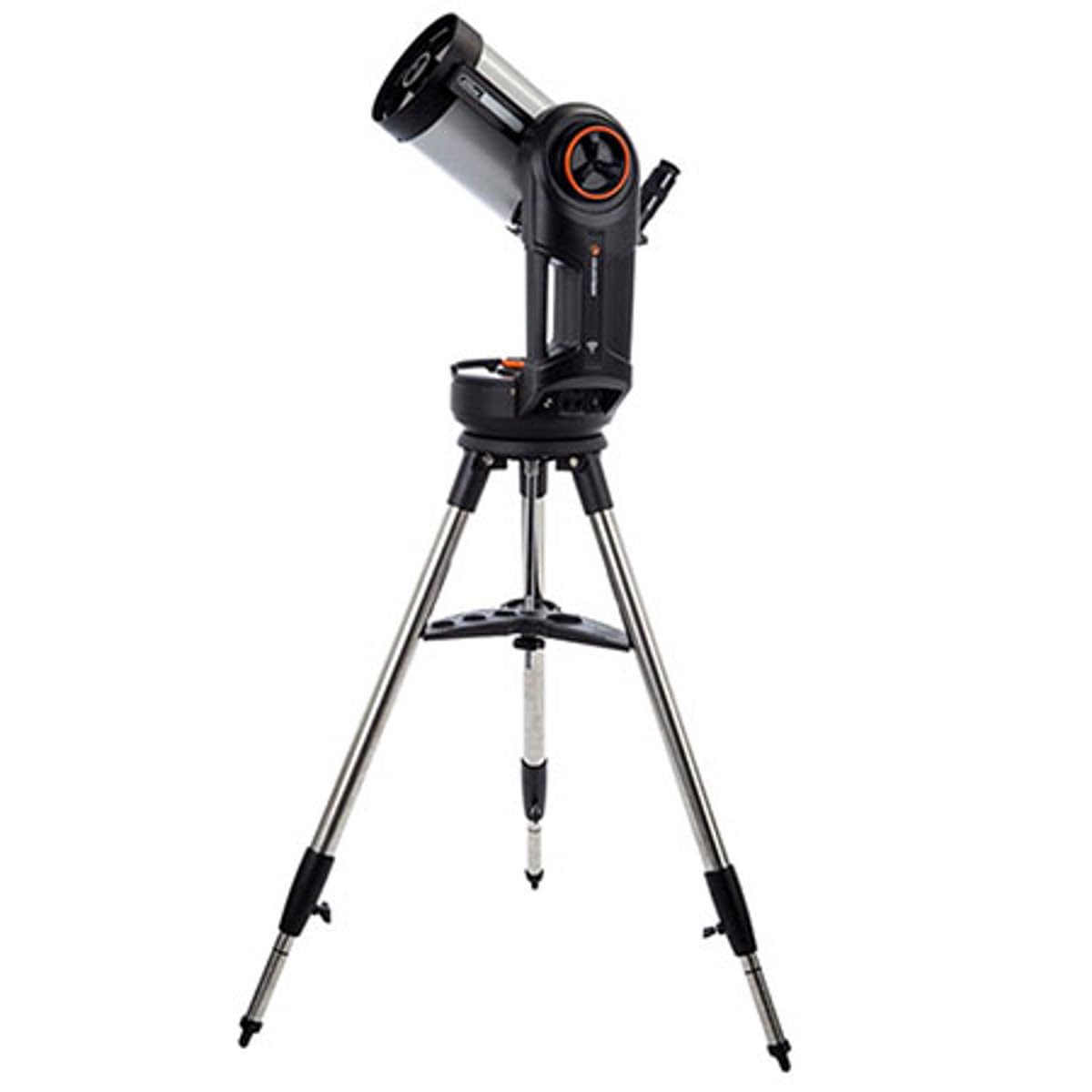
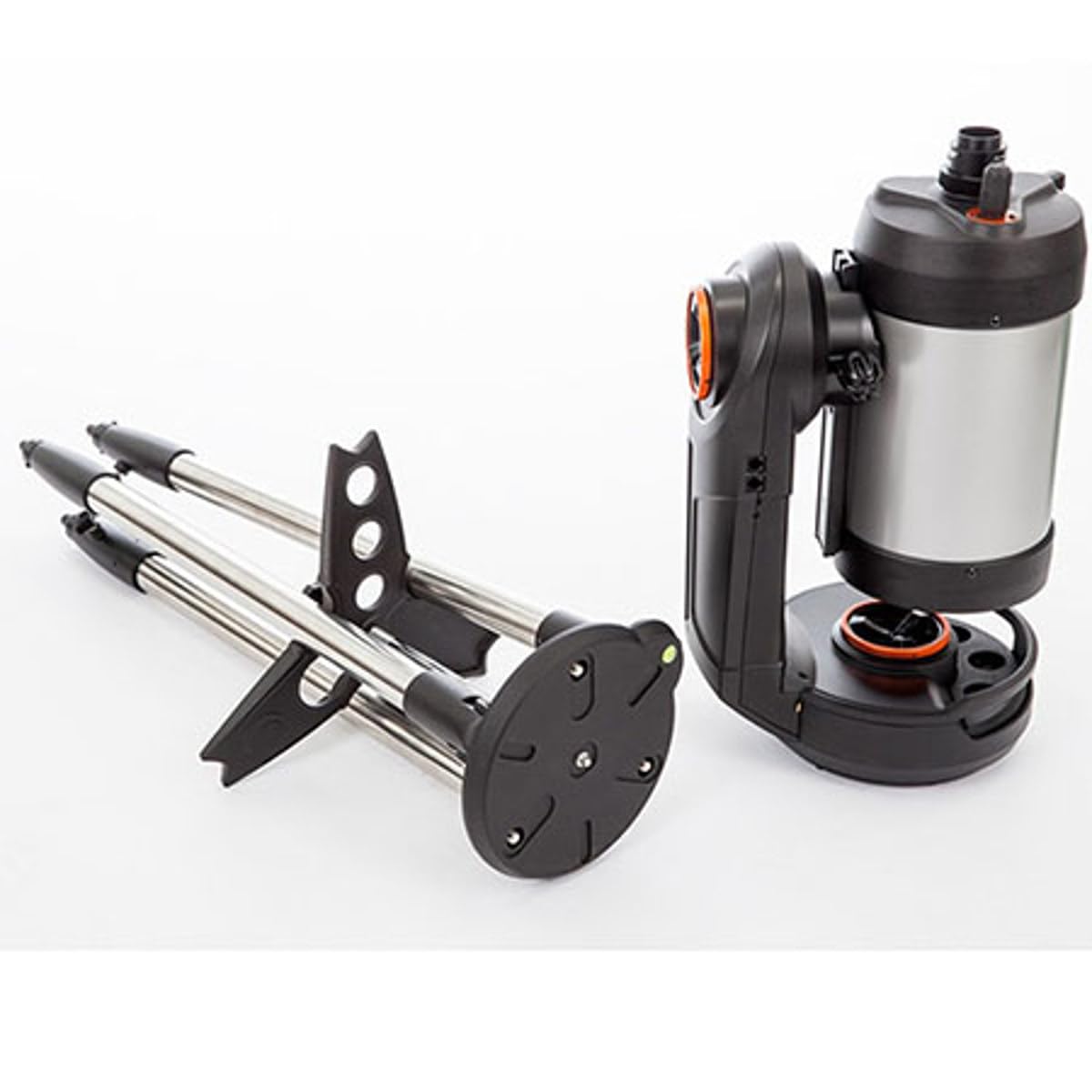
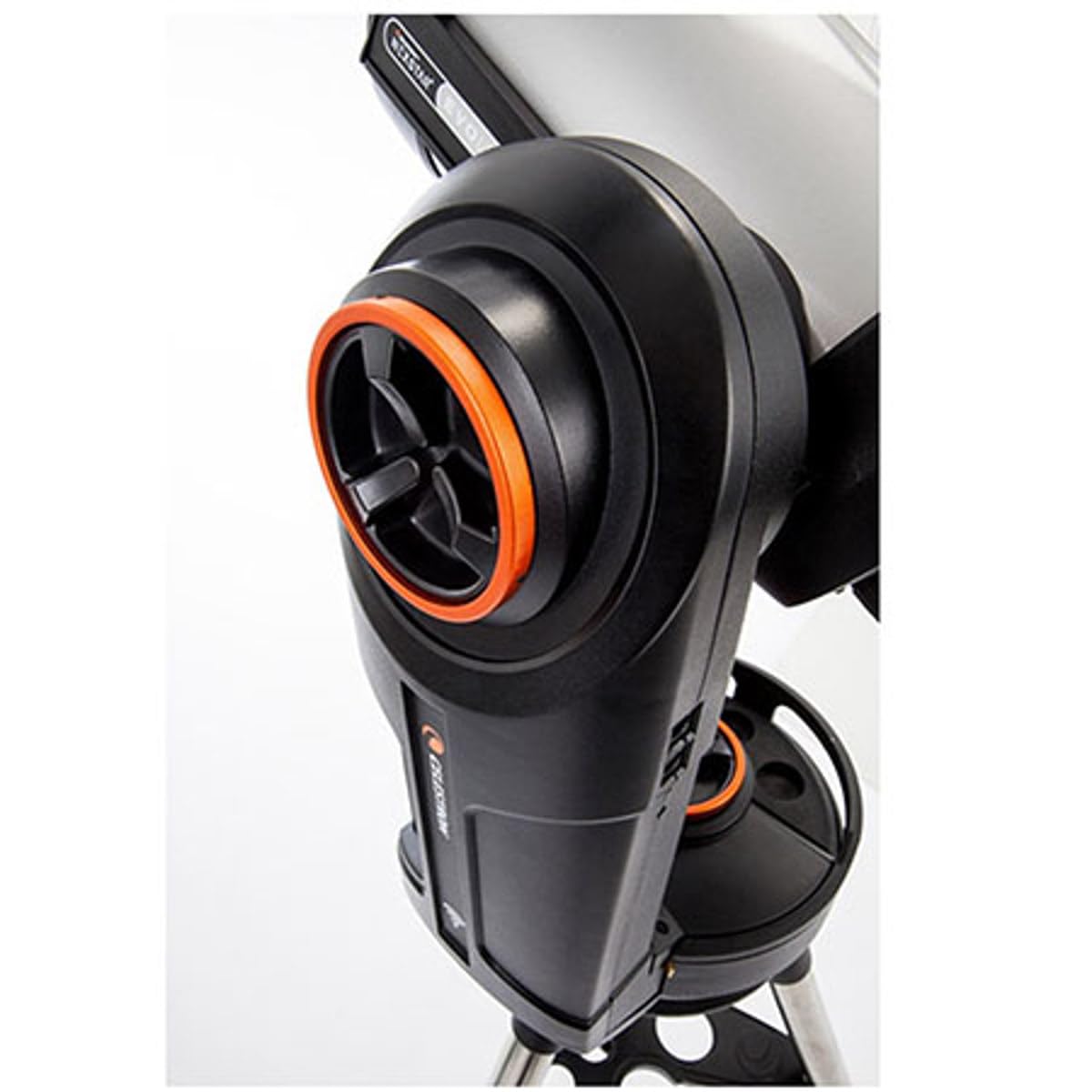
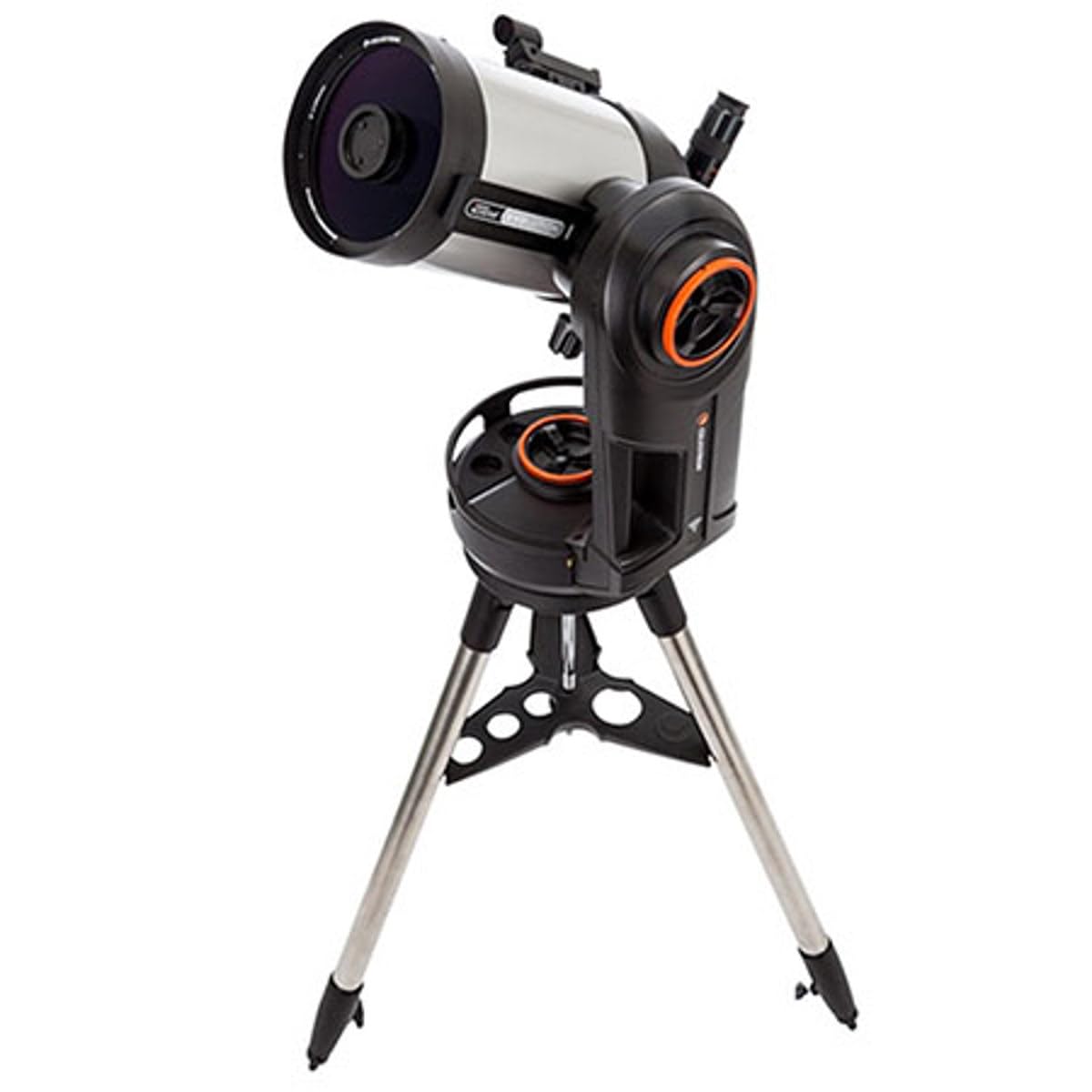
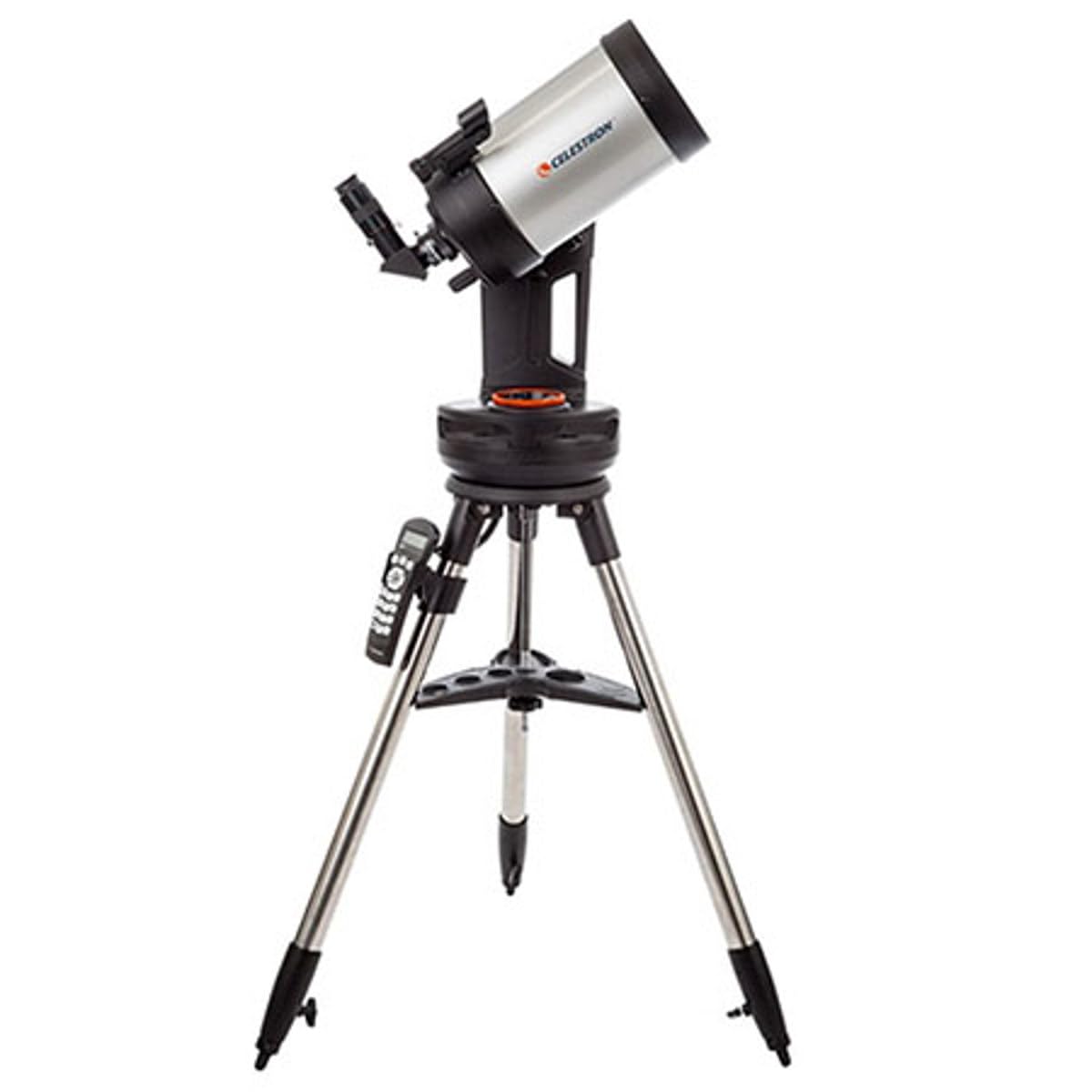
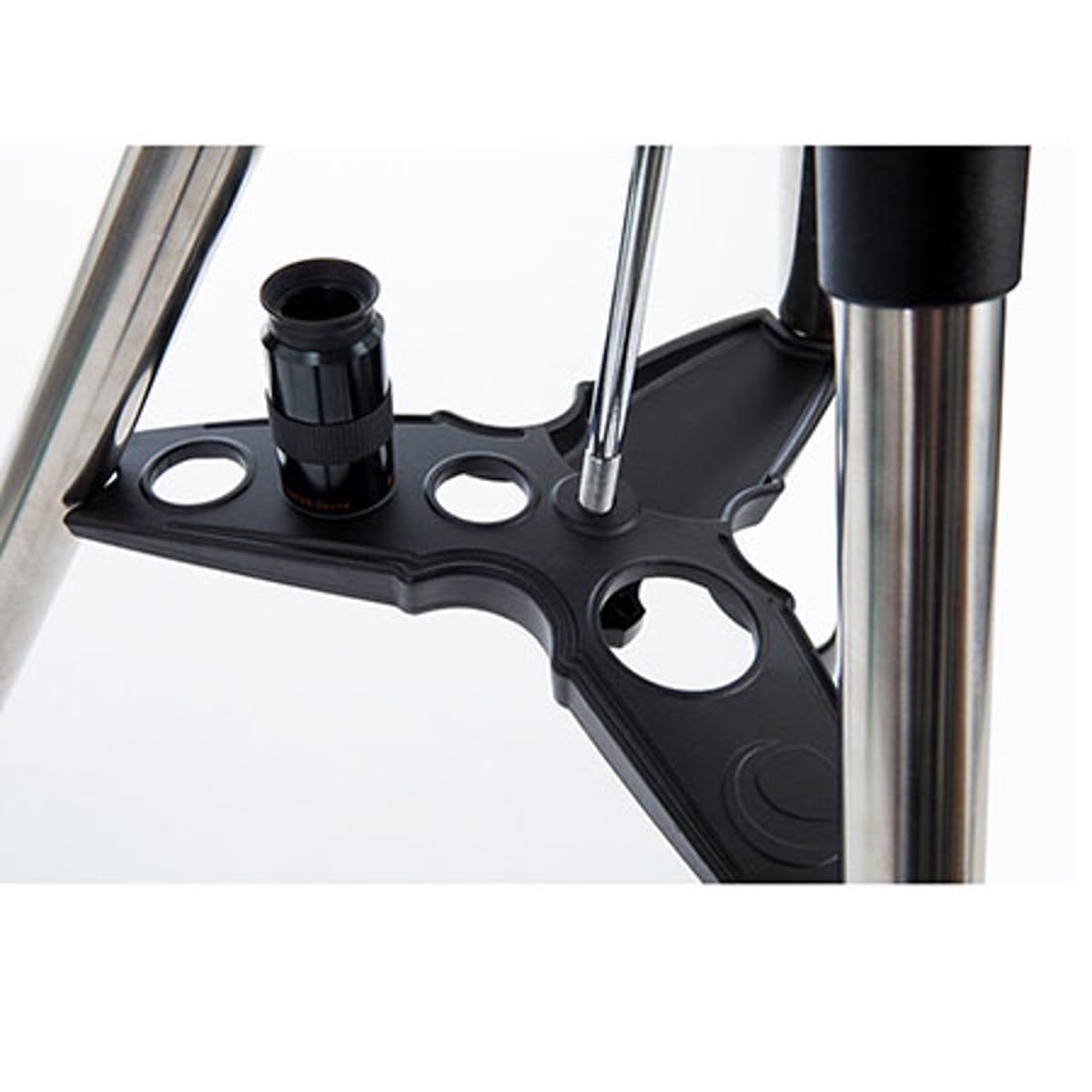
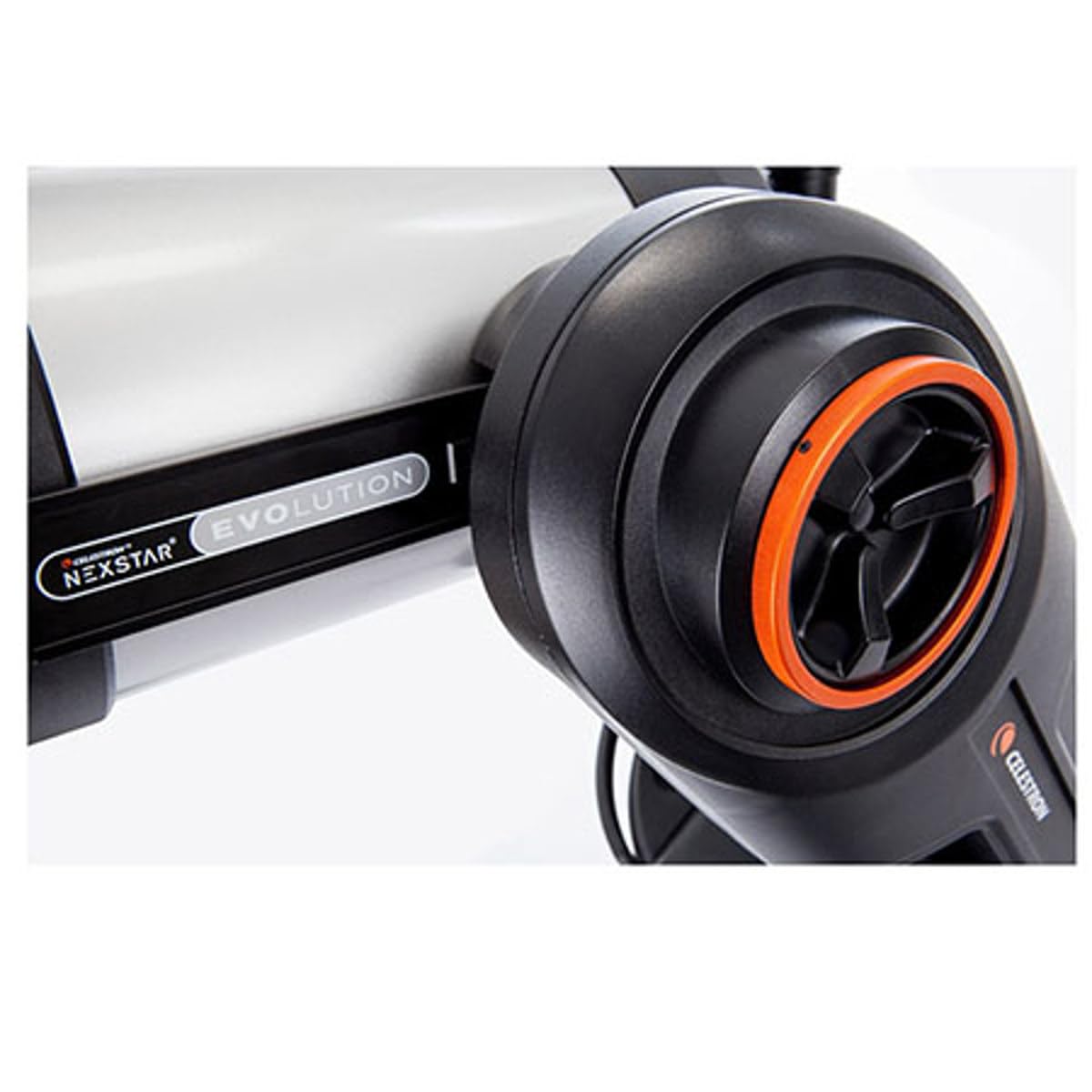
The Celestron NexStar Evolution Telescope is a cutting-edge 6-inch Schmidt-Cassegrain scope featuring built-in WiFi for wireless control via iOS and Android devices. Equipped with StarBright XLT coatings and precision worm gear motors, it offers sharp, bright views and exceptional tracking accuracy. Its rechargeable lithium-ion battery powers up to 10 hours of continuous use, complemented by a USB charging port for your devices. Designed for portability and ease, it includes manual clutches, accessory trays, and ergonomic handles, making it ideal for both visual observation and beginner astrophotography.
| ASIN | B00K6E1S3I |
| Best Sellers Rank | #948 in Camera & Photo Products ( See Top 100 in Camera & Photo Products ) #6 in Catadioptric Telescopes |
| Brand | Celestron |
| Built-In Media | Telescope Tube, Telescope Mount and Tripod, 40mm Eyepiece, 13mm Eyepiece, StarPointer, Star Diagonal, Telescope Handcontrol |
| Coating | StarBright XLT |
| Compatible Devices | Smartphone, Tablet |
| Customer Reviews | 3.8 out of 5 stars 174 Reviews |
| Exit Pupil Diameter | 15 Millimeters |
| Eye Piece Lens Description | Plossl |
| Field Of View | 2.61 Degrees |
| Finderscope | Reflex |
| Focal Length Description | 1500 millimeters |
| Focus Type | Manual Focus |
| Global Trade Identification Number | 00050234120906 |
| Item Dimensions D x W x H | 35"D x 28.5"W x 15"H |
| Item Height | 15 inches |
| Item Weight | 16330 Grams |
| Manufacturer | Celestron |
| Model Name | NexStar Evolution |
| Mount | Altazimuth Mount |
| Number of Batteries | 1 Lithium Metal batteries required. |
| Objective Lens Diameter | 150 Millimeters |
| Optical Tube Length | 6 Inches |
| Optical-Tube Length | 6 Inches |
| Power Source | Battery Powered,Corded Electric |
| Telescope Mount Description | Altazimuth Mount |
| UPC | 050234120906 |
| Warranty Description | 2 Years |
| Zoom Ratio | 3x |
G**N
Fantastic GoTo Telescope
I have owned about 20 to 30 telescopes over the past 40 years, including 4 previous Celestron 8 scopes. I've owned large Dobs (Teleports and Starmasters), Refractors (Tele Vue and Stellarvue) and even a Meade or two. I was intrigued by the Celestron Evolution EdgeHD with Star Sense. I was not disappointed. The GoTo feature is fantastic. The Star Sense really works. It hunts around the sky, takes pictures, recognizes star patters and then tells you it is aligned. The first time you use it, you need to use manual align so that the Star Sense camera aligns itself to the telescope. This is a one time thing and sounds more complicated than it is. The alignment worked well. Once aligned with star sense (using Auto Align), I selected M57 the Ring nebula and the Evolution scope put it right in the center of the eyepiece...amazing. I picked one celestial object after another (Saturn, Andromeda Galaxy, Dumbbell Nebula, Double Double cluster, Epsilon Lyra, etc.) and each time the Evolution scope landed the item in the center of the eyepiece. It never missed. This happened on repeated nights. When you auto align it asks you to first put the optical tube in the horizontal position. You don't have to be exact in this. A close approximation seems to be all that is required. Nice! I'm so satisfied with the Evolution HD scope that I will likely sell my 102mm Stellarvue. The 8 inch diameter definitely gives you a more satisfying view of deep sky objects than the 4 inch diameter of the refactor (at least for me). I updated the firmware in the telescope...be mindful that it updates the motor software, the Star sense and the hand controller firmware. The documents that come with the scope make you think you need a serial cable with a serial to USB converter cable. You don't. The engineers updated the cable ports so what you need is a USB to mini USB cable. What I couldn't figure out is whether you need one cable or two cables to accomplish all the firmware updates. I've read mixed messages on the Internet. I used only the one cable. Lots of things have been well thought out in the Evolution HD...like captive screws in the tripod, centering help to place the telescope in the mount, the built in lithium battery (no more batteries to trip over in the dark), handles on the base and next to the battery to help carry the telescope, a leveling bubble on the base. To properly balance the optical tube note from the picture that most of it sits forward so you can read the entire Evolution logo. The HD optical tube seems to be of very high quality. The optics are great. Even though my scope was shipped from NY to Hawaii, the scope arrived in perfect collimation. Note that if you decide to attach a reducer to the EvolutionHD in order to get a wider field you can't use the old Celestron reducer. You'll need to get the newer .7 celestron reducer which is more expensive. It is also difficult for dealers to get. Not sure why Celestron is not delivering more to the dealers. All in all this scope is HIGHLY RECOMMENDED.
A**R
I'd love to be able to write a positive review for ...
I'd love to be able to write a positive review for this scope, but I haven't had the chance to use it. It arrived a little over two weeks ago and I was very excited to take it for a spin until I found out that one of the tripod screws for the mount was misaligned. Threading is perfectly fine, just doesn't line up with the holes on the mount. I contacted Celestron support and was very pleased to receive a reply email within 48hrs, but am still waiting for the RMA label to send it back for a replacement. This appears to be a good scope and the tripod and mount are quite substantial. Right now, however, it's a very large and expensive paper weight.
U**T
Telescope was very easy to setup no real need for instructions
Telescope was very easy to setup no real need for instructions. Did need to know length of time to charge battery which Celestron failed to mention in instructions (Initial is 4 to 8 hours until light stops blinking had to google it.) Item was double boxed. I was impressed at the ease of alignment( as long as you get each alignment star in middle of eyepiece your good to go), and then how easy it was and how fast it aligned to what you wanted to look at with the iphone app, was a joy to use. Looked at Orion nebula using the supplied optics and it was beautiful so the quality is there. Took about 8 to 10 minutes to set up then align the scope that is pretty darn fast. My first scope was a goto meade DS-114 was a disaster. The quality was just horrible. Goto the trash was more like it lol. I will suggest anyone buying this scope buy the http://www.amazon.com/gp/product/B0069VXRLS/ref=cm_cr_ryp_prd_ttl_sol_2. these are a great set of eyepieces at a great price and gives you a good selection with colored filters add in the 2 celestron eye pieces that come with this scope and that is 6 eyepieces plus the 2 x barlow. None of them will be the same mm size either. I tried them all last night great quality plossl. You won't be disappointed, at this price I wasn't. I wanted a good telescope to show my grandkids and my wife and kids the stars and I believe with this telescope I can finally do just that.
C**T
Great telescope.
Initially, the hand controller failed and I sent it back to Celestron for reprogramming after we couldn't get it fixed by phone and email communication. It works fine now. The Celestron folks were very helpful. I mostly control the telescope during observing via the WiFi connection using a Samsung Tab 2 WiFi with Android 4.2.2 and Celestron's free SkyPortal software. I love it. After orienting with three stars using the SkyAlign capability that doesn't require entering the names of the three stars, I can point to whatever I designate with the SkyPortal software. I can actually designate from the Tab 2 touch screen instead of a name list so I can easily point to what is in my available sky (tree obscuration). It is very easy and sure beats the old way of doing a contortion act to align to stars through a sighting device. And it is now possible to point directly towards dim objects that you can't pick out with the naked eye and observe them. There are no manual veneer controls for steering the telescope, it is all via the motors. The Az-El clutch knobs are useful for storing the telescope and initial setup. With the internal rechargeable battery, there is no problem with limited battery life. I am very pleased. Since this is a Schmidt-cassegrain telescope with glass at the front end, I bought a lens shade to protect from dew. That has worked well.
M**E
Nice package with light gathering power
I wrote up my experiences with the EdgeHD, the 700 Mak-Cas., and a 6 inch APO triplet refractor. The EdgeHD 800 is an 8-inch Schmidt Cassegrain that is touted to have exceptional edge sharpness with both photographic and visual benefits. I had purchased an orange Celestron C8 in the ‘80s, and now getting back into the hobby after a decade and a half long hiatus, the Nexstar Evolution EdgeHD 800 with StarSense seemed a perfect place to jump back into the hobby. The Celestron 700 is a 7-inch Maksutov Cassegrain that is touted to have excellent contrast most suited to solar system viewing as well as improving the perception of light-polluted skies. So, living in light-polluted Jacksonville, FL, where I find solar system viewing most sustaining, I found the 700 Mak. to be most intriguing. I managed to save up $777 to buy a Celestron C-8 when I was a teenager. I enjoyed the hobby until I was divorced and ran into hard times and was forced to give up extravagances. I did not purchase a new scope until recently, after some 15 years of hardly looking up. I am sort of compulsive and occasionally impulsive when it comes to my hobbies. Whether it be model trains or airplanes, aquariums or preparedness, I usually buy too many things and wind up reselling most on eBay. As it turned out, my reentry into the hobby resulted in the purchase of 10 telescopes! I don’t beat myself up about this irresponsibility because my enthusiasm requires much fuel, and I can enjoy a wider range of optics and gain useful insights into the hobby that I otherwise would not. My timing was partly inspired by the opposition of Mars that will occur in 2020. We will be closer to Mars this year than we will for longer than I will live. I’m in my fifties, and I’m beginning to think in terms of bucket lists. I want to experience some things that I’ve always wanted to before my time is up. I have a particular interest in Mars and have conducted scientific research on the subject of Martian glaciers. In some sense, it’s a sort of hobby as well because I am an independent researcher and only work on my Mars projects when I am inspired to do so. Although a telescope cannot begin to reveal the details that Mars orbiters have, the hobby of telescopes is about something special that can’t be duplicated with technology. It’s that personal connection to the cosmos and the cosmic perspective that is derived from it that compels us to stargaze. There are all those cool optics and gadgets, as well! I managed to get hold of two EVO mounts for the test. Mounting the 700 Maksutov required a little hardware and ingenuity because the EVO mount accepts the narrower Vixen mounting bracket. An Orion dovetail adapter was used along with a custom spacer to allow the adapter to clear the curved mounting dock meant to hug the OTA. This is a less than ideal solution because it sets the optical tube assembly (OTA) about an inch further back than is the case with the 8-inch Schmidt. At 18 lbs., the 700 Mak. is 6 lbs. heavier than the 8-inch EdgeHD 800 but is still within the mount’s load limits because it can handle a 20 lb. 9.25-inch OTA. Balance is also too far forward as the front corrector of a Maksutov-Cassegrain is thicker and heavier than that of a Schmidt-Cassegrain and a Maksutov-Cassegrain tube is longer as well. This could be remedied with a weighted visual back or 2” to 1.25’eyepiece adapter. Properly balanced without any counterweight, the OTA is not far enough forward to reach the zenith. Another option would be to slide the tube forward beyond the balance point for adequate clearance while the tube is in the near-vertical position. When the tube is near vertical, the balance issue is much mitigated because the force of gravity is mostly transferred through the axis of the mount point, generating little torque. However, please return the OTA to the balance point or a bad accident may happen if the tube rotates down under the pull of gravity. The eyepieces for the test are two Tele Vue DeLite’s. One is an 18.2mm that yields 148x with the 2700mm focal length 700 Mak., and the other is a 13mm that yields 156x with the 2032mm focal length EdgeHD 800. Tele Vue DeLites are considered by many to be top-notch eyepieces for observing solar system detail without false color. An Orion 1 1/4-inch mirror diagonal is mated to the EdgeHD 800, and a Celestron 2-inch mirror diagonal to the 700 Mak. The first side-by-side test was conducted between 5 and 6:15 am when Jupiter, Saturn, and Mars were some 35 degrees above the horizon and fairly close together. I gave the scope 30 minutes to cool to the ambient temperature of 60 degrees. Jupiter was by far the brightest, followed by Saturn, and then a tiny Mars. The fair seeing was somewhat limiting as far as the test was concerned, with planetary details being limited to the point that the differences in the performance of the scopes would have to be determined by other visual factors. In fact, Mars was completely unresolvable. The Earth’s atmosphere is like a translucent curtain that quivers and induces the shimmering effects more familiarly associated with mirages. Although it is less noticeable than heated air on the horizon, a telescope magnifies even subtle shimmering. The planets exhibited more ghosting and red and blue color fringing in the EdgeHD 800. Focusing was more precise with the 700 Mak. with moons appearing more star-like. The brightness of the EdgeHD 800 was slightly greater but was not so important in terms of the perception of image quality. The most noticeable difference on this morning was the way Saturn appeared as a ball within a hoop in the 700 Mak., but not the EdgeHD 800. This was the result of the more defined focusing and resolution of the 700 Mak. resolving the planet and its rings as separate forms. This perceived visual “separation” did not occur with the EdgeHD 800 because the two features were not adequately resolved. The difference in the resolution of the clouds of Jupiter was not so great, with both scopes revealing the Great Red Spot. Better seeing would have been required to comment on this point. As far as the mechanics, I really like the Evolution mount. It is fairly steady and a joy to manually move and track. At about 12 pounds, the lighter weight of the EdgeHD 800 means steadier images and a more comfortable complete setup carrying weight than with it mated to the 18-pound 700 Mak. I can fairly easily carry the complete package with the super-helpful built-in carrying handles. The extra weight of the 700 Mak. caused some back strain and required additional care when moving the complete setup. In light of this, I conclude that the Evolution mount with the EdgeHD 800 is an excellent combination in terms of maximum aperture and convenience, but that it is a bit strained with the 700 Mak. Although one might expect the Schmidt-Cassegrain to cool down faster than the Maksutov-Cassegrain because of its thinner mirror and corrector plate, I did not observe any difference. Would the advantages of light-gathering power, weight, and compactness offered by the 8-inch prove more important to me than some degree of higher optical quality? But how much of a difference? On the following morning, I decided to test the skies with a smaller scope before lugging out the test subjects. There would be little point of repeating the test under similar seeing. I have a Celestron 127SLT mounted on an Orion VersaGo 2 that is about as handy as anything. I waited for the tube to reach ambient temperatures before casting judgment. The seeing was about the same as the previous morning, so I thought to perform a test of the 127SLT against a Meade 125EXT. Both are roughly 5-inch Maksutov-Cassegrains with the same focal length of 1500mm. The 13mm Tele Vue Delite yielded 115x magnification. Interestingly, the differences were much the same as with the first 700 Mak.-EdgeHD 800 test. The Celestron had a slight edge over the Meade. Comparing the views through the 5-inch scopes to the 7- and 8-inch scopes, aside from the difference in magnification and assuming similar seeing, the additional resolution provided by an increase in aperture is significant but not tremendous. I believe that 5-inch scopes provide pleasing enough views of the planets to satisfy most people, but the allure of a 7- or 8-inch scope is more important than the additional cost and trouble for many. Of some interest, the Delite exhibited very little false color in the 3 Maksutov-Cassegrains, but more in the Schmidt-Cassegrain. In comparing the DeLites to some standard quality eyepieces, the sharpness and color control are top-notch. In fact, I now consider standard eyepieces to be unacceptable, and this aspect of the test reaffirms my belief that, as I once mentioned to Al Nagler at a star party in the Keys attended by Pluto discoverer Clyde Tombaugh, “an eyepiece is half the telescope”. I came to this conclusion after I purchased the original 13mm Nagler. It finally cleared one evening, so I decided to test the StarSense technology under a residential, light-polluted location. The number of stars one can see from where I live is pitiful compared to my childhood skies. It seems that endless growth has steadily turned up the dimmer switch of the nighttime skies. The Evolution mount worked with authority as it drove the 8-inch Schmidt-Cassegrain across the sky while the StarSense camera captured and processed images. Although the smartphone app indicated that a successful alignment had been managed, I was unable to calibrate using any star I selected. I tried three times with the same result. Finally, I used the three-star technique of alignment and was able to align the telescope. Perhaps the StarSense technology is not up to the task of discerning the stars from some degree of background pollution. One advantage of the smartphone interface is that precise time is automatically provided. GPS information could also be utilized. A day later, a morning offered another planet-testing run. Thinking about the satisfying aspects of 5-inch telescopes led to my wanting to test my 127SLT against the 700 Mak. Would the additional 2 inches of aperture prove to be worth the considerable additional weight (tube+mount+tripod), inconvenience, and cost? I also thought of testing the scopes against a 12-inch Meade LX200 SCT. Although bigger scopes produce brighter images and potentially more resolution, this doesn’t always translate to better views because atmospheric turbulence is magnified more in larger apertures. I wondered what threshold of seeing would allow the bigger scope to wring out enough of its greater resolving power to defeat the smaller scopes. The best planetary images I ever witnessed was produced by a 16-inch Meade Newtonian using a 6-inch offset aperture (again, at the star party in the Keys). This optically less complex and unobstructed arrangement means the crispest of images are generated. Apochromatic (APO) refractors are also capable of near-perfect images. Some have claimed that folded optical systems are flawed in some practical sense by the additional optical elements that must be polished to near-perfection and that their compact form is really their greatest selling point and the reason for their popularity. Interestingly, a company called Astro-Physics makes both APO’s and Maksutov-Cassegrains and claim the 10-inch Mak-Cas they offer for $22K provides APO-like views. Perhaps more complex optical systems require more refinement to overcome their deficiencies. Convenience and optical performance seem to come at a great cost. I wouldn’t be able to test that 10-inch dream scope, but I would have an opportunity to compare the test subjects to an Explore Scientific 6-inch apo triplet refractor. The seeing was poor in the morning. Jupiter revealed little more than its two equatorial bands. I was using the 13mm DeLite with the 1500mm 127SLT for 115x magnification, and the 18.2mm DeLite with the 2700mm 700 Mak. for 148x magnification. False color ghosting was slightly noticeable in the 5-inch and less so in the 7-inch. Jupiter was both larger and brighter in the 7-inch despite the higher magnification. However, little additional detail could be gleaned from the wavering image. Surprisingly, I found that the image presented by the 5-inch was more pleasing to me. The reason for this could be because the lower magnification brought out less shimmering and resulted in a seemingly steadier image. If the seeing were always this bad or worse, I would be satisfied with the 5-inch for solar system viewing. The seeing on the following morning was similar to the first test between the 700 Mak. and the EdgeHd 800. I decided to retest the 700 Mak. and the 127SLT. I could easily see the Great Red Spot and the major gap in Saturn’s rings, and I could just begin to make out details like Jupiter’s higher latitude banding in the 127SLT. In the 700 Mak., the Great Red Spot became separated from the equatorial band, and sub-banding within the bands was occasionally visible, as was Saturn’s equatorial bands and more detail in the rings. Further, Jupiter was actually a bit too bright at 148x, so I dropped in the 13mm Delite for 208x. This was about perfect in terms of brightness, but the seeing prohibited seeing any more detail. All in all, the two scopes are a fairly close match with the 7-inch providing about as much additional detail and brightness as one would expect based on aperture alone. So, is the larger scope worth the higher price and trouble at this seeing level? I can carry the 127SLT and tripod with one hand, while the 700 Mak./EVO setup requires all my attention and much of my strength to move outside. The larger setup costs about 5 times more than the smaller setup. If money were an issue, I would be grateful for the 5-inch. If not, then the additional trouble is worth it for me at least when the seeing is reasonably good. While waiting for good seeing, I was able to acquire a Celestron CGEM equatorial mount that I will use with the 700 Mak. to solve the clearance issue mentioned before. It is StarSense ready and is a heavy and sturdy mount with a capacity of 40 pounds. This means I can mount my 35 pound 12-inch Meade OTA as well. The LX200 fork and OTA setup is too heavy for me to safely move or transport and the tripod is a behemoth. Altogether, they form what I call a mega-telescope. The OTA + mount+ tripod arrangement will allow me to transport more manageable sections of the telescope. However, mounting the OTA to the saddle is no easy feat for one person. The 6-inch refractor will also be paired with this mount. The next clear morning, I decided I would pit the 6-inch APO triplet refractor against the EdgeHD 800. The seeing was only fair with 150x magnification being the highest useful power, but I can say that the differences in optical quality were significant. The 8-inch was unable to resolve the details that the 6-inch could. With Jupiter, I could occasionally glimpse subtle details in the cloud bands, and the Galilean moons were resolved to disks in the 6-inch. I could only see about half as much detail in the 8-inch, and the disks of the moons were somewhat lost in unfocused light. On Saturn, the 6-inch presented the planet in 3D, with the outer ring appearing fainter and separate from the inner ring such that Saturn appeared to have two rings of very different character. The faintest of moons were also visible. The 8-inch revealed the Cassini ring division, but the lack of contrast and finer focusing meant the previous impressions were not duplicated. Also, the smaller moons were not so obvious. Mars revealed a dark patch within the mirk of atmospheric turbulence, which was clearer in the 6-inch. On the positive side of things for the EVO EdgeHD 800 package, the mount was very stable with only a 12-pound load, and the entire telescope, at 45 pounds, was easy to move about fully assembled. In comparison, the CGEM and 20-pound, 4-foot-long refractor shook every time I focused the eyepiece, and the tripod and mount pair, even without counterweights, is a rather awkward and wide, 60-pound octopus to carry and navigate around obstacles. Further, I had to attach the weight and tube assembly under poor light. As far as the optics go, a $1K OTA can’t be expected to compete with one that costs $5k, but the EdgeHD 800 absolutely does provide useful and pleasing views. It is a very versatile and portable package that is, in a sense, like a smartphone, whereas the refractor is more like a high-resolution monitor. I suppose the 127SLT is like an iPod, and the 12-inch Meade is like an old school big screen tv. But where does the 700 Mak, fit in? I guess it would be most like a tablet. Comparing the two telescopes to each other and to the ideal solar system standard that is the 6-inch APO triplet refractor helped me to better observe the difference and to characterize their position in the telescope hierarchy. On the next morning, I took out the refractor and the 700 Mak. Again, the seeing was only fair, but I was treated to a Jovian spectacle. When a moon crosses the limb of Jupiter, it’s a kind of occultation. Not only was this happening, but a shadow of a moon cast on Jupiter would do the same, and at the same time. The 700 Mak.’s performance was better than I expected set against the high standard of the refractor. The differences were more subtle than with the EdgeHD 800. Airy disks are concentric patterns of light that circle stars and other small and bright objects that all telescopes try to manage as well as possible. Well, the airy disks of the Galilean moons were bright enough in the 700 Mak. to make resolving the moons difficult. In contrast, the airy disks were hard to see through the refractor and the disks were well resolved. Likewise, as the moon and the shadow simultaneously crossed the limb of Jupiter, they appeared more like a pimple and a notch through the 700 Mak. than the clearly defined disks through the refractor. On Saturn, I could more easily pick out the very faint moons and distinguish the small section of Saturn that protruded from behind the rings in the refractor. Overall, the planet and rings were better defined in the refractor, but the difference was not as much as with the EdgeHD 800. Mars was looking a bit egg-shaped due to incomplete illumination from the Earth’s point of view. Mechanically, with the 700 Mak. mounted on the EVO mount, I noticed that it shook a bit more than with the 8-inch OTA. This is because the 700 Mak. is heavier and longer. The length especially adds a resonating component to the shaking. Still, the long refractor shook more on the CGEM mount, in part because the fine focusing knob on the refractor was not working. The thought occurred to me that if the 8-inch EdgeHD 800 is DVD quality, then the 7-inch 700 Mak. is in Blu-Ray, and the 6-inch APO triplet is in 4K. As always, the quality of the signal as it relates to seeing is the limiting factor. My suggestion is, if planets are your favorite object to observe and you have money to burn, buy a 6-in APO triplet refractor to have a super-quality instrument that you will always appreciate, and a 5-inch Masutov-Casagrain on a VersaGo II or some such tripod for convenience. If money is a factor, then buy the middle of the heights $1K 700 Mak. and be happy that you can afford such a fine and practical instrument. If you are more into deep-sky objects and astrophotography, you may go with the EdgeHD 800 for the greater light-gathering power. However, a 6-in APO triplet refractor would give amazing widefield views under dark skies.
J**P
Amazing Scope- Takes away all the hassle of locating objects and let's you spend more time at the eyepiece.
I purchased this scope along with the optional StarSense AutoAlign device. All I can say is wow has amateur astronomy advanced since I bought my last telescope in the 1980's. Previous to this telescope, I owned a GEM 8" Newtonian with fairly rough setting circles. I would spend a great deal of my "observing" time trying to align those setting circles to match the RA/DEC coordinates of the deep sky objects. Invariably this required a lot of scan searching the sky with a lower power eyepiece in the neighborhood of where the setting circles indicated the object should be. In one night with the StarSense and the Nexstar Evolution scope, I was able to view more objects in an hour than in months of observing sessions with the Newtonian. It was as easy as selecting the object from the SkyPortal software on an iPad and then watching the scope automatically slew to that object bringing it into the center of my low power eyepiece. I suppose if there is a positive to doing things "old school" with the setting circles and scanning the sky, it's that you really get to learn the stars and constellations. Also, as I used the iPad to slew from one deep sky object to another, there was a twinge of guilt that I was 'binge' watching the Universe. I would tend to look at more objects for less time than I had when I put forth all the effort to find them with the setting circles and scanning. I am sure once the initial excitement wears off, I’ll choose to slow down and view fewer objects to better appreciate the finer details of each. I could not be happier with this product, and I am really looking forward to spending a lot of time under the skies with this scope.
A**O
Frustrating - Defective Out of the Box
This was my first ever telescope purchase. I researched for months before deciding to go with the Evolution 8 as it was pricey but figured it would grow with me. My experience has been nothing but disappointing. I took the item out and set it up. On day 1 the tripod wouldn’t work, the screws to bold the extended legs were loose. The bolts themselves weren’t stripped, but the screws to hold them in seemed too big or there were the wrong guage. I then contacted the seller (Adorama) for resolution. They only offered returns but asked me to work with the manufacturer Celestron first. I did just that and weeks later they sent me new screws that were exactly the same as what I had, so that didn’t solve the problem. I was left with no other resolution but to return, which I just did. While I am still interested in astronomy, this really turned me off of the product. The seller originally asked me to pay for shipping back, but since it was a defective product I requested they pay for it to which they agreed thankfully as it is quite a large package weighing about 60lbs. Now I am awaiting my refund, which hopefully will not include any restocking or fees as I received and returned a defective product. Overall I am disappointed with my experience all around.
J**K
Totally satisfied!
If you like looking for stars, don't buy this scope. If you like looking at stars, buy this scope. Having purchased a $2k scope I went and purchased the $40 phone app (SkySafari Pro) that would let me get the most out of it. The Celestron app has a much (much) smaller database but it does include some audio content, if you are into that. Couple points. 1. If you download SkySafari make sure to delete the free Celestron app. I ran into problems with these apps conflicting. Save yourself some headache and commit to one or the other. 2. Alignment. I had trouble aligning the scope until I committed to three stars that formed a triangle and were easy to identify. I'm in the Northern hemisphere so those stars were Sirius, Regulus, and Betelgeuse. I have been using these stars and alignment works every time. 3. The red dot finder. I used the moon to align it. Loosen the clutches and manually center the scope on the Moon. Use the wheels on the RDF to align it to the Moon. Mine does not align to the center of the Moon. It's a little high and to the right. This actually works out pretty well. When I align to a star I just align the star the correct distance from the red dot. This way the star is never eclipsed by the red dot. Main thing is to be aware that your RDF may not perfectly align with the star but that will not matter. It's still usable and maybe preferable this way. 4. The light gathering ability of this scope is amazing. The Moon is blinding in the included 40mm eyepiece. It is sharp with 3d shadow detail. Jupiter is to bright for simple phone pictures through the eyepiece. 5. I purchased an 18mm Celestron X-Cel eyepiece and 2x barlow to get a sense of how I could push this scope. I put the barlow on the included 13mm eyepiece converting it to a 7.5 and the details on the moon were astonishing. I didn't think I would be able to use eyepieces in the 7mm range but for the Moon at least they put you right into the craters. 6. The tripod is solid stuff. The single arm and alt-azimuth is certainly a limitation. But the scope itself can be mounted on an equatorial mount if you ever want to do serious astro photography. Celestron really thought through what is needed for a great night of star viewing. Just fantastic. Totally satisfied.
Trustpilot
Hace 2 semanas
Hace 1 mes