We remain fully operational. Our teams are working around the clock to ensure your deliveries continue safely.

Descargar la aplicación


Servicios al cliente
Sobre nosotros
Copyright © 2025 Desertcart Holdings Limited
Descargar la aplicación





Buy anything from 5,000+ international stores. One checkout price. No surprise fees. Join 2M+ shoppers on Desertcart.
Desertcart purchases this item on your behalf and handles shipping, customs, and support to Nicaragua.
🚀 Elevate Your Projects with Pico Power!
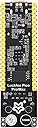
The coolwellLuckfox Pico Max RV1106 is a high-performance micro development board featuring a single-core ARM Cortex-A7 processor, integrated NPU, and advanced ISP capabilities. With its lightweight design and powerful encoding performance, this board is ideal for developers looking to create innovative applications in a compact form factor.
| ASIN | B0CKPHB7BB |
| Best Sellers Rank | 175,459 in Computers & Accessories ( See Top 100 in Computers & Accessories ) 1,862 in Motherboards |
| Box Contents | Luckfox Pico Max M (EN) development board |
| Brand Name | coolwell |
| Compatible Devices | Camera, Personal Computer |
| Country of Origin | China |
| Customer Reviews | 4.4 4.4 out of 5 stars (12) |
| Manufacturer | Coolwell |
| Model Name | CL-Luckfox Pico Max M (EN) |
| Network Connectivity Technology | GPIO, I2C, USB |
| Operating System | Linux |
| Processor Brand | Rockchip |
| Processor Count | 1 |
| RAM Memory Technology | DDR2 |
| Total USB Ports | 1 |
| Wireless Compability | Bluetooth |
M**S
Works exactly as intended. You know why you bought it.
C**N
Bien reçu. Pas de difficulté à programmer ce dernier et mettre en œuvre sur Ps 4 en firmware 11. Très bon matos. Je recommande vivement.
T**D
Das Pico Max RV1106 ist ein beeindruckendes Micro-Entwicklungsboard mit Linux-Betriebssystem (Busy Box). Mit ARM Cortex-A7Prozessor bietet es eine leistungsstarke Plattform. Die vorverlöteten Header machen die Einrichtung einfach. Die Möglichkeit, das Board zu programmieren und vielfältige Anwendungen zu entwickeln, ist faszinierend. Es bietet großes Potenzial für Entwickler und Bastler, die innovative Projekte realisieren möchten.
H**A
Der Luckfox Pico-Max, Modell "RV1106" ist ideal für Alle, die ein kompaktes, aber leistungsstarkes Board für ihre Projekte suchen. Dieses Board zeichnet sich durch seine Integration eines ARM Cortex-A7-Prozessors, eines RISC-V MCU, eines NPU (Neural Processing Unit) und eines ISP (Image Signal Processor) aus, und beschert so eine Leistung, die so ziemlich alle Dev-Boards in diesem Preissegment in den Schatten stellt. Die eingebaute Power-on-Reset-Funktion (POR) sorgt für einen stabilen und zuverlässigen Start des Systems, was bei Entwicklungsboards eine wichtige Eigenschaft ist. Die Vorverlöteten Header erleichtern das Anschließen von Komponenten und Zubehör, wodurch Zeit und Mühe beim Löten gespart wird. Die Kombination von ARM Cortex-A7 und RISC-V MCU ermöglicht eine effiziente Verarbeitung und ist ideal für Aufgaben, die eine hohe Rechenleistung erfordern. Der NPU bietet zusätzliche Leistung für Anwendungen, die auf maschinelles Lernen oder künstliche Intelligenz angewiesen sind, während der ISP besonders nützlich für Projekte ist, die Bildverarbeitung beinhalten. Die Linux-Kompatibilität dieses Boards ist ein weiteres herausragendes Merkmal, da sie es Entwicklern ermöglicht, eine breite Palette von Software und Tools zu nutzen, die für das Linux-Betriebssystem verfügbar sind. Dies eröffnet ein weites Feld an Möglichkeiten für kreative und innovative Projekte.
D**G
I have been looking for a lazy man's embedded micro. I've tried the Arduino and ESP32, but they require specialized software; I am a Linux developer and I was looking for a development system that I could use with my normal development stack. The Coolwell Luckfox Pico Max RV1106 Linux Micro Development Board appears to be that system, so I picked it up to give it a shot. Unfortunately, I can't seem to get it connected in my Linux environment. First, the board arrived with no manual. There is some documentation on the product page, but it is in graphics and the resolution is so poor that I can't read it. I was able to google the product and came across the vendor page, so that is what I used as the base for my experimentation. The instructions are pretty complete for setting up the interface, with a description of connecting the USB-C port on the device to any USB port on the desktop, then scanning for the attached device via the 'lsusb' command. Unfortunately the board didn't get detected. The vendor claims that, for any problems, it's the cable or USB port, but since I use both of these regularly for other work, I don't think so. I also tried returning the board and getting a replacement, but I had no success with the new board, either. On the web page there are also included directions for connecting to a Mac or Windows machine. I have both, so I may try an alternate connection as I have time, but for now I have a brick, but at least it's a small, light brick. And the LEDs flash!
Trustpilot
Hace 1 mes
Hace 1 día