We remain fully operational. Our teams are working around the clock to ensure your deliveries continue safely.

Descargar la aplicación


Servicios al cliente
Sobre nosotros
Copyright © 2025 Desertcart Holdings Limited
Descargar la aplicación




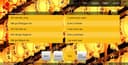
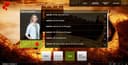



🌟 Master Mandarin, Join the Elite!
Fluenz Mandarin 1+2+3 is a comprehensive language learning program designed for Mac, PC, iPhone, iPad, and Android users. It features hundreds of engaging video lessons, interactive workouts, and audio training to help you achieve fluency in Mandarin. Developed by Harvard graduates and used by the US Navy, this program offers a unique approach to mastering the language, complete with tools for accent perfection and on-the-go referencing.
| ASIN | B00310UXQW |
| Customer Reviews | 3.1 3.1 out of 5 stars (87) |
| Date First Available | December 1, 2009 |
| Is Discontinued By Manufacturer | No |
| Item model number | 2F-1-MAN123-Iu |
| Manufacturer | Fluenz |
| Our Recommended age | 5 - 20 years |
| Package Dimensions | 7.7 x 7.4 x 2.3 inches; 1.15 Pounds |
C**S
Have to consider what you get for the money you pay ...
I'm about halfway through Fluenz Mandarin 3, and so while I am not quite finished, I feel comfortable evaluating the product. I will say that it is not a bad product. The lessons are well done and well organized, with clear explanations of the topics being learned. As the Fluenz folks say frequently, they err on the side of learning less, but learning it well. The lessons are upbeat and designed to encourage one along, and perhaps because the emphasis is on learning a small set of things well, one is rarely frustrated or confused throughout the process. Moreover, although the learning medium is technologically advanced, the general format is very traditional: dialogue, explanation of dialogue, drills. For a language learner of just about any age or background, this will be pretty familiar. No virtual immersion, no games, no gimmicks. That said, there are some notable drawbacks. First, and perhaps foremost, while I admire the "learn less, but learn better" philosophy, at the end of the day, the amount of Mandarin actually learned (in terms of vocab, grammar, etc.) is pretty limited. Especially for the serious language learner, it can be frustrating to go through a 10 minute explanation of a dialogue that only has one or two new words or ideas. Very fundamental issues are not introduced until late in the game (if I remember correctly, one learns the words for gold, silver, and bronze medal before one even learns how to say "My name is _________"!). I felt like the 3rd disc picked up the pace, but again it shouldn't take that long to really challenge the learner. I also was perplexed as to why a non-native speaker would do much of the "teaching" in the first two discs. Ms. Gil seems nice and personable, but there is little doubt that she is not a native speaker, as even to the language learner is it clear that she mixes up tones and pronunciation not infrequently. I've learned languages in a number of contexts, and I understand the benefit of having a native speaker of a language learner's mother tongue teach one a foreign language (as they, in many cases, can more readily answer questions and "understand where you're coming from" as a language learner, especially in the early stages). But, for a scripted, one-way teaching format it makes no sense not to have a native speaker of Mandarin, especially given the number of truly bilingual Chinese/English speakers out there. The lack of instruction in hanzi is also to the language learner's detriment. I am a non-native but fluent speaker of Japanese, a language which shares many characters with Mandarin--having hanzi (or at least the option for hanzi) seems like an easy technological fix, and would have been useful. I recognize that my position is a little bit unique, but even for someone unfamiliar with Asian languages, having at least some familiarity with characters would be very useful. Heck, even knowing "man" and "woman" would avoid embarrassing mishaps at the restroom! I also feel like the elephant in the room must be addressed: the price. At the moment, Mandarin 1 through 3 is retailing at over $500, with an Amazon "sale price" of about $350. For those kinds of prices, one should expect results. Yet, to be honest, I learned more from an old Living Language Mandarin set of CDs + book that cost under $50. Even more damning for this business model is the emergence of *free* language applications that very closely mimic paid versions such as Fluenz and Rosetta Stone. For example, I've been brushing up on my French through Duolingo, which has its flaws but not only is its price right, I'd honestly put it head to head with a product such as Fluenz. Duolingo doesn't have a Chinese app, but once it does, I'd be hard pressed to recommend spending $350~$500 for Fluenz when there's a free product that's just about equivalent. Look, learning a language isn't easy, and for a native English speaker, Mandarin's about as hard as it gets. There's something to be said for a product that gives you a crash course in a difficult language in a non-threatening manner. But, *especially at this price*, it's difficult to really give it much more of an endorsement than that. This is a product I really want to "like"; there is real thought behind its production, and it doesn't feel as corporate and slick as Rosetta Stone. You CAN and WILL learn some Mandarin from it. However, I'm just not sure it's the best use of $350~$500 for someone who's serious about learning Mandarin.
L**M
This is one of the best language programs I've ever used, but no program is an island
I actually just purchased this program and am waiting for it to be delievered today, but I was able to play around with a copy for the last few weeks and basically I really love this program. I did try Rosetta Stone and I have tried a few other methods for learning Chinese and various other languages, but this is by far the most informative and intuiative of them. And I guess in the end it all goes to what you are looking for and how you learn. Some people would prefer something like Rosetta Stone for all the reason why someone else wouldn't. There are a few things about this program that is a draw back in some people's eyes, and I would agree with them, to an extent. 1. on the 1+2 parts, the program host is an American native English speaker named sonia. And even though her pronunciation may not the be best (especially since usually native speakers of mandarin would typically used) it can be nice for me to hear someone doing the tones and pronunciation that seem so awkward and difficult who is an English speaker. with that said, I would also simply spend more focus on the parts that are native speakers, also there are a few books/and books with CD's that go into great detail on Chinese pronunciation. one of those (I'm using the McGraw Hill Chinese pronunciation for this, and it is a wonderful addition) works very well with going through this program as it gives you an over view and you then try to duplicate the sounds of the native speakers, but Chinese is definately a language where a very detail look at the pronuncation and tones is going to something that is very prudent to do. 2. There are no chinese characters, they only use Pinyin. As I've read from at least one other reviewer, that even though it is understood (and explianed) why they only use Pinyin, that having the Chinese characters just shown under the pinyin would be helpful to get used to seeing it. And I would agree with that. but then again, it could also be overwhelming and distracting. I like how the focus is more on speaking and comprehension and learning chinese characters can easily be done in other ways either using this as a starting point or something completely different. You could look up the characters for the words that you are learning and do some writing practice working with the grammar and words you are learning with this program. [...] is a great resource for a chinese dictionary and character look up as well as to generate practice grid sheets. I do really like the way they have the workouts set up. and I also very much like how you can use a microphone to record yourself to compare your pronunciation with the recordings. these are very good resources and also makes it very worthwhile to go back and work on this even if you have gotten through everything else in the lessons, since pronunciation and tones is so crucial. I also LOVE how they have the tone marks easy to genterage by hitting 1, 2, 3, or 4 for the corresponding tone. I would also say that overall, the layout of vocabulary and grammar and the way they build on it is very good and, you really do start understanding and writing out longer and more complex Chinese sentences before you know it. There isn't as much vocabulary as with some other programs or books,but you could very easily supplement, or use several to work on various aspects. also with the comprehension and base that you get throught he fluenz program will make it relatively easy to build on your vocabulary as you continue your study and practice in the language. I just wish they they another asian language available in Japanese or Thai. :)
J**.
Crappy. It does not give you any leverge on ...
Crappy. It does not give you any leverge on learning. Makes it more difficult to learn and not easier. Pimsluer is way better on a universal level. Fluenz was made by people with zero understanding of the learning process.
H**R
Major Weaknesses
In my view, Fluenz Version F2 1+2+3 Mandarin has 2 glaring weaknesses. First, there is no real help with the pronunciation of tones. The software requires the users to listen to recordings of their own voice to determine if the tones are correct. It's unlikely that you can learn to speak mandarin this way. To overcome this weakness, my wife has arranged for private tutoring with a native speaker. However, the only way to produce written versions of the dialogues is by hand. You have to write them out yourself. This software is a step above flash cards, but not much. You can probably learn to understand some spoken Chinese with this program, but you will not be able to speak it correctly. This software is very expensive for what it offers.
Trustpilot
Hace 2 semanas
Hace 1 día