We remain fully operational. Our teams are working around the clock to ensure your deliveries continue safely.

Descargar la aplicación


Servicios al cliente
Sobre nosotros
Copyright © 2025 Desertcart Holdings Limited
Descargar la aplicación

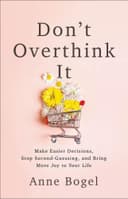
Don't Overthink It: Make Easier Decisions, Stop Second-Guessing, and Bring More Joy to Your Life [Anne Bogel] on desertcart.com. *FREE* shipping on qualifying offers. Don't Overthink It: Make Easier Decisions, Stop Second-Guessing, and Bring More Joy to Your Life Review: Kritters Ramblings - A non fiction book that could be defined as self help, but I would call it life instructional! This is a genre that I don't typically read, but from a person/author who I love so I thought I would give it a try and I am glad I did. Anne Bogel is known to many for her blog or her podcast or both where she helps connect readers with great books. As a book blogger myself, my goal for my blog is to ramble about books in hopes that readers will connect and find a book that they would like to read. I have followed her career for a bit, so was excited when she announced a third book and then was greatly intrigued when she started speaking about what it would be about - a vastly different direction from her first two. This book focuses on the concept of overthinking and the many different ways in which a person can overthink and then provides tools and skills to help make decision making easier and how to avoid overthinking when it isn't necessary. I found this book to be very helpful. The tools were easy to implement quickly and I loved her personal antidotes that made the skills easier to understand. This is the perfect gift book for the person in your life who may spend too much time pondering and needs to move more things into action mode. This is a book that I could see myself dipping back into time after time to remind myself that overthinking can keep you from doing and enjoying life. Review: A Must-Read for Chronic Overthinkers - For as long as I can remember, my mom has been telling me that I “think too much.” She’s not wrong. When it comes to mental aerobics, I’m an Olympics-caliber athlete with the ability to twist the simplest problem or idea into more knots than a Cirque du Soleil contortionist. At times, this proclivity for overthinking has served me well, leading me to act with purpose and intentionality. More often than not, though, overthinking has led to frustration, procrastination, and an inability to remain present because my mind is otherwise occupied. In the past few years I’ve made great strides in my battle against overthinking, but I still have quite a ways to go. Which is why I was thrilled when I learned that the forthcoming book from Anne Bogel (better known around the internet as Modern Mrs. Darcy) would be addressing this very topic. And as part of the launch team for Don’t Overthink It, I had the opportunity to read an advanced reader copy! The book’s premise is perfectly summed up in its subtitle: Make Better Decisions, Stop Second Guessing, and Bring More Joy to Your Life. Those are pretty big claims from a small tome, but after reading it, I can say that Don’t Overthink It delivers on its promises. In the book’s opening chapter, Anne defines overthinking as “those times when we lavish mental energy on things that don’t deserve it. Those times when we can’t seem to think about anything else, even though we know our thoughts are better spent elsewhere.” Anne herself is no stranger to overthinking, having had her brain space hijacked by everything from travel plans to grocery purchases. And she knows that her readers can sympathize with this pitfall of getting caught in a loop of unproductive—or even destructive—thought. Overthinking can look like worry or fretting about the small stuff or second-guessing ourselves. Regardless of the form it takes, overthinking is repetitive, unhealthy, and unhelpful, depleting our mental energy and rendering us incapable of focusing on the things that actually matter. Thankfully, we overthinkers are not condemned to a lifetime of mental imprisonment. According to Anne, it is possible to replace negative thought patterns with beneficial ones by following a three-part plan: 1) laying a solid foundation to conquer overthinking; 2) conquering unhealthy thought patterns in the moment and implementing practices that keep us from falling into these patterns in the first place; and 3) learning how to smartly think our way into life’s simple pleasures. In Don’t Overthink It, Anne digs into the specifics of this plan. She shows readers how to monitor our thinking, identifies potential triggers, and lists ways we can avoid them. As someone who has overthought my tendency to overthink, I was familiar with a lot of these concepts; still, I found it helpful and heartening to know that I am not alone in succumbing to these mental pitfalls. I also appreciated the reminder that I get to CHOOSE what to think about and that I don’t have to remain a victim to my thoughts. Just knowing that overthinking does not need to be a chronic condition was freeing for me. Many of the tools suggested in this book involve eliminating thinking altogether through steps such as streamlining decisions (e.g., eating or wearing the same thing every day), outsourcing, and getting clear on our values which brings clarity to our decision-making. I’ve already adopted may of these tools in recent years and can attest to their effectiveness. No matter how much we do to minimize overthinking, it’s bound to happen from time to time. To that end, I found the most helpful part of the book to be the section dedicated to strategies for interrupting overthinking as it happens. I actually made a list of these tips in an Evernote file on my phone, and plan to pull them up next time I find myself mentally spinning. In the weeks since I read this book, my most-used strategy from the list has been “considering a different view” by asking myself “what would I like about this if I liked it? what could I consider to be good here?” These questions quickly snap me out of rumination-mode and redirect my thinking towards solving the problem at hand. I loved the book’s final few chapters on bringing joy into everyday life. Anne models how we can shift our mindset to expect good things from less-than-good situations. She also offers detailed strategies for using rituals to become more mindful, and gives ideas for learning how to embrace abundance through small, simple splurges—something that can be difficult for veteran overthinkers! If you have read any of Anne Bogel’s other books, or are familiar with her blog, you will know that her writing is warm and relatable, balancing personal anecdotes with solid principles and actionable ideas. While this book is more repetitive than I would have liked, it’s still a quick, memorable read that I can wholeheartedly recommend. It would also pair wonderfully with Emily P. Freeman’s The Next Right Thing, which looks at the same concepts from a spiritual/soul perspective.



| Best Sellers Rank | #69,608 in Books ( See Top 100 in Books ) #833 in Christian Self Help #986 in Christian Personal Growth #1,455 in Personal Transformation Self-Help |
| Customer Reviews | 4.4 4.4 out of 5 stars (1,902) |
| Dimensions | 5.5 x 0.51 x 8.5 inches |
| Edition | 1st |
| ISBN-10 | 0801094461 |
| ISBN-13 | 978-0801094460 |
| Item Weight | 2.31 pounds |
| Language | English |
| Print length | 224 pages |
| Publication date | March 3, 2020 |
| Publisher | Baker Books |
K**M
Kritters Ramblings
A non fiction book that could be defined as self help, but I would call it life instructional! This is a genre that I don't typically read, but from a person/author who I love so I thought I would give it a try and I am glad I did. Anne Bogel is known to many for her blog or her podcast or both where she helps connect readers with great books. As a book blogger myself, my goal for my blog is to ramble about books in hopes that readers will connect and find a book that they would like to read. I have followed her career for a bit, so was excited when she announced a third book and then was greatly intrigued when she started speaking about what it would be about - a vastly different direction from her first two. This book focuses on the concept of overthinking and the many different ways in which a person can overthink and then provides tools and skills to help make decision making easier and how to avoid overthinking when it isn't necessary. I found this book to be very helpful. The tools were easy to implement quickly and I loved her personal antidotes that made the skills easier to understand. This is the perfect gift book for the person in your life who may spend too much time pondering and needs to move more things into action mode. This is a book that I could see myself dipping back into time after time to remind myself that overthinking can keep you from doing and enjoying life.
K**A
A Must-Read for Chronic Overthinkers
For as long as I can remember, my mom has been telling me that I “think too much.” She’s not wrong. When it comes to mental aerobics, I’m an Olympics-caliber athlete with the ability to twist the simplest problem or idea into more knots than a Cirque du Soleil contortionist. At times, this proclivity for overthinking has served me well, leading me to act with purpose and intentionality. More often than not, though, overthinking has led to frustration, procrastination, and an inability to remain present because my mind is otherwise occupied. In the past few years I’ve made great strides in my battle against overthinking, but I still have quite a ways to go. Which is why I was thrilled when I learned that the forthcoming book from Anne Bogel (better known around the internet as Modern Mrs. Darcy) would be addressing this very topic. And as part of the launch team for Don’t Overthink It, I had the opportunity to read an advanced reader copy! The book’s premise is perfectly summed up in its subtitle: Make Better Decisions, Stop Second Guessing, and Bring More Joy to Your Life. Those are pretty big claims from a small tome, but after reading it, I can say that Don’t Overthink It delivers on its promises. In the book’s opening chapter, Anne defines overthinking as “those times when we lavish mental energy on things that don’t deserve it. Those times when we can’t seem to think about anything else, even though we know our thoughts are better spent elsewhere.” Anne herself is no stranger to overthinking, having had her brain space hijacked by everything from travel plans to grocery purchases. And she knows that her readers can sympathize with this pitfall of getting caught in a loop of unproductive—or even destructive—thought. Overthinking can look like worry or fretting about the small stuff or second-guessing ourselves. Regardless of the form it takes, overthinking is repetitive, unhealthy, and unhelpful, depleting our mental energy and rendering us incapable of focusing on the things that actually matter. Thankfully, we overthinkers are not condemned to a lifetime of mental imprisonment. According to Anne, it is possible to replace negative thought patterns with beneficial ones by following a three-part plan: 1) laying a solid foundation to conquer overthinking; 2) conquering unhealthy thought patterns in the moment and implementing practices that keep us from falling into these patterns in the first place; and 3) learning how to smartly think our way into life’s simple pleasures. In Don’t Overthink It, Anne digs into the specifics of this plan. She shows readers how to monitor our thinking, identifies potential triggers, and lists ways we can avoid them. As someone who has overthought my tendency to overthink, I was familiar with a lot of these concepts; still, I found it helpful and heartening to know that I am not alone in succumbing to these mental pitfalls. I also appreciated the reminder that I get to CHOOSE what to think about and that I don’t have to remain a victim to my thoughts. Just knowing that overthinking does not need to be a chronic condition was freeing for me. Many of the tools suggested in this book involve eliminating thinking altogether through steps such as streamlining decisions (e.g., eating or wearing the same thing every day), outsourcing, and getting clear on our values which brings clarity to our decision-making. I’ve already adopted may of these tools in recent years and can attest to their effectiveness. No matter how much we do to minimize overthinking, it’s bound to happen from time to time. To that end, I found the most helpful part of the book to be the section dedicated to strategies for interrupting overthinking as it happens. I actually made a list of these tips in an Evernote file on my phone, and plan to pull them up next time I find myself mentally spinning. In the weeks since I read this book, my most-used strategy from the list has been “considering a different view” by asking myself “what would I like about this if I liked it? what could I consider to be good here?” These questions quickly snap me out of rumination-mode and redirect my thinking towards solving the problem at hand. I loved the book’s final few chapters on bringing joy into everyday life. Anne models how we can shift our mindset to expect good things from less-than-good situations. She also offers detailed strategies for using rituals to become more mindful, and gives ideas for learning how to embrace abundance through small, simple splurges—something that can be difficult for veteran overthinkers! If you have read any of Anne Bogel’s other books, or are familiar with her blog, you will know that her writing is warm and relatable, balancing personal anecdotes with solid principles and actionable ideas. While this book is more repetitive than I would have liked, it’s still a quick, memorable read that I can wholeheartedly recommend. It would also pair wonderfully with Emily P. Freeman’s The Next Right Thing, which looks at the same concepts from a spiritual/soul perspective.
T**S
So Much More Than 'Self-Help'
Analysis paralysis. Rumination. Perfectionism. How do we fight these and so many other types of overthinking? Values-based decision making. Completing the cycle. Simple abundance. Fans of Anne Bogel, her blog (Modern Mrs. Darcy), and her podcast (What Should I Read Next) will be familiar with Anne's skill for bringing universal subjects to an intimate level and helping us see them with fresh eyes. She turns her talent to the subject of chronic over-thinking in her new book, Don't Overthink It: Make Easier Decisions, Stop Second-Guessing, and Bring More Joy to Your Life. 'Life changing' is an over-used term lately. But it's accurate for this book. Reading it has changed my life for the better. The thoughts, ideas, and processes that Anne shares in the book aren't highly original; we've heard them before, seen them elsewhere. The genius of the book is that she's brought them all together in one place and presented them in such an engaging manner. The information is both practical and practicable. The chapter on values-based decisions, titled Decide What Matters, has caused a major shift in the way I live my life because I did, after a lot of reflection, decide what matters most to me. This now informs all my choices, though it takes time for it to become automatic. And the chapter on limiting your options to save your sanity, Limit Yourself to Free Yourself, helped me see why having all the options is not always a good thing. “Each small decision requires only a bit of brain power, but the cumulative effect is large.” You may not think you’re an Overthinker. You may not normally be an Overthinker. But the lessons in this book are helpful whether you face chronic decision-making problems or are just going through a season of decision-overload. I highly recommend it.
G**D
Easy understanding of the content. Written from author’s life experience and we are able to relate with our lifestyle. Thank you!!!
Y**Y
The author thinks overthinking is only for women, reading this as a man was a big disappointment, everything was about "us women" and "we as women" clearly making everything from a female perspective with no respect to the other gender. It genuinely felt awful to read, I tried to continue and hoped it would change direction, however sadly it only got worse and worse the further you went. Author could probably have shared some interesting perspectives about her knowledge on the subject if she didn't make it all about herself and women, secluding men entirely, such a shame.
D**E
The quality of printing is bad, letters too small and grey and not sharp(
P**K
My wife loves this book and found very helpful
A**R
Hoping it’s going to be good & helpful
Trustpilot
Hace 2 semanas
Hace 1 semana