We remain fully operational. Our teams are working around the clock to ensure your deliveries continue safely.

Descargar la aplicación


Servicios al cliente
Sobre nosotros
Copyright © 2025 Desertcart Holdings Limited
Descargar la aplicación


Buy anything from 5,000+ international stores. One checkout price. No surprise fees. Join 2M+ shoppers on Desertcart.
Desertcart purchases this item on your behalf and handles shipping, customs, and support to Nicaragua.
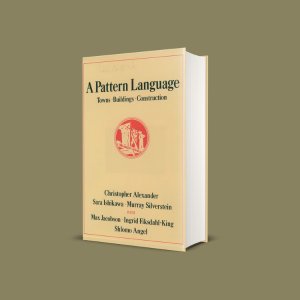
A Pattern Language: Towns, Buildings, Construction (Center for Environmental Structure Series) [Christopher Alexander, Sara Ishikawa, Murray Silverstein, Max Jacobson, Ingrid Fiksdahl-King, Shlomo Angel] on desertcart.com. *FREE* shipping on qualifying offers. A Pattern Language: Towns, Buildings, Construction (Center for Environmental Structure Series) Review: Good for non-specialists with an interest in architecture - Odd that this should come up for a review from me, when I must have bought and read it twenty years ago. I remember it well, however, and am glad that I read it. I have always been interested in architecture (one of those things I would have studied if I had several lifetimes). I learned a great deal from this about architecture in general, and what makes a building appealing to humans. It sometimes gave me the words for something I only felt about a house or a building. The 'low, sheltering roof' of a house in my neighborhood was just the phrase I needed to express why the first time I saw it, I was drawn to that particular house as an ideal, cozy home. This book helped me understand why we instinctively respond to older buildings, buildings with 'character' and 'history' to them, buildings that have a patina from decades or centuries of human inhabitants making their mark on the bricks and boards that make up the structure. However, I have to say that as a graduate of UC Berkeley, I was aware of the Marxist sub-text of some of the authors' recommendations in this book. It is clearly influenced by the Marxist current in academia in the late 1960s and early 1970s, for example in its assertion that in the future, people would want to live in sort of 'compounds' with less privacy and more shared space - architecture and housing being planned to in effect 'force' a 'communal' lifestyle on people. Of course, it is presented as 'what people want' and what people naturally desire: living with no privacy from your neighbors instead of individual private spaces. So some of the assertions about domestic architecture come across a bit like the promises that we'd all be driving flying cars and eating entire meals in tablet form. The ideology clearly has not been borne out by experience since the book was written, though there are probably Marxist-leaning readers who will take it as gospel and even try to convince people to live in compounds where all your comings and goings are known and noted, your neighbors will see everything you do through your windows and in your yard, and you will be happy. Review: Perfect for Downsizing! Must read!! - The ideas in this book will forever change how you look at city and building design. Urban planners, architects, builders and interior designers who want to keep their jobs-- read up! This book will help you create low-cost solutions to the real estate downturns in your area. You have unprecedented opportunities to rethink your cities, towns, strip malls, etc. to make them more user-friendly and inviting while trimming the ugly wasted space that fills so many of our urban centers and McMansion neighborhoods. More careful expansion of the cities along logical pathways, with rainwater harvesting, edible self-managed self-watered landscaping, and tree-shaded roads with neighborhood shops and small industry woven in would have created more jobs and more meaning plus kept people together in sustainable neighborhoods at a much lower cost, both initially and long-term. Now we face the prospect of bulldozing entire vacant blocks and turning them into the rural spaces that so many longed to be near to begin with. This is not good business sense-- it's pathology. 'A Pattern Language' is the perfect medicine for this sickness. Like a healthy diet, it gets down to basics: how the human body relates to space; how people 'feel' in certain environments; the criteria of places that draw people in as opposed to others that are left usused or avoided. These principles are classic patterns that have stood the test of time, and Mr. Alexander gives numerous examples from around the world, from entire regions down to the height of windowsills and the best designs for office space. Anyone planning their own house needs this book! I designed a big house in Arizona for my large family using these principles and it's amazingly light and functional while being cool in summer and warm in winter. The kitchen is smaller than most custom homes, yet eight people can prepare food together comfortably while 3 more surf the internet and Dad reads his paper.
| Best Sellers Rank | #13,401 in Books ( See Top 100 in Books ) #1 in Urban & Land Use Planning (Books) #1 in Architectural Criticism #2 in Architectural Drafting & Presentation |
| Customer Reviews | 4.8 out of 5 stars 1,036 Reviews |
D**R
Good for non-specialists with an interest in architecture
Odd that this should come up for a review from me, when I must have bought and read it twenty years ago. I remember it well, however, and am glad that I read it. I have always been interested in architecture (one of those things I would have studied if I had several lifetimes). I learned a great deal from this about architecture in general, and what makes a building appealing to humans. It sometimes gave me the words for something I only felt about a house or a building. The 'low, sheltering roof' of a house in my neighborhood was just the phrase I needed to express why the first time I saw it, I was drawn to that particular house as an ideal, cozy home. This book helped me understand why we instinctively respond to older buildings, buildings with 'character' and 'history' to them, buildings that have a patina from decades or centuries of human inhabitants making their mark on the bricks and boards that make up the structure. However, I have to say that as a graduate of UC Berkeley, I was aware of the Marxist sub-text of some of the authors' recommendations in this book. It is clearly influenced by the Marxist current in academia in the late 1960s and early 1970s, for example in its assertion that in the future, people would want to live in sort of 'compounds' with less privacy and more shared space - architecture and housing being planned to in effect 'force' a 'communal' lifestyle on people. Of course, it is presented as 'what people want' and what people naturally desire: living with no privacy from your neighbors instead of individual private spaces. So some of the assertions about domestic architecture come across a bit like the promises that we'd all be driving flying cars and eating entire meals in tablet form. The ideology clearly has not been borne out by experience since the book was written, though there are probably Marxist-leaning readers who will take it as gospel and even try to convince people to live in compounds where all your comings and goings are known and noted, your neighbors will see everything you do through your windows and in your yard, and you will be happy.
J**S
Perfect for Downsizing! Must read!!
The ideas in this book will forever change how you look at city and building design. Urban planners, architects, builders and interior designers who want to keep their jobs-- read up! This book will help you create low-cost solutions to the real estate downturns in your area. You have unprecedented opportunities to rethink your cities, towns, strip malls, etc. to make them more user-friendly and inviting while trimming the ugly wasted space that fills so many of our urban centers and McMansion neighborhoods. More careful expansion of the cities along logical pathways, with rainwater harvesting, edible self-managed self-watered landscaping, and tree-shaded roads with neighborhood shops and small industry woven in would have created more jobs and more meaning plus kept people together in sustainable neighborhoods at a much lower cost, both initially and long-term. Now we face the prospect of bulldozing entire vacant blocks and turning them into the rural spaces that so many longed to be near to begin with. This is not good business sense-- it's pathology. 'A Pattern Language' is the perfect medicine for this sickness. Like a healthy diet, it gets down to basics: how the human body relates to space; how people 'feel' in certain environments; the criteria of places that draw people in as opposed to others that are left usused or avoided. These principles are classic patterns that have stood the test of time, and Mr. Alexander gives numerous examples from around the world, from entire regions down to the height of windowsills and the best designs for office space. Anyone planning their own house needs this book! I designed a big house in Arizona for my large family using these principles and it's amazingly light and functional while being cool in summer and warm in winter. The kitchen is smaller than most custom homes, yet eight people can prepare food together comfortably while 3 more surf the internet and Dad reads his paper.
B**N
brilliant series
i first learned about alexander through my study of software engineering. i'm an artist working on generative/evolutionary digital art, both visual and sonic, and i'm also in the process of studying to build a house. alexander's books have been an inspiration to me in all of these fields. i won't expound on the positives, as others have already done so, and my five stars give you an idea of how i feel about these books. there are quite a few negatives though: a) the price of these books is outrageous, why are they not available in a cheap paperback edition. if mr. alexander really wants to change the world he would do well to look at the open source software movement, specifically the ideal of open documentation. mr. alexander has a website on which he talks about freedom and idealism, etc... however, the book is not free, instead, it is very expensive, but more importantly, is not free to copy and redistribute. one gets the feeling that there is an element of the california guru in all of this. that he is peddling utopia to the hyper-comfortable. ok that sounds really harsh, but it makes me very angry that such a resource is not distributed freely, especially in the developing world. mr. alexander if you read this, please consider establishing an open on-line repository of your patterns, perhaps in wiki format, so that other patterns can be added, and so that your existing patterns can be amended through time and translated to other languages. i realize that most people in the developing world do not have access to the internet btw, but at least it would allow the people or organizations who do to print and distribute copies freely. b) there is quite a stark difference between the more rigorous and engineering oriented 'notes on the synthesis of form' and the later work. i think in the later work he correctly ditched the engineering jargon because he deemed it unnecessarily cumbersome, and also realized that it is not necessary to build a house. peasants with no engineering or mathematical background have been building beautiful buildings for ages, however in NOTSOF he spends considerable time espousing the idea of a generative grammar as a way of managing the immense complexity of most engineering/design tasks. for instance when he gets into the problem of manufacturing a tea kettle which solves both manufacturing and design constraints. i'd really like to see more patterns dealing directly with issues of energy management and ecological well being, which by definition would have to be more technical, but not by a great margin if explained in simple language. this way a house could be organically "grown", but with energy efficiency there as a morphological force from the outset. c) in general the books could be shorter and less repetitive. there is a bit too much advocacy, and they often read like a some kind of new age self help manual, on the surface that is. these books can survive the new age surface feel precisely because they are so deep, but i think that less self-advocacy would significantly lighten them and would probably also manage to shave off most of the new age baggage. and finally, my advice to the software engineer, is to first read 'a timeless way of building', which will give you a strong idea about how patterns work. i also highly recommend 'notes on the synthesis of form' to anybody designing anything. i don't think that 'a pattern language' is that necessary to read, unless you want to build houses, or are just a big fan of alexander's (of which i am both). i based this review on 'the timeless way of building', 'a pattern language', 'notes on the synthesis of form', and 'the production of houses'. i can't wait to read 'the nature of order' thanks mr. alexander!!
J**Y
A Must-Have in Learning About Architecture
I love this book! Such an interesting meditation on architecture. Really brilliant.
R**E
wealth of positive design concepts
Do take the time to peruse all reader reviews. This is a valuable book. It is a bit enormous, though, and there is no index. This means that if the reader has to hunt for some little reference or fact, he or she is in for a long trek through these pages. Although it is designed with many short chapters, each devoted to a design element, the sheer amount of data is somewhat daunting. Alexander does write clearly, and in an informal, second or first-person manner. But there is little summarizing. Probably an excellent book to read cover-to-cover as part of a large study project. So read this book and know it well BEFORE you talk to your architect, contractor, designer... don't do as I did and start speed reading it when the architect hands over the blue prints. Note: Whereas feng shui is a little more mystical, Alexander's suggested design tactics make practical sense. (I gently encourage any reader trying to choose between feng shui and this book to go with the latter). Very useful concepts for anyone who wants to make the most of their living space.
R**G
If you need to understand and communicate design ideas, you will want this book
This is a seminal work that has had enormous influence on software design as well as other design professions. Oddly enough, my original BSc was in Urban Studies and I worked in software design when I read this book the first time. Blew me away. This book is based on ideas that seem obvious once you hear them. I just never would have heard them otherwise.
S**N
If you are designing or building your own house this is a godsend
This book is aimed at non architects, written in short, practical entries that are easy to understand and hard to argue against. I used this book to build my house and it made the space more beautiful, practical and livable. I can't say enough good things about it. It is one of the most influential books on my life and has made an impact on me and my family who live in our house. It's inspiring and useful. There's not really anything else like it.
I**Y
It's history now.
This classic architecture work contains abundant wisdom and practical direction for living for every thinking person. I first read it nearly thirty years ago and used its principles to create a garden that delights to this day. When I found it again, I was eager to read the parts I had skipped over the first time. To my sorrow, the book is no longer relevant to the way most people now live. There is barely any nod to electronic communication or entertainment. If you want to be overwhelmed by how much we have lost, or changed, since this was written, I highly recommend it. I hope that, as with other lost arts, a new generation will be fascinated by the old ways people used to live, and will adopt the good and reinvent human spaces. Big box stores, super highways, multiplex cinemas, malls, security-driven barriers and other structures such as looping airport approaches and chaotic store layout, fractured product placement in retail outlets: all were not thought of in this work. The serenity of the human soul was the overriding value. It is easy to see the world today is organized more like a bandit's trap than a serene living arena. Definitely a deep and thought-provoking read.
Trustpilot
Hace 1 mes
Hace 2 meses