Some deliveries may take a little longer than usual due to regional shipping conditions.

Descargar la aplicación


Servicios al cliente
Sobre nosotros
Copyright © 2025 Desertcart Holdings Limited
Descargar la aplicación
Full description not available
P**T
A Very Good Premise, Delivered by an Unskilled Author
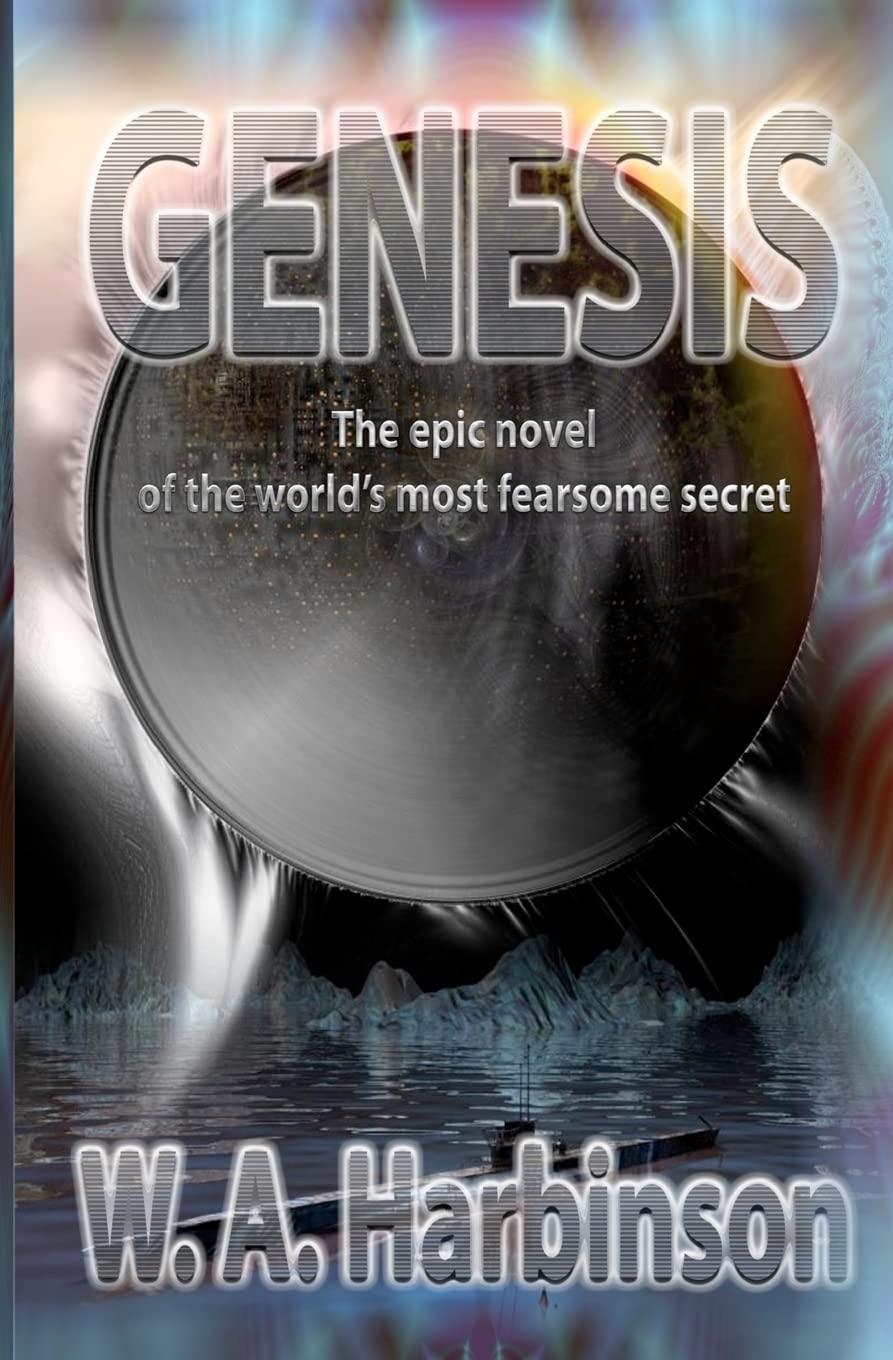
I read this book as a young man (at the time quite fond of science fiction) shortly after it was first published. I remember that at the time it seemed to be a 'hard read' and difficult to stay interested in. I recall that only the subject matter kept me plodding through until the ending. Years later I would remember the central concepts fondly, although I had forgotten the author's name and title.I finally decided now, in the early years of the 21st Century, so figure out if the book was really that bad, or if my relative youth during that first reading was to blame. After some Googling on the recalled subject matter, I decided that the book must be Genesis by Harbinson. I got a copy for my Kindle and dove in.Within the first few pages, I realized that my general dislike of the book back then was not due to my youth. It is quite simply a poorly written piece of literature. However, the central conceit remains strong and engaging. It is just too bad that the man who did the 'research' and put the story together does not happen to have the skill or talent one expects from a good author.My major issues with Harbinson's writing 'style' are listed below:- Boring structure, word use and syntax. In an opening passage about an encounter of a US Army bomber over WWII Germany, it seems like all statements issued by crew members are followed with the descriptive, "he bawled". For example (and with paraphrasing on my part); "We're all gonna die", bawled the captain. "They're coming at us again", bawled the waist gunner. "Aaiiieee", bawled the nose gunner. It really does read like that. While descriptive the first time it is used, it grows noticeable and tiresome after the first couple repetitions. Skilled authors know how to avoid this kind of thing.- Poor editing on the part of both the author and editor. Reading extended passages puts one in mind of History Channel documentaries, where after each commercial break a lot of the same information and personal introductions are repeated for those who joined the show in progress, or who have short memories. In a single paragraph, the same piece of information is restated, as if the author decided to relocate it and forgot to delete the original. This happens a LOT and draws attention to itself.- Lots of typos. We all make them, and I have probably made some in this hasty review, but jeeze! Maybe somebody made these errors when the text was retyped/scanned for Kindle....? I don't have the original printed version to check. But in what I am reading, there are many words that are missing, incomplete, or replaced by similar looking words that are clearly wrong.- Descriptive passages that just go on and on. Authors usually try to find a balance between not fleshing out characters, locations, and events thoroughly enough, and bloating the text with too much exposition. Harbinson goes for the latter, and my interest fades after a while. I have noticed many times that the text seems to be offering nothing new, with nothing advancing the story or my understanding of what is happening. Then I start skimming ahead, and two pages later it is still going on and I realize that if those two pages were deleted nobody would notice. It is almost like Harbinson simply thinks through the longest list of details, or longest rambling pointless discussion between two people, and just writes it all down without any authorly editing.- Inconsistent character identifiers. There are times when I just cannot get a grasp of who the author is talking about after the plot jumps around in time and place. It might be later in the paragraph or on the next page that I finally know. I finally say to my self, "Oh! Last time he just referred to this character by his last name and now he is using the first name." Since I don't have this problem with any other books I read, I conclude that this is the author's shortcoming.(spoiler)Run-on sentence coming: Anyway, if you really like reading about an American genius who works with the greats of early aviation and rocketry development after already being far beyond their accomplishments, only to grow bored and defecting to the Nazis, only to use the German war resources for his own gains and finally running a secret empire with hidden bases and moving around by various flying saucers and pulling the strings of governments and research, you will still find this worth a read.
T**S
The book that started it all
While Genesis is the third book in the Projekt Saucer series, it is the first one Harbinson wrote, and as such it was this book that started the brilliant series.Starting off with a prologue where Allied pilots in 1944 encounter mysterious glowing objects (the feuerballs or "Foo fighters"), the story then moves onto the main plot, which is set from 1974-1979.The main characters of the story are two American UFO investigators- the young Robert Stanford and the elderly Frederick Epstein. Also featured is an ordinary guy from England, called Richard Watson, who has a not-so-ordinary experience when he is abducted by one of Wilson's flying saucers. For those not familiar with the series, the character John Wilson is the main focus of the entire series- the man who runs the ultra-advanced saucer base in Antarctica and hopes to eventually take over the whole world.After Epstein mysteriously disappears, Stanford goes on a quest to find his old friend and also get to the bottom of the whole flying saucer issue. His journey takes him from the fields of Texas, to the sweltering jungles of Paraguay, and eventually to the frozen wastes of Antarctica.The chapters in the story alternate from third-person chapters showing what's happening to the story's characters in the present, to first-person chapters where Wilson narrates what happened in his past.This works quite well in the story and allows the reader to get a better insight into the UFO mystery that is the main theme of the whole series.As always, the characters are portrayed quite well. Harbinson does a good job, for instance, of portraying Stanford's increasing frustration at being left in the dark over the mystery of the UFOs and their connection to Epstein's disappearance. Eventually, however, Stanford gets all the answers he seeks, but at a price. I won't give away too much though. Read the book to find out what happens.Overall, yet another excellent novel from W. A. Harbinson.
D**S
This Book Was Mentioned By A Coast to Coast AM Caller
This book was mentioned by a Coast to Coast AM caller, and I was intrigued enough to purchase it. To be honest, I'm only about a third of the way through it at this time, but I wanted to field a couple of thoughts to those who might be considering this purchase.I'm intrigued by the general concept, as I understand it thus far, but the syntax of the writing leaves a great deal to be desired. I have not noted an enormous number of spelling errors thus far, but there have been a few incorrect words which throw off the flow of the reader. Back to syntax, however... The author really, Really, REALLY likes writing with commas, but doesn't have (in my opinion) a true grasp of how to use them elegantly. So much of what I've read could have been stated much more eloquently by compositing sentences rather than using comma after comma after comma to present descriptions. In too many cases, the descriptions would appear to feed back on themselves rather than clearly addressing the initial subject.A lot of the writing feels very repetitious, with descriptions or details repeated. A good editor would have been able to do wonders for this book, but as it is, too much of it feels... stilted. It is making it a chore for me to read, although I want to uncover the story and see it through.I mainly submit this to counter the horrible review which has been made and to clarify what I believe the other reader may have meant, based upon my own observations. The structure could use a lot of work in many places. Many, many places. (syntax) I will update this once I finish the book.
M**D
One of the BEST UFO novels ever!!
I bought the paperback edition of this when it first came out and was totally blown away by the story.A mixture of fact,rumour,speculation all mixed in with an essential novel that keeps you gripped from page 1 onwards.Although this was book 3 of a series of saucer novels,it was actually published first(1980).So,if you are not really bothered about reading the rest,Genesis can still be read as a stand alone story.....It really is an an incredible story from Irish novelist W.A.Harbinson...and I still stand by that after just reading again after 30+ years.
J**N
Brilliant UFO tale
I read this years ago and have been trying to find it ever since. Searches for 80s books about UFOs turn up lots of results! It's a very clever entwining historical facts with UFO legends to come up with a, not hugely implausible, explanation.It's a pretty good read, though I found the retelling of UFO events somewhat tedious, and my slightly more mature, nay cynical, approach did find some inconsistencies and plot holes. I'm still glad I found it again!
B**.
Complex and believable.
Have had the paperback of this for years. Most impressed with the mix of known facts from WW2 and fiction. Would recommend this book to everyone.
G**A
Slow Start Great ending
Out of Harbinsons 3 books this one was the slowest. For some reason he goes back over the stories in the first two books. But once it picks up its great. I look at these as Sci-fi rather than anything else. Take it as such and you'll enjoy this book.
J**D
Great read
read this book 4 or 5 times now enjoyed it so much in the past, decided to get the electronic version.
Trustpilot
Hace 2 semanas
Hace 2 meses