We remain fully operational. Our teams are working around the clock to ensure your deliveries continue safely.

Descargar la aplicación


Servicios al cliente
Sobre nosotros
Copyright © 2025 Desertcart Holdings Limited
Descargar la aplicación
Buy anything from 5,000+ international stores. One checkout price. No surprise fees. Join 2M+ shoppers on Desertcart.
Desertcart purchases this item on your behalf and handles shipping, customs, and support to Nicaragua.
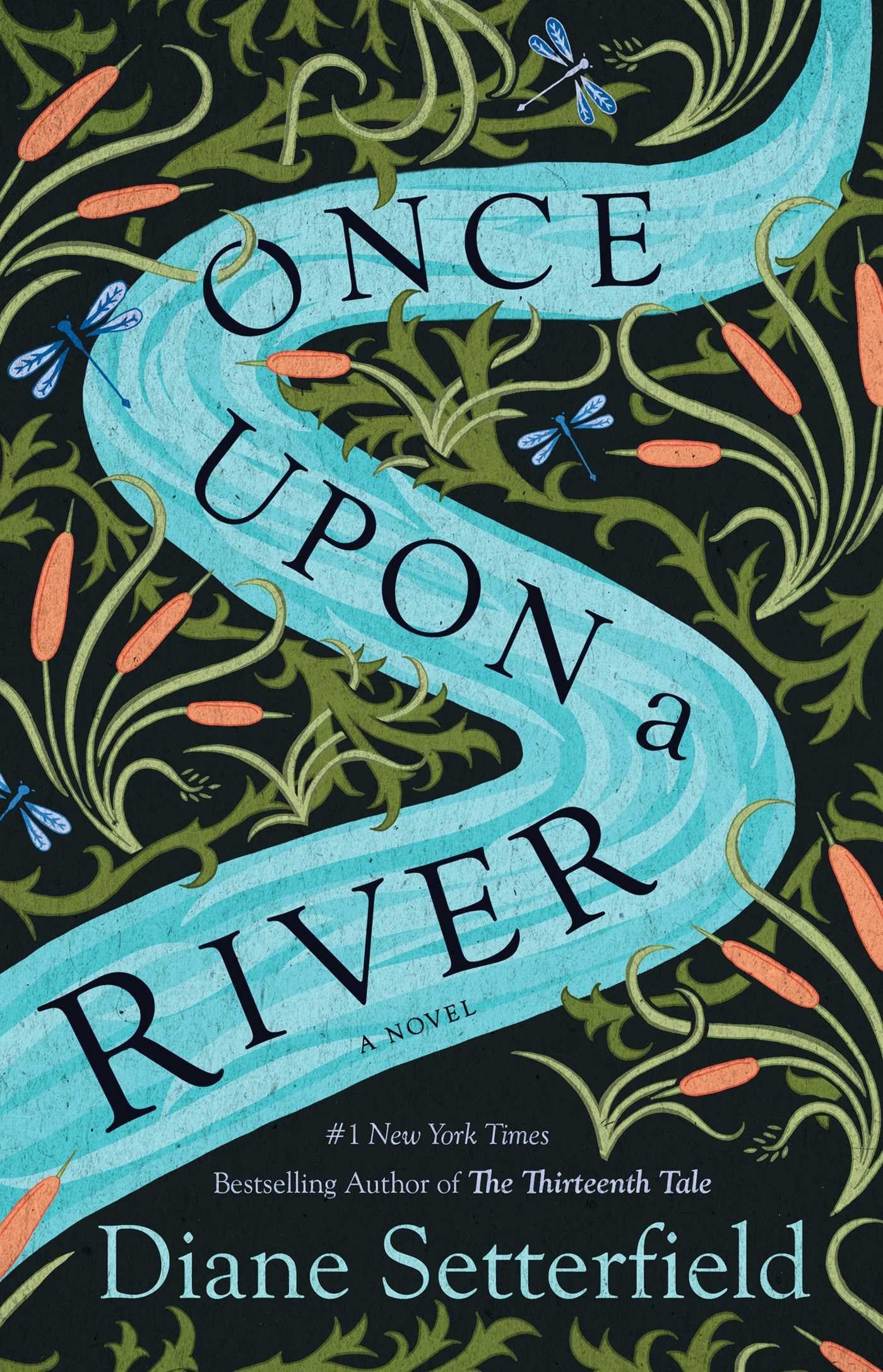
Once Upon a River: A Novel [Setterfield, Diane] on desertcart.com. *FREE* shipping on qualifying offers. Once Upon a River: A Novel Review: Masterfully told - I have to say that the writing style of this author is like nothing I've ever read. It's a beautifully interwoven tale. Part murder mystery, part love story, part story of healing, and so many other things. The plot and characters are somewhat complex, you definitely need to pay attention. But you come to love all the characters and empathize with their stories of loss. The author developed the storyline, characters, and world in masterful ways! I loved the weaving in of folk tales and legends - the blurring of real life, magic, and said folk tales. It was one of my favorite parts of the story. I'm left with a feeling of completion - wholeness. The ending was just what it needed to be. Review: Engaging but complicated tale featuring the Thames - Setterfield’s book is part mystery, part fantasy, and part ode to the Thames River. In the late 1870s near a village called Radcott, an injured man stumbles into a local inn during a storm. Regulars huddled around the fire are startled by the man’s appearance and by the fact he appears to carry a drowned young girl in his arms. The summoned neighborhood doctor/nurse Rita searches in vain for a pulse or breath in the girl before turning her attention to the injured man. The girl’s body is placed in an outbuilding until the storm abates. To everyone’s amazement, the girl recovers, but she either won’t or can’t talk. The search begins for the parents. Two sets of people come forward to see the child. The first couple is the wealthy Vaughns convinced that the child is their Amelia, a girl who went missing months before when she strayed too close to the river’s edge. The second couple is the Armstrongs, Robert and his wife Bess, who think the child might be their grandchild, Alice. The Armstrong’s son Robin is whom they think is the father of the child. Robin has been a constant source of trouble to the Armstrongs growing into a deceitful young man with less than honorable close friends and associates. Robert Armstrong fears that the girl is an abandoned child of Robin’s. Both sets of couples want to provide the child with a home, but as the Vaughns were the first to see her and lay claim to her, the Armstrongs relinquish their claim glad to see the child is well-cared for. Robert Armstrong still wants to visit the girl which causes the Vaughns some worry. Meanwhile, Henry Daunt, who found the child in the river and brought the child to the inn also feels a responsibility for the child for the girl. He and the nurse Rita keep tabs on the child’s condition in the hopes that she will recover the ability to speak. Lily is another person, a woman who keeps to herself and works at the parsonage who has reason to believe she knows who the child is. At the inn where the incident occurred, a local tale has circulated for many years about a riverman who lost his daughter in the Thames. As local legend would have it, he is said to be forever charged with roaming the river to rescue some people, but to take others to the other side of the river from which there is no return. Setterfield has written a complex story with many characters and subplots. It’s an engaging read, but I found myself confused about all the girls who disappeared. If you were to add the riverman’s daughter there are a total of four missing girls, three of whom are named Alice, Amelia, and finally, Ann. I had a hard time keeping Alice and Amelia straight with their correct backstories. It’s an atmospheric story that kept me reading, but not one to pick up on a day with a lot of distractions.
| Best Sellers Rank | #109,296 in Books ( See Top 100 in Books ) #512 in Gothic Fiction #990 in Historical British & Irish Literature #1,238 in Literary Fiction (Books) |
| Customer Reviews | 4.3 out of 5 stars 20,224 Reviews |
K**E
Masterfully told
I have to say that the writing style of this author is like nothing I've ever read. It's a beautifully interwoven tale. Part murder mystery, part love story, part story of healing, and so many other things. The plot and characters are somewhat complex, you definitely need to pay attention. But you come to love all the characters and empathize with their stories of loss. The author developed the storyline, characters, and world in masterful ways! I loved the weaving in of folk tales and legends - the blurring of real life, magic, and said folk tales. It was one of my favorite parts of the story. I'm left with a feeling of completion - wholeness. The ending was just what it needed to be.
K**Y
Engaging but complicated tale featuring the Thames
Setterfield’s book is part mystery, part fantasy, and part ode to the Thames River. In the late 1870s near a village called Radcott, an injured man stumbles into a local inn during a storm. Regulars huddled around the fire are startled by the man’s appearance and by the fact he appears to carry a drowned young girl in his arms. The summoned neighborhood doctor/nurse Rita searches in vain for a pulse or breath in the girl before turning her attention to the injured man. The girl’s body is placed in an outbuilding until the storm abates. To everyone’s amazement, the girl recovers, but she either won’t or can’t talk. The search begins for the parents. Two sets of people come forward to see the child. The first couple is the wealthy Vaughns convinced that the child is their Amelia, a girl who went missing months before when she strayed too close to the river’s edge. The second couple is the Armstrongs, Robert and his wife Bess, who think the child might be their grandchild, Alice. The Armstrong’s son Robin is whom they think is the father of the child. Robin has been a constant source of trouble to the Armstrongs growing into a deceitful young man with less than honorable close friends and associates. Robert Armstrong fears that the girl is an abandoned child of Robin’s. Both sets of couples want to provide the child with a home, but as the Vaughns were the first to see her and lay claim to her, the Armstrongs relinquish their claim glad to see the child is well-cared for. Robert Armstrong still wants to visit the girl which causes the Vaughns some worry. Meanwhile, Henry Daunt, who found the child in the river and brought the child to the inn also feels a responsibility for the child for the girl. He and the nurse Rita keep tabs on the child’s condition in the hopes that she will recover the ability to speak. Lily is another person, a woman who keeps to herself and works at the parsonage who has reason to believe she knows who the child is. At the inn where the incident occurred, a local tale has circulated for many years about a riverman who lost his daughter in the Thames. As local legend would have it, he is said to be forever charged with roaming the river to rescue some people, but to take others to the other side of the river from which there is no return. Setterfield has written a complex story with many characters and subplots. It’s an engaging read, but I found myself confused about all the girls who disappeared. If you were to add the riverman’s daughter there are a total of four missing girls, three of whom are named Alice, Amelia, and finally, Ann. I had a hard time keeping Alice and Amelia straight with their correct backstories. It’s an atmospheric story that kept me reading, but not one to pick up on a day with a lot of distractions.
C**G
Infused with folklore, an ode to the river Thames!
A dark night during the midwinter solstice, a lost child, a riverside inn known for weaving tales…infused with folklore, this novel from the author of The Thirteenth Tale is an ode to the river Thames and the way it steeps the culture of those who live on its shores. Once Upon A River starts with a thrilling event that quickens the heart, but it is as slow and meandering a tale as the river it is set around. “The river does not seem particularly intent on reaching its destination…Instead it winds its way in time-wasting loops and diversions,” observes the narrator of Diane Setterfield’s third novel. The sparking start, where a man with a bashed in face kicks in the door of a riverside inn with what appears to be a doll. Only, it’s not a doll, but a child’s corpse, who suddenly, and in inexplicable ways, returns to life. What follows is a slowed pace, a delicate and precious unwrapping of who this little girl may be; the novel, like any river, spreads into three plot tributaries. One relates the tale of a prosperous mixed-race farmer with a wayward adult stepson. The second follows a wealthy landowner whose marriage to a once lively, wild woman has now thinned due to the kidnapping and disappearance of their two-year-old daughter. Lastly we meet the fearful, half-simple housekeeper for the village parson. All the while we have the outliers, a woman trained in medicine who grows attached to the child and the man, in as slow and murky a way as the water flowing past them everyday. The story takes shape around claims each of these parties makes on the little lost girl. Unlike The Thirteenth Tale, which is filled with ghosts, incest, a country manor, murder and an evil twin, Once Upon A River is a milder and much more wholesome, with characters who are more shades of white and pale grey than black. The wholesomeness of this tale harkens to the folklore and whimsy of life on a river, tales that are woven into the mud and marsh and born into the blood of the occupants dwelling nearby. It’s quaint and charming, meandering as calmly as the setting, the book is by no means a page-turner. Instead it takes its time, build the suspense, the wonder inside the readers head as they try to uncover all that might unfold. Who really is this child? Where did she come from? There is plenty of heart, and happy endings with even the sprinkling of ghosts finding rest by the end. More classic and fashioned after Dickens than the darkened, chilling themes of Brontë, Once Upon A River may not be newly imagined, but it is simple, delicious and familiar.
B**E
RICH WORDS
I have seen many reviews of this book saying it was very wordy. I would agree but oh how rich the words are. I love Diane's descriptive writing. I am pulled in by the warm, soothing rhythm of her stories. Her characters are your family, friends and neighbors. So familiar. This story is borderline fantasy which is not my genre of choice but I really enjoyed it. It was long and lacks a huge climax or turning point. However, if you were a fan, as I was, of The Thirteenth Tale, you won't be disappointed.
L**T
engrossing
Stories within stories, well told. Covers the entire range of emotions and characters in a setting richly described. Well worth the read.
G**O
Enjoyable book
I thoroughly enjoyed this book. Especially the latter part. Initially it was very interesting. Then to weave the story there were so many details that I thought unimportant I almost got lost. They were important though to the story. A little past midway I got more interested and could not wait to read what happened next. Great story and great development of characters!
S**I
An Enchanting Tale
Once Upon a River by Diane Setterfield – Setterfield isn’t a prolific writer. She’s only written 2 other novels, and I read and adored The Thirteenth Tale. But she is so worth waiting for. Her books follow no formula, not even her own. Where Tale’s surprise was an unreliable narrator, revealed only at the end, River is a story about storytelling. In the mid 19th century, at a small English village situated on the Thames River, the regulars at the Swan pub are surprised on a dreary winter Solstice night by a badly injured man who carries in a dead child. Except she isn’t dead and when it’s revealed that she is in fact alive, but refuses to speak, everyone wants to claim her. But to whom does she belong? Over the course of the year, competing claimants establish their bona fides, their secrets, and their lies. The child might be one of three missing girls, with three grieving families desperate to call her theirs. A local nurse, a photographer, a black man (rare at this time and place,) a married couple whose daughter was kidnapped two years before, a woman who occupies the lowest social rung, and the owners of the Swan all work to unravel the mystery of this girl who lives, and of the girls who are still missing. Is it magic or science that will finally reveal her identity? Is it myth or justice that will win the end? Among all the peculiar relationships that identify the many colors of family and the complexities of love are also the naïve townsfolk who like nothing more than to tell – and embroider – a story. How much truth breathes in their tales imbues this story with so much charm that I could hardly bear to end my reading each day. Setterfield is a brilliant writer. She wraps her lyrical words and clever mysteries around the reader with convincing clarity, and immerses us in English life along the Thames, reminding that fairy tales still beguile us.
C**Y
Once Upon a Time
"What kind of wishing well was it that gave you one of the things you most wanted, without even wishing for it, and made you at the same time so painfully conscious of everything you could not have?" Once Upon a River begins when a man comes into The Swan, the local inn, with a seemingly dead girl in his arms. When she comes back to life a while later, she sparks the interest of everyone in the village and tales begin to emerge. Three families have girls missing, and they all believe the mysterious girl is their daughter. Where did she come from and who does she belong to? Diane Setterfield is a magician with her words. The way she writes cause the reader to slow down and savor every sentence. It is impossible to rush through the book. Some readers may find this tedious, but I love the way she pulls you into the story. It moves much the way a river does, slow in some points, quickly in others, but always pure and consistent. There is a whole host of characters in this book, and Setterfield manages to write them in a way that kept me from getting confused about who was who. I felt like I really got to know these villagers and found myself connecting to each one of them. This book manages to be so many things at once but still be a cohesive whole. At times it was a fantasy, others history, but it was always true to itself.
Trustpilot
Hace 2 semanas
Hace 2 semanas